30 Jaw-Dropping Backyard Patio Designs for 2026 That Will Amaze Your Guests

You know that feeling when you finally find the backyard patio design that looks exactly right for your space? After scrolling through what feels like a million options, it can be tough to land on The One. We spent serious time filtering through hundreds of options from high-end designers and accessible retailers alike. In this guide, you’ll find 30 distinct patio ideas, covering everything from modern minimalist setups to cozy, rustic escapes. We’re seeing a huge shift in 2026 toward creating true outdoor ‘rooms’ with defined zones for cooking, dining, and lounging—it’s about extending your living space, not just adding a few chairs. And stay until the end—we break down the most common mistakes that can ruin these looks.
📌 Save this to Pinterest for later—you’ll want to revisit these ideas.
1. Modern Patio with Dining, Kitchen, and Fire Pit Zones
This layout is a masterclass in creating functional outdoor “rooms” without building a single wall. The magic is in the zoning. The wooden pergola clearly defines the dining and kitchen space, creating a sense of intimacy and providing welcome shade. Meanwhile, the lounge area is anchored by its own distinct feature—the built-in fire pit bench. This separation makes the whole patio feel larger and more purposeful, allowing for multiple activities to happen at once without feeling chaotic.
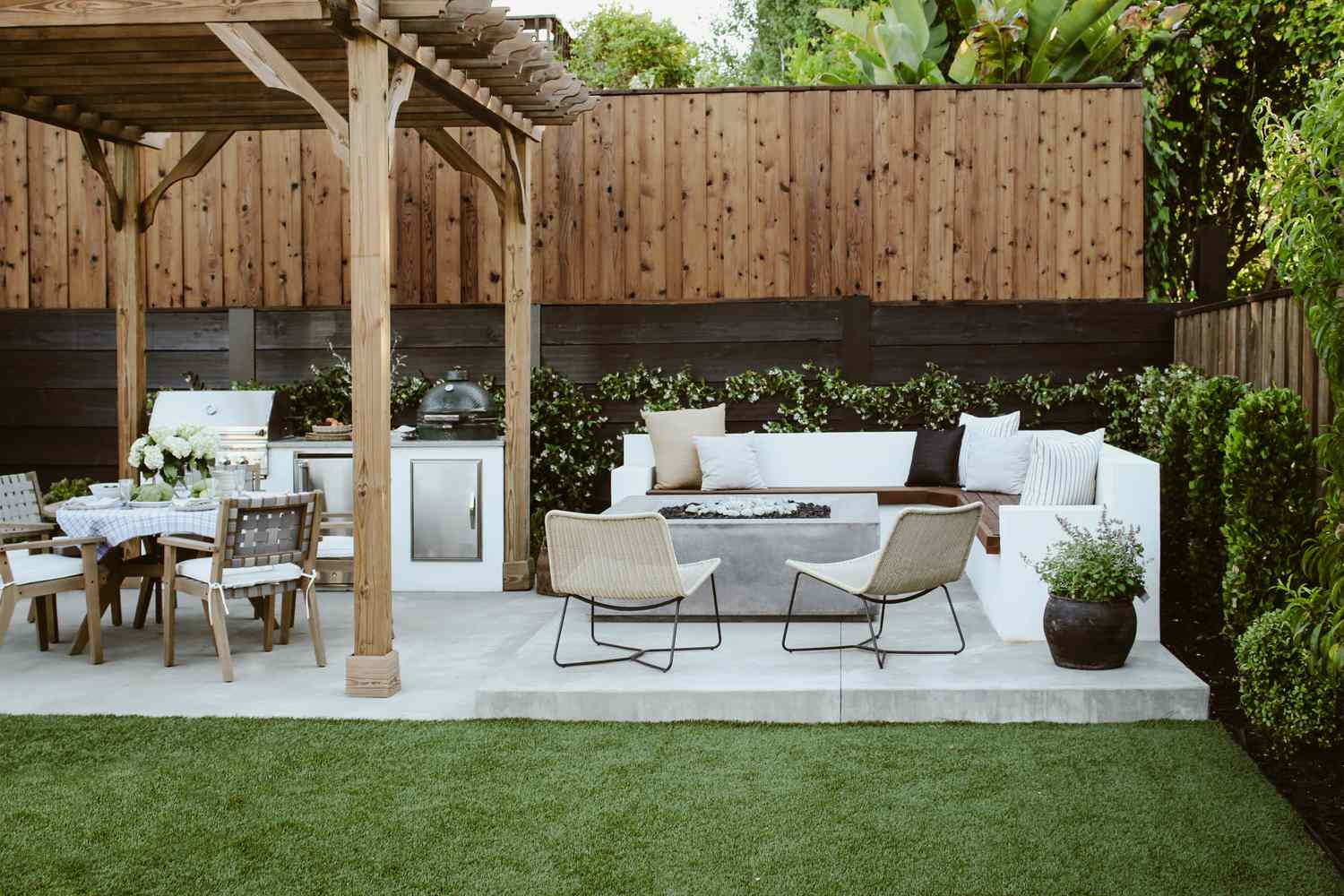
To keep a multi-zone patio feeling cohesive, stick to a tight color and material palette. Notice how the warm wood of the pergola is echoed in the dining chairs, while the black accents on the fence and chair frames create a common thread. The light gray concrete floor acts as a neutral, unifying base for the entire backyard, preventing the different zones from feeling disconnected. This repetition of materials is what elevates the design from merely functional to truly polished.
2. Multi-Level Patio with Twin Dining Areas
Think of this design as a simple formula: 50% hardscaping + 30% structures + 20% lush greenery. The multi-level stone patio provides the foundation, while the covered porch and the white pergola add vertical interest and define separate zones. The final, crucial layer is the abundance of plants, which softens all the hard edges and makes the space feel integrated with the landscape. You could swap the stone for concrete and the white pergola for black metal, and the formula would still work beautifully.
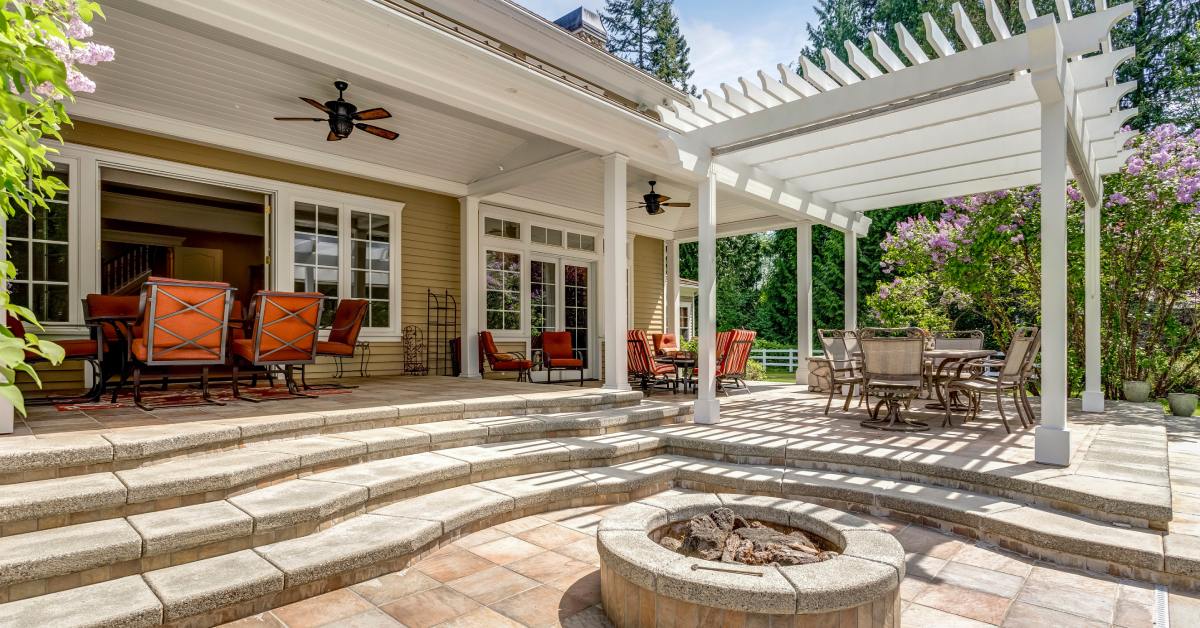
A multi-level patio is gorgeous, but be honest with yourself about accessibility. Lots of steps, even wide ones like these, can be a challenge for guests with mobility issues, toddlers, or anyone carrying a precarious tray of drinks. Also, consider the drainage plan from day one. Water needs a clear path to flow away from the house and off each level, which often requires professional grading and installation of channel drains to prevent pooling and water damage.
3. Stone-Clad Outdoor Room with a Dining Gazebo
This is a significant investment in permanent structures, creating what is essentially an entire outdoor room. The costs reflect custom stonework and a substantial gazebo build.
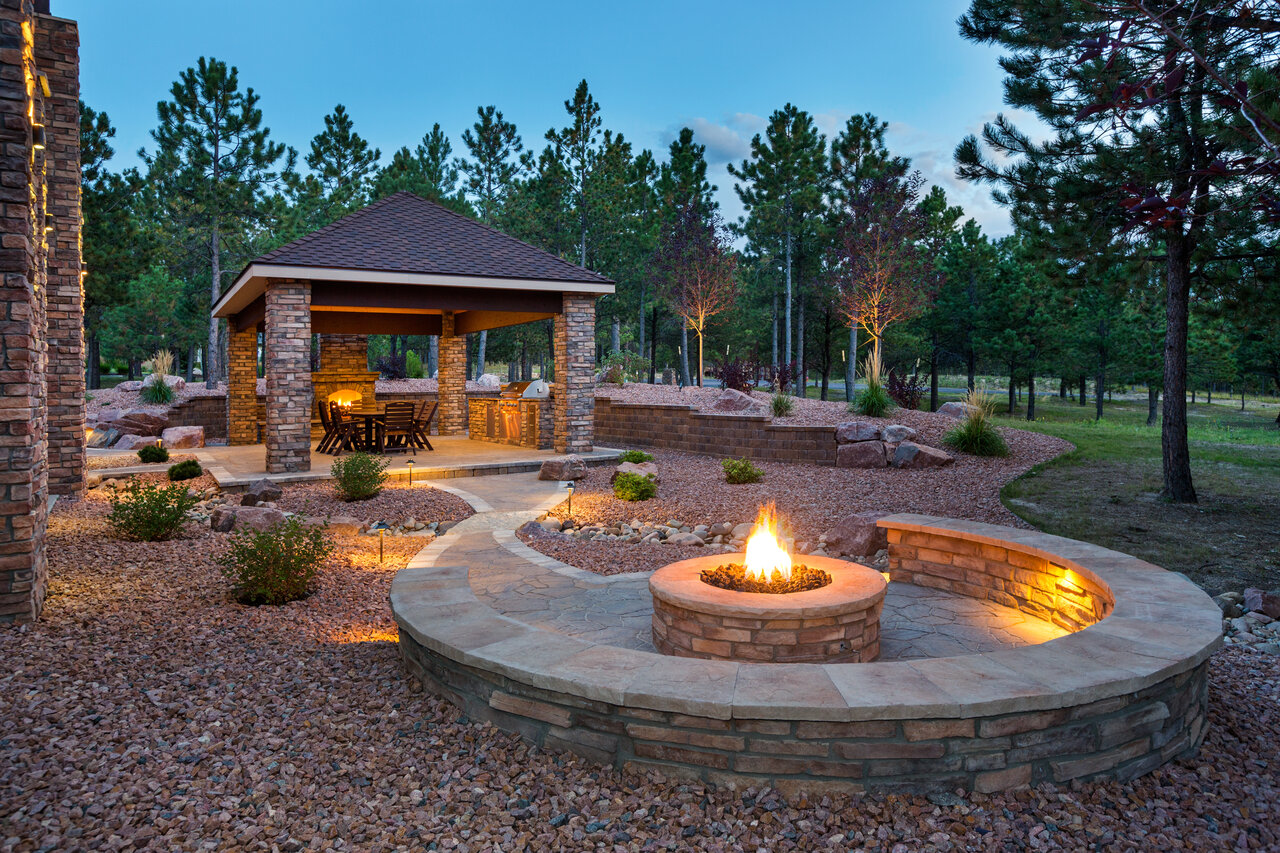
- Gazebo & Grill Station Structure: $12,000 – $25,000
- Custom Stone Fire Pit & Seating Wall: $8,000 – $18,000
- Gravel & Landscape Prep: $3,000 – $7,000
- Dining Furniture & Grill: $2,500 – $6,000
- TOTAL: $25,500 – $56,000
- Budget Alternative: A fabric-roof gazebo kit ($1,000-$3,000), a modular pre-fab fire pit kit ($800-$2,000), and DIY gravel work can achieve a similar feel for about 40% of the cost.
An expansive design like this requires a significant footprint. You’ll need a minimum of 600-800 square feet of relatively flat, usable space to accommodate the distinct zones without them feeling cramped. The gazebo alone needs a clearance of at least 15×15 feet. This is a look best suited for generous suburban or rural backyards. For smaller spaces, consider the more compact single-zone layout seen in Idea #15, which delivers a cozy fire pit experience without the massive scale.
4. Neutral Paver Patio with a Defined Fire Pit Circle
The single element that makes this entire design work is the circular inlay of darker pavers. It’s such a clever and relatively inexpensive trick. Without it, the fire pit and benches would just be items sitting on a uniform patio. But by creating this distinct visual ârugâ with pavers, the design carves out a dedicated zone. It feels intentional and anchored. This simple change in pattern and color elevates the whole space from a basic backyard to a thoughtfully designed outdoor living area.
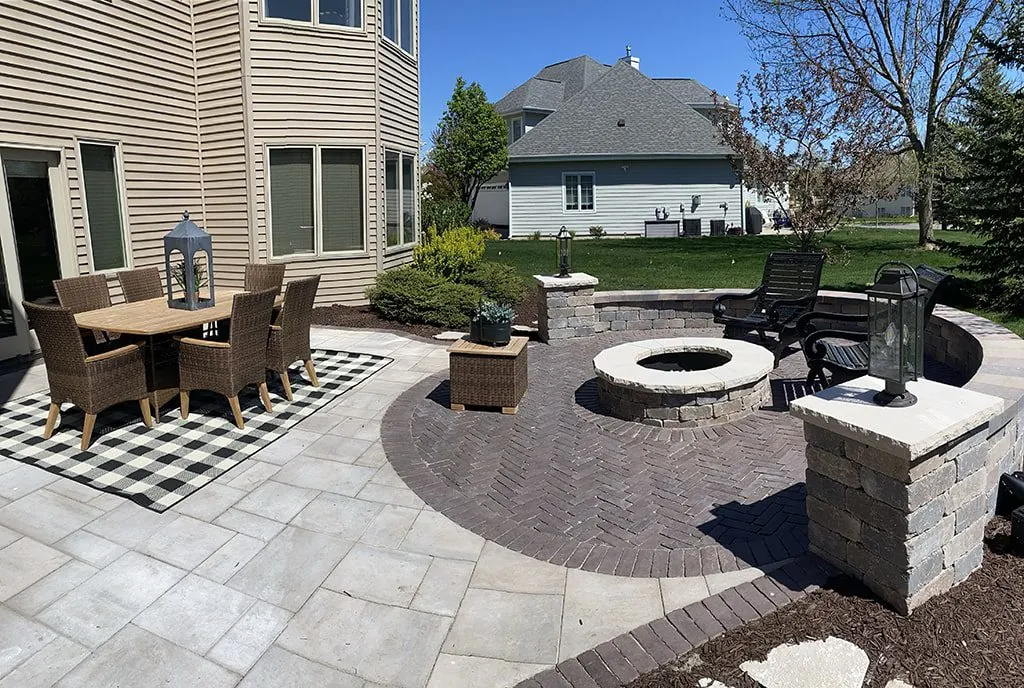
Paver patios are famously low-maintenance, but they aren’t zero-maintenance. The sand-filled joints between pavers will inevitably sprout a few weeds, especially in the herringbone pattern where joints are plentiful. Plan on spending an hour or two every spring pulling weeds and topping off the joint sand. To keep the colors looking fresh, a gentle power wash and a re-application of sealant every 3-5 years is a good idea, which can cost a few hundred dollars if you hire it out.
5. Expansive Covered Patio with Fireplace and Kitchen
The success of this sprawling patio lies in its smart use of repetition and scale. The large, dominant stone fireplace could have overwhelmed the space, but its texture and color are repeated in the base of the kitchen island, creating harmony. Similarly, the dark gray of the lounge furniture is echoed in the kitchen’s backsplash. The soaring ceiling with its exposed beams provides the necessary volume to prevent these multiple zones from feeling crowded, ensuring the area feels grand and airy, not chaotic. Compare this to the cozier covered space in Idea #6.
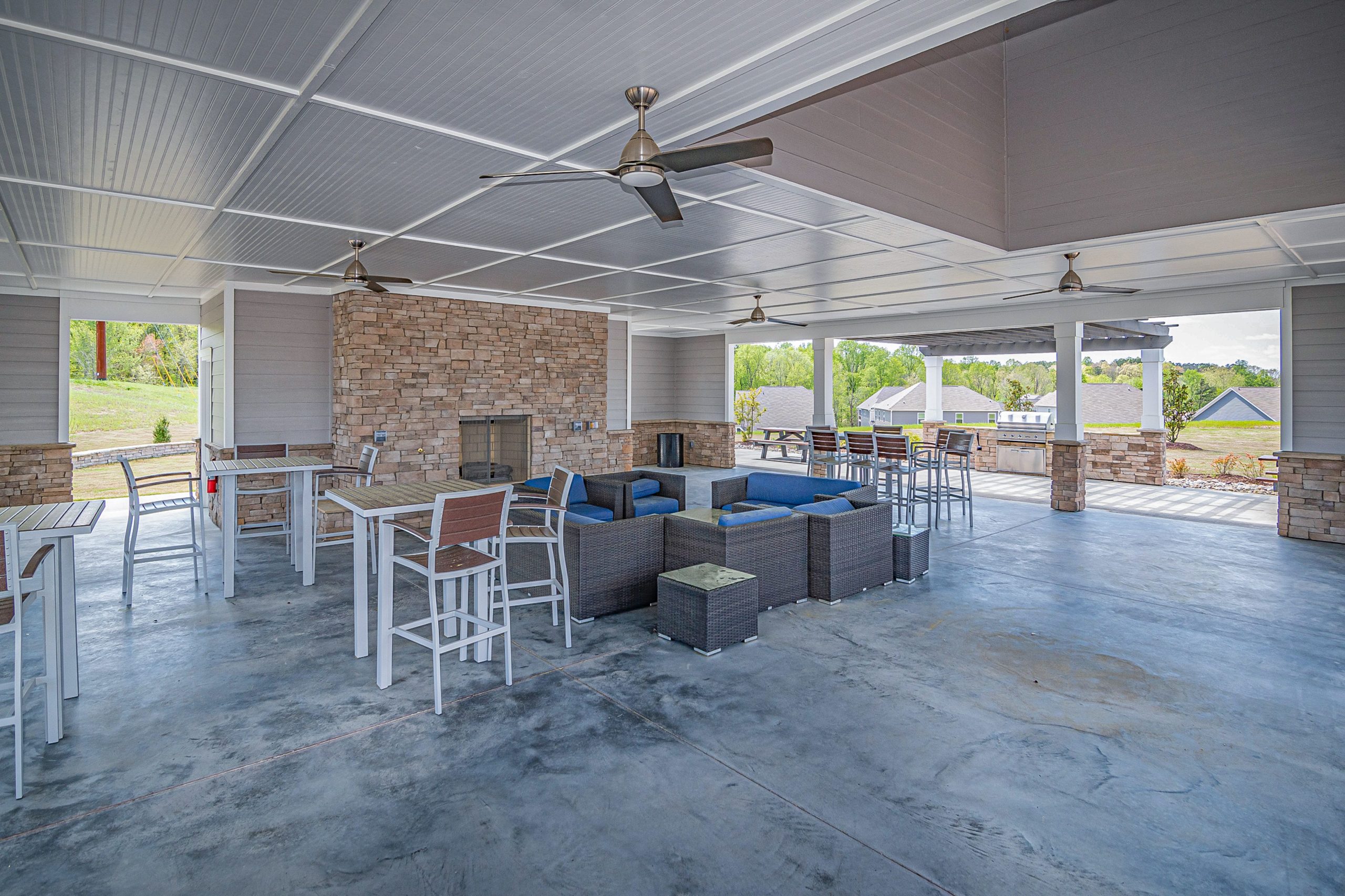
A patio of this magnitude is fantastic for entertaining a crowd, but consider the ambiance when it’s just you. Such a large, open space with high ceilings can sometimes feel empty or less intimate for a quiet morning coffee. The extensive use of hard surfaces—stone, concrete, metal—can also create an echo chamber. Softening the area with more textiles, like outdoor curtains or additional rugs, would be key to managing both the scale and the sound for everyday living.
6. Cozy Covered Patio with a Fireplace and Spa Deck
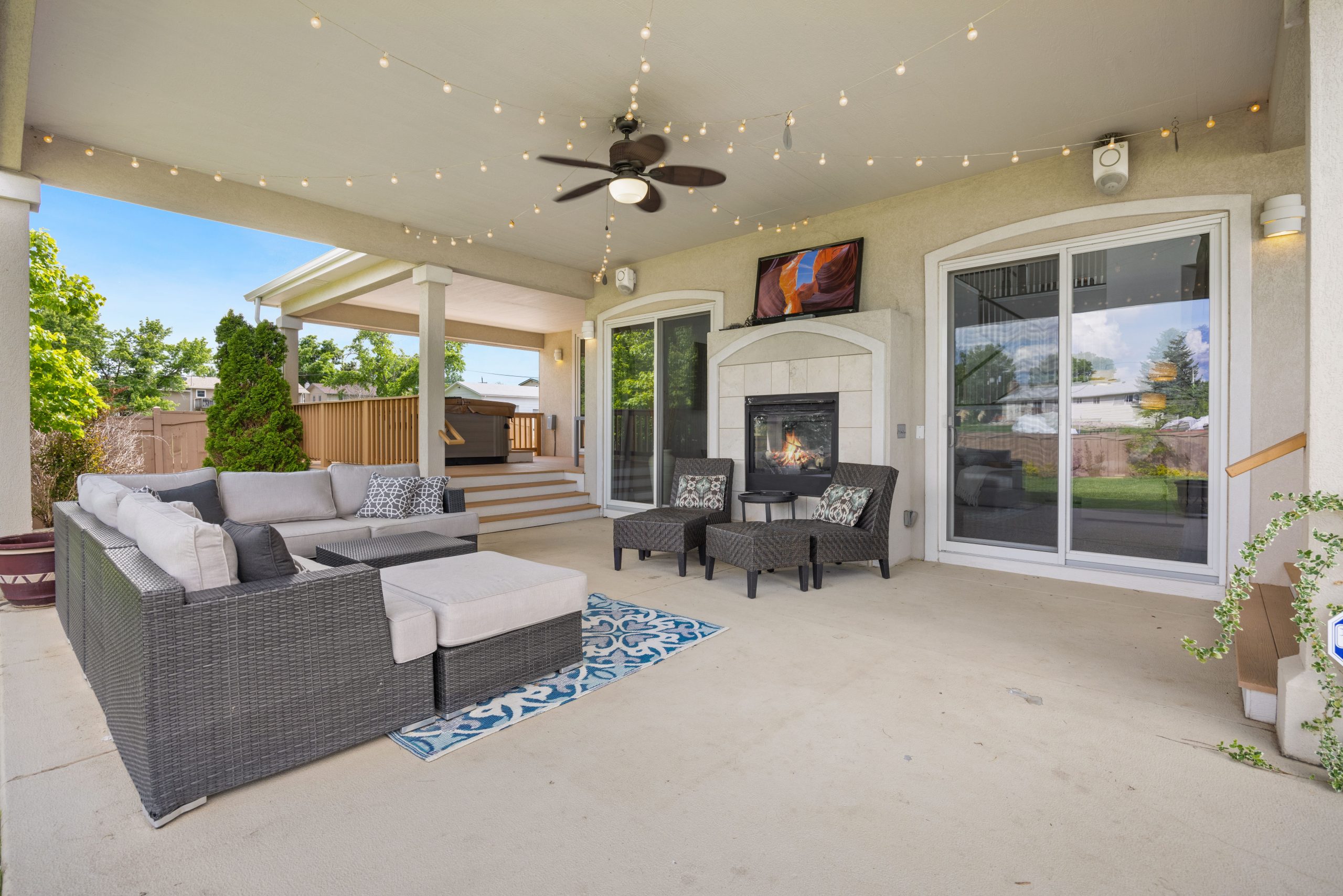
Hanging string lights correctly is the difference between a magical glow and a messy tangle. Here’s a quick guide to get that perfect drape.
- Time: 1-2 hours
- Cost: $50 – $150 (for lights and a kit)
- Step 1: Buy a string light suspension kit. It includes the coated steel cable and hardware you need for a straight, sag-free line. Don’t try to stretch the light strands themselves—they will break.
- Step 2: Install hook or eyelet hardware into your anchor points (beams, walls, posts). Ensure they are secure.
- Step 3: Run the steel guide wire first, pulling it taut with the turnbuckle from your kit. This is your structural line.
- Step 4: Attach your string lights to the guide wire every 12-18 inches using zip ties or clips. This prevents the bulbs from swaying wildly and keeps the line clean.
When placing a TV outdoors, even in a covered area, moisture and glare are your biggest enemies. Invest in a dedicated outdoor TV and a weatherproof mount—do not bring your indoor TV outside. Outdoor-rated models are sealed against humidity and have much brighter, anti-glare screens designed for daylight viewing. Mount it at a height where the center of the screen is at eye level when you’re seated (usually 40-45 inches off the floor), not high up like a security camera.
7. Modern Pergola Lounge in a Natural Meadow Setting
It’s all about the contrast. The clean, sharp lines of the modern pergola and the minimalist gray furniture are made 100 times more impactful because they are placed in a soft, slightly wild meadow. If this same setup were on a pristine concrete patio, it would be nice, but it wouldn’t have this magic. The juxtaposition of the highly structured, man-made elements with the loose, natural beauty of the landscape is what creates the serene, breathtaking quality of the space. It’s a perfect blend of control and nature.
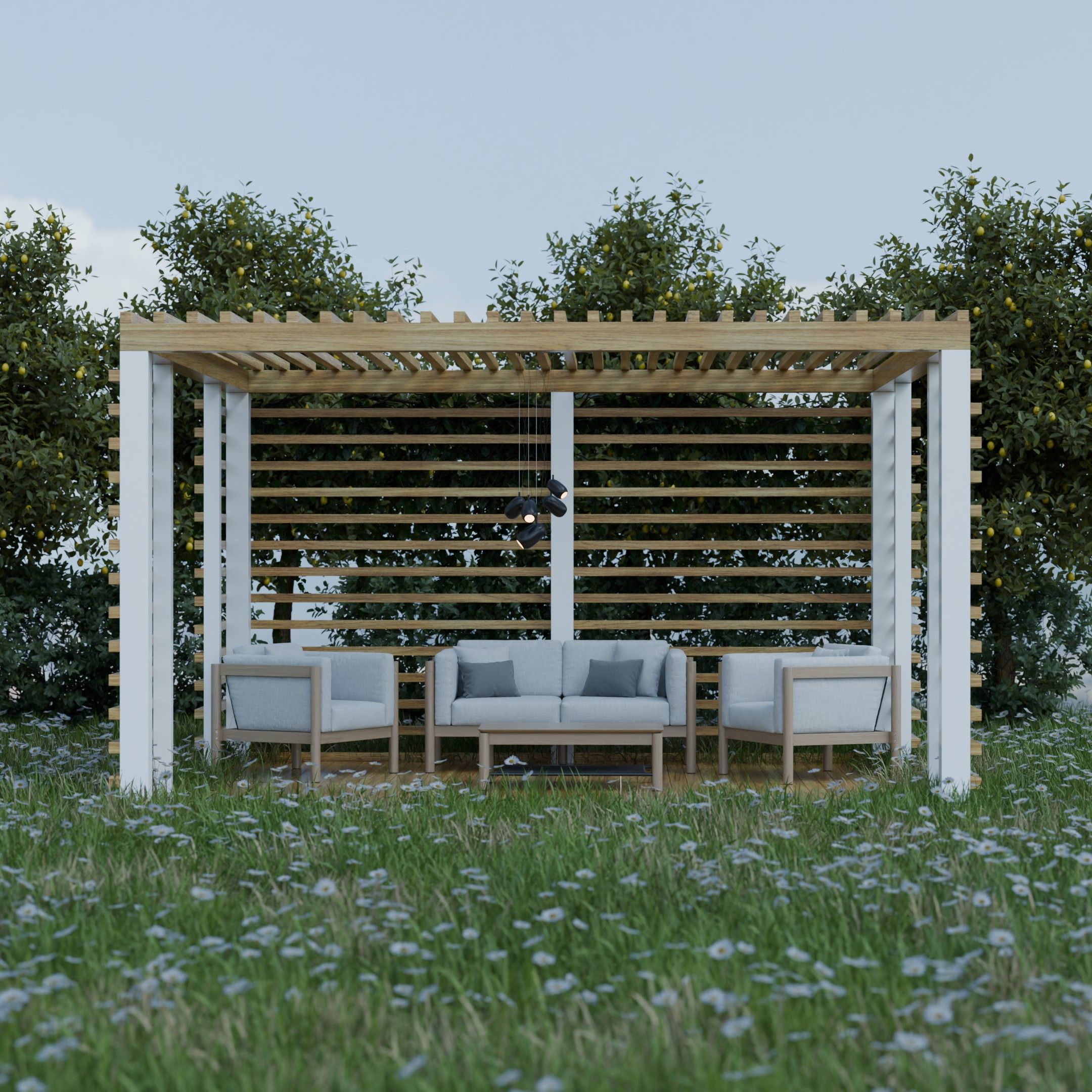
This look taps directly into the “biophilic design” trend, which is all about strengthening the connection between people and nature in our living spaces. Instead of paving over the entire backyard, this approach embraces and incorporates the natural landscape. In 2026, we’re seeing a move away from perfectly manicured, sterile backyards and towards more sustainable, habitat-friendly designs that feel like a genuine escape. This isn’t just a patio; it’s a destination within your own property.
8. Contemporary Backyard with Wooden Deck and Lawn Path
This design feels so calm and harmonious because of its mastery of texture and line. The straight, clean lines of the wooden deck boards contrast beautifully with the soft, organic shapes of the daybed and the lush lawn. The stepping stones create a gentle, curving path that invites exploration, breaking up the rectangular geometry of the yard. This interplay between straight and curved, hard and soft, is what gives the garden its sophisticated yet relaxing atmosphere. It’s balanced without being boring.
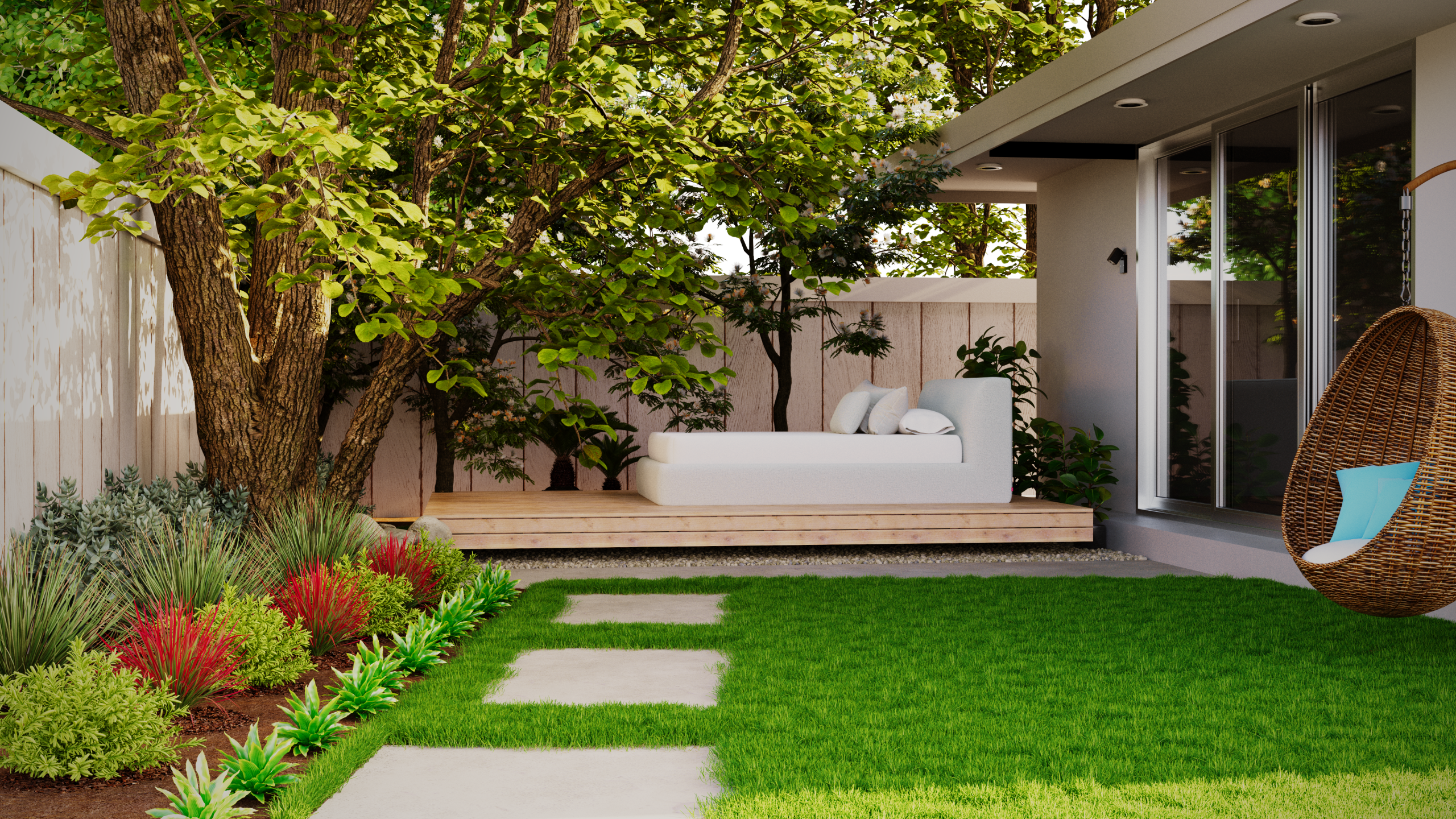
You don’t need a custom-built deck to get this vibe. A similar look can be achieved on a much tighter budget. Check IKEA for their modular outdoor flooring tiles (like RUNNEN), which you can lay yourself over a level surface for around $3-$4 per square foot. For the seating, a simple white outdoor sectional from Target or Walmart paired with a few large outdoor pillows can create the daybed feel for under $800. The key is sticking to the clean white and light wood palette.
9. Tiled Patio with Wicker Furniture and a Translucent Roof
Here’s the recipe for this casual, European-inspired look: 40% bold pattern (the floor tiles) + 40% natural texture (wicker, wood beams, brick) + 20% solid color pop (the blue cushions). The patterned floor is the star of the show. By keeping the furniture and walls in earthy, neutral tones, the tiles get the attention they deserve without overwhelming the space. The solid blue cushions provide a necessary point of visual relief, preventing the scene from becoming too busy with competing textures.
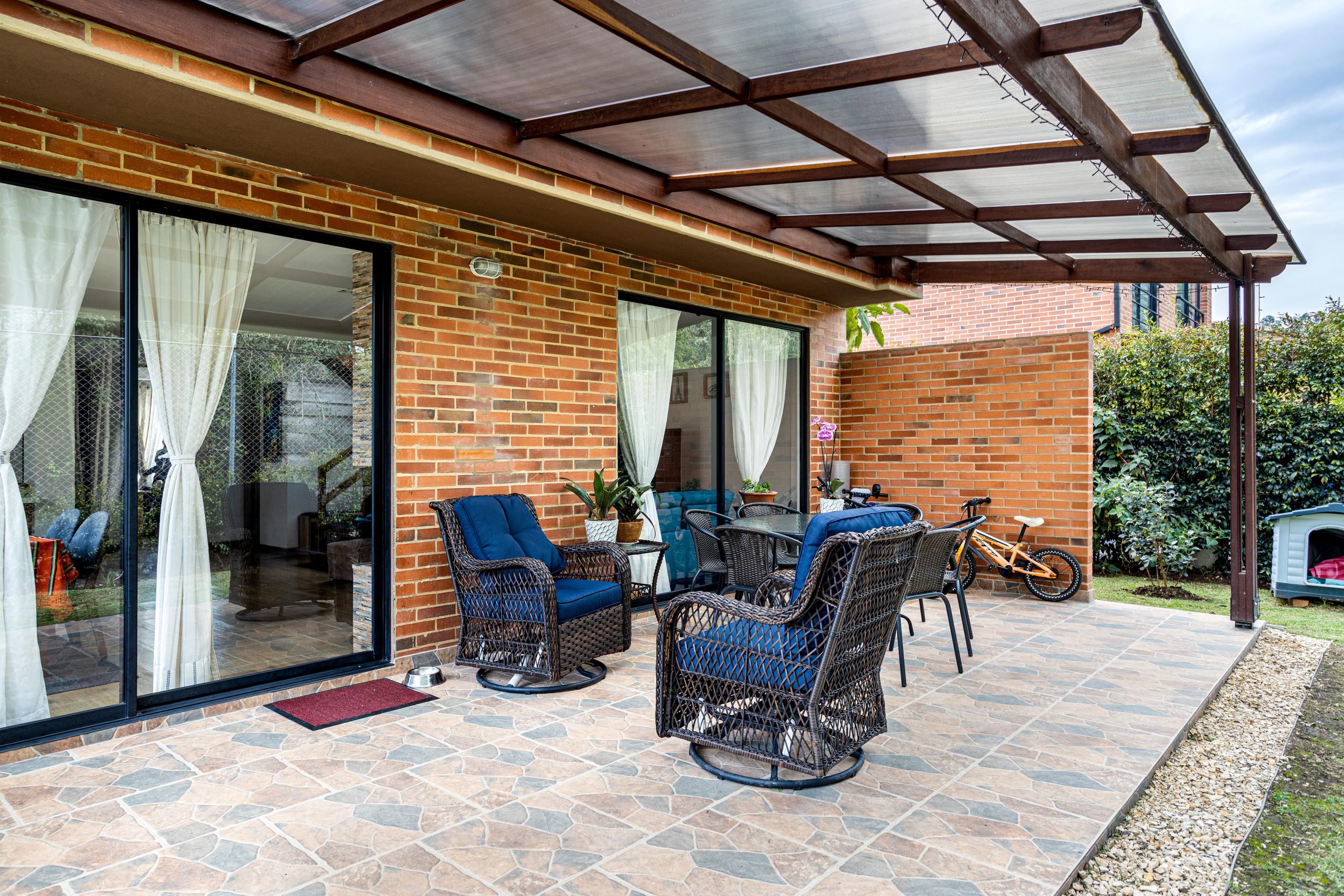
A translucent roof is fantastic for providing protection from rain while still letting in light, but it is not a maintenance-free choice. Polycarbonate or acrylic panels will collect dirt, leaves, and bird droppings, requiring a good scrub at least twice a year to stay clear and bright. They are also prone to scratching from falling branches and can discolor or become brittle over a decade or so, eventually needing replacement. That beautiful patterned tile floor can also be tricky; dirt loves to settle in the grout lines, so regular sweeping and occasional deep cleaning will be necessary.
10. Choosing Your Ideal Backyard Patio Fire Pit
When deciding between a wood and a gas fire pit, the romance of a crackling fire often clashes with the reality of daily use. Wood fires require effort: you have to buy or chop the wood, store it somewhere dry, build the fire, tend to it, and then safely extinguish it. And then there’s the smoke, which can be a major annoyance depending on the wind direction and proximity to your neighbors’ open windows. Be honest about whether you’ll consistently put in that work.
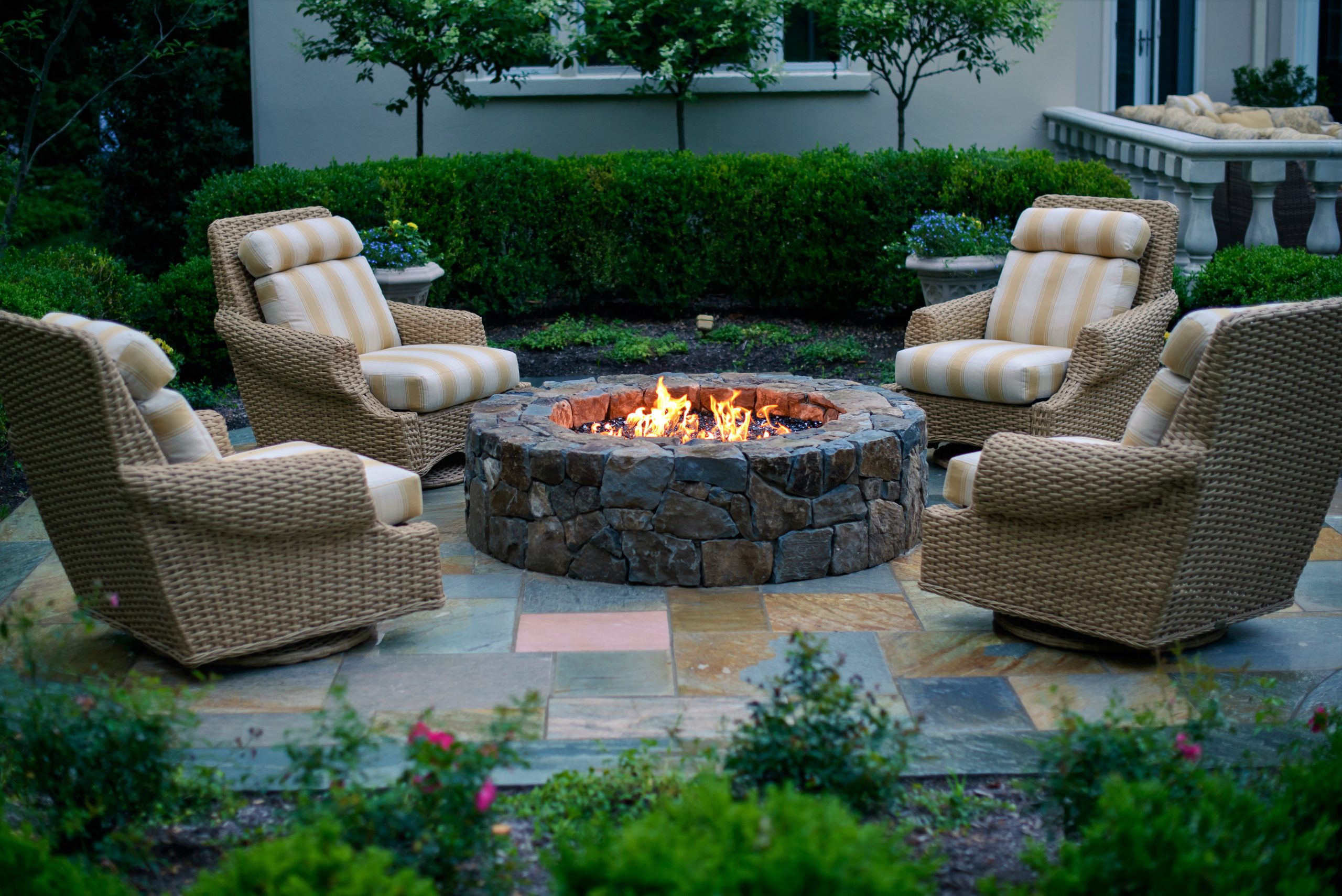
Gas fire pits win on convenience, hands down. A flick of a switch and you have instant ambiance with no smoke or cleanup. If you want a fire pit you’ll actually use on a regular weeknight, gas is almost always the better choice. For a professionally installed gas line, budget between $500 and $2,000 depending on the distance from your main gas supply. If that’s not feasible, a propane tank model offers similar convenience, just remember you’ll need to refill and hide the tank.
11. Cozy Stone Fire Pit Nook with Wicker Armchairs
It’s the stone pillars. Take them away, and you have a nice patio. But with them, you have an *entrance*. They create a distinct threshold, psychologically separating the cozy fire pit area from the rest of the yard. This simple architectural element adds a sense of arrival and enclosure, making the space feel more like a dedicated room. The lanterns on top are the perfect finishing touch, adding to the welcoming, intentional feel of this outdoor nook.
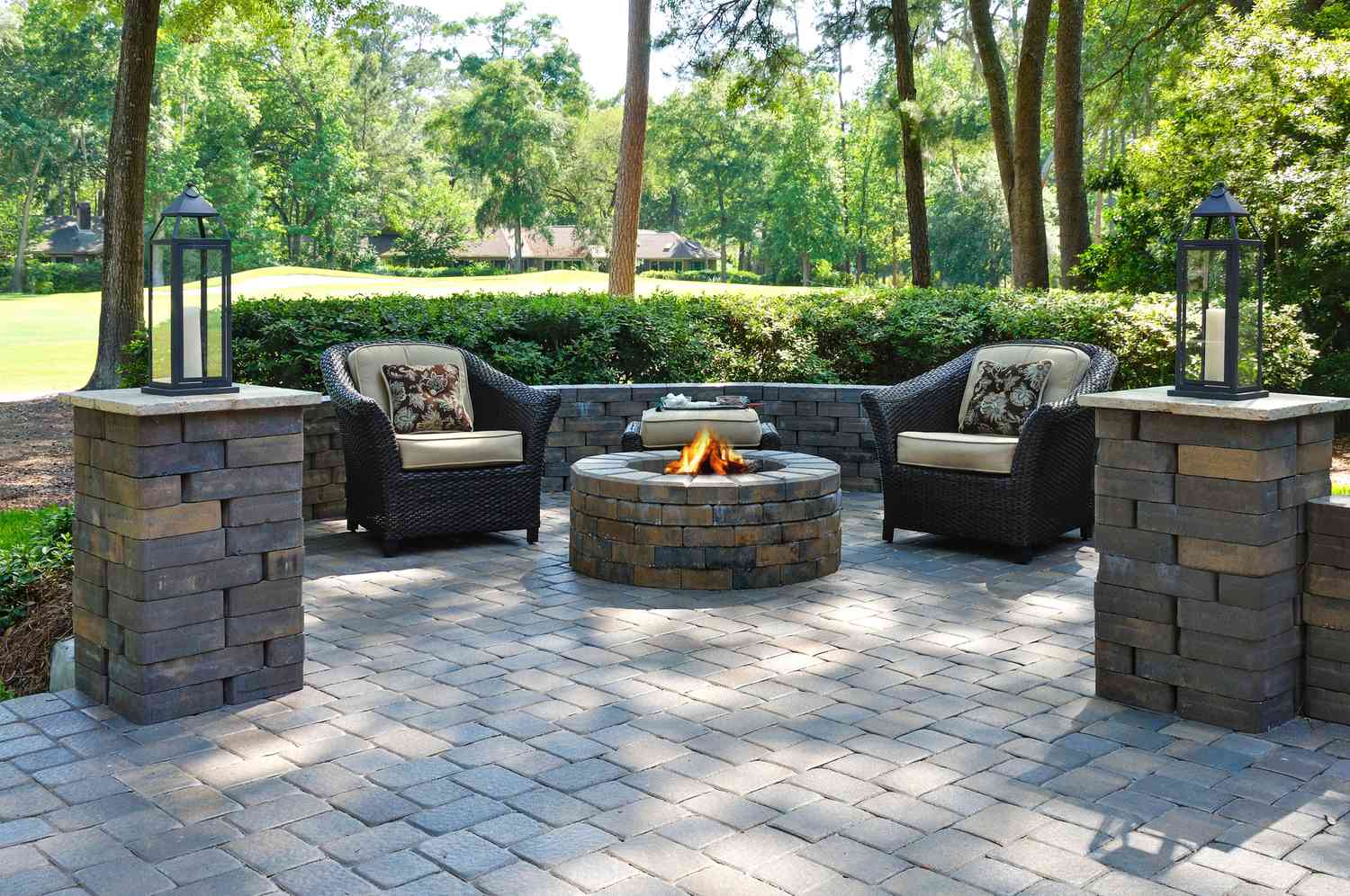
This space feels so inviting because it nails the principle of enclosure. The low stone wall at the back and the tall pillars at the front create a semi-enclosed space that feels protected and intimate, without being fully walled off from the surrounding nature. The circular arrangement of the fire pit and chairs further enhances this effect, encouraging conversation and drawing people together. It’s a perfect example of how to create a sense of cozy sanctuary in an open backyard.
12. Circular Paver Patio with Four Adirondack Chairs
This is a fantastic, scalable design that works well in small to medium-sized yards. For this exact look with four chairs and comfortable spacing, you’ll want a circular patio with a diameter of at least 12-14 feet. This allows for the fire pit in the center, about 3 feet of clearance around it for safety and legroom, and enough space for the chairs themselves. Anything smaller than 10 feet in diameter will start to feel cramped for a group of four.
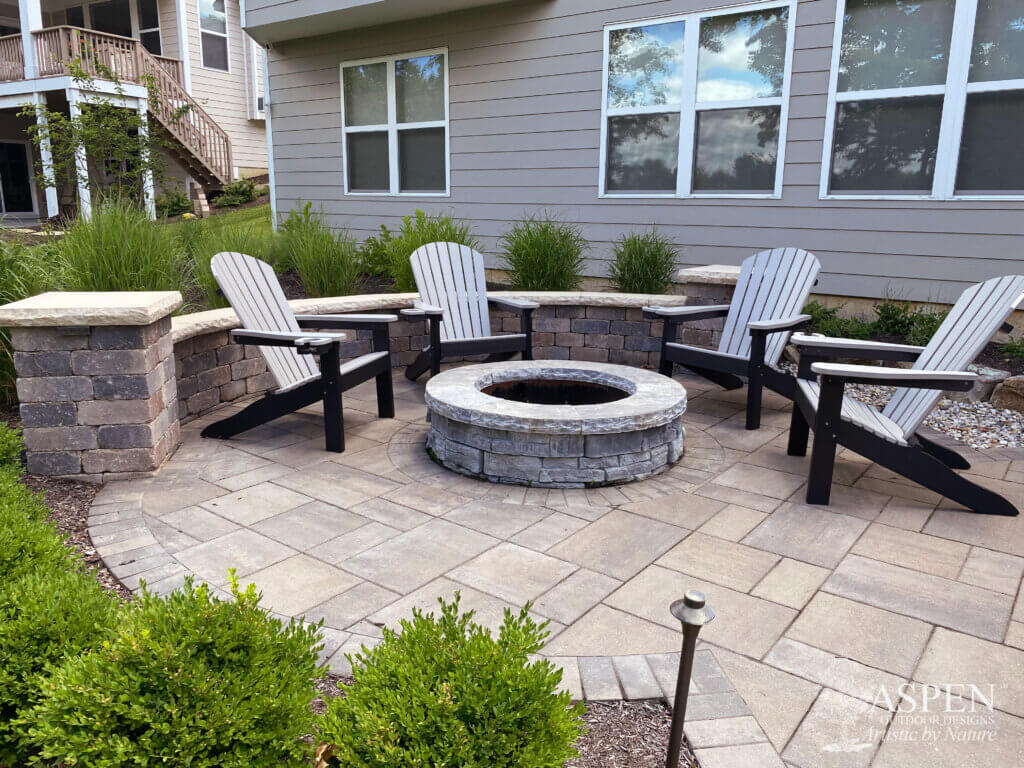
You can get this classic campfire vibe for a fraction of the cost of custom masonry. Start with a simple metal fire bowl from a big-box store like Home Depot or Lowe’s ($100-$300). Surround it with four classic plastic Adirondack chairs from Walmart or Target—they come in great colors and are super durable ($25-$50 each). Instead of a full paver patio, you can create a similar circular zone using affordable pea gravel or mulch bordered by a simple landscape edging.
13. Rustic Gravel Patio with a White Sofa
Let’s talk about the reality of a gravel patio. It looks effortlessly charming and is budget-friendly to install, but it’s not a set-it-and-forget-it surface. Gravel migrates, so you’ll be raking it back into place, especially around chair legs. Leaves and debris get mixed in and can be a pain to rake out cleanly. And weeds will eventually find their way through. A high-quality landscape fabric underneath is non-negotiable to keep them at bay. Also, that beautiful white sofa will need vigilant covering to protect it from dirt, dust, and bird droppings in such an open, natural setting.
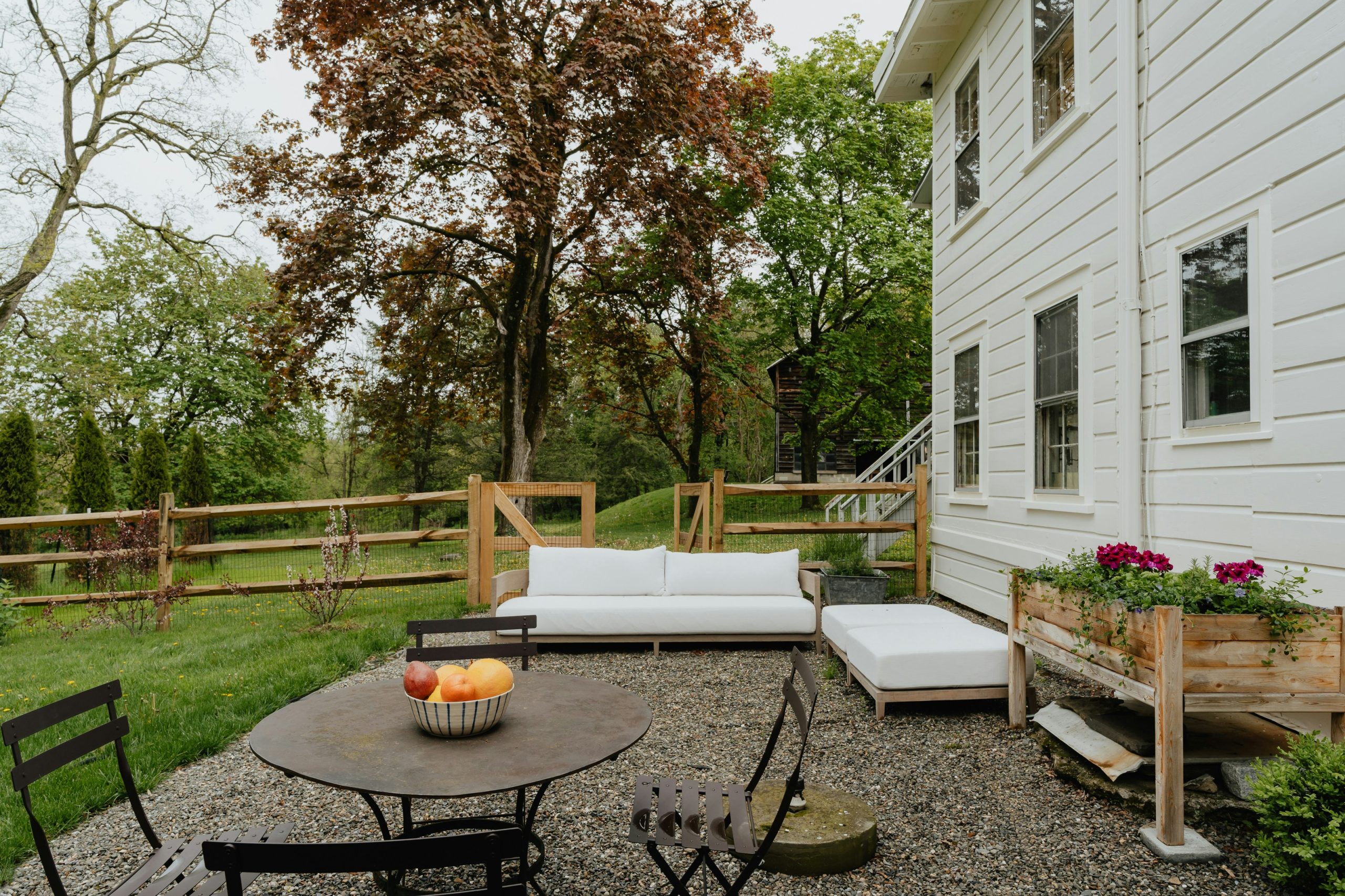
This look is a direct descendant of the ‘Modern Farmhouse’ trend that has dominated for years, but with a more relaxed, rustic European twist. The combination of clean white furniture against a more rugged, natural base of gravel and a simple wood fence speaks to a desire for spaces that feel both stylish and unpretentious. It’s less about perfection and more about comfort and a connection to the outdoors. It feels less like a formal patio and more like a discovered corner of a country garden. As a budget-friendly option compared to the paver look of Idea #4, its appeal is obvious.
14. Creating an Inviting Outdoor Fire Pit Space
The enduring appeal of a fire pit comes down to a primal sense of gathering. A central fire creates a natural focal point that draws people in and encourages face-to-face interaction. The circular or semi-circular seating arrangements that typically surround fire pits are inherently communal, fostering conversation in a way that a linear sofa arrangement cannot. The warm, flickering light is also incredibly flattering and creates an intimate, cozy atmosphere that no electric lamp can truly replicate.
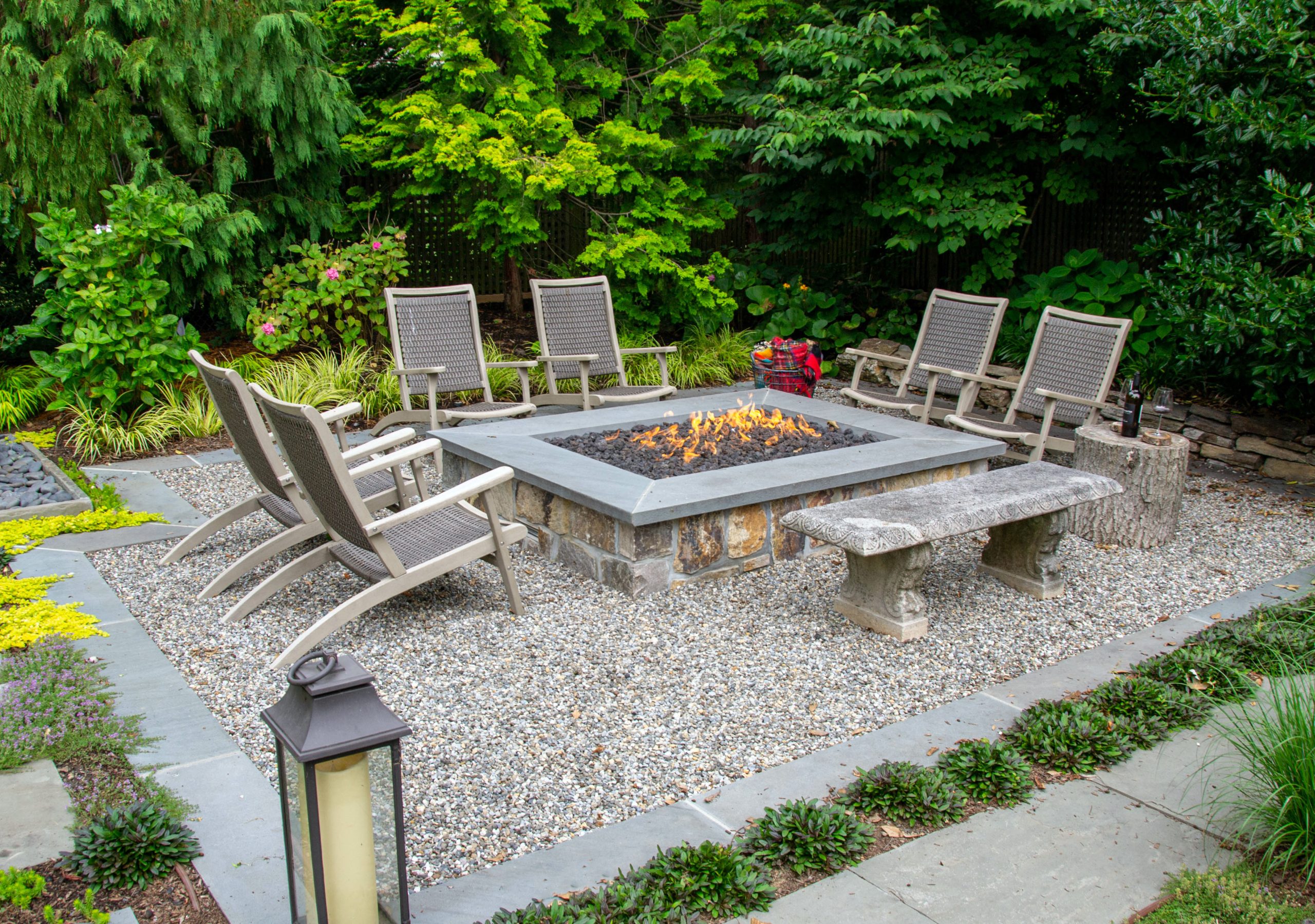
The key to a comfortable fire pit seating area is spacing. You need a “clearance zone” of at least 30-36 inches between the edge of the fire pit and the front of your chairs. This provides enough room for people to walk by without getting too close to the heat and gives everyone ample legroom. For wood-burning pits, extend that to at least 7-10 feet of clearance from any flammable structures, including your house siding, fences, or low-hanging branches.
15. Circular Paver Patio with Woven Sofas and a Guarded Fire Pit
It’s the glass wind guard. This simple addition completely elevates the fire pit. Functionally, it’s brilliant—it keeps the flame steady and upright on breezy evenings and prevents flickering embers from flying out. Aesthetically, it adds a touch of modern sophistication. The clear glass contains the raw flame, creating a beautiful contrast between the wildness of the fire and the crisp, clean enclosure. It makes the entire feature look more polished, expensive, and thoughtful. This feels very different from the open flame in Idea #16.
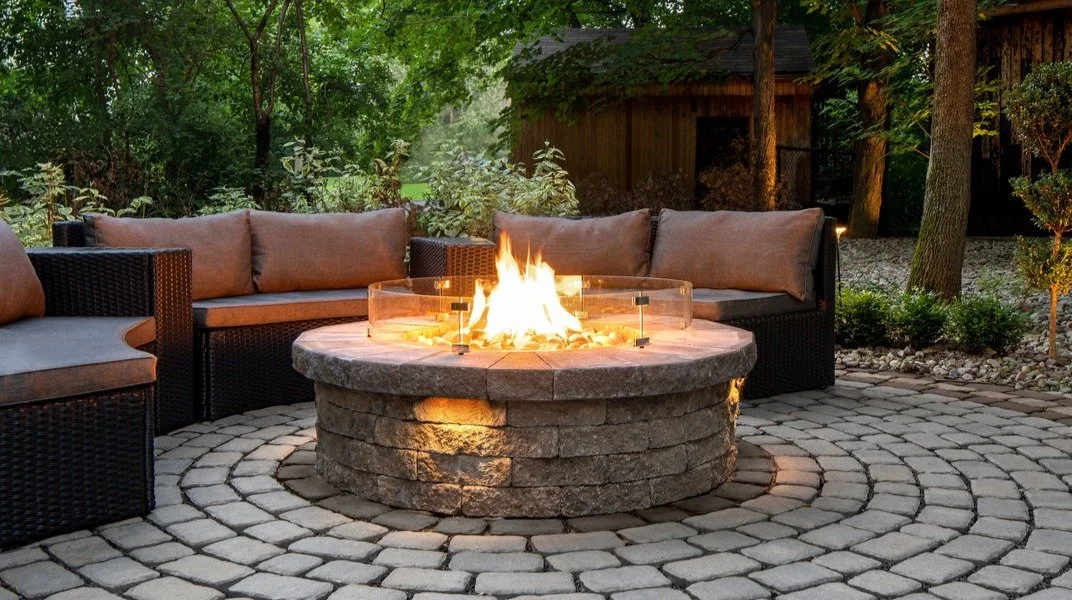
Deep, comfy outdoor sofas like these are pure bliss for lounging, but they are massive water sponges. Even with performance fabrics, a heavy downpour will saturate the thick cushions, and they can take days to dry out completely, risking mildew. You absolutely must have a plan for them. Either invest in high-quality, custom-fit waterproof covers that you use diligently, or ensure you have a nearby waterproof deck box or shed to store them in when not in use.
16. Round Patio with Slatted Chairs and a Stone Wall
The visual formula here is a study in contrasting forms: 80% geometric shapes + 20% organic softness. The design is dominated by strong geometry: the square patio tiles, the circular border and fire pit, the rectangular slatted chairs. What keeps it from feeling sterile is the 20% of softness provided by the curved stone wall and the overflowing, vibrant flowers in the planters. This balance of hard lines and soft, natural elements makes the space feel both modern and welcoming.
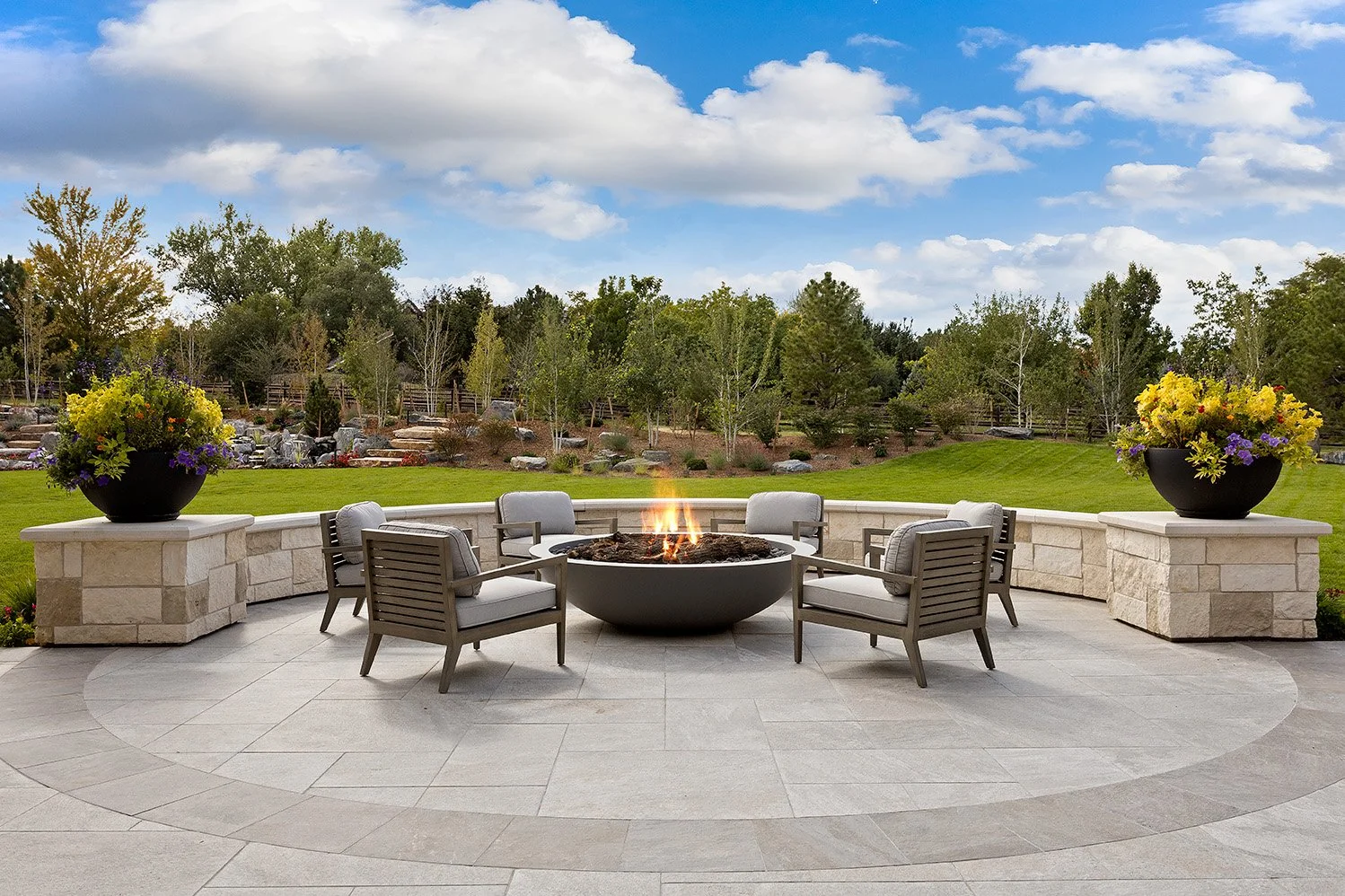
What makes this work is the clever use of enclosure and focal point. The semi-circular stone wall creates a sense of an outdoor room, giving the seating area a clear boundary and a cozy, protected feeling. It directs the eye inward, right to the main event: the dark, bowl-shaped fire pit. By making the fire pit a contrasting dark gray, it immediately becomes the undisputed focal point of the entire composition, anchoring the seating arrangement and giving the space a clear purpose.
17. Modern Outdoor Kitchen and Lounge with a Rectangular Fire Pit
That gorgeous cream-colored, textured kitchen island front is a showstopper, but it’s also a magnet for scuffs, splashes, and dirt. The area near the ground will get kicked by barstool-sitters, and the section near the grill is prime territory for grease splatters. This will require more than a quick wipe-down. Plan on gentle but regular scrubbing with a soft brush and a mild cleanser to keep it looking pristine. Likewise, the light gray grout on the patio floor will need periodic deep cleaning to prevent it from looking dingy over time.
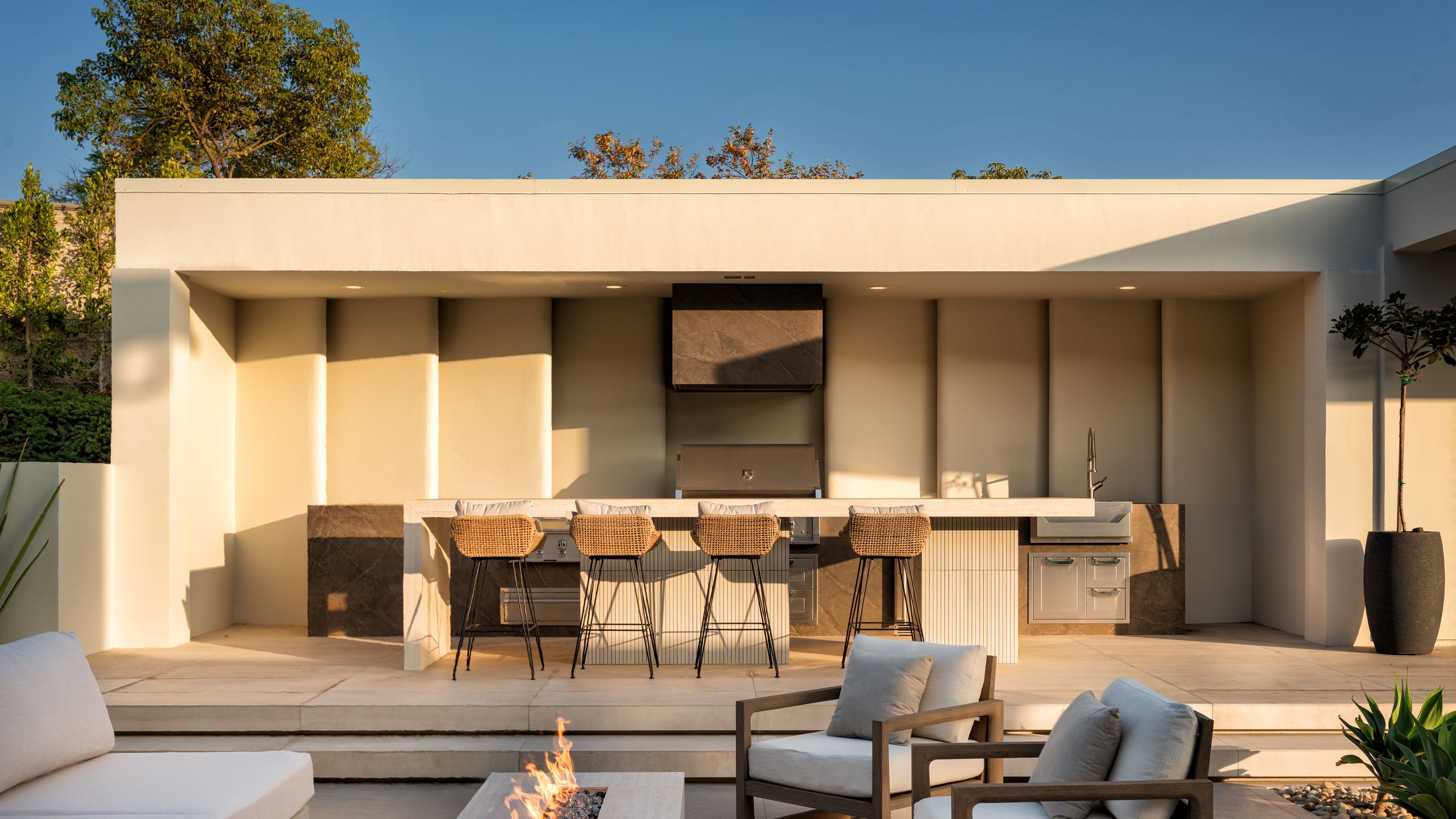
When designing an outdoor kitchen, think about workflow just like you would indoors. Create a functional triangle between your ‘hot zone’ (the grill), your ‘cold zone’ (the refrigerator or cooler), and your ‘wet zone’ (the sink). You want them to be close enough for convenience but with enough counter space in between for prep and plating. Here, the grill, sink, and counter space are well-integrated, making it a truly functional cooking area, not just a place to park a grill.
18. Modern Patio with Integrated Concrete Bench and Fire Pit
A built-in concrete bench is a major commitment. Before you pour, make sure you’ve checked these boxes:
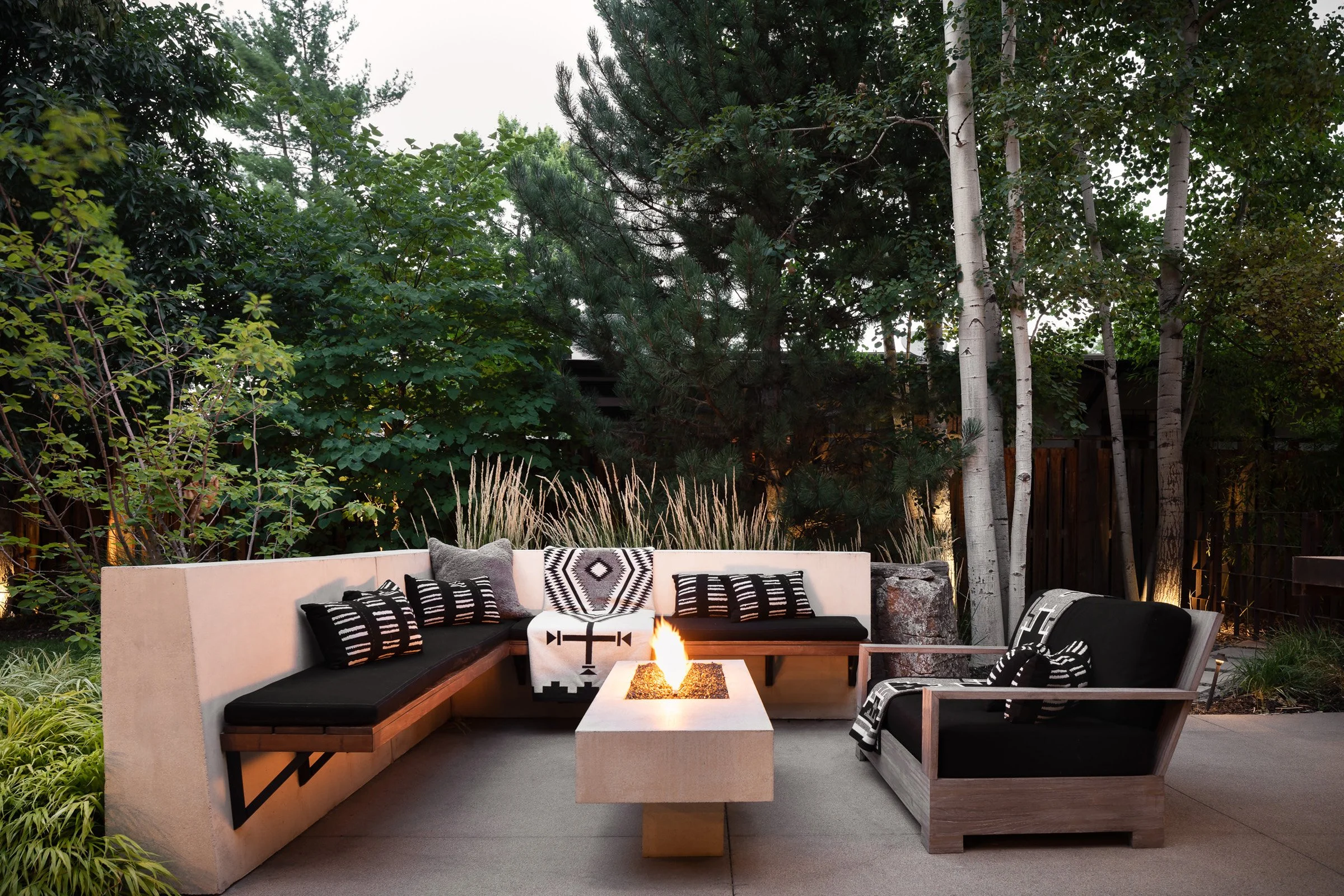
- Sun Path Analysis: Have you sat in this exact spot at different times of the day? A bench that’s in blistering sun from noon to 4 PM won’t get used. Track the sun’s path for a full day before finalizing the location.
- Ergonomics Check: Is the seat height and depth comfortable for you? The standard is 16-18 inches high and 20-24 inches deep. Build a temporary mockup with cinder blocks to test it out.
- Drainage Plan: Concrete is permanent. Ensure the bench and surrounding patio are graded properly to direct water away from your home’s foundation. A slight slope (1/4 inch per foot) is essential.
- Lighting and Power: Do you want integrated lighting under the bench or an outlet nearby? Plan the conduit and wiring *before* the concrete is poured.
The hero of this design is the mixed-material approach to the seating. It’s not just a cold, hard concrete bench. The integration of the warm, wooden platforms completely transforms it. This detail adds visual warmth, breaks up the monolithic concrete, provides a more comfortable seating surface, and introduces a sophisticated, custom-designed feel. Without the wood, the bench is purely functional; with it, it becomes a piece of architectural art.
19. Cozy Deck Lounge with Privacy Plants and Pergola
A retractable fabric pergola cover is a fantastic, flexible solution for shade, but it’s not a storm-proof roof. You absolutely must retract it in high winds or heavy rain. A strong gust can catch it like a sail, potentially damaging the fabric or even bending the pergola structure itself. They also require occasional cleaning to remove mildew and dirt, and the fabric will eventually need to be replaced after 8-12 years of sun exposure, which can be a significant cost.
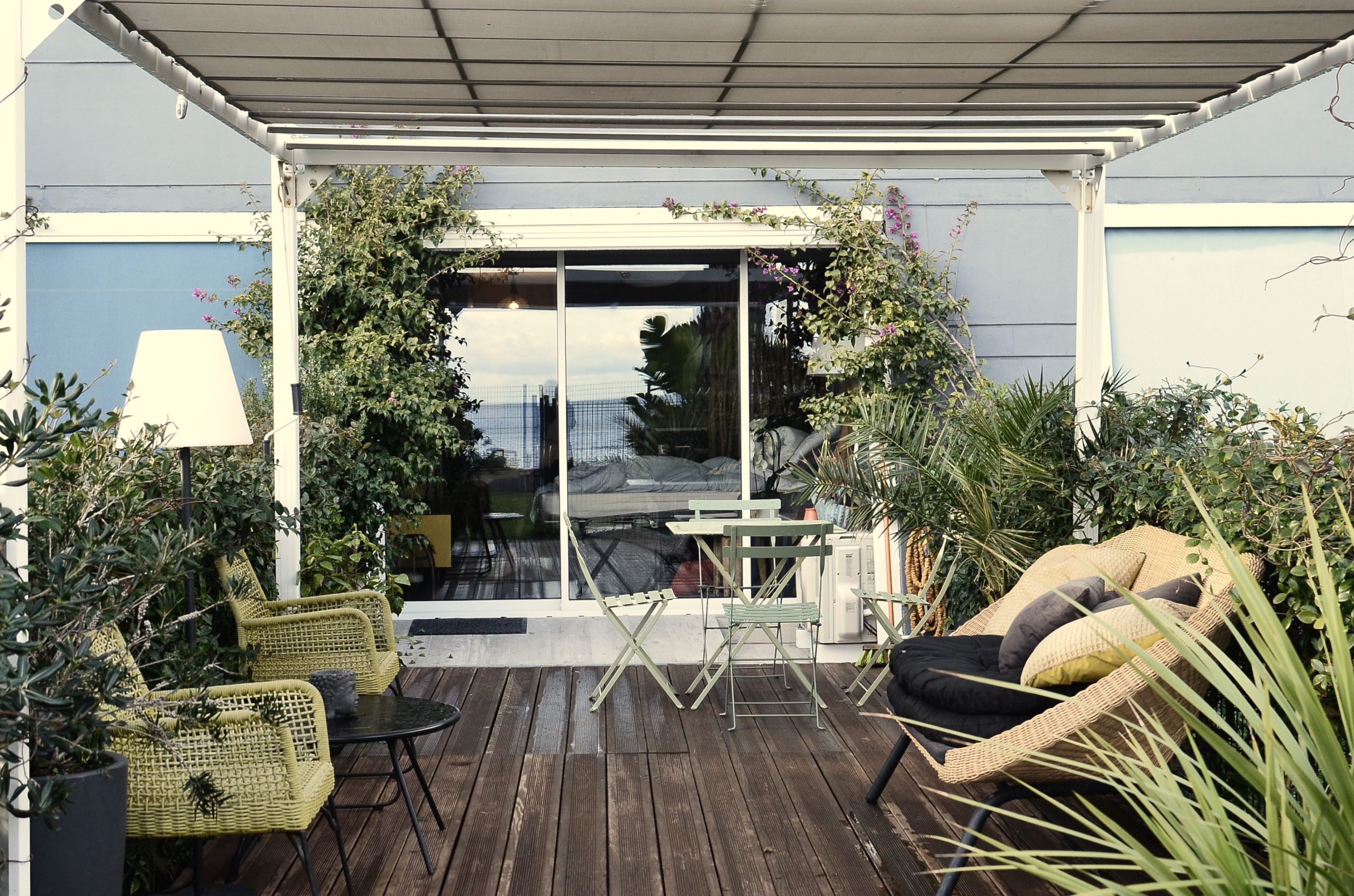
This little patio feels like a secret garden oasis because of its brilliant use of vertical layering for privacy. Instead of just one big fence, the design uses multiple layers: a solid wall at the back, a mid-layer of lush, dense potted plants, and the overhead plane of the pergola. This layered approach creates a rich, textured sense of enclosure that feels cozy and secluded, not boxed-in or claustrophobic. It makes the space feel intentionally designed and deeply personal.
20. Stone Patio with Built-In Seating and Overhead String Lights
The cost here is primarily in the custom stone and masonry work, which requires skilled labor. String lights and pillows are the affordable finishing touches.
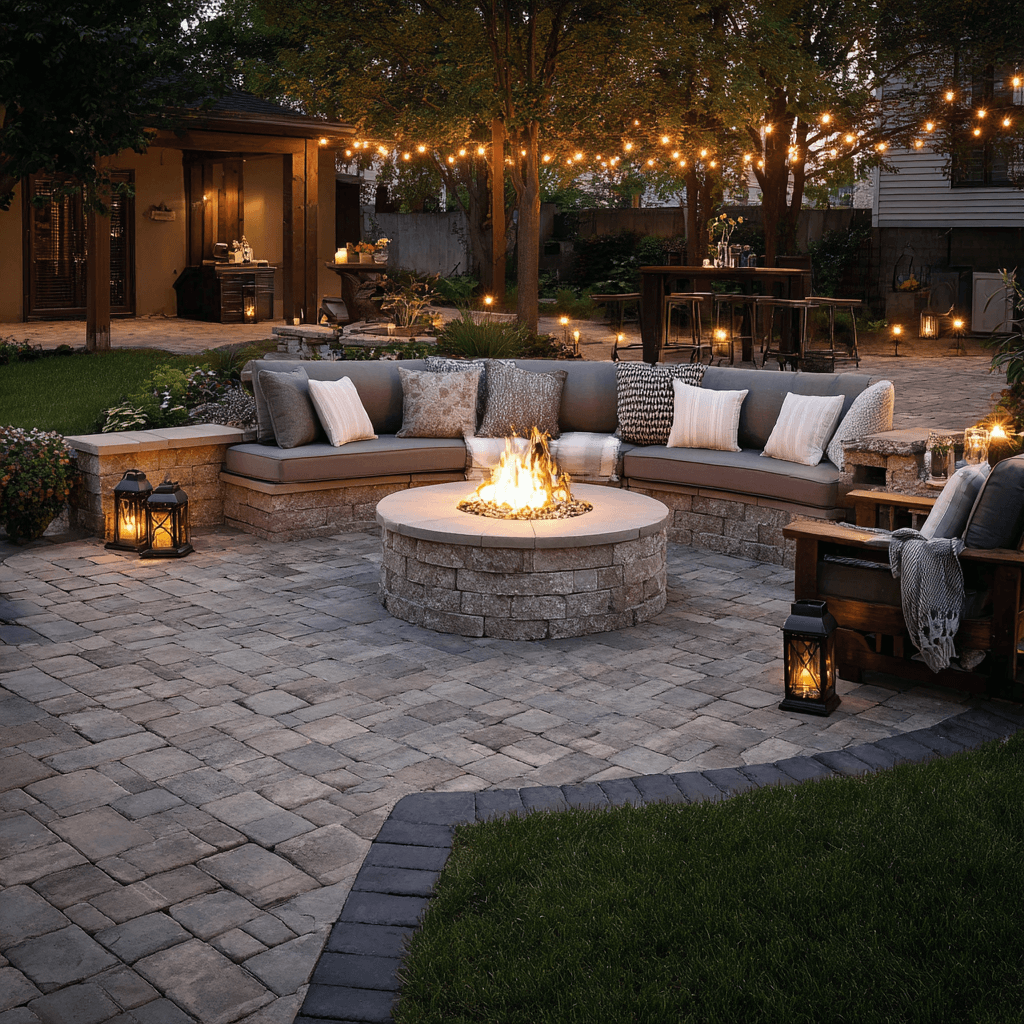
- L-Shaped Built-in Stone Bench: $7,000 – $15,000 (depending on length and stone type)
- Stone Paver Patio Installation: $15 – $30 per sq. ft. (a 20×20 ft patio = $6,000 – $12,000)
- Circular Stone Fire Pit: $2,500 – $6,000
- High-Quality Cushions & Pillows: $1,000 – $2,500
- Commercial-Grade String Lights & Lanterns: $500 – $1,200
- TOTAL: $17,000 – $36,700
This design is ideal for a medium to large backyard, requiring a space of at least 18×18 feet to feel comfortable and not cramped. The L-shaped bench needs substantial room to function as the primary seating, and the central fire pit requires safe clearance on all sides. For smaller patios, a similar vibe can be achieved by swapping the built-in bench for a more compact L-shaped outdoor sectional sofa and using a smaller, portable fire pit. See Idea #25 for a version without the built-ins.
21. Fire Pit Patio with Pergola and Outdoor Kitchen
When planning a pergola near a fire pit, always prioritize safety and material choice. If you opt for a wood pergola like this one, ensure it’s positioned at least 10-12 feet away from a wood-burning fire pit to prevent stray embers from becoming a fire hazard. For gas fire pits, wind direction is more of a concern for comfort. Consider treating the wood with a fire retardant for extra peace of mind. Alternatively, aluminum or vinyl pergolas are non-combustible options that offer a similar look with less risk.
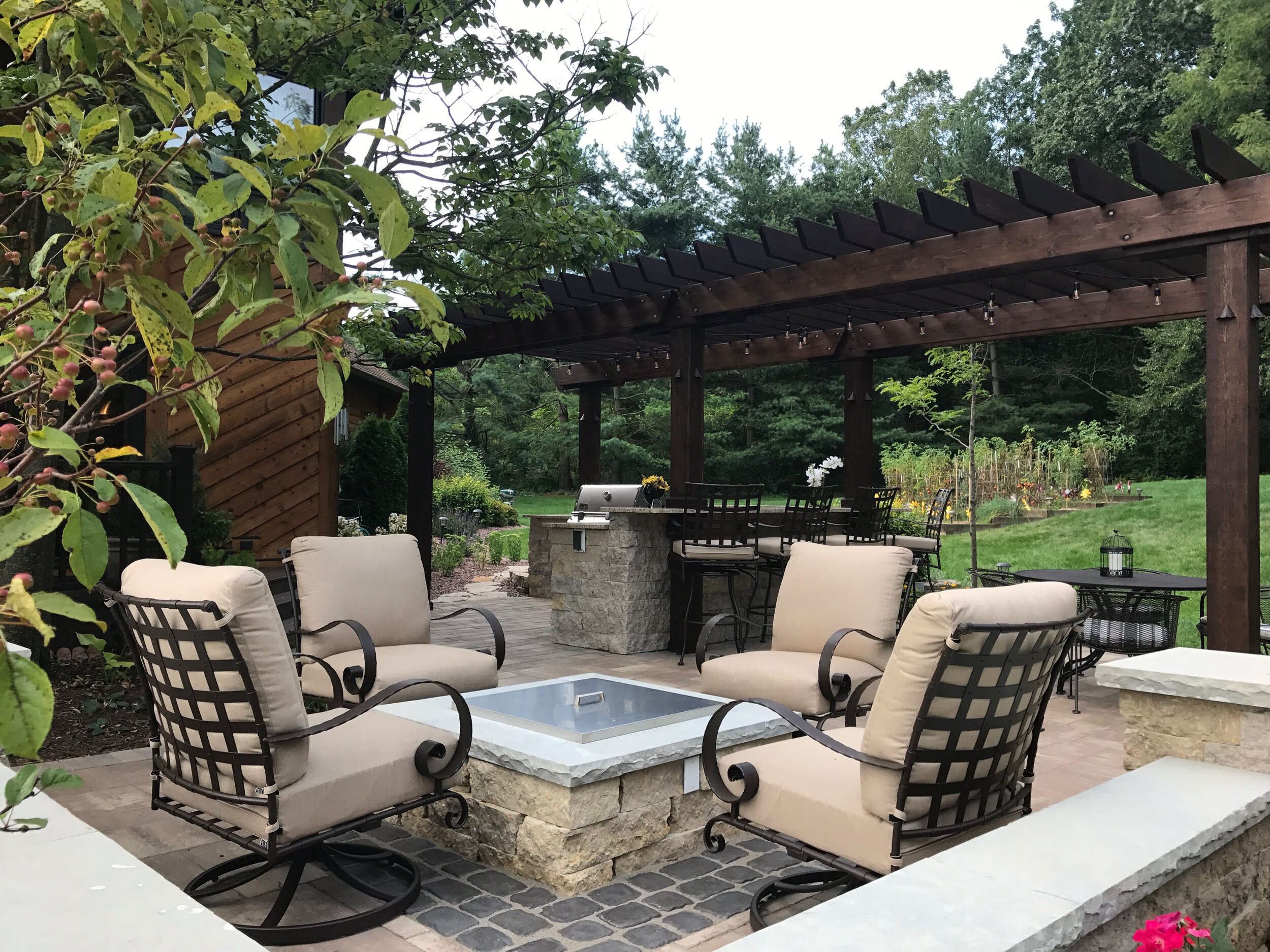
This pleasingly balanced design follows a simple formula: 60% open space + 40% covered space. The fire pit and lounge chairs sit in the open-air portion, perfect for stargazing, while the kitchen and bar are tucked under the pergola, providing shelter from sun and light rain. The material palette keeps it simple: 50% warm tones (wood, stone, upholstery) and 50% cool tones (pavers, stainless steel), creating a look that is neither too rustic nor too sterile.
22. Flagstone Patio with a River Stone Fire Pit
The standout feature here is the texture of the flagstone patio. The irregular shapes and varied gray tones of the stones create a natural, organic feeling that you simply can’t get with uniform pavers or concrete. It feels settled, as if it has been part of the landscape for years. This rustic, slightly imperfect surface is the perfect foundation for the relaxed wicker chairs and stone fire pit, grounding the entire design with an earthy, authentic charm. Compare the feel of this floor to the large, modern pavers in Idea #27.
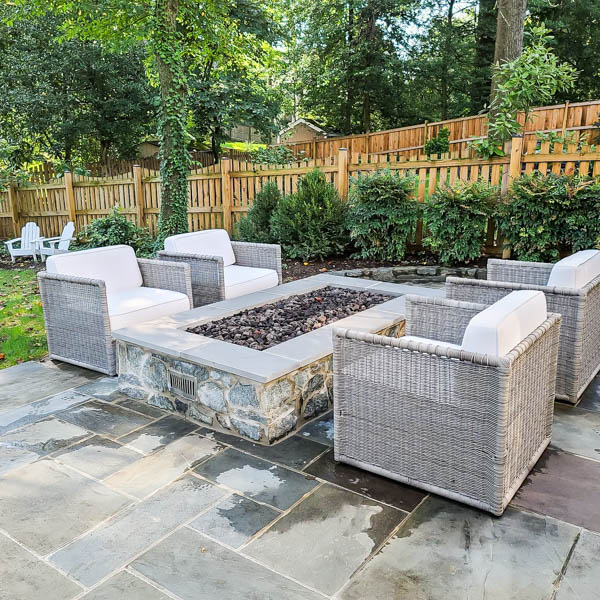
A professionally laid flagstone patio can be pricey. For a similar look on a budget, consider using concrete flagstone molds, which you can find at any hardware store. You mix bags of concrete, pour them into the molds right in place, and create a custom-fit puzzle of pavers for a few hundred dollars. It’s labor-intensive but can save you thousands. For seating, scour Facebook Marketplace for a set of four used wicker chairs—a fresh coat of spray paint and some new cushions from Target can make them look brand new.
23. Modern Wood Deck with White Cushions and Botanical Pillows
This design is so successful because it perfectly balances warm and cool tones, soft and hard textures. The light, warm wood of the furniture and deck provides a natural, inviting base. This is contrasted by the cool, dark tones of the shingled wall and black window frames, which add depth and a touch of modern drama. Finally, the soft white cushions and the vibrant green of the plants and pillows cut through the neutrals, adding life and comfort. It’s a textbook example of creating a layered, sophisticated palette.
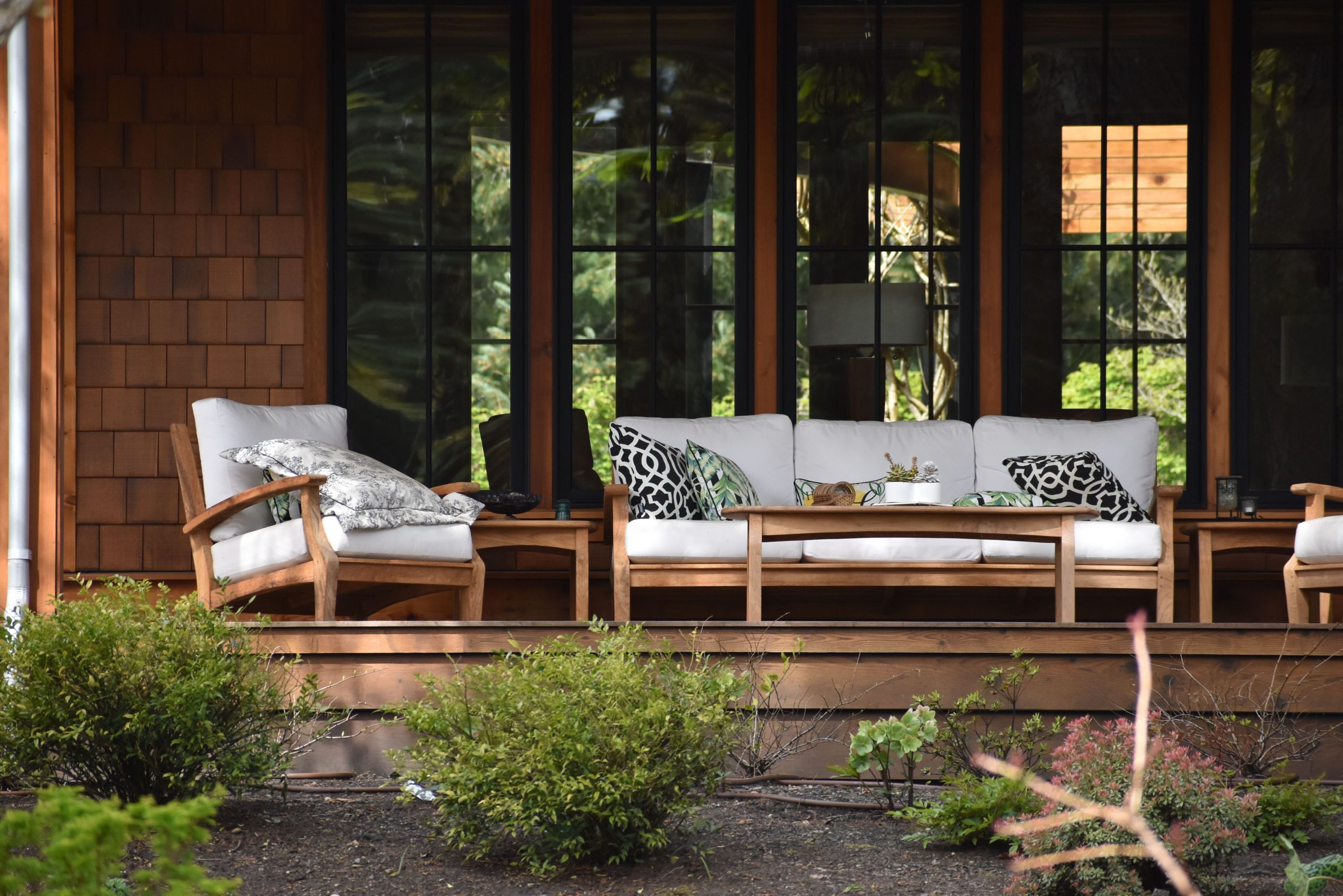
White outdoor cushions are undeniably chic, but they are a commitment. They will show every speck of dust, pollen, and every drop of spilled rosé. You must commit to using covers or bringing them inside when not in use. Even with stain-resistant fabric, they will require more frequent washing than their darker counterparts. Also, a natural light wood deck needs to be cleaned and re-sealed every 1-2 years to prevent it from weathering to a less desirable gray and to protect it from moisture and mildew.
24. Patio with Cascading Water Wall and Fire Pit
It’s the combination of fire and water. This is a classic, high-end design feature for a reason. Placing these two opposing elements in close proximity creates a powerful sensory experience. You get the warmth and crackle of the fire pit, which encourages gathering, combined with the soothing, ambient sound and movement of the cascading water. This duality turns a simple patio into a dynamic, resort-like environment that engages multiple senses at once and feels incredibly luxurious and serene.
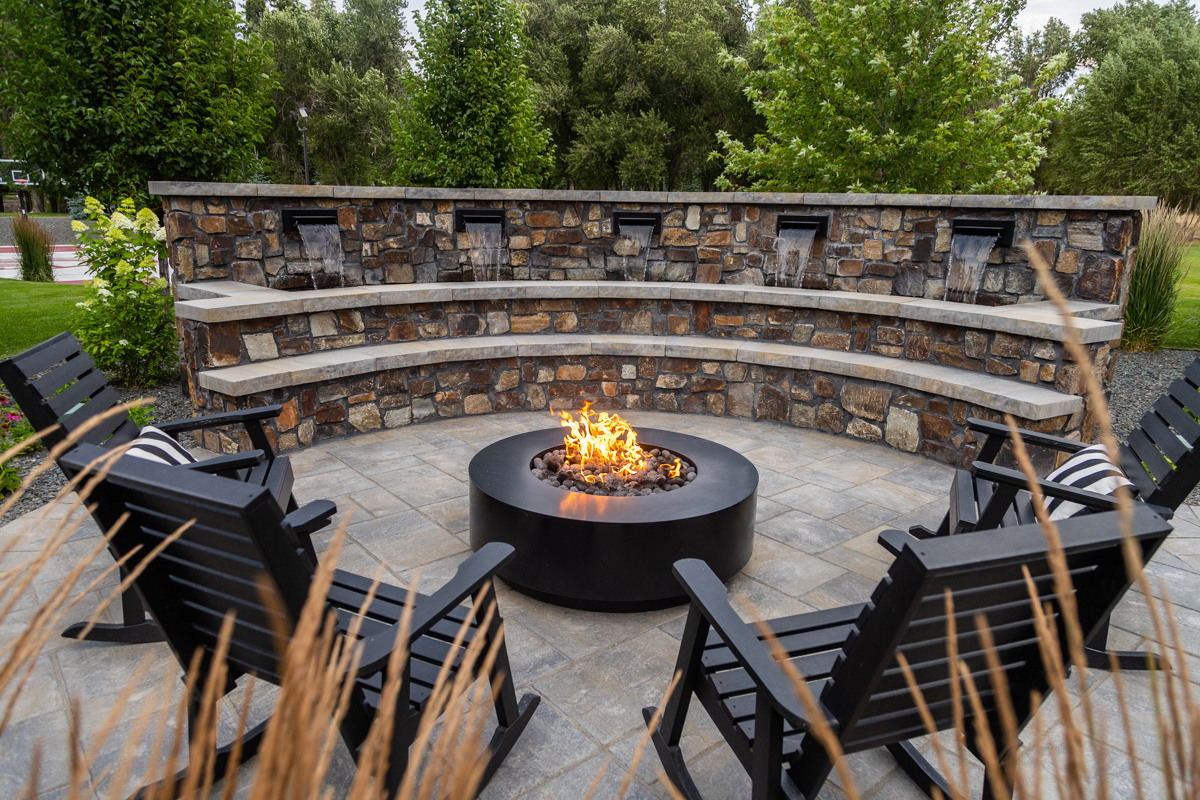
An integrated water feature in a stone wall is a stunning look, but it comes with significant practical considerations. The system requires a pump, filtration, and plumbing, all of which need regular maintenance to prevent clogs and algae growth. In colder climates, the entire system must be properly winterized to prevent pipes from freezing and cracking, which can lead to expensive repairs. It’s a feature that adds as much to your weekend to-do list as it does to your backyard’s ambiance.
25. Paver Patio with Woven Seating and Bamboo Accents
This patio captures the ‘Japandi’ design trend perfectly, even in an outdoor setting. It’s a hybrid of Japanese minimalism and Scandinavian functionalism. You can see the Japanese influence in the use of bamboo, the subtle landscape lighting, and the focus on natural textures. The Scandinavian side comes through in the clean lines of the furniture and the cozy, hygge-inducing arrangement around the fire pit. It’s a trend with staying power because it creates spaces that are both serene and deeply comfortable.
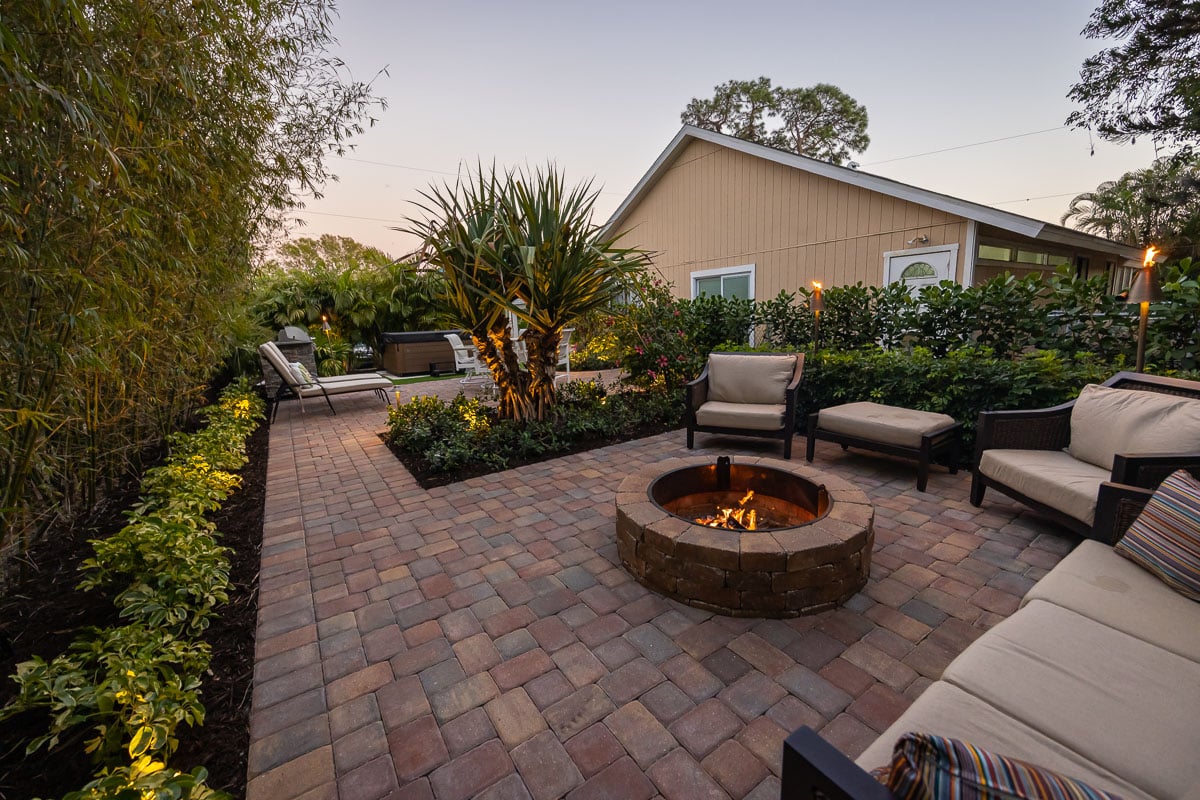
Outdoor lighting can make or break your patio’s evening vibe. The key to this look is using multiple, low-voltage light sources instead of one harsh overhead light. Use uplights to highlight interesting plant textures like the bamboo. Add path lights to safely illuminate walkways. And finally, ensure your fire feature itself provides a warm glow. The goal is to create layers of light—ambient, task, and accent—for a rich, welcoming atmosphere that’s also functional.
26. Circular Patio with Orange-Cushioned Chairs
This design’s power comes from a brave and simple formula: 90% monochrome + 10% bold color pop. The patio floor, retaining wall, furniture frames, and railing are all in shades of dark gray and black. This creates a dramatic, minimalist, and cohesive backdrop. Then, the bright orange cushions are introduced as a single, powerful accent. This high-contrast approach is confident and impactful. Without the orange, the space would be moody but might lack personality. With it, it becomes unforgettable.
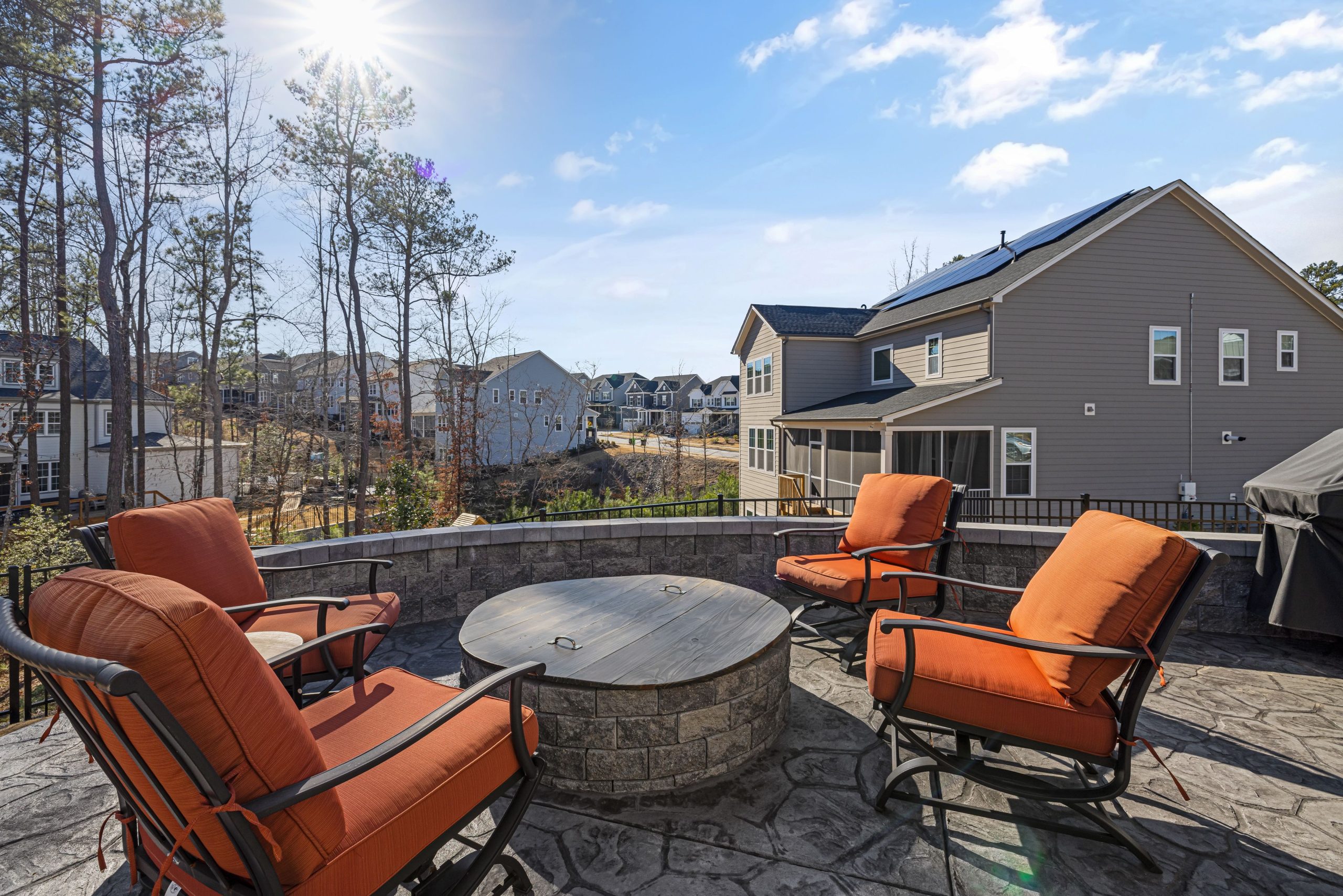
Stamped concrete can be a more affordable alternative to natural flagstone, but for a truly budget-friendly version of this, focus on the color story. You can create a simple circular patio with inexpensive gray pavers from a home improvement store (around $2-$4 per sq/ft). Find a set of four simple black metal chairs from a store like Target or on Facebook Marketplace. The real trick is investing in the most vibrant, high-quality outdoor cushions you can find. The pop of color is what sells the look.
27. Modern Patio with Bluestone Pavers and a Square Fire Pit
This design feels so calm and upscale because of its commitment to clean, horizontal lines. The large, rectangular bluestone pavers establish a strong linear pattern on the ground. This is echoed in the strong horizontal lines of the low stone wall and the charcoal gray cap on both the wall and the fire pit. Even the modern chairs have a low, horizontal profile. This repetition of lines creates a sense of order, stability, and peacefulness, making the space feel intentionally designed and uncluttered.
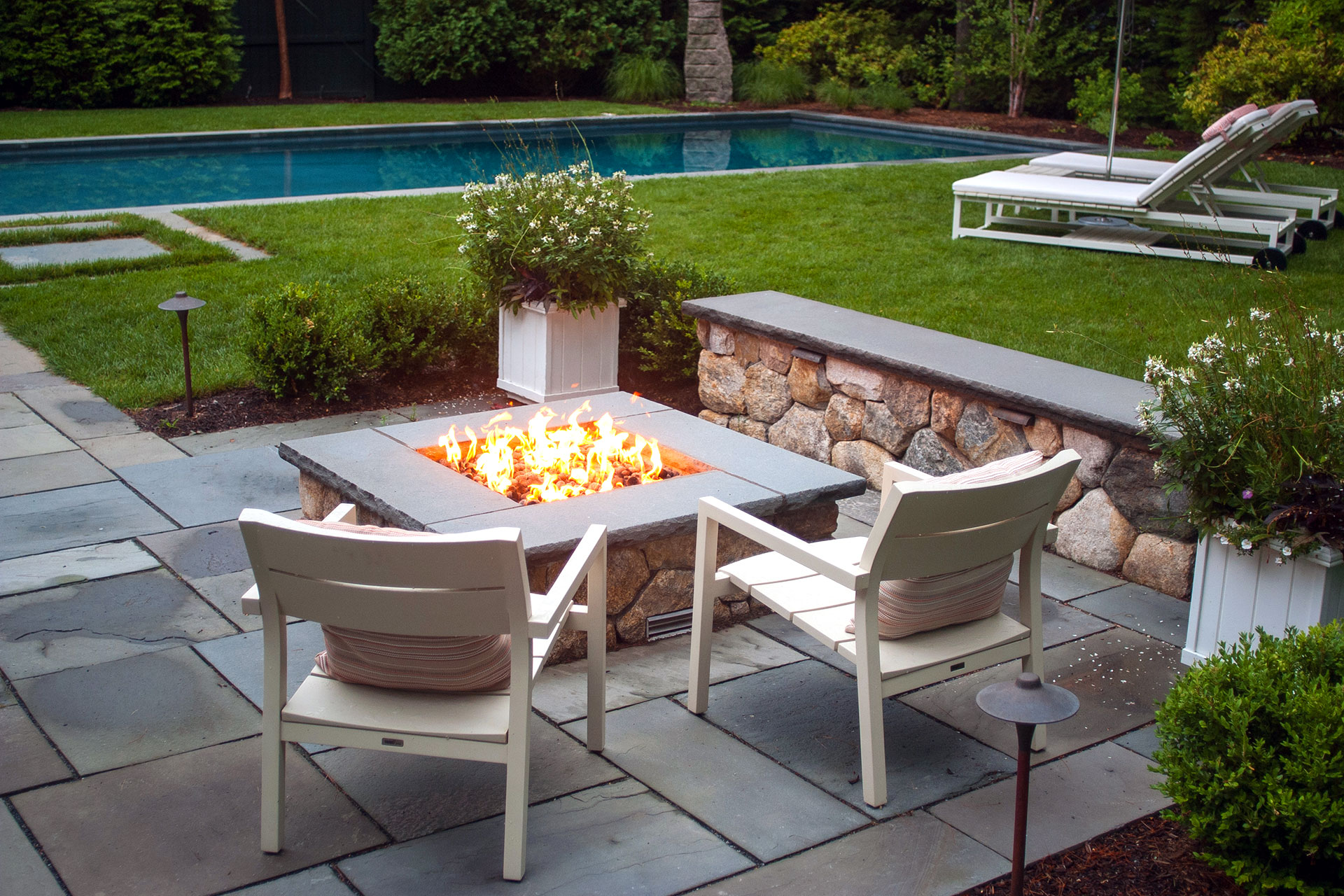
Large format pavers like these are perfect for making a small or medium-sized patio (150-300 sq. ft.) feel larger. Because there are fewer grout lines, the surface appears less busy and more expansive. The rectangular shape also helps to elongate the space visually. This technique is less effective in massive areas, where it can sometimes feel a bit like a commercial plaza. For a more intimate feel on a large patio, consider the flagstone used in Idea #22.
28. Brick Patio with Wrought Iron and a Bottle Chandelier
The single element that gives this patio its unique personality is the green glass bottle chandelier. The rest of the space—brick columns, iron furniture, tile floor—is classic and handsome, but could be found in many backyards. The chandelier, however, is a piece of folk art. It’s unexpected, whimsical, and signals that the people who live here don’t take themselves too seriously. It adds a memorable, conversational piece that is both a light source and a sculpture.
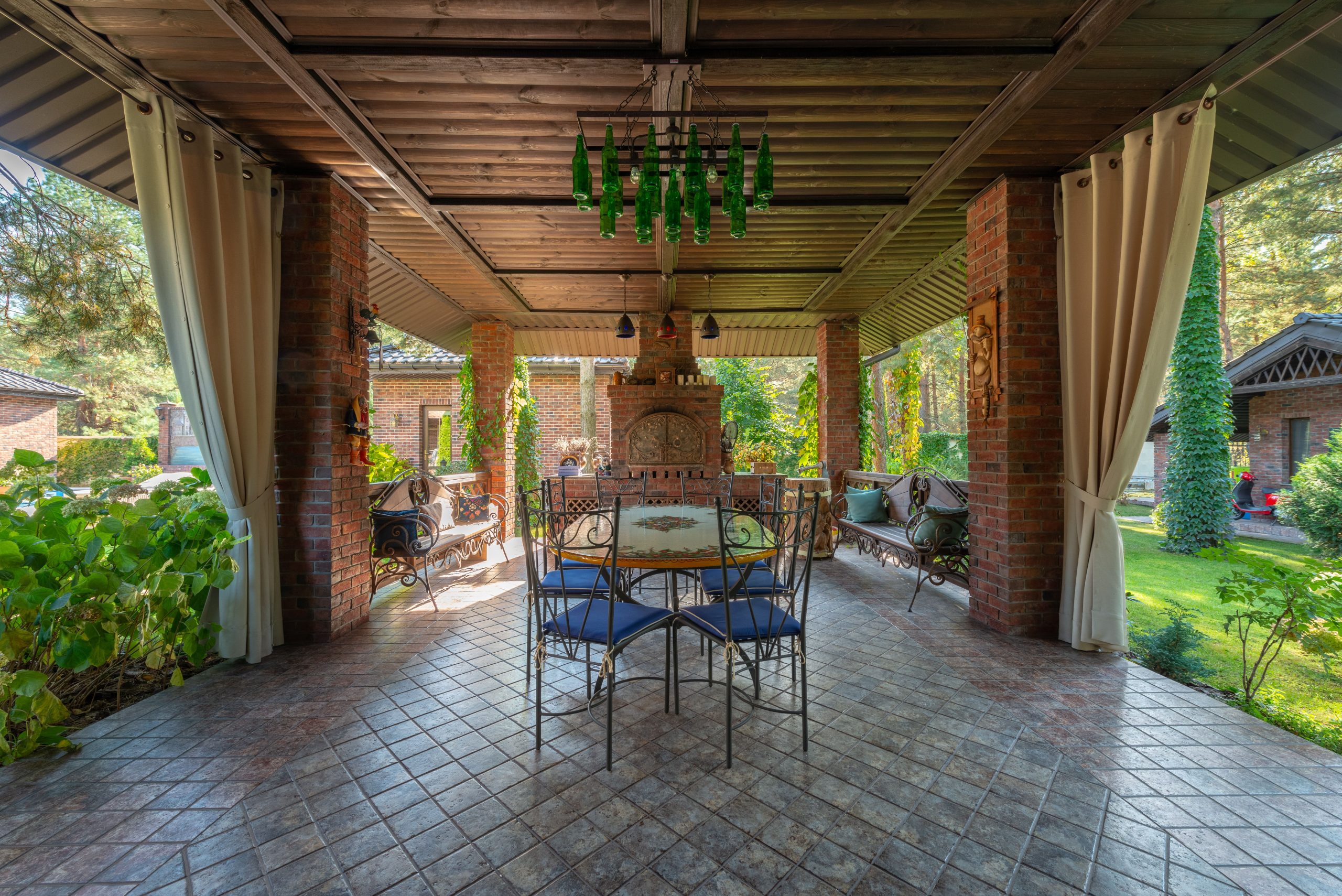
You can make a similar bottle chandelier yourself for a fun weekend project. Here’s a simplified approach:
- Time: 4-5 hours
- Cost: $75 – $150
- Step 1: Collect 10-12 interesting empty glass bottles (wine bottles work great). Clean them thoroughly and remove the labels.
- Step 2: Purchase a bottle-cutting kit and a string light set with individual sockets. Carefully score and cut the bottom off each bottle. Sand the edges smooth.
- Step 3: Find a base, like an old metal wagon wheel or a round wooden plank. Drill holes for your light cords to pass through.
- Step 4: Feed the light sockets through the base and then down into the neck of each bottle, securing the bottles in place. Hang securely and enjoy!
29. Rustic Flagstone Patio with Stacked Stone Fire Pit
This is a highly achievable, rustic look with costs that can vary widely based on whether you DIY the stonework or hire a mason.
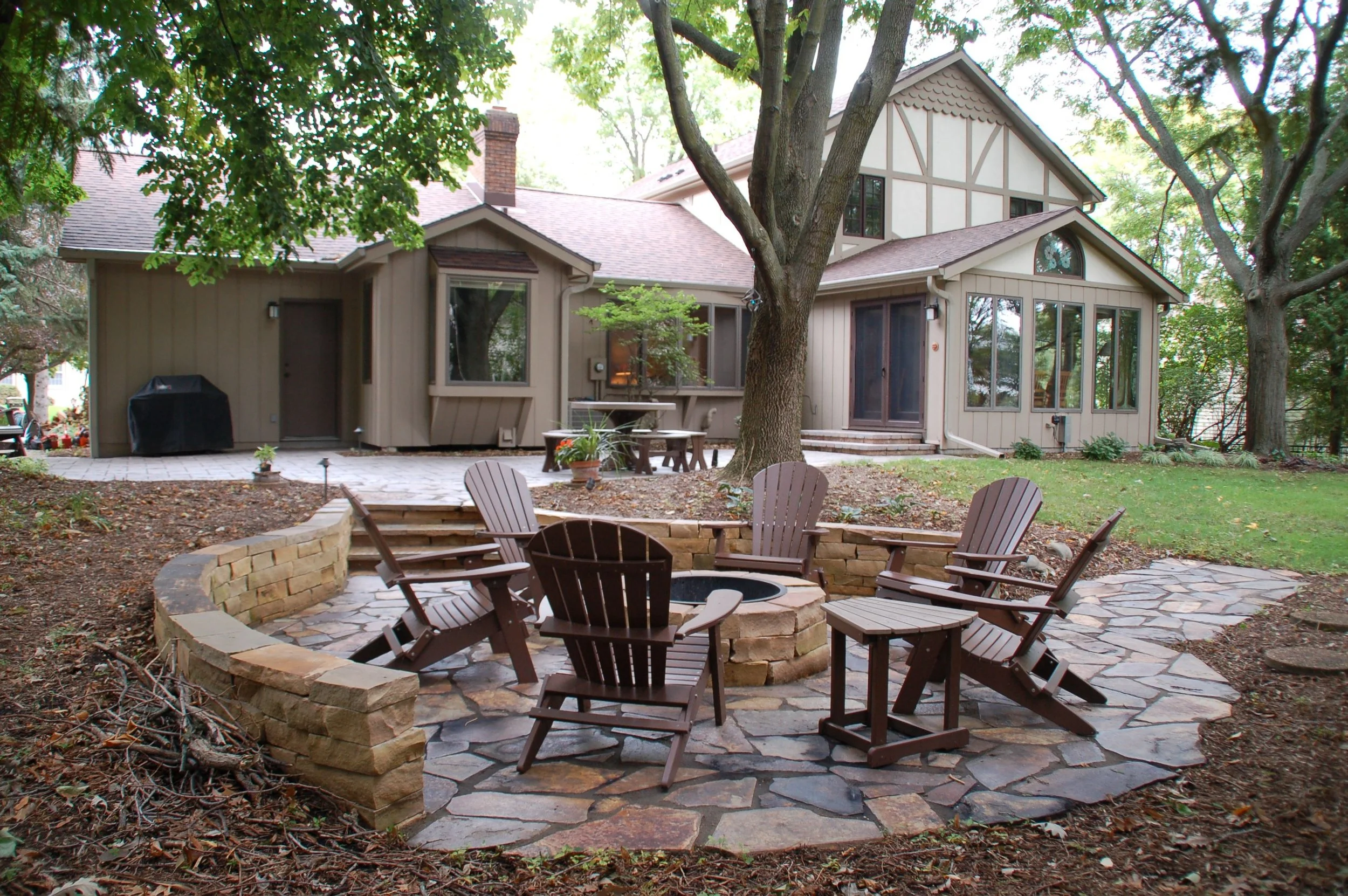
- Irregular Flagstone & Base Material: $8 – $20 per sq. ft. (a 14-ft diameter circle = $1,200 – $3,000)
- Stacked Stone Fire Pit Kit or Materials: $600 – $1,800
- Stacked Stone Low Wall: $40 – $75 per linear foot ($1,200 – $2,250 for 30 ft)
- Adirondack Chairs (4): $400 – $1,200
- TOTAL (DIY): $3,400 – $8,250
- TOTAL (Pro-Installed): $8,000 – $18,000+
The charm of irregular flagstone is also its primary challenge: the uneven surface. While beautiful, it can make furniture placement tricky. Chairs might wobble, and a small side table could be perpetually unstable. You’ll have to shuffle things around to find stable spots for each furniture leg. It’s also not the most friendly surface for anyone with mobility issues or for kids running around. It’s the price you pay for that authentic, ‘found-in-nature’ aesthetic. Compare this to the more formal stone patio in Idea #22.
30. Modern Outdoor Kitchen with Stone Island and TV
This outdoor kitchen feels so sleek and integrated because of its smart material continuity. The gray of the horizontal siding on the back wall creates a clean, modern backdrop that sets the tone for the entire space. This cool gray is then picked up in the stacked stone base of the island and the dark gray pavers of the patio floor. By using different textures (smooth siding, rough stone, flat pavers) in the same color family, the design achieves a cohesive, layered look that feels sophisticated and intentional. The light wood stools and white countertop provide the perfect warm contrast. For a larger-scale version, look at Idea #1.
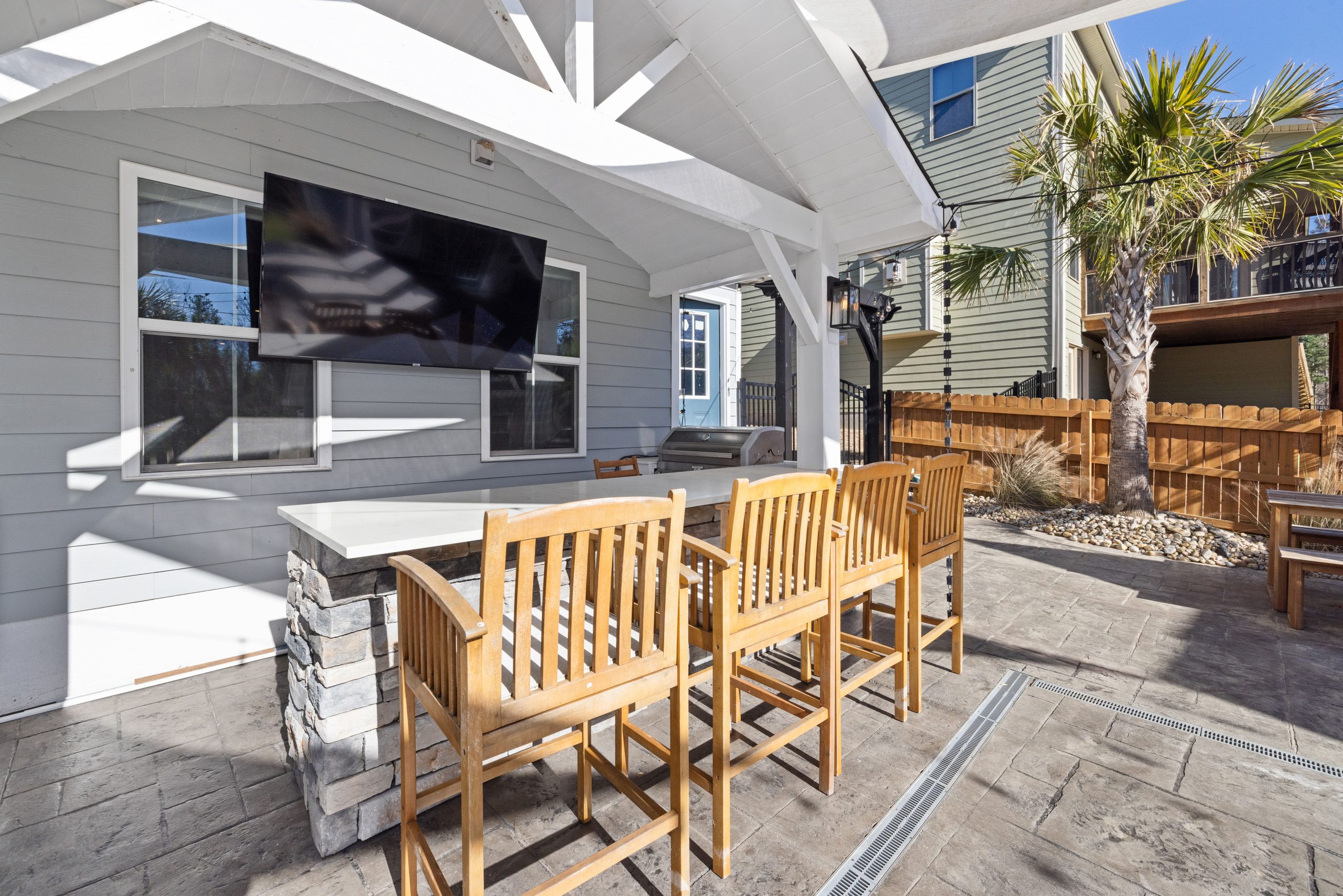
An outdoor kitchen with a TV is a dream, but proper planning is everything. Here’s what to confirm before you start:
- Utilities Check: Have you confirmed the location and cost for running gas, electrical, and potentially water lines to your desired spot? This is often the biggest hidden cost.
- Code Compliance: Check your local building codes. There are minimum clearance requirements for how close a grill can be to combustible materials like your home’s siding.
- Appliance Selection: Have you chosen outdoor-rated appliances? Stainless steel used in indoor appliances will rust and fail quickly outside. All electrical components, including the TV and outlets, must be weatherproof (GFCI protected).
Your Outdoor Chapter Awaits
With so many ways to create a functional and beautiful outdoor space, the only thing left to do is start planning. Whether you’re dreaming of a full outdoor kitchen or a simple, cozy fire pit nook, the right design can completely change how you use your home. Think of your patio as your next living room, just with better scenery.
Ready to start your project? Pin your favorite ideas from this article to your board, and let the transformation begin!