
You know that feeling when you finally find the perfect outdoor water fountain—the one that instantly makes your garden feel like a secret oasis? We’ve sifted through hundreds of options, from high-end garden centers to budget-friendly finds, to bring you the best of what’s out there. Inside, you’ll find 27 distinct ideas for 2026, covering everything from modern, minimalist boulder features to grand, classical tiered fountains. For this year, the trend is all about creating multi-sensory experiences; it’s not just the look, but the sound of water that creates a tranquil escape. And stay until the end — we break down the most common mistakes that can ruin these looks. 📌 Save this to Pinterest for later — you’ll want to revisit these ideas.
1. Carved Three-Tier Stone Fountain on a Garden Pathway
This classic design works because it creates an undeniable focal point. The fountain’s verticality draws the eye up, while the circular basin and surrounding paved path create a sense of harmony and enclosure. The contrast between the cool, weathered grey stone and the soft, vibrant pink flowers and green topiaries is a masterclass in garden color theory. It feels intentional and established, turning a simple garden walk into a destination.
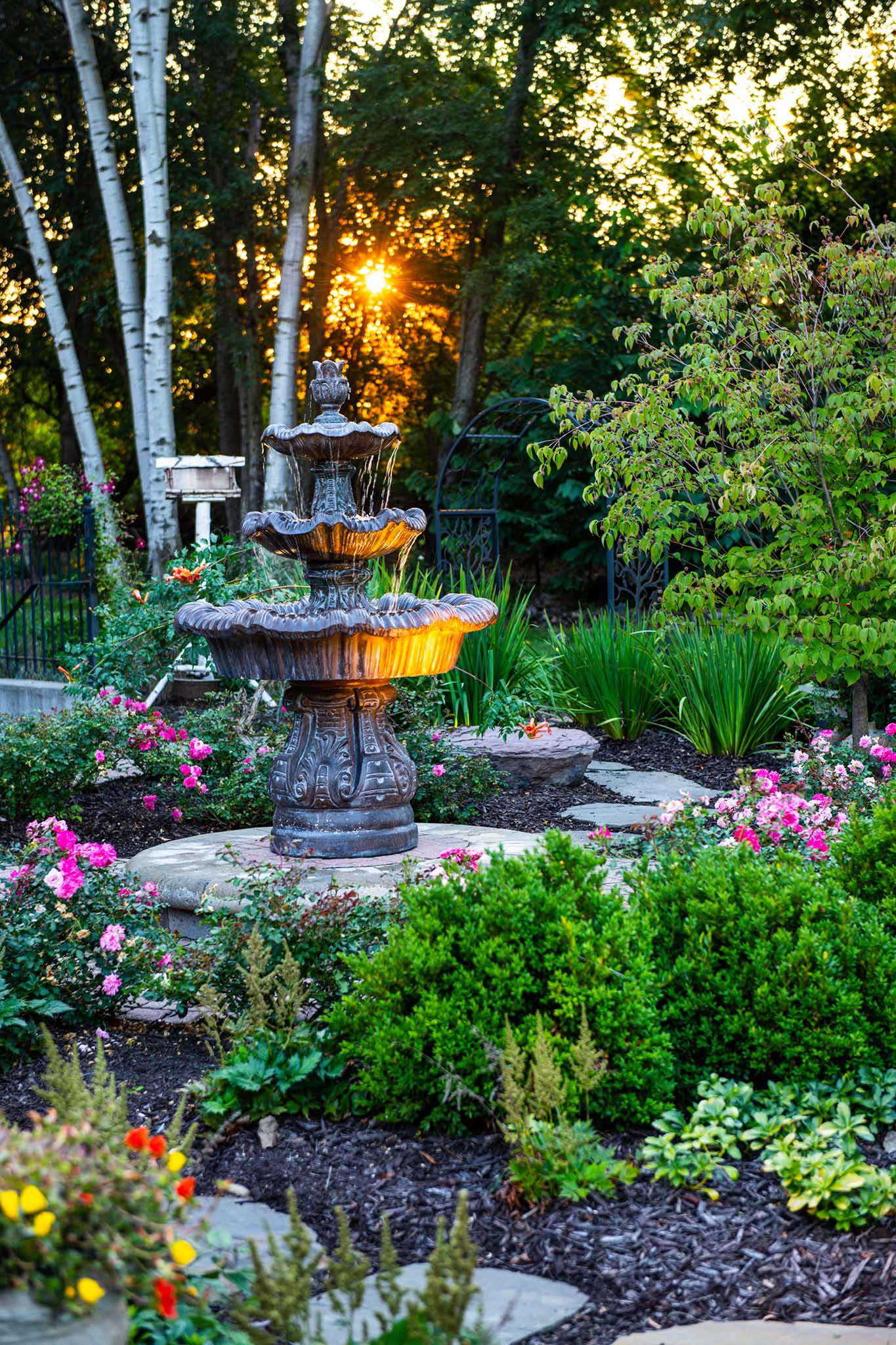
A stone fountain of this size requires a commitment. You’ll need to check water levels weekly, especially in warmer weather, to protect the pump. Expect to give it a thorough cleaning at least twice a year to remove algae and mineral deposits, which can be a multi-hour job involving scrubbing and potentially specialized cleaning solutions. In climates with freezing winters, you must fully drain the fountain and either cover it securely or disconnect and store the pump to prevent cracks and damage. Annual upkeep costs could include water treatments and replacement pump parts, averaging $50-$150.
2. Classical Fountain with a Grand Rectangular Basin
When installing a fountain with a large basin like this, consider underwater lighting from the start. Don’t treat it as an afterthought. Position at least two submersible, warm-white LED spotlights at opposing angles, pointing towards the water stream. This technique adds incredible drama at night, highlighting the water’s movement and creating a shimmering effect on the surface. It transforms the feature from a daytime accent into a 24/7 centerpiece.
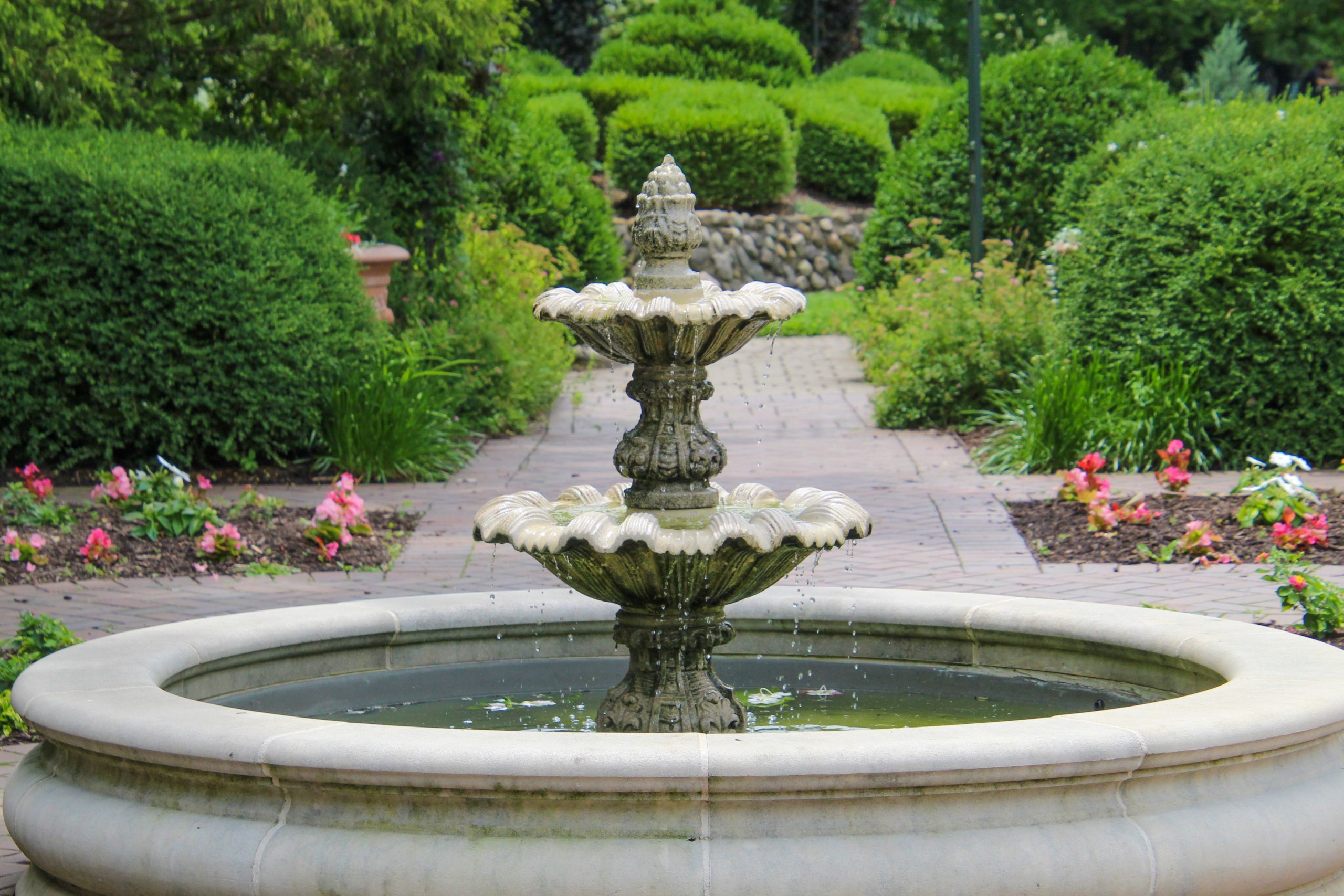
An expansive feature like this demands a generous setting. This look is ideal for yards of at least 2,000 square feet, where it can act as a central hub without overwhelming the space. The basin itself is substantial, so you’ll need a minimum footprint of 15×10 feet for the fountain and its immediate manicured hedges. It’s a statement piece that assumes you have a larger property to support its grand scale. For smaller spaces, consider the more compact upright design in Idea #18.
3. Modern Boulder Bubbler with a Stacked Slate Wall
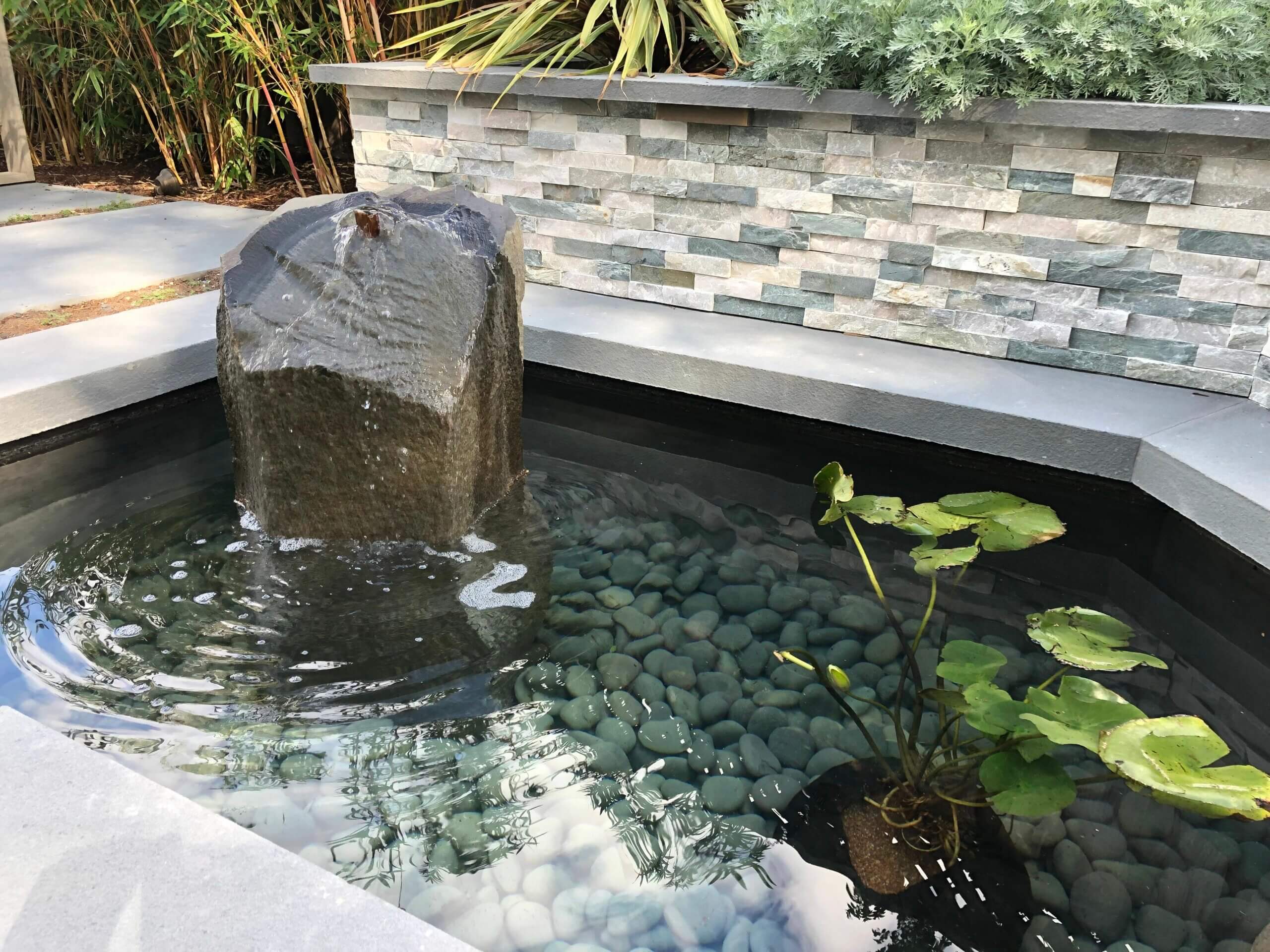
The formula here is a study in modern, natural textures: 50% rugged stone + 30% clean lines + 20% soft foliage. The dark gray boulder and river stones provide the organic, rugged base. The clean lines come from the rectangular concrete pavers and the crisp capstone on the stacked slate wall. A curated selection of green plants, like the water lilies, softens the hardscaping. You could swap the slate wall for a smooth stucco finish or the concrete pavers for large-format porcelain tiles to lean more minimalist while keeping the same successful ratio.
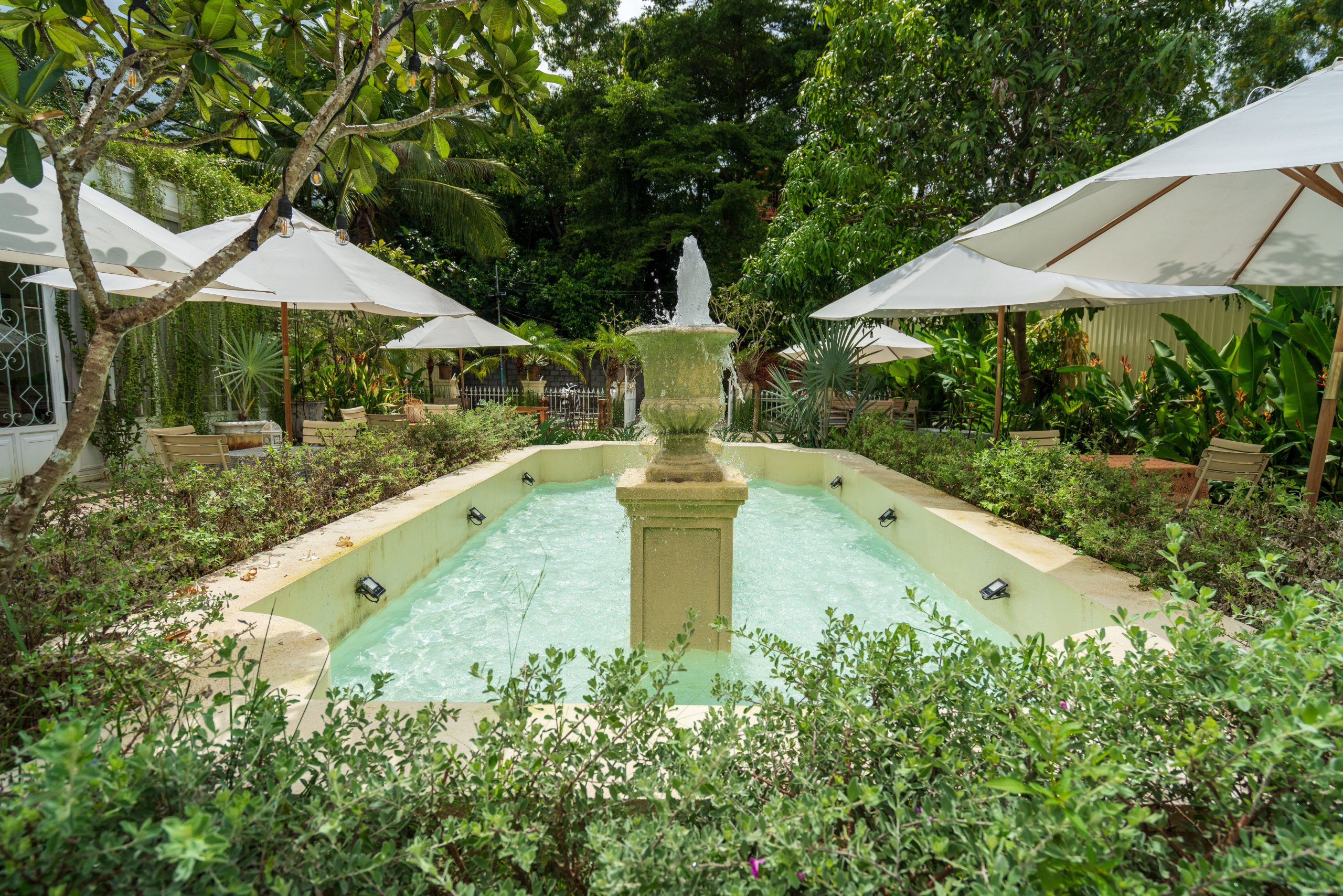
Achieving this modern, earthy vibe doesn’t have to break the bank. Instead of a custom-drilled boulder, look for pre-made ‘bubbler’ fountain kits at home improvement stores or garden centers for $300-$600. For the backdrop, skip the complex masonry of a stacked stone wall and opt for installing stone veneer panels over a simple cinder block wall. You can often find bags of polished river stones on Facebook Marketplace for a fraction of the retail price, bringing a similar, high-contrast look home for under $1,000.
4. Creating a Classic Garden Fountain Landscape
- Check the Ground: Is the chosen spot perfectly level? A traditional fountain requires a stable, level base to ensure water flows evenly from all sides and the structure remains stable.
- Power Source: How will you get power to the pump? Plan the route for a GFCI-protected outdoor electrical line. Hiding the cord is key for a clean look, which may require trenching.
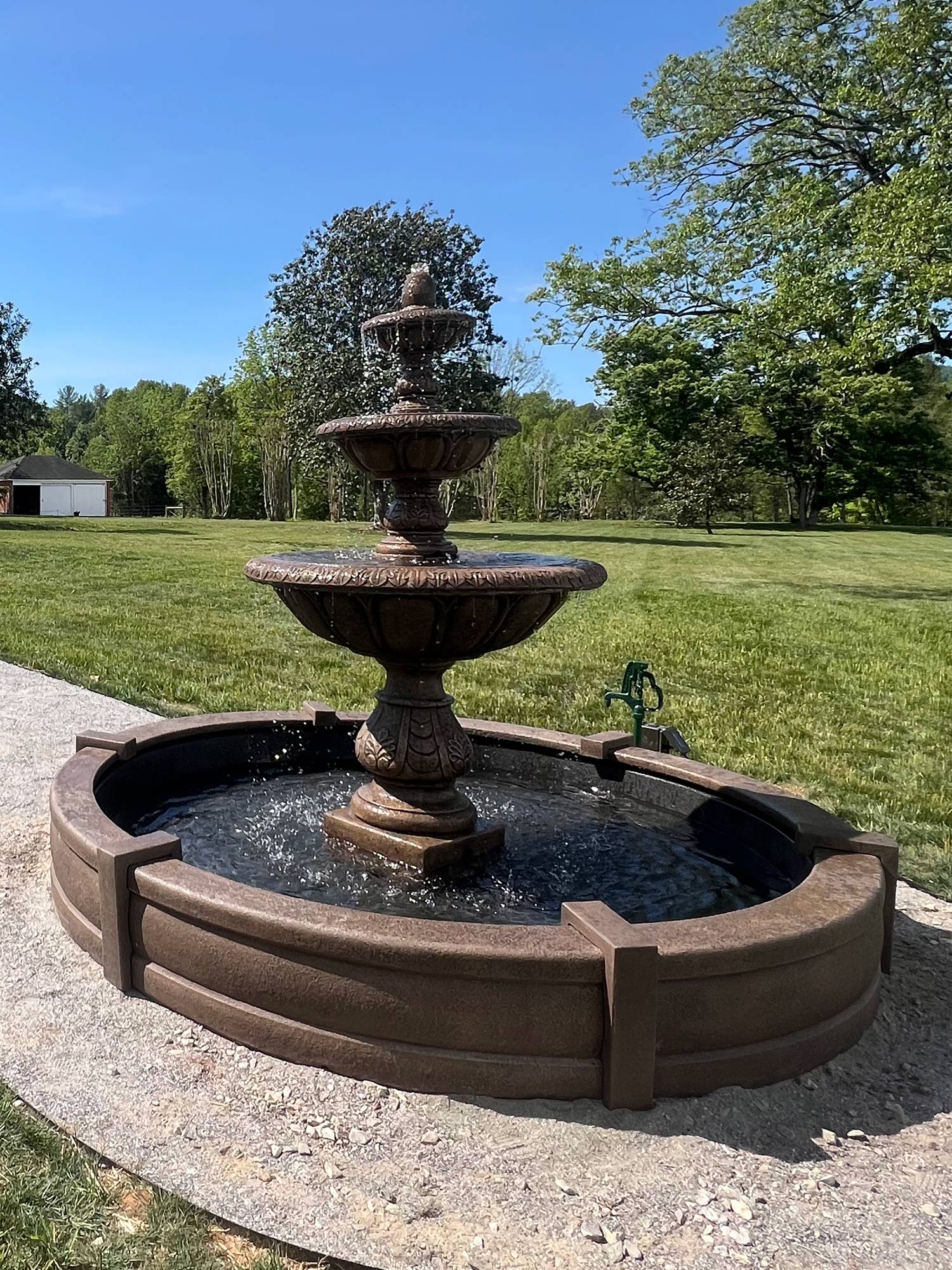
- Water Access: How will you fill it? A nearby hose bib is essential for easy filling and topping off, which you’ll do frequently in summer.
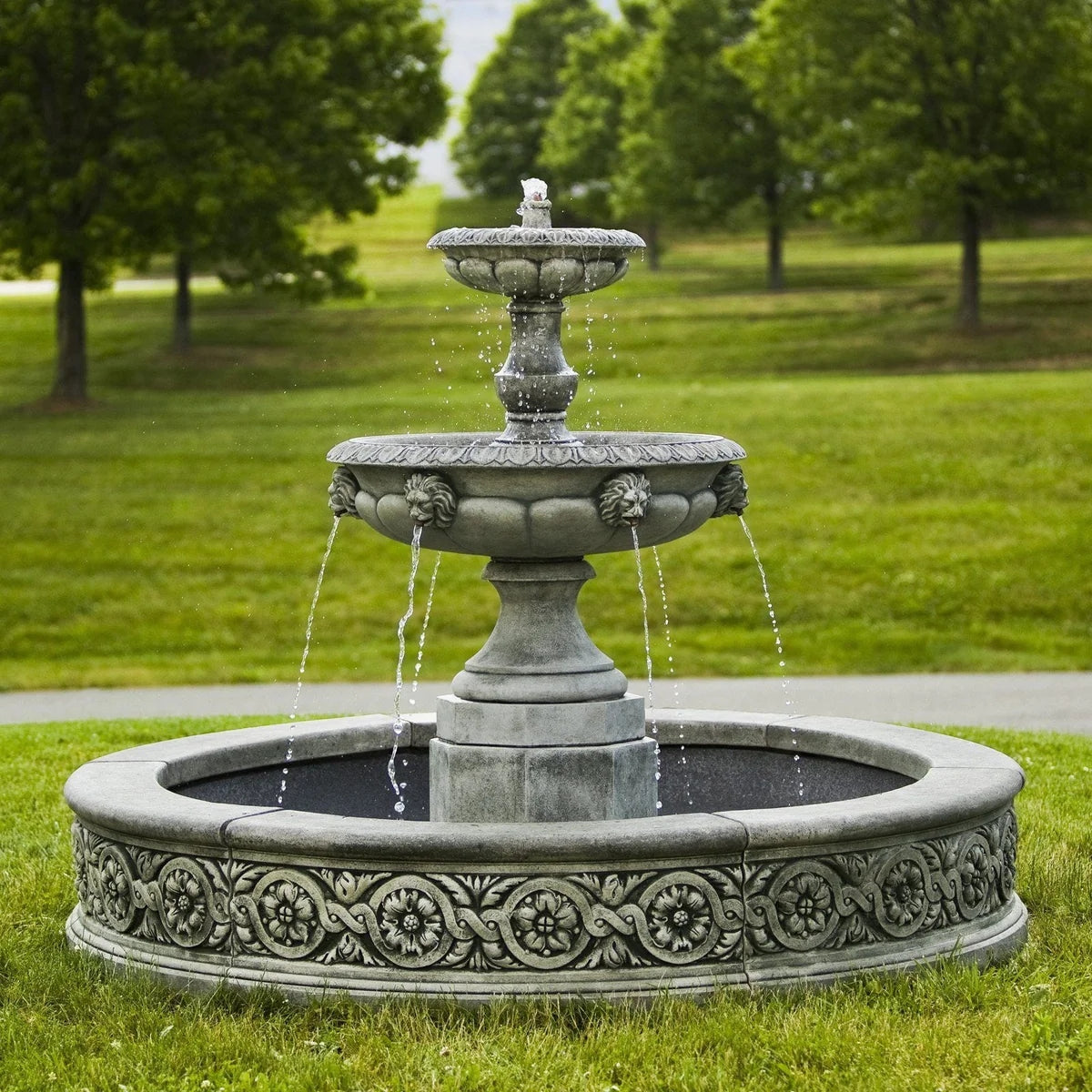
Be honest about the noise factor. While we idealize the gentle babble of water, a large fountain can be surprisingly loud. If your goal is a quiet, contemplative space for reading or conversation, the constant sound of splashing water might be more distracting than relaxing. Consider a model with an adjustable flow pump so you can dial the sound up or down, or opt for a ‘bubbler’ style like the one in Idea #3 for a softer auditory experience.
5. Illuminated Glass Sphere Fountain on a Modern Patio
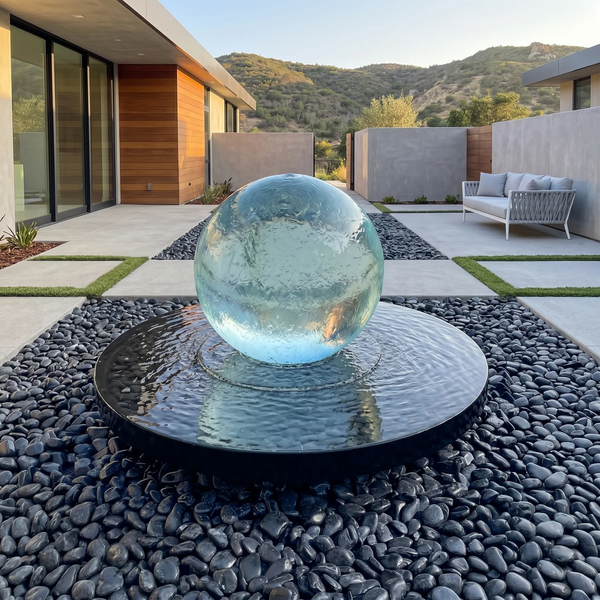
The single element that defines this entire setup is the internal illumination. Without the soft blue light glowing from within the glass sphere, the feature would be interesting but static. The light transforms the water and the textured glass into a living sculpture, drawing the eye and setting a serene, futuristic mood. It’s the difference between a simple fountain and a piece of functional art, especially after dusk.
How-To: Create the Polished Stone Border
Time: 2-3 hours | Cost: $100-$300
- Define the Edge: After placing your fountain, lay down a flexible rubber or metal landscape edging in a clean circle about 18-24 inches out from the fountain’s base. Secure it with the provided stakes.
- Add Weed Barrier: Cut a piece of high-quality landscape fabric to fit the inside of your defined circle. Make a cutout for the fountain’s base and any electrical cords.
- Pour the Stones: Purchase enough polished black river stones to fill the area to a depth of 2-3 inches. One 20-pound bag typically covers 1-1.5 square feet.
- Rinse and Level: Gently rinse the stones with a hose to bring out their shine. Use a small rake or your hands to level them for a smooth, professional finish.
6. Formal Garden with Water Jets and Chain-Link Accents
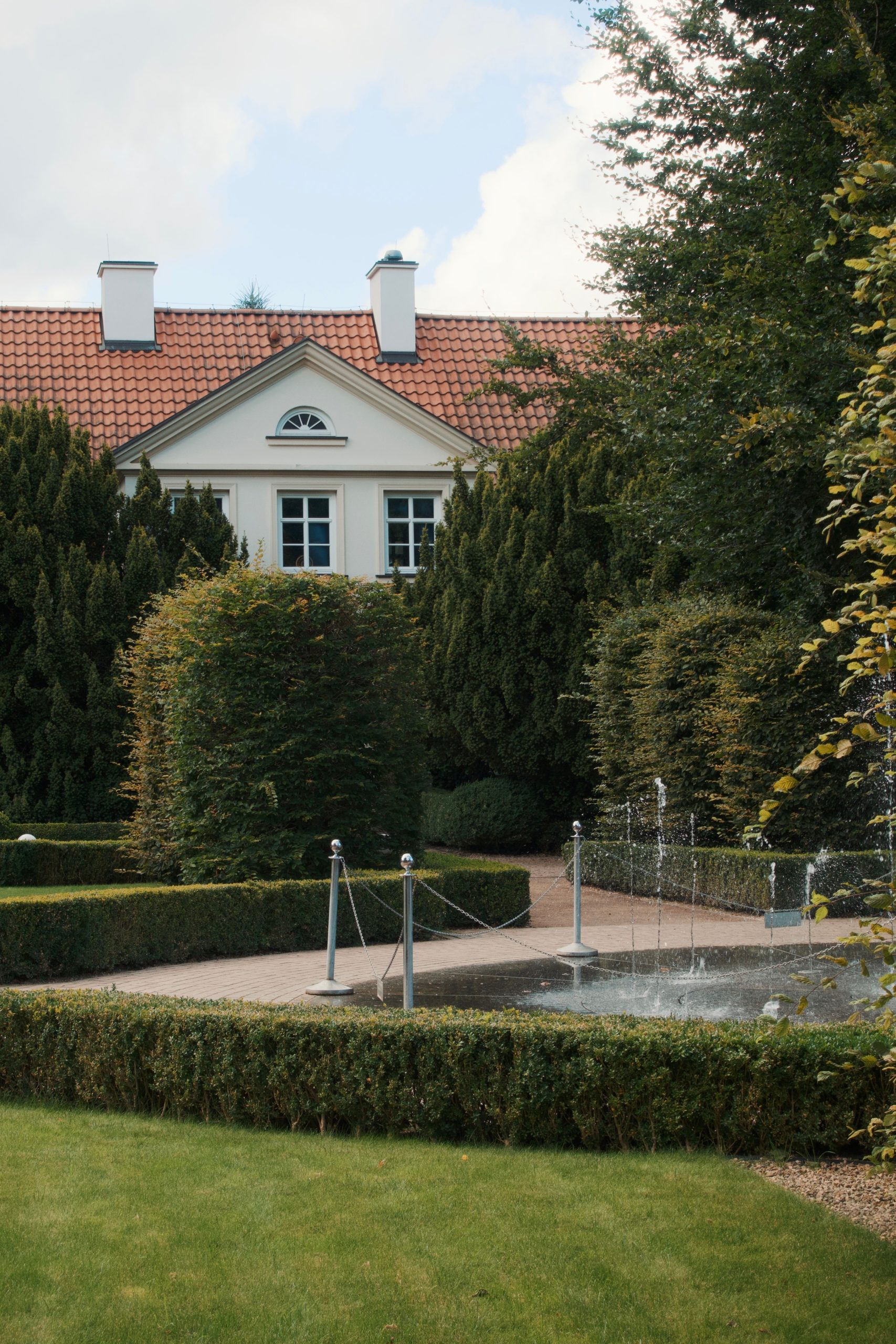
This design’s success lies in its strong geometry and repetition. The rectangular water feature mirrors the formal lines of the classical house and manicured hedges, creating a sense of order and elegance. The repetition of the silver posts and the arcs of the water jets add a rhythm that guides the eye through the space. It’s a highly controlled environment where every element, from the paving to the plants, feels deliberately placed and perfectly aligned.
While minimalist, naturalistic fountains are popular, there’s a renewed appreciation for this kind of unapologetic formalism, especially on properties with traditional architecture. This look signals a return to classic landscape design principles, where the garden is an extension of the home’s structure and grandeur. It’s less about trying to mimic nature and more about creating a refined, human-ordered version of it. On Pinterest, this is part of the ‘Grandmillennial’ and ‘Light Academia’ trends spilling into outdoor design.
7. Three-Tiered Neoclassical Fountain with Lion Head Spouts
To recreate this grand, classic look, here’s a potential cost estimate:
- Fountain: Ornate, carved stone or high-quality cast concrete fountain (6-8 ft tall) – $3,500 – $8,000
- Installation: Professional installation including a concrete pad, plumbing, and electrical work – $2,000 – $5,000
- Landscaping: Surrounding lawn, soil preparation, and mature hedges – $1,500 – $4,000
- Lighting: Submersible and landscape spotlights – $500 – $1,200
- TOTAL: $7,500 – $18,200
Budget alternative: A smaller, fiberglass version with similar styling can be found for $800-$1,500, with DIY installation bringing the total closer to $2,000.
For a large fountain on a lawn, proper drainage is non-negotiable. Ensure your installer creates a ‘French drain’ system around the concrete pad. This is essentially a small trench filled with gravel and a perforated pipe that directs overflow and splash-out away from the fountain’s base. This prevents the surrounding grass from becoming a swampy, muddy mess and protects the fountain’s foundation from water damage and shifting over time.
8. Two-Tiered Bowl Fountain Nestled in Ornamental Grasses
This serene scene is all about balance: 70% soft, natural textures + 30% solid, simple forms. The overwhelming majority of the view is filled with the airy, bright green ornamental grasses, which feel wild and unstructured. The fountain itself provides the contrasting 30%: a solid, dark, two-tiered object with a simple, clean silhouette. This formula prevents the fountain from looking plopped-down and instead makes it feel discovered within its own private niche. Compare this to the very structured look of Idea #7, which uses the opposite ratio.
A fountain surrounded by dense plantings like this looks beautiful, but it’s a magnet for debris. Fallen leaves, grass clippings, and petals will constantly find their way into the basins, which can clog the pump intake if you’re not diligent. You’ll need to skim the water surface every few days, especially in the fall. Be prepared for a bit more hands-on maintenance than with a fountain placed on a hardscaped patio.
9. An Essential Garden Water Feature
The number one rule of choosing a fountain is to respect the scale of your space. For a small urban patio (under 200 sq ft), a wall-mounted fountain or a slim pedestal design is perfect. For a medium suburban backyard (500-1500 sq ft), a two- or three-tiered fountain like the ones in Idea #10 or Idea #21 works well as a focal point. Truly enormous, multi-part fountains are best reserved for large estates or commercial properties where they won’t look comically oversized.
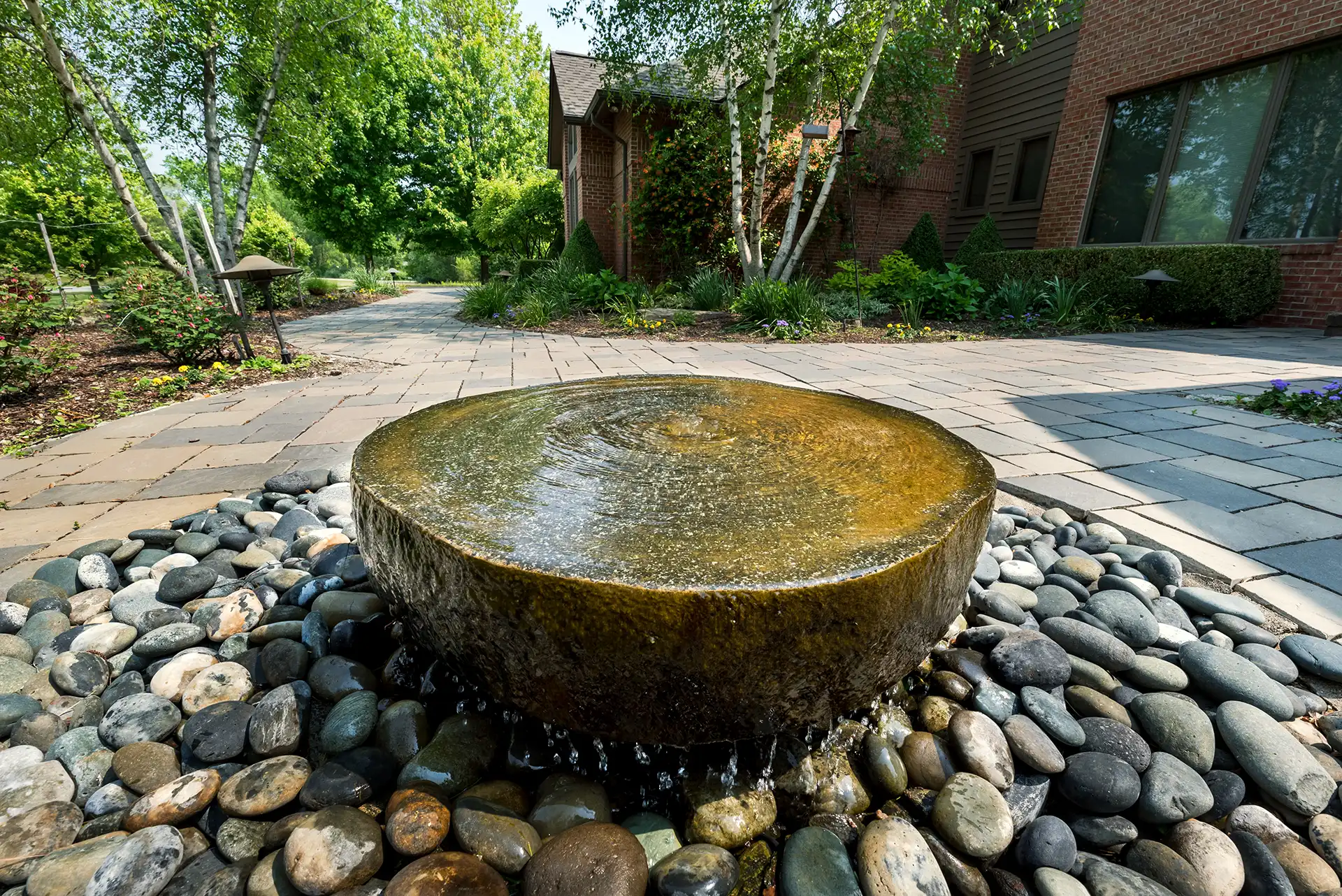
Let’s talk about algae. It’s the inevitable reality of any outdoor water feature, especially in sunny locations. To keep it under control, you’ll need to add a water clarifier or algaecide specifically designed for fountains every 1-2 weeks. These products are formulated to be safe for birds and wildlife. Skipping this step means you’ll be spending a lot more time scrubbing green slime off the surfaces. It’s a small, consistent task that makes a huge difference in the fountain’s appearance and health.
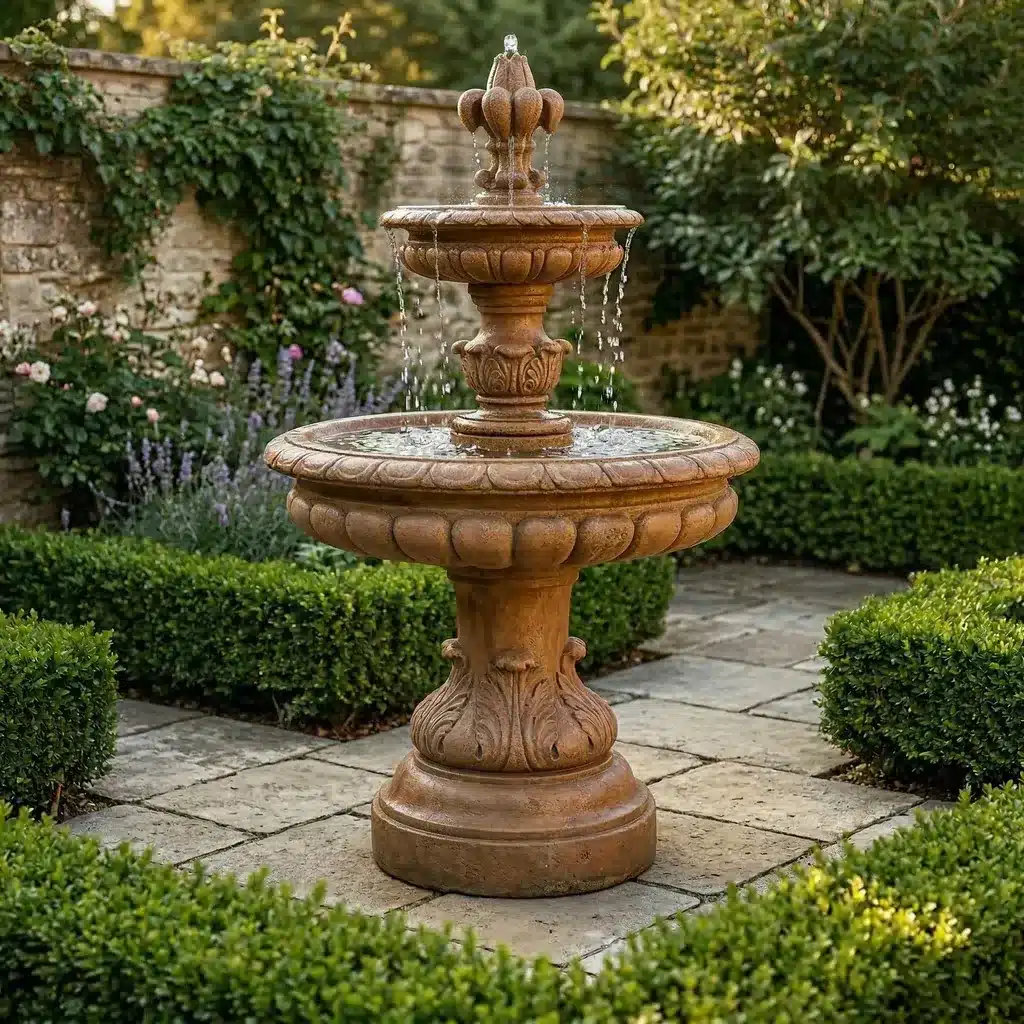
10. Three-Tiered Fountain with Carved Details and Lavender
What truly sets this fountain apart is its distinctive terracotta brown finish. In a world of grey concrete and stone, this warm, earthy tone gives it an immediate sense of age and character, as if it were imported from an old Italian villa. It bridges the gap between the formal structure of the fountain and the natural, rustic feel of the stone pavers and blooming lavender. If this fountain were grey, it would be nice; in this color, it’s memorable.
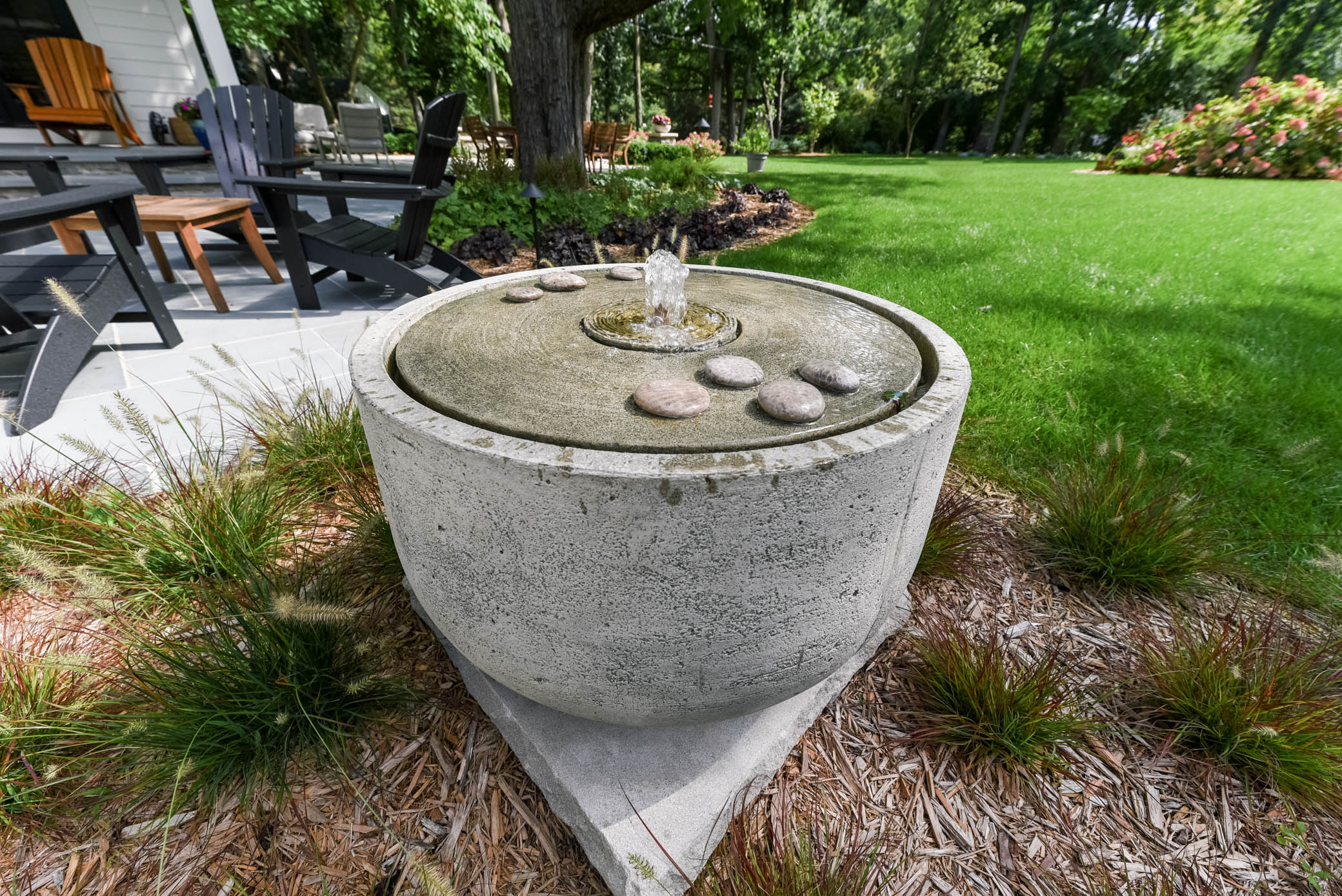
Before you commit to a heavy, multi-tiered fountain, check these items off your list:
- Delivery Path: How will you get this from the truck to its final spot? Fountain components are incredibly heavy. You’ll need a clear, wide path accessible by a hand truck or dolly. Measure gates and walkways!
- Foundation: Can your patio or ground support the weight? A large, filled fountain can weigh over 1,000 pounds. It requires a reinforced concrete pad or perfectly level, compacted ground.
- Pump Accessibility: How will you access the pump for maintenance? Ensure the design allows for easy removal of the pump without having to disassemble the entire fountain.
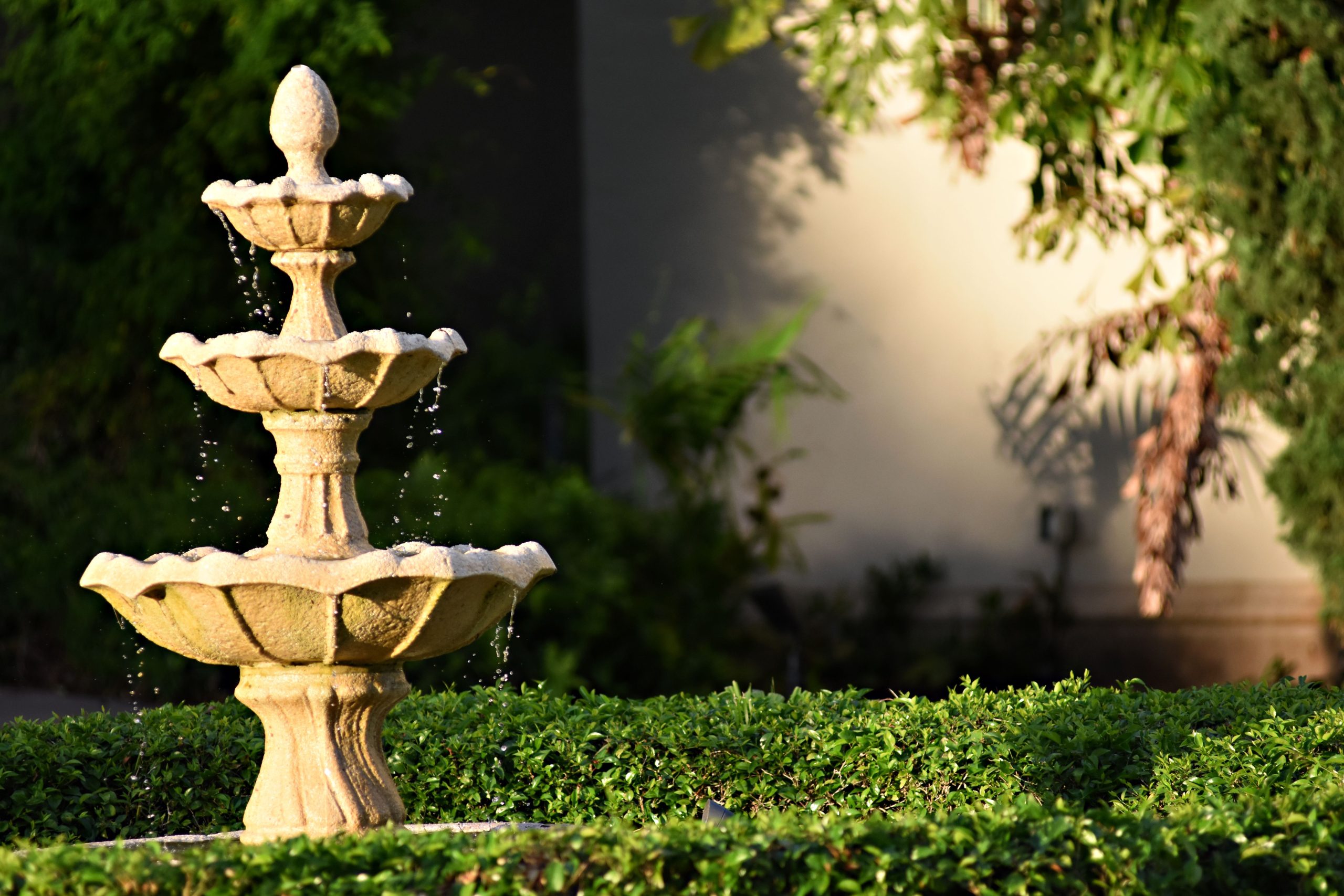
11. Simple Three-Tiered Fountain Against a Green Hedge
This is a perfect example of a high-impact, lower-budget setup. By choosing a standard, widely-available three-tiered fountain model (often found for $400-$900) and placing it against a simple, uniform backdrop like a manicured hedge, you create a classic look a fraction of the cost of a more complex installation. The real money-saver here is the backdrop: a simple hedge does the work of a more expensive stone wall or intricate landscaping, providing a lush, green canvas that makes the fountain pop.
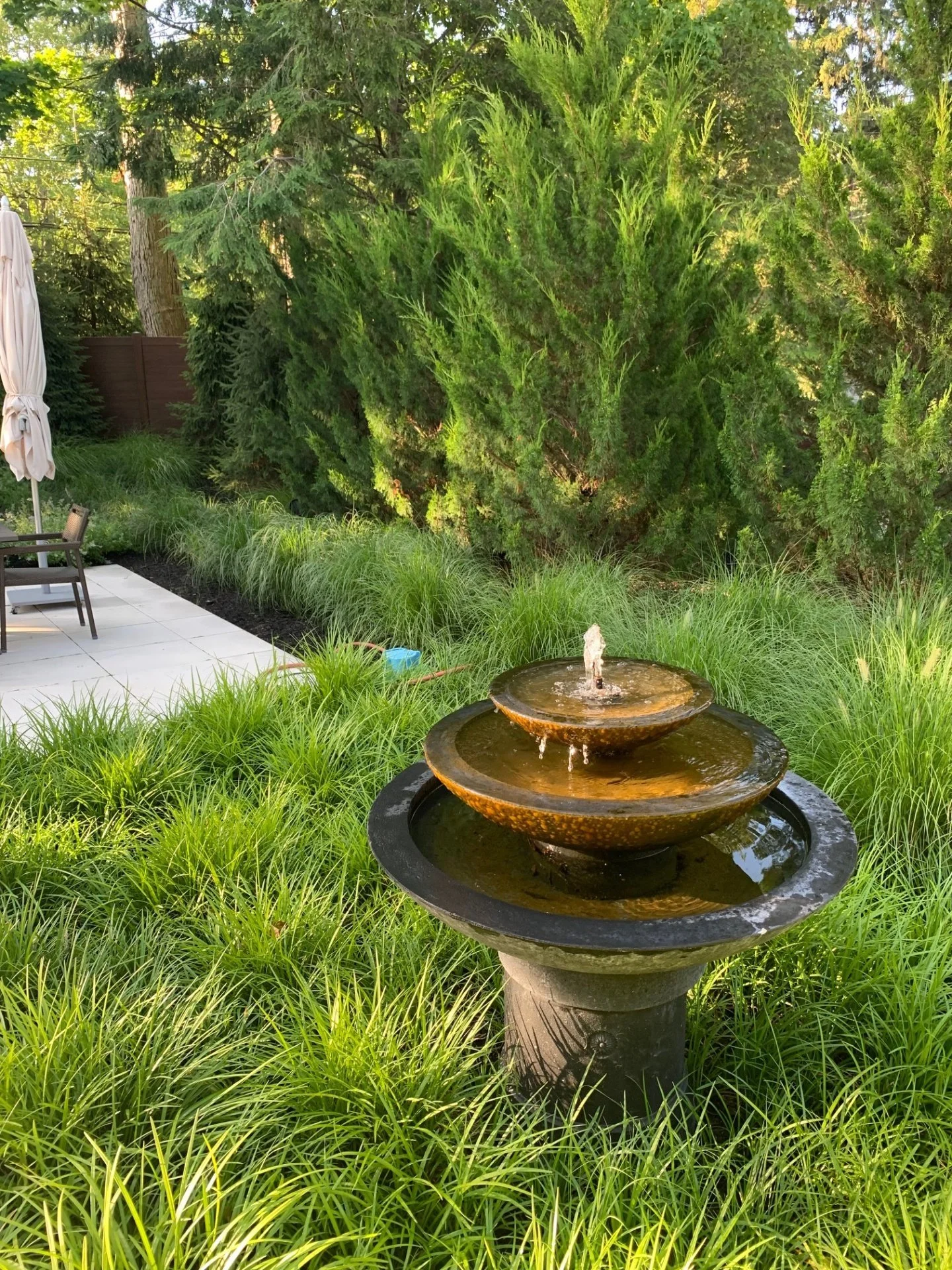
The power of this design lies in its simplicity and clean layers. You have three distinct visual planes: the light-colored wall in the far background, the deep green hedge in the mid-ground, and the tan stone fountain in the foreground. This layering creates depth and makes the garden feel larger and more organized than it might be. The tree shadows on the back wall add a dynamic, moving element that brings the static scene to life.
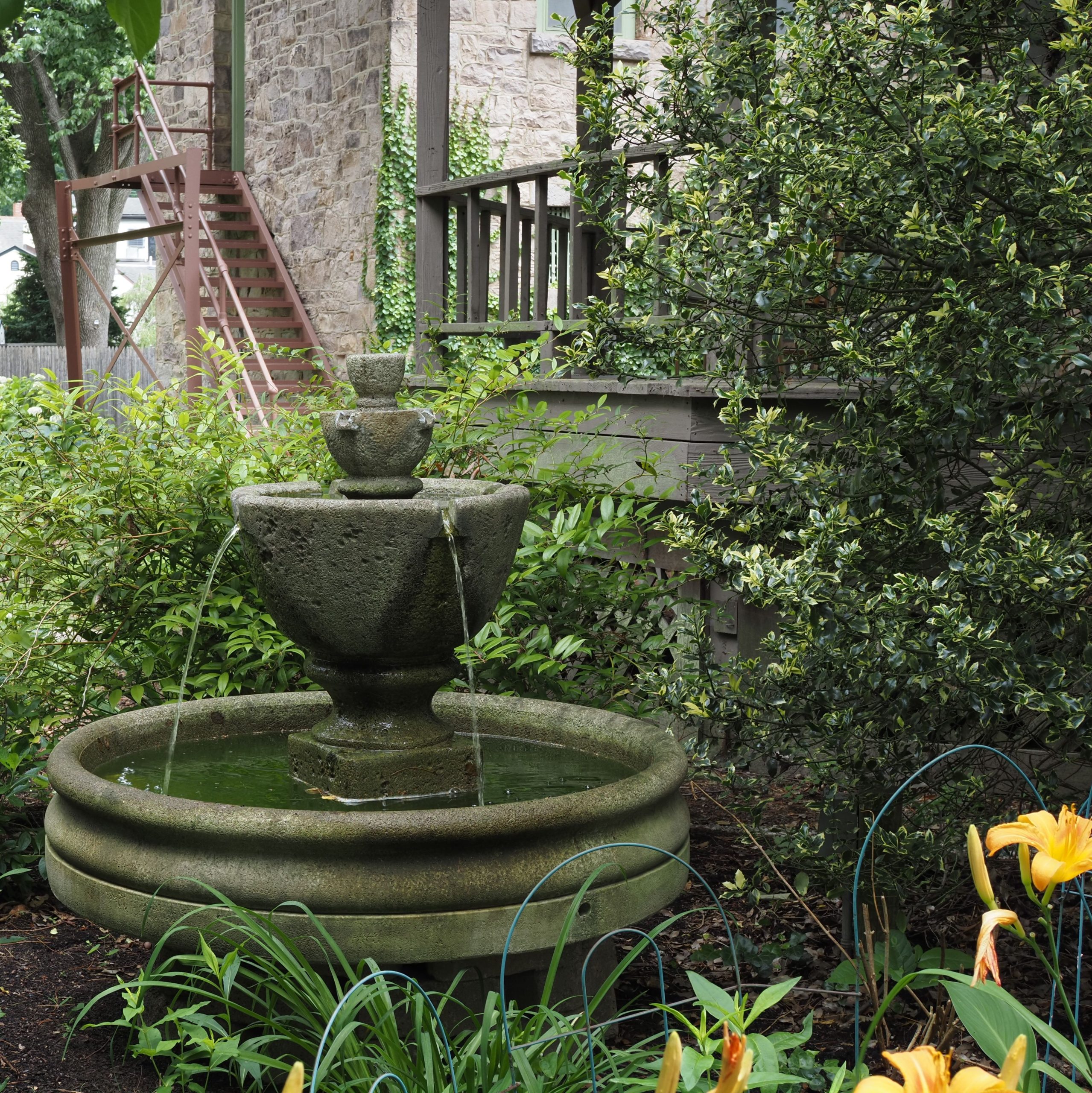
12. Tiered Stone Fountain in a Lush, Naturalistic Garden
When aiming for a ‘natural’ look, let the fountain itself age gracefully. Don’t be too quick to scrub off the moss or patina that develops on the stone, as seen here. This greening effect helps the fountain blend into the surrounding foliage and gives it a sense of permanence and history. You can encourage moss growth by painting a mixture of buttermilk and crumbled moss onto the stone surfaces in shaded, damp areas.
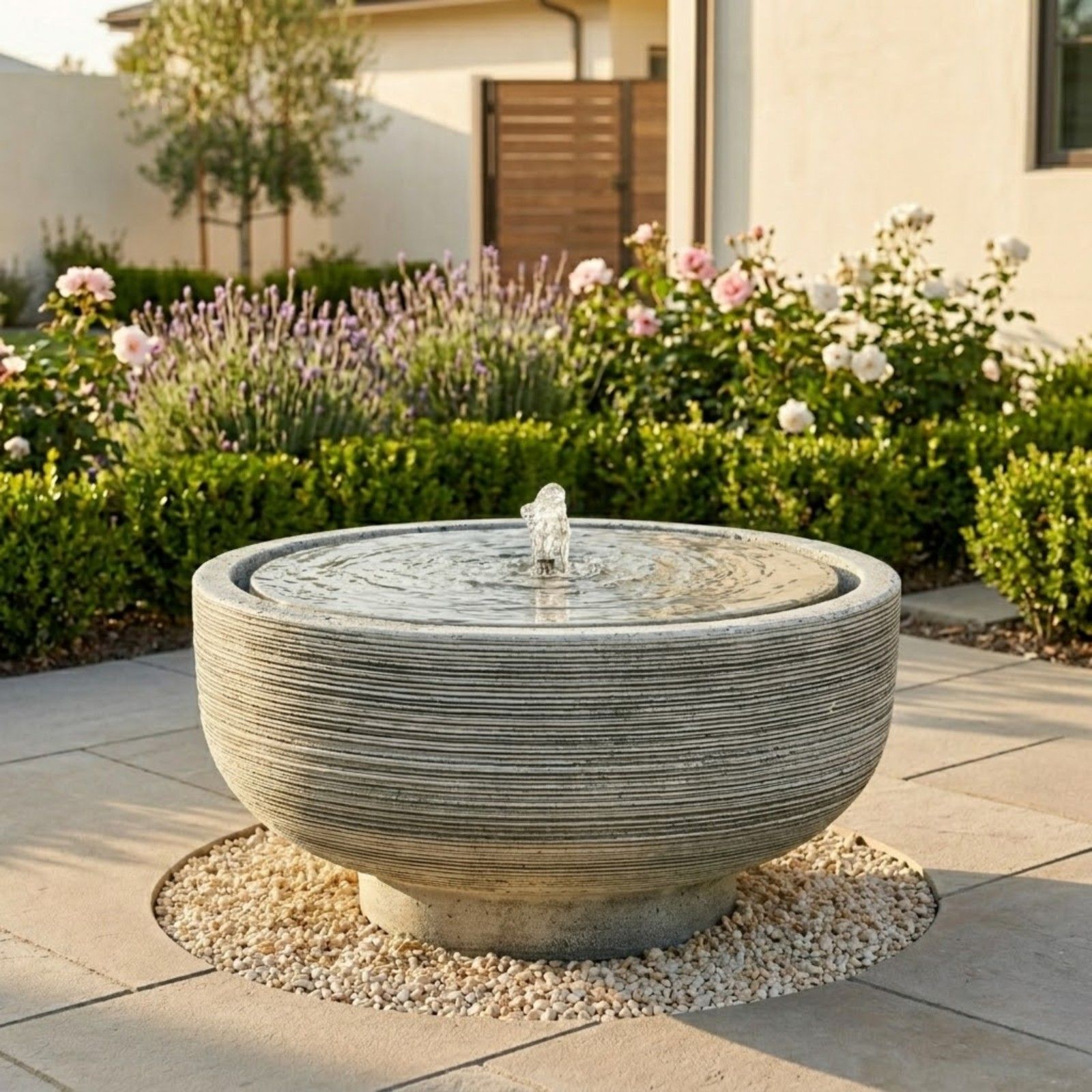
The visual recipe for this established, tranquil space is: 60% untamed foliage + 30% weathered hardscape + 10% architectural context. The dense, multi-layered greenery, including shrubs and yellow daylilies, forms the lush base. The moss-covered stacked stone of the fountain and the background building provide the solid, grounding elements. Finally, the glimpse of the dark wood deck railing hints at the human element, making the scene feel like a cherished, lived-in garden.
13. A Grand Fountain for a Stately Courtyard
A large, multi-tiered fountain is a centerpiece, not an accent. This style requires a significant open area, like a circular driveway, a formal courtyard, or the center of a large parterre garden. You need at least 15-20 feet of open space around the fountain’s basin to appreciate its scale and design. Placing a fountain of this magnitude in a small yard will make the entire space feel cramped and out of proportion. It’s the outdoor equivalent of putting a king-sized bed in a tiny bedroom.
Let’s be honest: a fountain this large can have significant running costs. Depending on your local climate and the fountain’s flow rate, evaporation can cause you to lose several gallons of water a day, which can impact your water bill. The powerful pump required will also be a constant draw on electricity. While beautiful, a grand fountain is a luxury item with recurring utility and maintenance expenses that go far beyond the initial purchase price.
14. Cascading Terraced Fountains in a Formal Hedge Garden
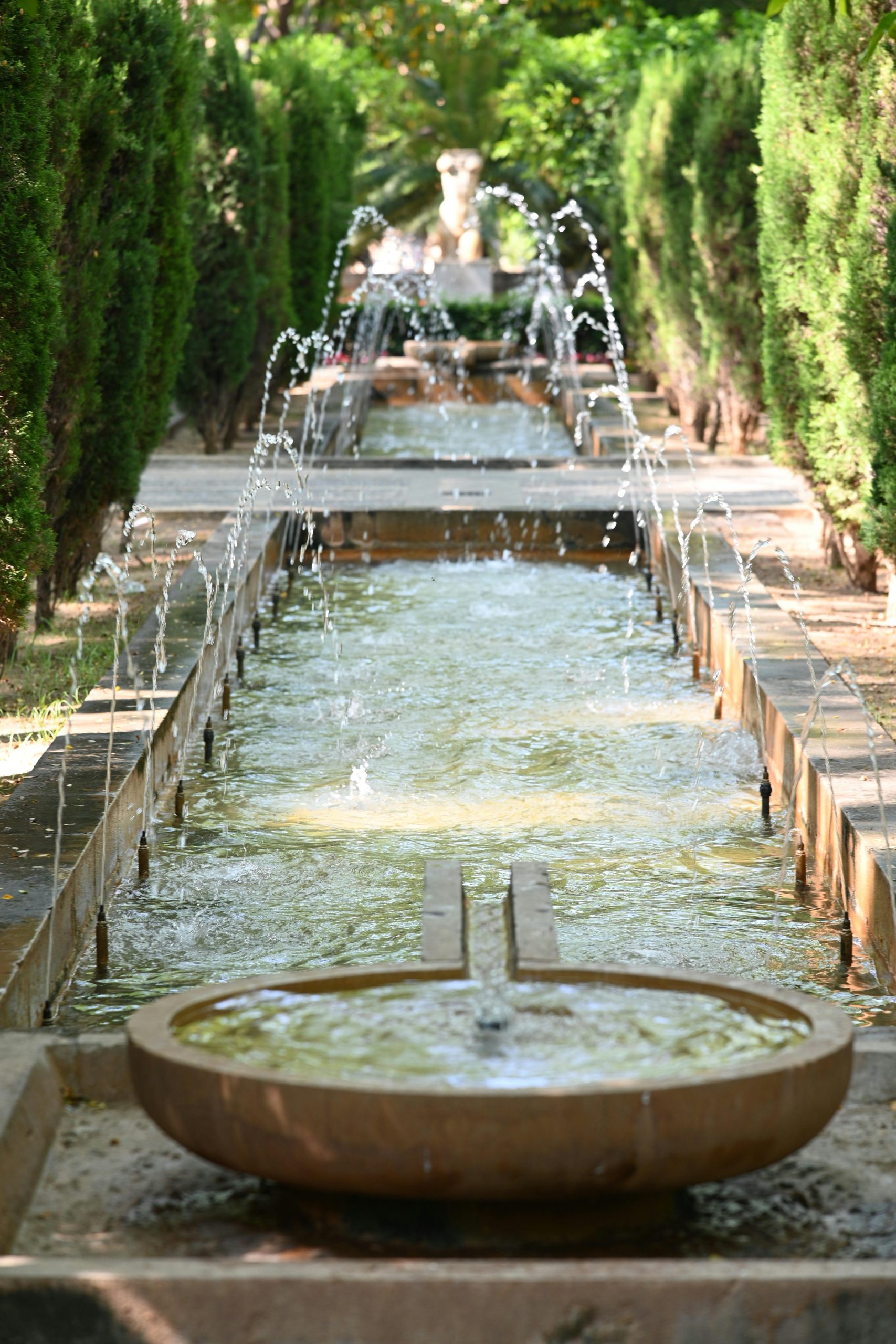
This grand design works by using a powerful landscape design technique: the linear axis. The long, straight line of the terraced fountains and hedges pulls your eye directly through the garden toward a focal point in the distance. This creates a feeling of immense scale, order, and formality. The repetitive rhythm of the water jets reinforces this line, turning a simple walk through the garden into a stately procession. It’s a look borrowed from historical European palaces.
How-To: Set Up a Single Water Jet
Time: 4-6 hours | Cost: $250-$500 (per jet)
- Choose a Location: Select a spot in a pond or basin at least 12 inches deep.
- Select a Pump: You’ll need a submersible pump capable of lifting water to your desired height. Check the ‘head height’ rating on the pump’s specifications.
- Attach Tubing: Connect a length of flexible vinyl or kink-free tubing to the pump’s outlet, securing it with a hose clamp.
- Attach Nozzle: Connect the other end of the tube to your jet nozzle. The nozzle can be freestanding on a block or integrated into the basin’s structure.
- Position and Power: Submerge the pump, position the nozzle, and run the pump’s power cord (safely, via a GFCI outlet) to your power source. Adjust the nozzle’s angle to create the desired arc.
15. Designing with a Sleek, Modern Water Feature
Modern fountains succeed by focusing on material and form over ornamentation. They often feature simple geometric shapes—cubes, spheres, or clean lines—and highlight the natural beauty of materials like concrete, steel, or stone. The focus shifts from decorative carvings to the sensory experience: the sound of the water, the way light plays on its surface, and the clean, uncluttered silhouette. This is a very different approach from the ornate classicism of Idea #23.
As our homes and yards become more streamlined and minimalist, so do our water features. The 2026 trend is a move toward ‘quiet luxury’ in the garden. Homeowners want the calming sound and visual appeal of water without the fussy, traditional look. These modern designs integrate seamlessly with contemporary architecture and landscaping, acting as a piece of sculpture that happens to include water. They reflect a desire for tranquil, uncluttered personal retreats.
16. Ribbed Concrete Bowl Fountain on a Paved Patio
The critical detail here is the ribbed texture of the concrete bowl. If this were a smooth bowl, it would be far less interesting. The vertical ribs create subtle shadows and highlights, giving the simple shape depth and character. This texture connects it to the natural, varied forms of the surrounding lavender and rose bushes, preventing the concrete from feeling too stark or industrial against the soft plantings.
You can get this serene, elegant look for much less. A small, plug-and-play bowl fountain from a big-box store like Target or Walmart will typically run between $150 and $400. Surround it with a bag or two of inexpensive pea gravel from a garden supply store instead of pavers. Then, plant a few perennial lavender plants around the border. You can achieve the a very similar tranquil corner for under $500, with no professional installation required.
17. Dark Gray Tiered Fountain with Warm LED Lighting
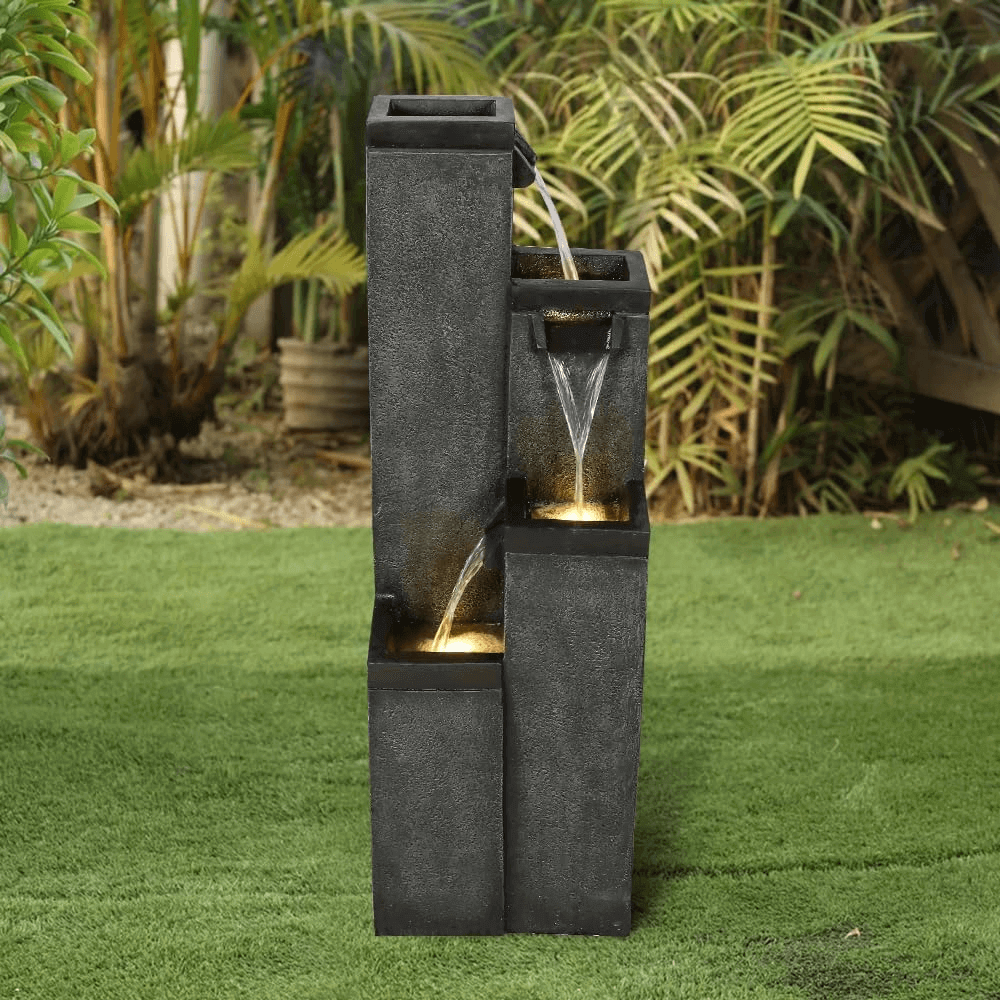
When using integrated lighting in a fountain, always opt for warm white LEDs (2700K-3000K). The temptation can be to use cool white or even colored lights, but this often looks unnatural and cheapens the effect. The warm yellow-toned light seen here mimics candlelight or firelight, creating an inviting, cozy, and high-end ambiance. It complements the natural green of the lawn and makes the water itself seem to glow from within.
This design is effective because of its high-contrast elements. The dark, almost black, color of the fountain stands out sharply against the bright green lawn during the day. At night, this relationship inverts: the fountain recedes into the darkness while the warm, illuminated water becomes the focal point. This day-to-night transformation keeps the feature interesting and dynamic, ensuring it’s a 24-hour asset to the landscape.
18. Modern Tiered Waterfall with Integrated Accent Lighting
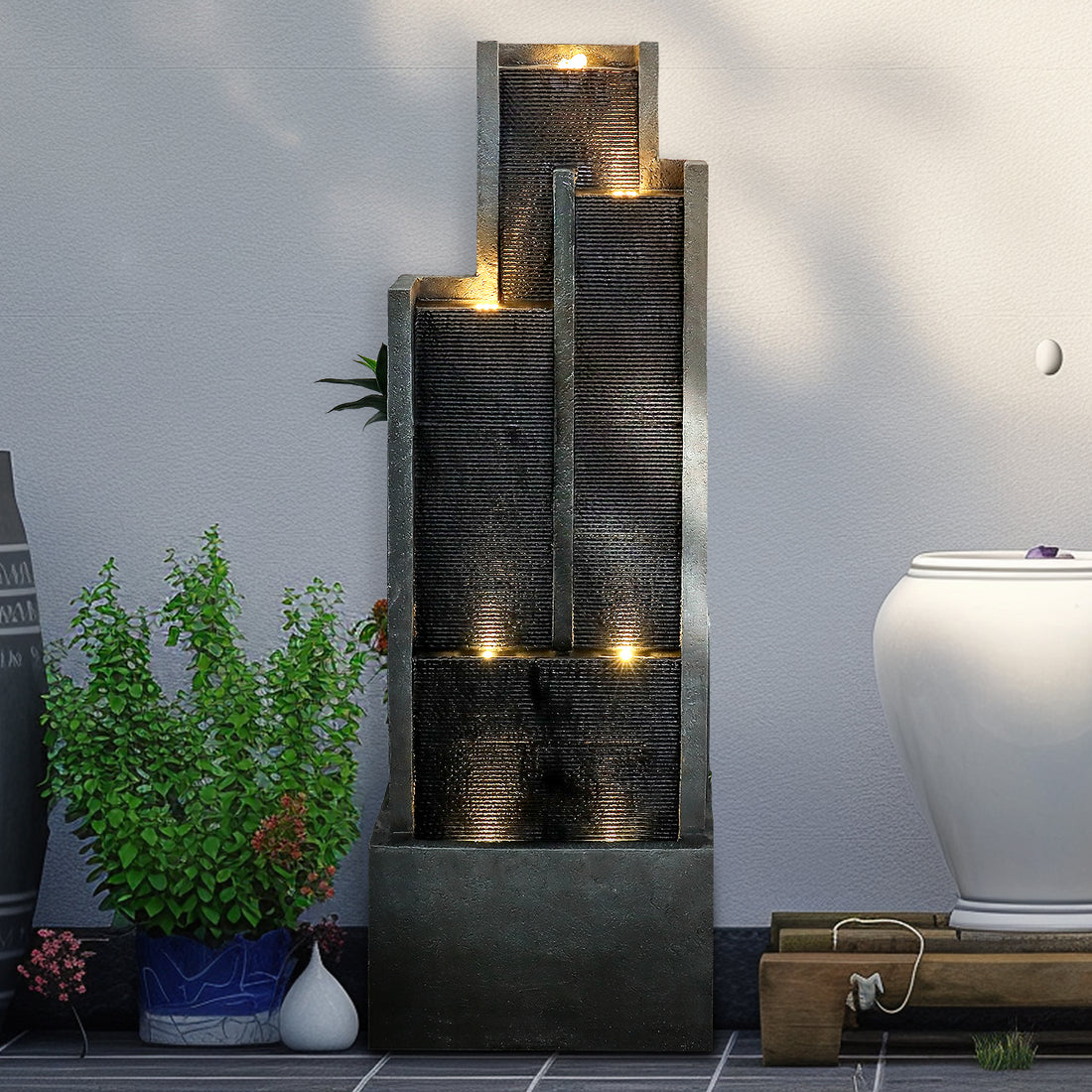
This look breaks down to a simple but effective formula: 50% dark, textured hardscape + 30% flowing water + 20% warm illumination. The tall, dark gray rectangular fountain provides the strong architectural backbone. The cascading water covers a significant portion of the surface, creating movement and sound. Finally, the strategically placed warm lights add a layer of drama and highlight the texture of both the water and the fountain itself. The surrounding plants are secondary, serving only to soften the edges.
While stunning, fountains with multiple lights and separate tiers can be an maintenance headache. Each light is a potential failure point, and replacing submersible LEDs can sometimes require partially disassembling the unit. The various textured surfaces and corners are also prime real estate for algae growth, requiring more detailed cleaning than a simple bowl fountain. Be prepared to spend more time on upkeep to keep this type of illuminated feature looking its best.
19. Geometric Light Grey Concrete Fountain with Illumination
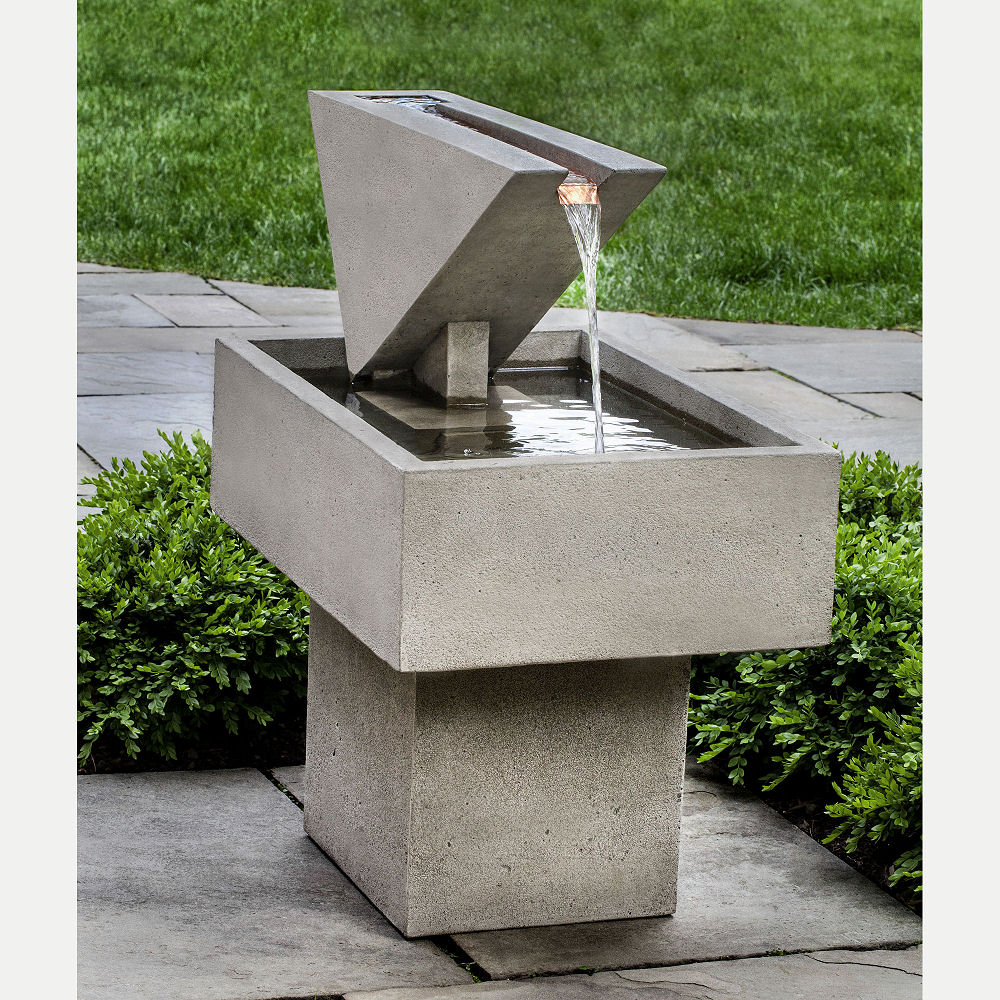
The single most important element in this design is the angular, asymmetric form. Standard fountains are almost always symmetrical. By using a tilted, geometric shape, the designer creates immediate visual tension and interest. It feels like a piece of modern sculpture. The water’s path is not immediately obvious, which invites a closer look. This clever use of geometry transforms a simple concrete block into a sophisticated, artful object.
This fountain’s compact, vertical design makes it ideal for smaller, contemporary spaces. It would work beautifully on a townhouse patio, a narrow side yard, or a rooftop terrace where floor space is at a premium. Its footprint is likely no more than 3×2 feet, but its height gives it presence. This is a great solution when you want the sound and look of water without sacrificing a large chunk of your valuable outdoor living area, unlike the expansive design in Idea #1.
20. Paver Patio with Integrated Water Jets
For an in-ground jet system like this, the key to a high-end look is the grate and the surrounding material. Instead of a standard plastic or metal grate over the reservoir, this design uses interlocking pavers with pebble-filled gaps. This seamlessly integrates the feature into the patio. Water simply appears and disappears into the floor. To do this, you build the patio on a pedestal system over a hidden water basin with the pumps and filters underneath.
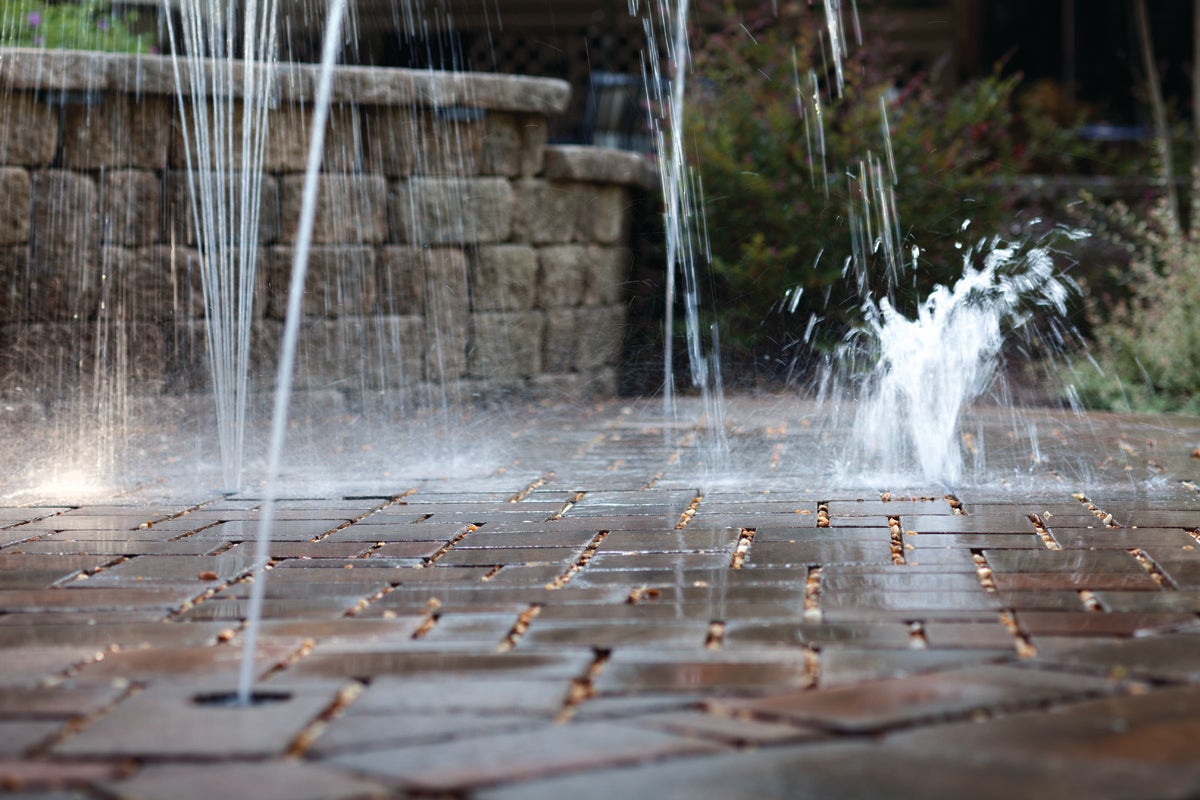
This type of ‘disappearing’ fountain is sleek, but it is not maintenance-free. The hidden underground reservoir needs to be accessed and cleaned at least once a season to remove debris like leaves, dirt, and sediment that gets washed down with the water. The small pebbles can also be kicked around and need to be swept back into place. And if a pump or light fails, you’ll have to lift a section of heavy pavers to service it, which is a much bigger job than with a self-contained unit.
21. Classic Three-Tiered Concrete Fountain in a Garden
This is a timeless design for a reason: it taps into classical proportions that are inherently pleasing to the eye. The fluted columns and successively smaller bowls create a stable, elegant pyramid shape that feels both grand and balanced. When placed in a soft, unstructured setting of green foliage, the fountain’s formal structure provides a perfect point of contrast. It’s the interplay between the man-made formality and the natural wilderness that makes it work so well.
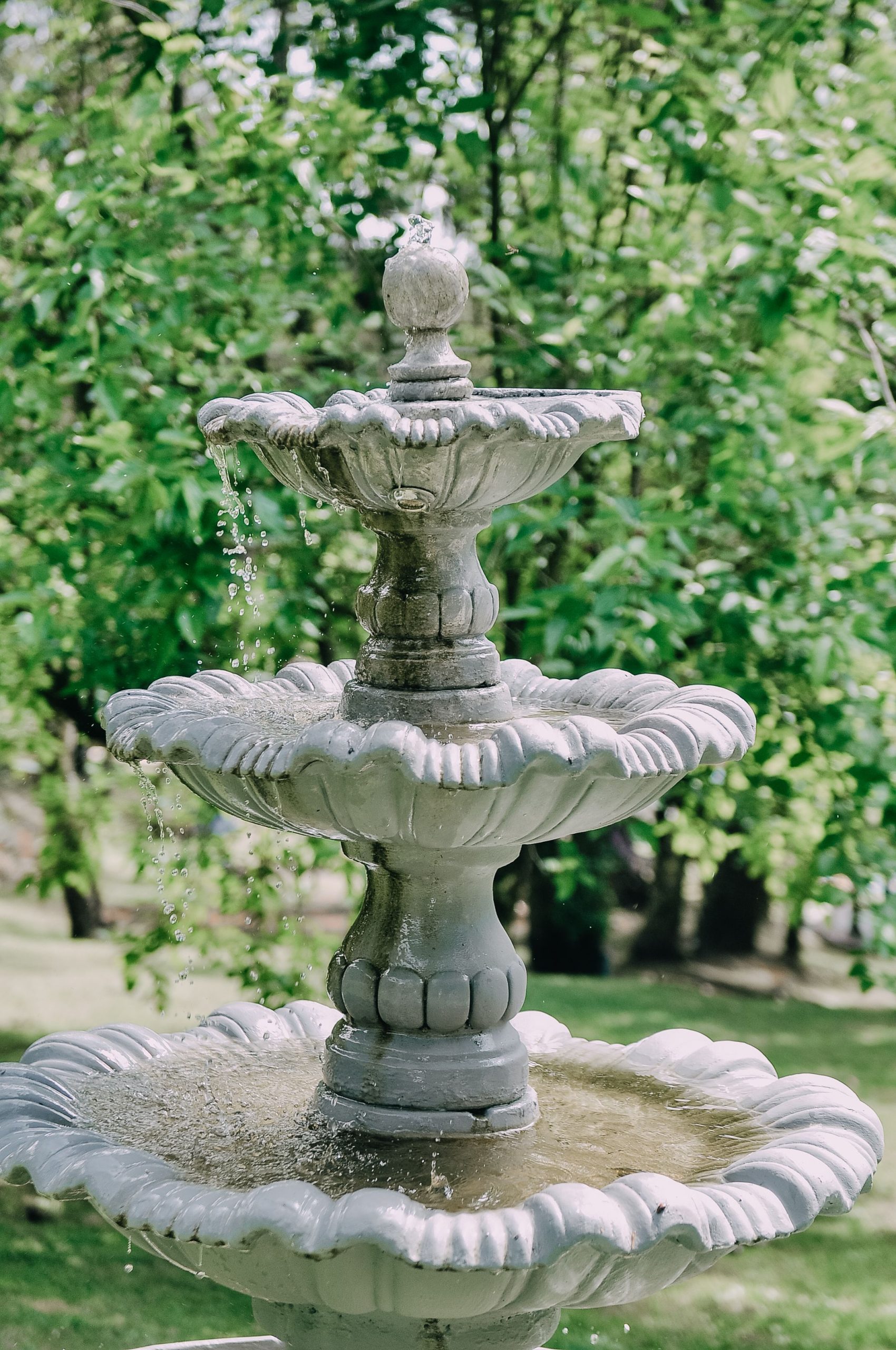
You don’t need to spend thousands on carved stone to get this classic silhouette. Look for lighter-weight versions made from fiberglass or resin that mimic the look of concrete. These can often be found online or at garden centers for $500 to $1,200. While they may not last for generations like stone, they provide the same visual impact for a fraction of the cost and are much easier to move and install yourself, making it a manageable weekend project.
22. Three-Tiered Fountain with Pineapple Finial and Pea Gravel
The pineapple finial on top is the detail that gives this fountain its specific charm and personality. In landscape design, the pineapple is a traditional symbol of hospitality and welcome. By choosing this finial instead of a generic sphere or point, the designer infuses the entire garden with a friendly, inviting feeling. It’s a small touch that has a big impact on the overall mood of the space, turning a standard fountain into a conversation piece.
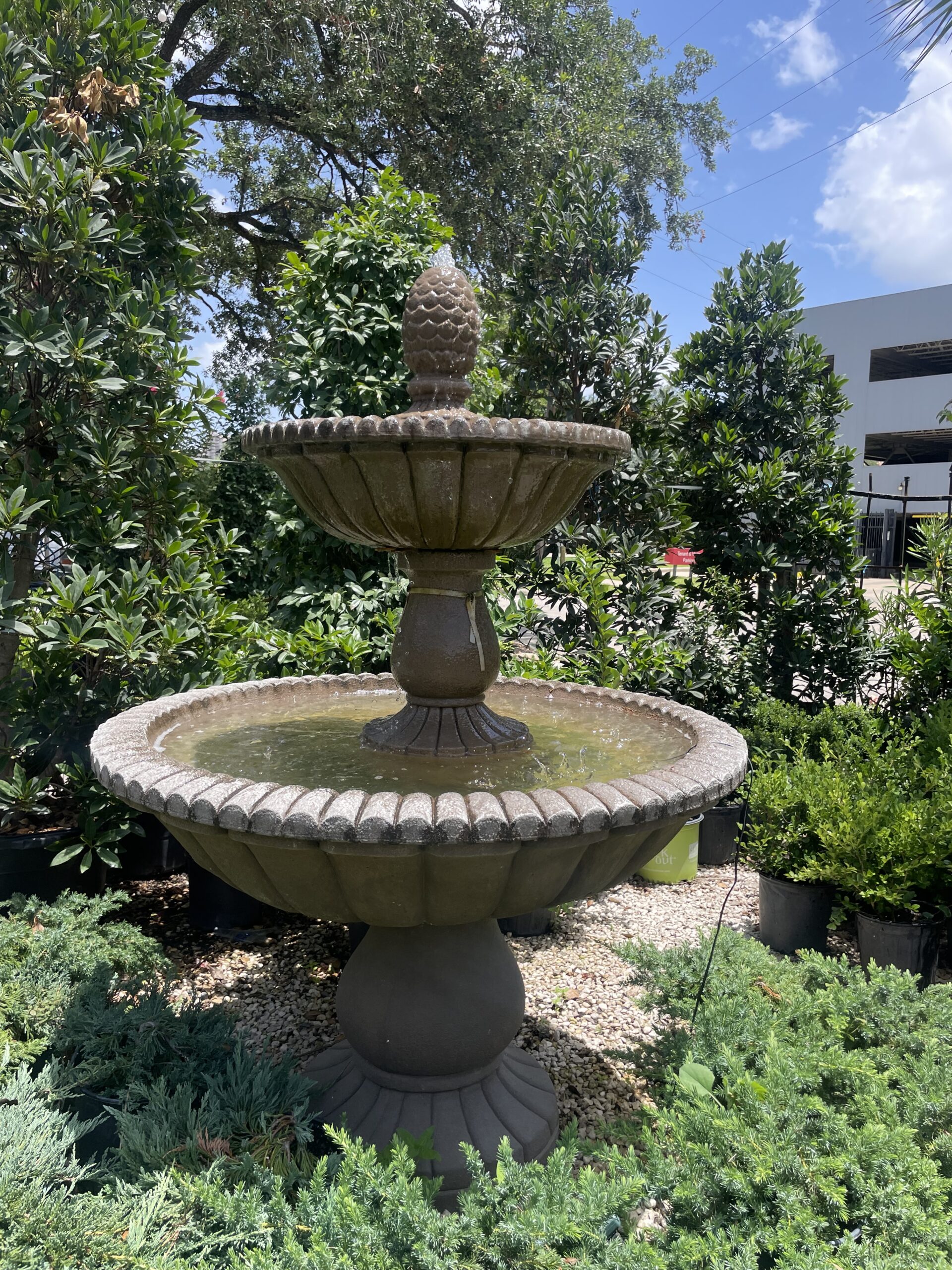
Using pea gravel as a base around your fountain is a brilliant, low-cost, and practical choice. It creates a clean, textured surface that allows water splash-out to drain away freely, preventing muddy puddles. For best results, install heavy-duty landscape fabric underneath the gravel to suppress weeds, and use a steel or stone border to keep the small stones from migrating into your lawn or garden beds. A 2-3 inch layer is all you need.
23. Classical Fountain with Horse and Pineapple Motifs
The success of this opulent fountain is rooted in its masterful use of scale and detail. The fountain is large enough to command the space, but the details—the carved horses, the pineapple finial—are intricate enough to draw you in for a closer look. The different tiers break down the overall mass, making it feel ornate rather than bulky. It’s placed in a setting of perfectly manicured hedges and a wide patio, which gives it the ‘breathing room’ a piece this dramatic requires.
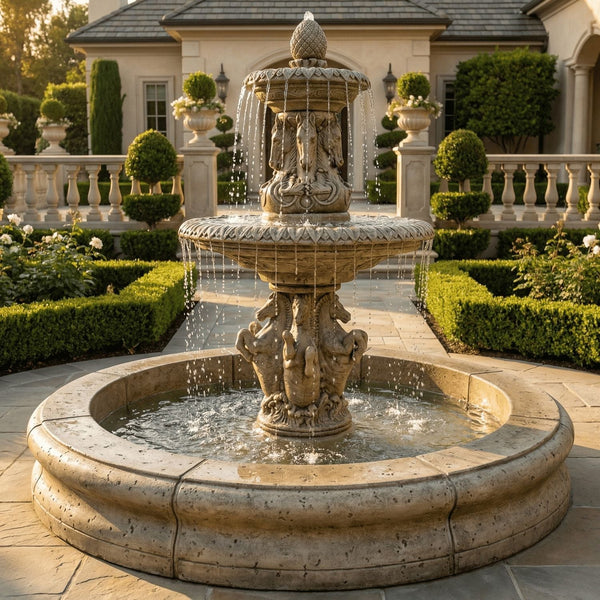
A fountain of this stature is exclusively for large, formal landscapes. The diameter of the outer basin alone is likely 10-12 feet. To look appropriate, it should be the centerpiece of a patio, courtyard, or garden area that is at least 40×40 feet. Anything smaller and the fountain will completely dominate the space, making your yard feel cramped. This is a commitment to a very specific, grand aesthetic, a more ornate version of the fountain in Idea #13.
24. Cascading Concrete Bowls Water Feature
This is modern rustic design expressed as a formula: 70% raw texture + 30% simple geometry. The magic is in the rough, imperfect surfaces of the concrete bowls and the ribbed vertical panel; they feel organic and hand-formed. This rawness is contained within a very simple geometric arrangement of stacked circles and a rectangle. The result is a piece that feels both natural and thoughtfully designed, fitting perfectly into a contemporary or transitional garden.
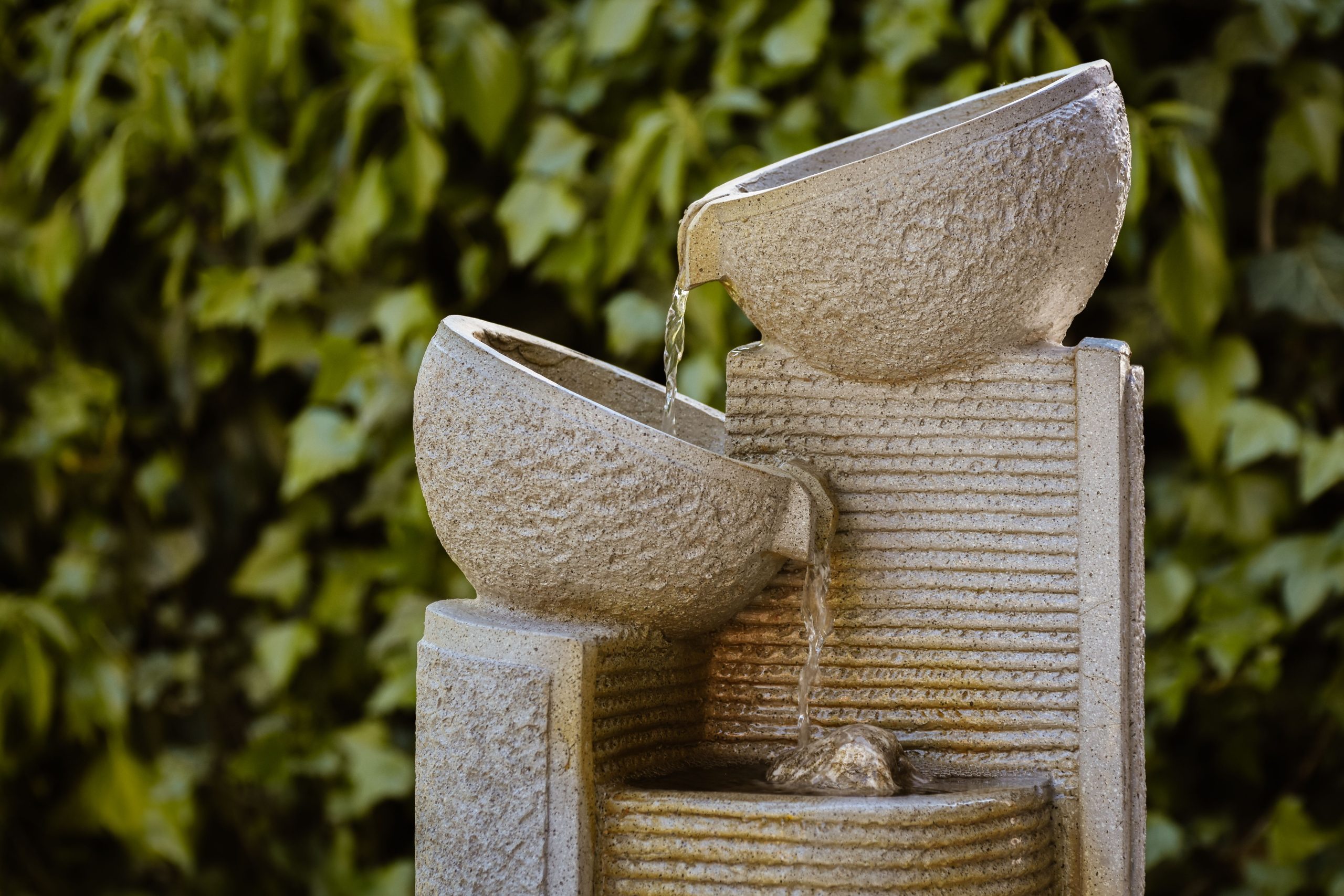
Splash is a real consideration with a ‘spillway’ design like this. Because the water falls freely from the top bowl and then down the panel, it’s more likely to splash outside the basin, especially on a windy day. This isn’t a fountain for a small, finished wood deck where you want everything to stay perfectly dry. It’s best placed on a patio with good drainage or within a garden bed where the overspray will simply water the plants.
25. Natural Boulder and Rock Cascading Fountain
that makes this design work is its complete mimicry of nature. This isn’t a structured ‘fountain’ in the classical sense; it’s a recreation of a miniature mountain spring. The use of multiple boulders and smaller, irregular rocks to create the cascade makes it look like it was discovered rather than built. The scattered autumn leaves, rather than being cleaned away, add to the authentic, rustic charm. It’s a piece of wilderness, miniaturized.
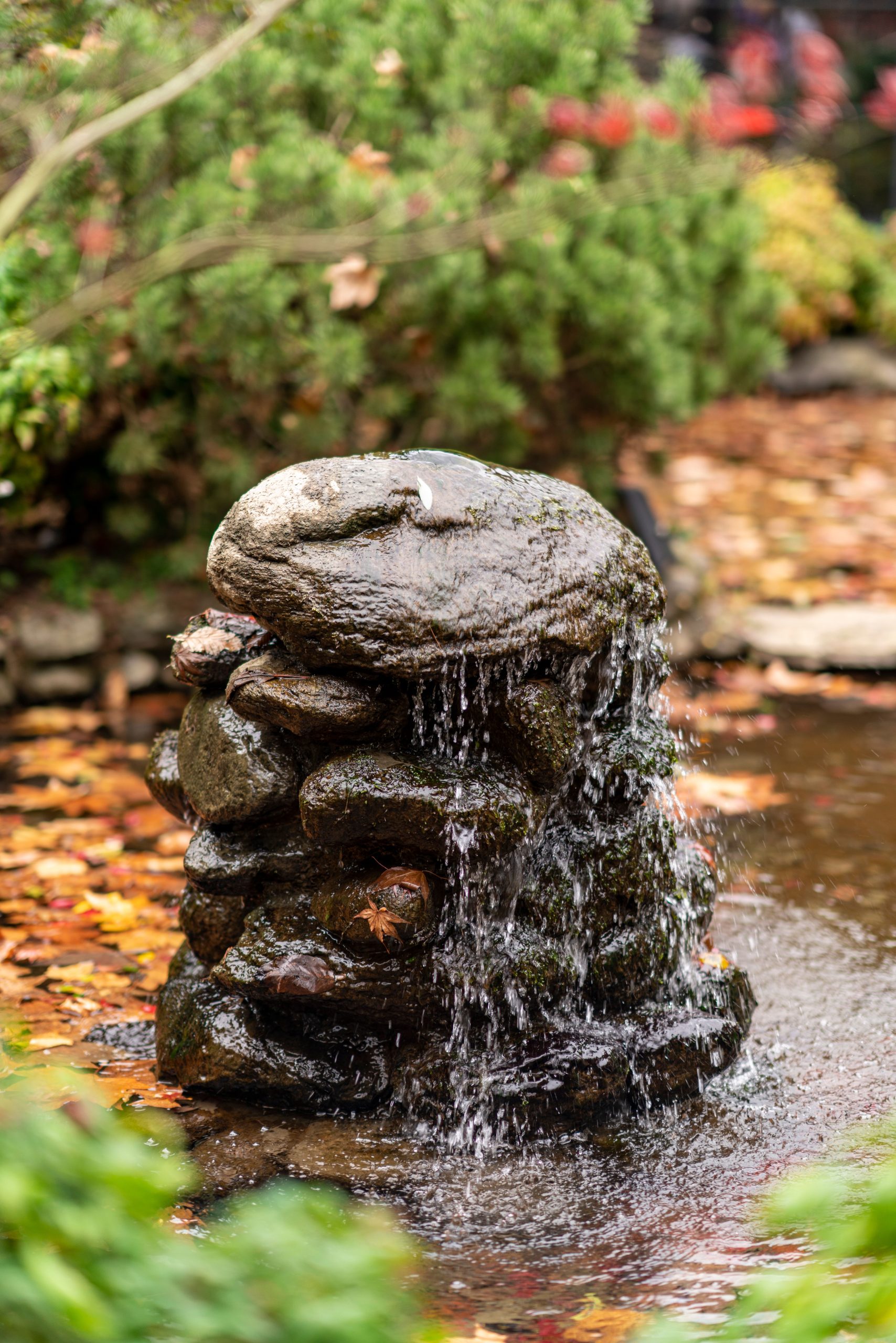
How-To: Create a Simple Rock Cascade
Time: 1 Weekend | Cost: $400-$900
- Dig the Reservoir: Dig a hole for a pond liner or pre-formed basin. This will house the pump and collect the water.
- Build a Berm: Use the excavated soil to build up a small hill or ‘berm’ next to the reservoir. This will be the base for your cascade.
- Place Liner & Rocks: Lay a flexible pond liner over the berm and into the reservoir. Start placing your largest boulders first to create the main drop-offs for the waterfall. Use smaller rocks to fill gaps and hide the liner.
- Run Tubing: Submerge your pump in the reservoir and run the tubing up to the very top of your rock formation, hiding it between the stones.
- Test the Flow: Fill the reservoir and turn on the pump. Adjust the rocks as needed to get a pleasant-sounding, natural-looking flow of water.
26. Close-Up of a Weathered Stone Fountain Cascade
This image perfectly illustrates the power of texture in design. The rough, weathered surface of the stone provides a beautiful contrast to the smooth, flowing water. The notched edges of the upper basin do more than just add a decorative flair; they break up the water flow, creating distinct streams and adding to the gentle splashing sound. The blurred green foliage in the background provides a soft, organic frame, making the entire vignette feel calming and natural.
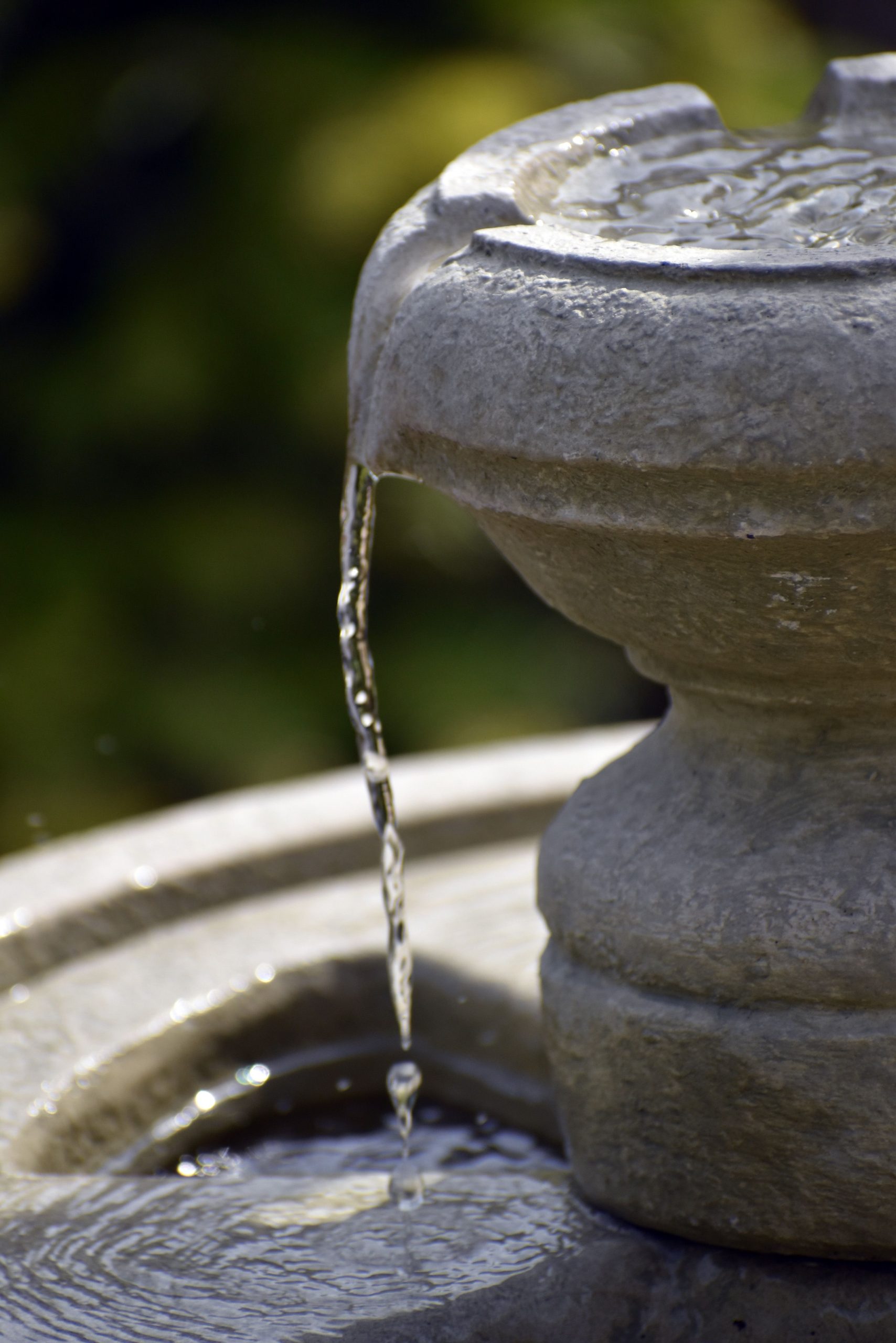
If you love the sound of a fountain, pay close attention to the ‘spillway’—the edge over which the water falls. A smooth, wide edge creates a quiet, sheet-like flow. A notched or serrated edge, like the one shown here, creates multiple small streams and a more pronounced, trickling sound. A ‘bubbler’ where water comes up from the center of a basin will be the quietest of all. Choose the edge style that creates the sound you find most relaxing.
27. Illuminated Tiered Stone Wall Waterfalls
This sophisticated look is a carefully balanced equation: 40% structured stone + 30% lush greenery + 20% moving water + 10% dramatic lighting. The tiered stone block walls and paved steps provide the strong ‘bones’ of the design. A profusion of grasses and shrubs softens all the hard edges. The sheer descent waterfalls and reflecting pools bring the scene to life, and the strategically placed warm lights create the after-dark magic. It is a true integration of hardscape and landscape.
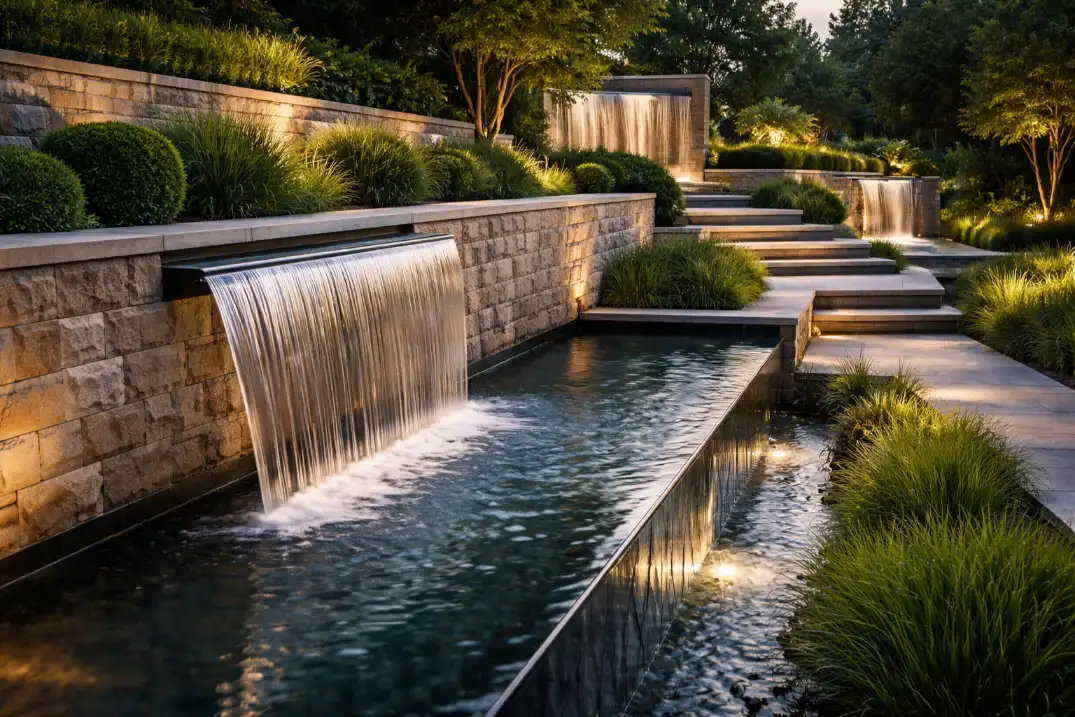
A custom, multi-level installation like this represents a significant investment.
- Masonry: Tiered retaining walls, stone cladding, and pathways – $15,000 – $40,000+ depending on scale and materials.
- Water Feature: Multiple pumps, basins, sheer descent waterfalls, filtration systems, and plumbing – $8,000 – $20,000+
- Lighting: Professional low-voltage landscape and underwater lighting design and installation – $3,000 – $7,000+
- Landscaping: Mature plants, soil, irrigation – $4,000 – $10,000+
- TOTAL: $30,000 – $77,000+
Budget alternative: A single sheer descent waterfall on a much smaller clad wall can be professionally installed for $5,000 – $12,000.
Your Garden’s Next Chapter Starts with a Splash
You’ve seen the inspiration, from quiet bubblers to grand cascades. The right water feature does more than just decorate; it brings your garden to life with sound and movement. Now the fun part begins: choosing the one that tells your story. Don’t forget to save your favorites to Pinterest to keep the inspiration flowing!