
You know that feeling when you finally find the Jacuzzi outdoor idea that looks exactly right for your space? It’s a mix of excitement and a little bit of “Wait, can I actually pull this off?”. We see you, we are you, and we’ve done the homework. After filtering through literally hundreds of options, we narrowed it down to 27 distinct, Pinterest-worthy ideas that actually deliver. We’re covering everything from modern and minimal to lush and tropical, with real-world examples that work. And yes, a backyard oasis is more attainable than you think in 2026, as people continue to invest in creating personal retreats right at home. And stay until the end — we break down the most common mistakes that can ruin these looks. 📌 Save this to Pinterest for later — you’ll want to revisit these ideas.
1. An Ocean-View Jacuzzi on a Classic Wooden Deck
What makes this setup so breathtakingly simple and effective? It’s all about embracing the borrowed view. The design doesn’t try to compete with the ocean; it frames it. The clean lines of the white jacuzzi and the warm, light brown wooden deck create a neutral foreground that lets the deep blue of the water and sky take center stage. The use of dark gray loungers provides a subtle, grounding contrast without adding visual noise. This principle of “less is more” is key when your backdrop is this magnificent.
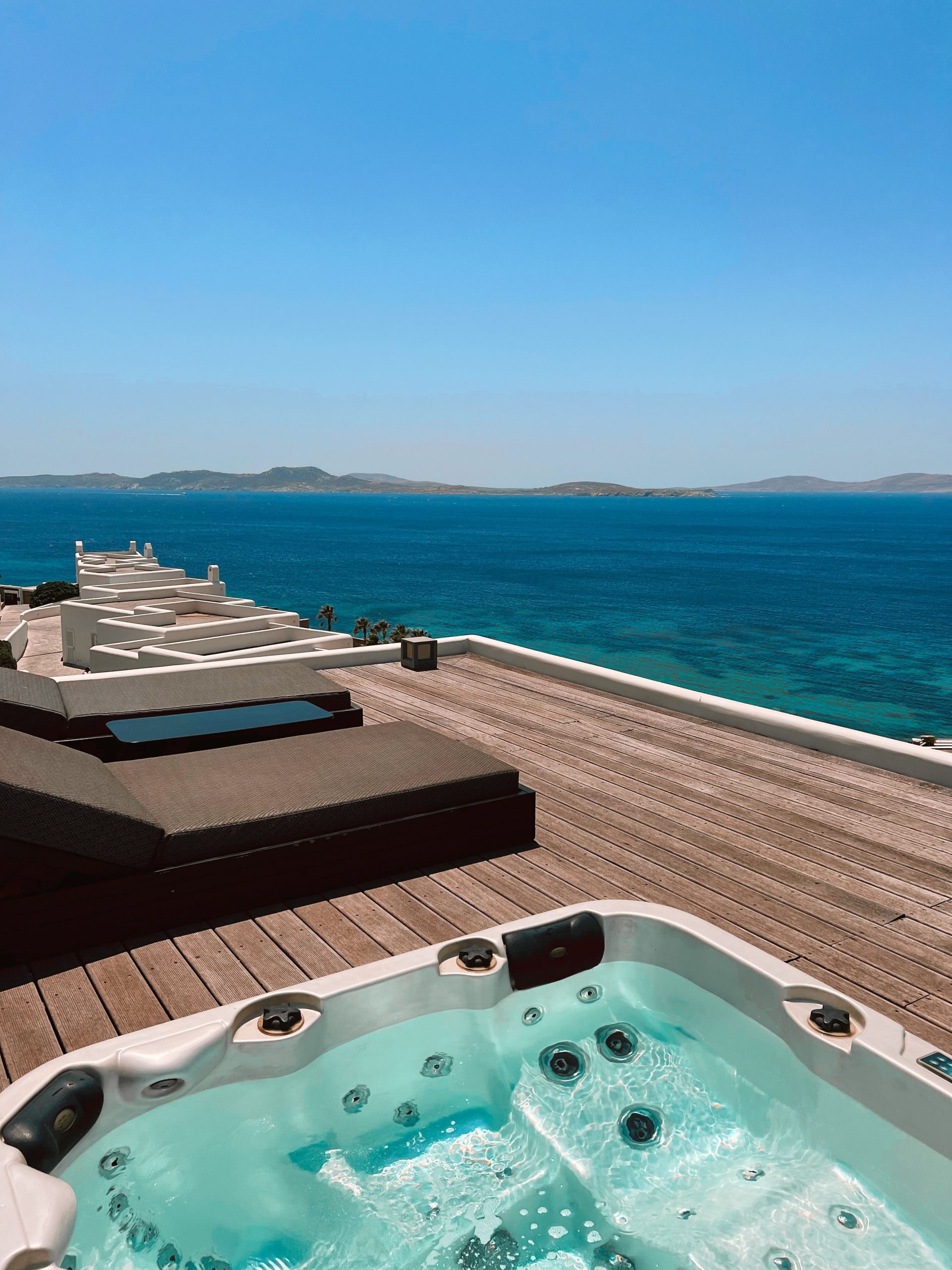
that makes this entire concept work is the seamless horizon line. The placement of the jacuzzi and deck allows for an uninterrupted view that connects the water in the tub to the ocean beyond. If you were to add a bulky railing or tall furniture, you would instantly break that connection and lose the sense of infinite space. Everything here is designed to make you feel like you are floating right at the edge of the world, and that single, powerful illusion is the entire point.
2. Modern Sunset Soak with Coastal Town Views
This look is a masterclass in modern coastal style. Think of it as a simple equation: 50% sleek materials + 30% natural textures + 20% vibrant accent. The sleek comes from the white jacuzzi shell, chrome fixtures, and minimalist glass railing. The natural element is the light wood deck, which adds warmth and prevents the design from feeling too sterile. The final pop comes from the single orange towel, which brilliantly picks up the colors of the sunset, making the whole scene feel curated and cohesive. You could swap the orange for a deep blue or sunny yellow to match a different mood.
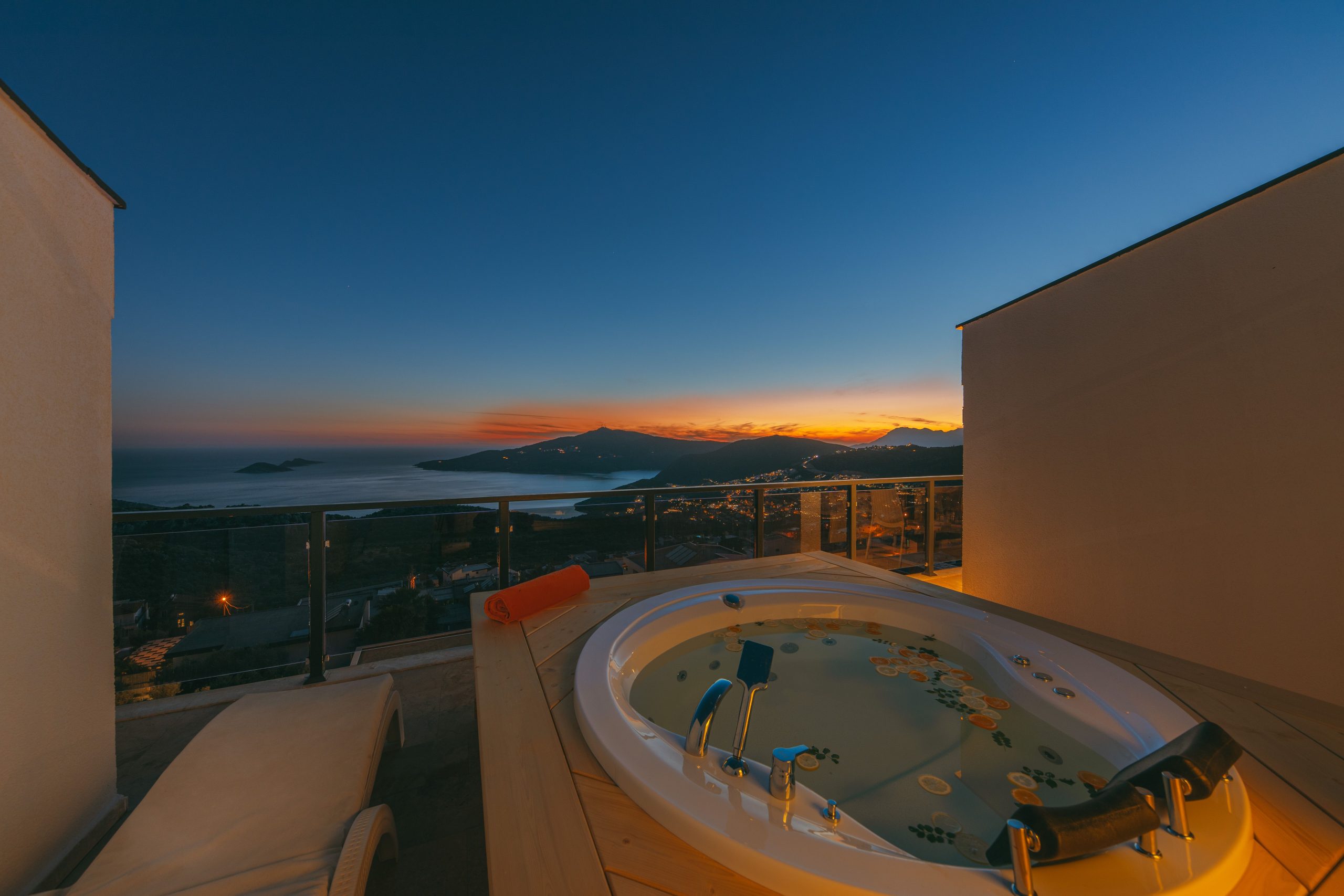
Let’s have some real talk about glass railings. While they look absolutely stunning and are perfect for preserving a view, they are a magnet for fingerprints, smudges, and water spots, especially in a coastal environment with salt spray. You will be cleaning this glass far more often than you think to keep it looking pristine. Also, check your local building codes. Many areas have specific height and strength requirements for glass safety railings, especially on an elevated deck, which can add to the cost and complexity of installation.
3. Octagonal Jacuzzi on a Dark Wood Deck Facing the Mountains
When you have a dark deck, a white jacuzzi can look stark. The secret here is the use of dark accents on the tub itself—the four dark headrests. This small detail is a professional designer’s trick to create visual harmony. It bridges the high contrast between the dark deck and white tub, making the jacuzzi feel integrated rather than just placed on top. When choosing your hot tub, look for models that offer two-tone options or customizable headrests to achieve this polished, cohesive look. It makes a world of difference.
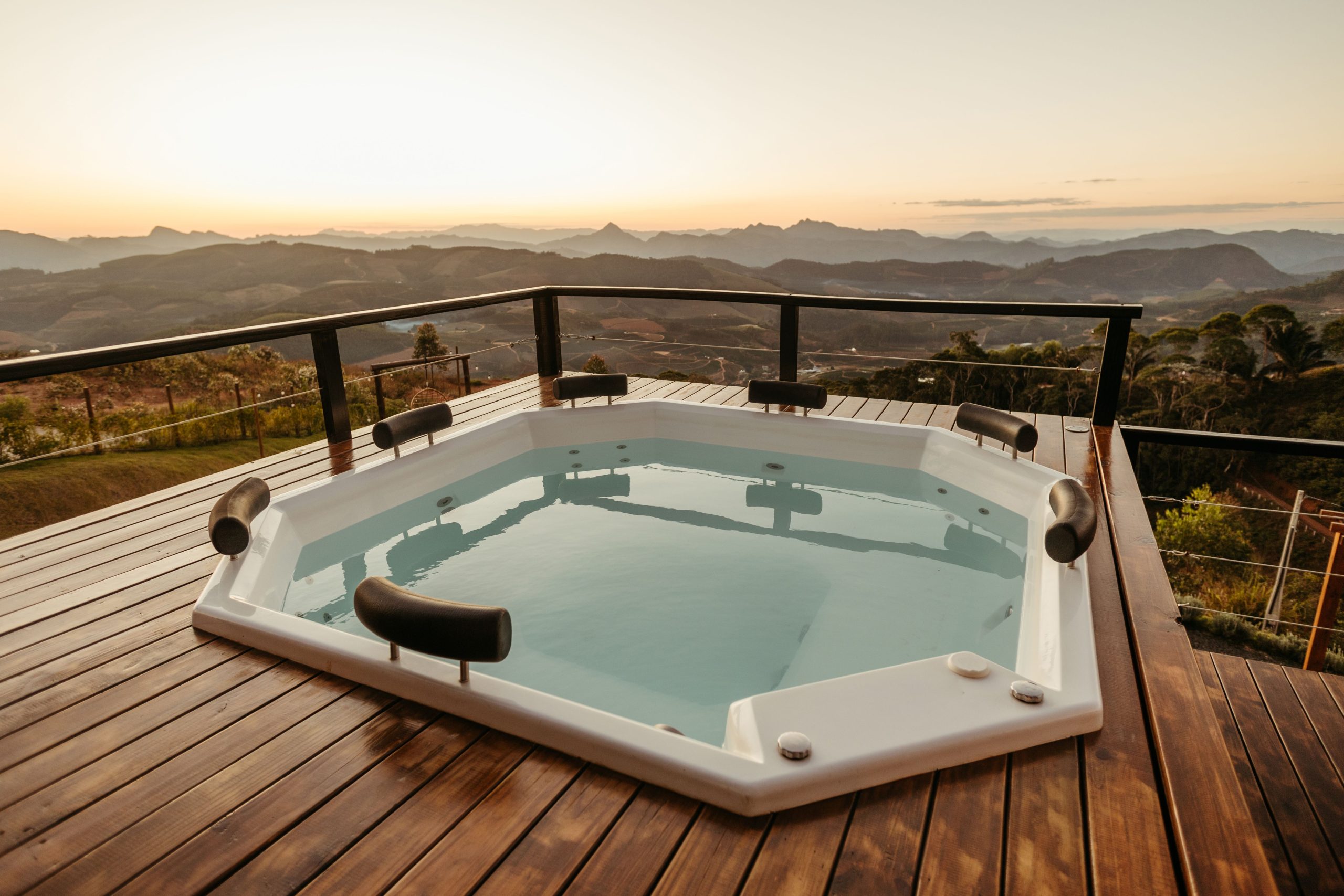
An expansive view demands an equally expansive-feeling deck. This idea works best with a deck that has at least 150-200 square feet of usable space, not including the jacuzzi cutout. You need enough room for the tub, safe circulation around it (at least 24 inches on all sides), and a small seating area to make it functional. The octagonal shape is a smart choice for maximizing seating inside the tub without the massive footprint of a large square model, making it a good fit for a slightly narrower deck where a square might feel bulky.
4. Tiered Patios Featuring a Round Stone-Clad Jacuzzi
Recreating this multi-level, resort-style oasis is a significant investment. The custom stonework and integrated pool are the biggest costs.
- Main Furniture (Loungers, Chairs): $2,000 – $5,000
- Jacuzzi & Pool Installation: $40,000 – $80,000+
- Textiles (Cushions, Umbrellas): $1,500 – $3,000
- Structures (Pergola, Walls): $15,000 – $30,000
- Patio & Decking: $10,000 – $25,000
- Budget Alternative: Use pre-fabricated stone veneer panels instead of custom masonry, opt for a high-quality standalone jacuzzi ($8k-$15k), and a smaller concrete patio. This could bring the total closer to $25k-$40k.
- TOTAL: $68,500 – $143,000+
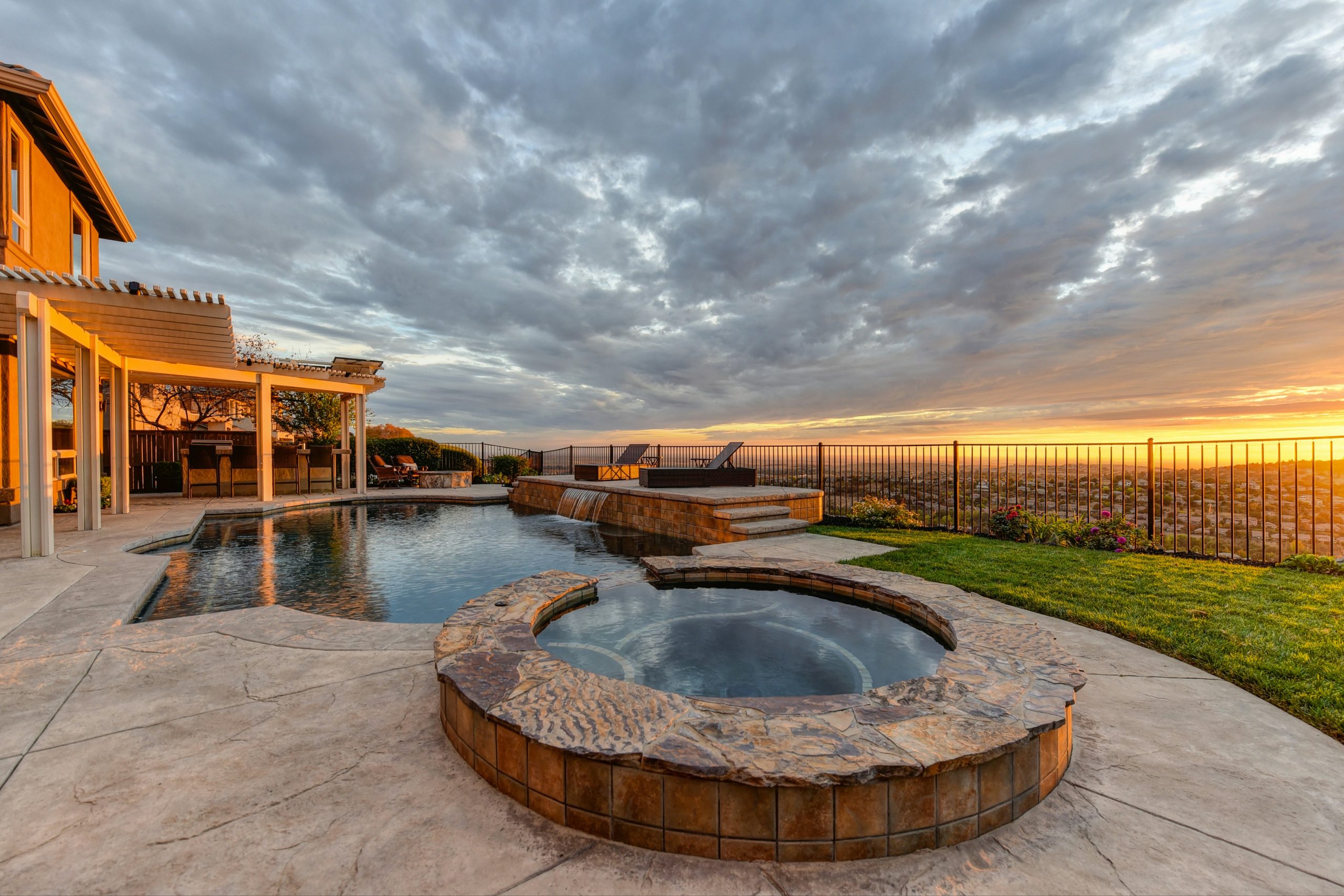
This design works because of its masterful use of levels and texture. The space is broken into distinct zones—soaking, swimming, lounging—each defined by a change in elevation. This creates visual interest and makes a large area feel more intimate and organized. The repetition of the rustic, rust-toned stone on the jacuzzi, the waterfalls, and the landscape walls ties the entire sprawling space together into one cohesive design, proving you can go big and still be beautiful.
5. A Lush, Tropical Jacuzzi Nook with a Red Chaise Lounge
The single element that makes this space feel special is the unapologetic use of red. From the distressed deck boards to the chaise cushion and the painted wall, the commitment to this warm, energetic color is what elevates the design from a simple backyard setup to a deliberate, tropical-inspired retreat. If you removed the red, you’d be left with a perfectly fine jacuzzi on a deck. With it, you have a vibrant, memorable, and deeply personal space that radiates warmth and character. It’s a powerful lesson in how a bold color choice can define a mood.
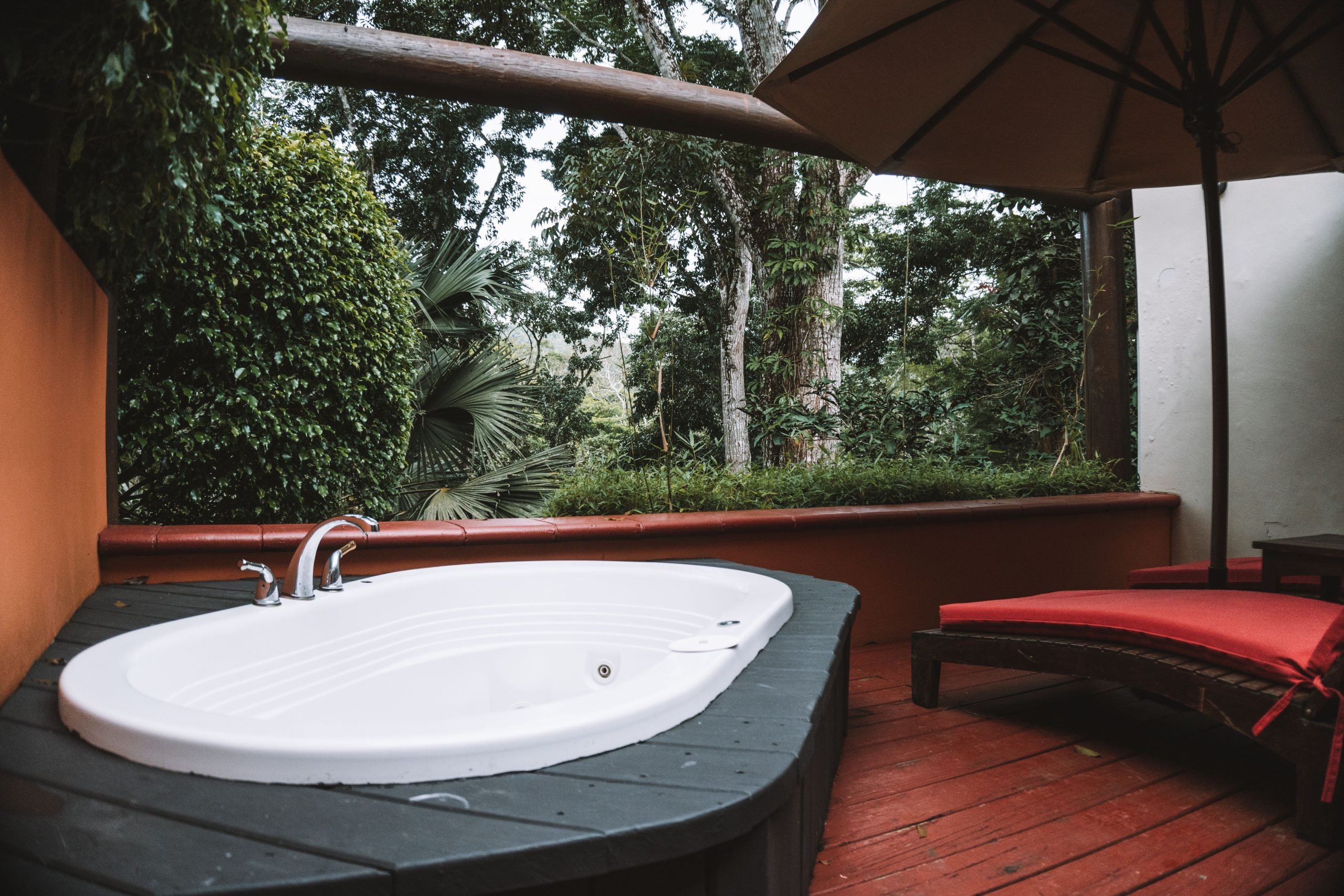
A wooden deck in a lush, foliage-heavy environment requires consistent upkeep. The same moisture that makes the plants thrive can lead to mildew, moss, and rot on your deck boards. You’ll need to power wash and re-stain or seal the wood every 1-2 years to protect it. That distressed red finish, while beautiful, will also show wear and tear, requiring touch-ups. Be prepared for a seasonal maintenance routine to keep this tropical paradise from being reclaimed by nature.
6. Private Swim Spa Gazebo with a Wicker Sectional
That clear-to-amber corrugated roof on the gazebo looks fantastic and lets in a lot of light, but let’s be honest: it’s going to get dirty. Pollen, leaves, and bird droppings will be very visible from below, and cleaning the inside of those corrugations is a serious chore. Also, while it provides shelter from rain, it can create a greenhouse effect on hot, sunny days, making the space uncomfortably warm unless you have excellent ventilation or the ability to draw the curtains for shade.
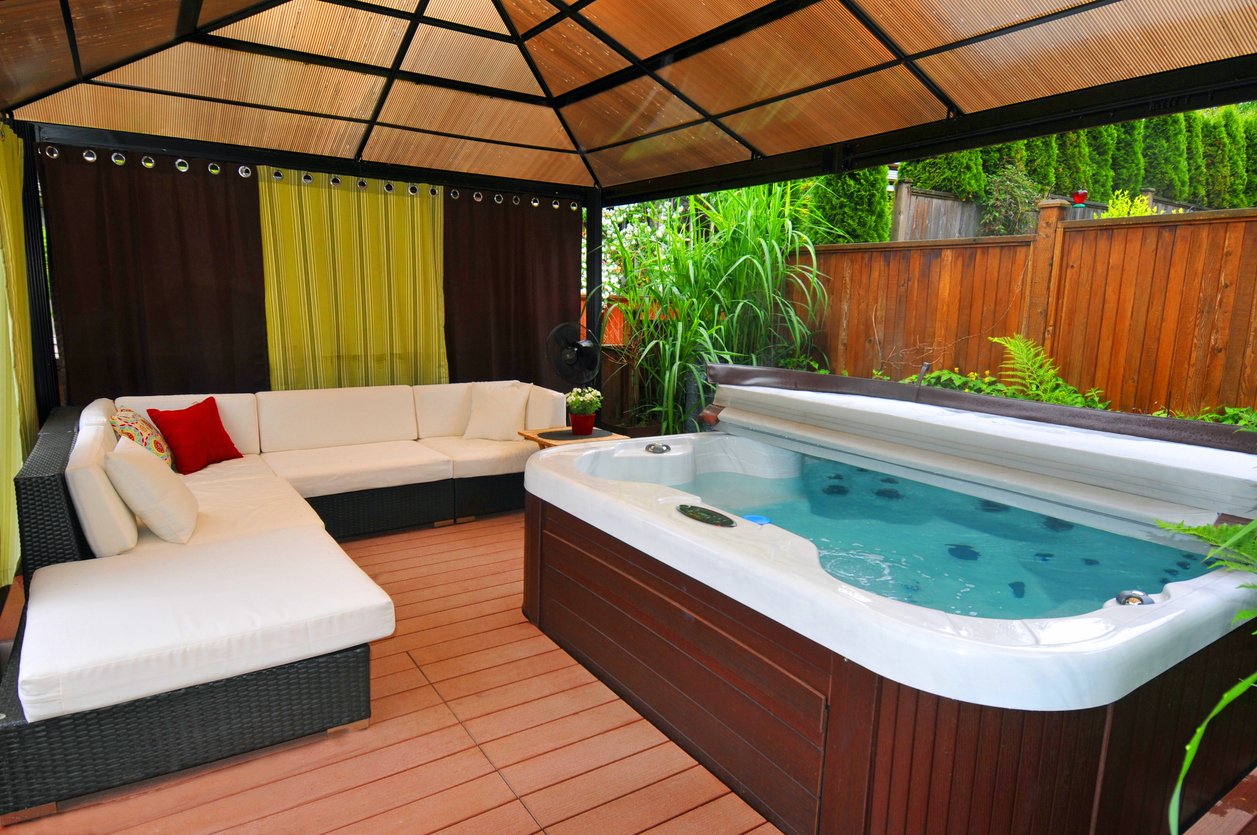
To keep an outdoor sectional looking its best, invest in covers and use them religiously. But the real pro tip is to periodically bring the cushions inside for a 24-hour “drying out” session in a low-humidity space, even if they have waterproof covers. This prevents that musty, mildewy smell that can develop when moisture inevitably gets trapped in the foam core. Think of it as a spa day for your cushions. It will dramatically extend their life and keep them fresh all season.
7. Modern Tiered Deck with an Integrated Swim Spa
This design is a stunning example of architectural integration. The swim spa isn’t just an add-on; it’s part of a cohesive system. The gray composite deck flows from the house, down multiple levels, and seems to seamlessly merge with the spa itself. The use of natural wood for the fence and posts, combined with the stone cladding on the house, creates a material palette that is both modern and deeply connected to nature. The result is a backyard that feels like a single, thoughtfully designed organism.
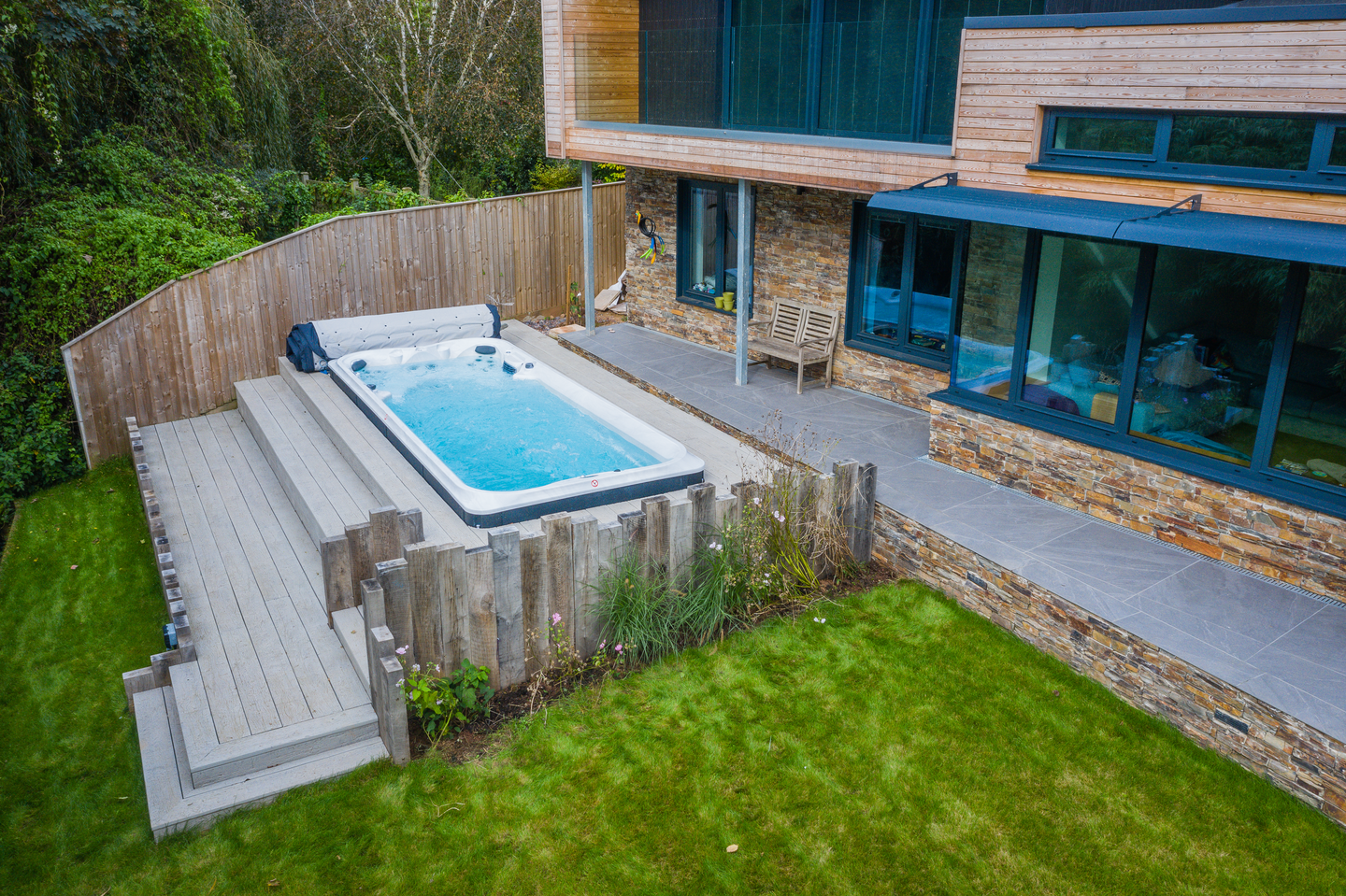
Thinking about a project this integrated? Here’s a checklist to run through before you even call a contractor:
- Measure Everything: Do you have the footprint for both the swim spa and the multi-level decking required to make it look built-in? This includes height clearances as well as length and width.
- Check Zoning: Verify local setback rules for how close you can build to your property lines, especially for a permanent structure like this.
- Sun Path: Where does the sun hit your yard throughout the day? You want to position the spa to get the sun you want (or don’t want) at the times you’ll be using it most.
8. Rustic Wood-Fired Hot Tub by a Forest Stream
The soul of this idea is the wood-fired heating system, symbolized by that beautiful metal chimney. This isn’t about flipping a switch; it’s about the ritual of heating the water. It’s about the smell of woodsmoke, the crackle of the fire, and a deeper connection to the rustic experience. Removing the chimney and replacing it with a standard electric heater would fundamentally change the character of the space, turning it from a rustic, off-grid escape into just another hot tub. The process is the prize.
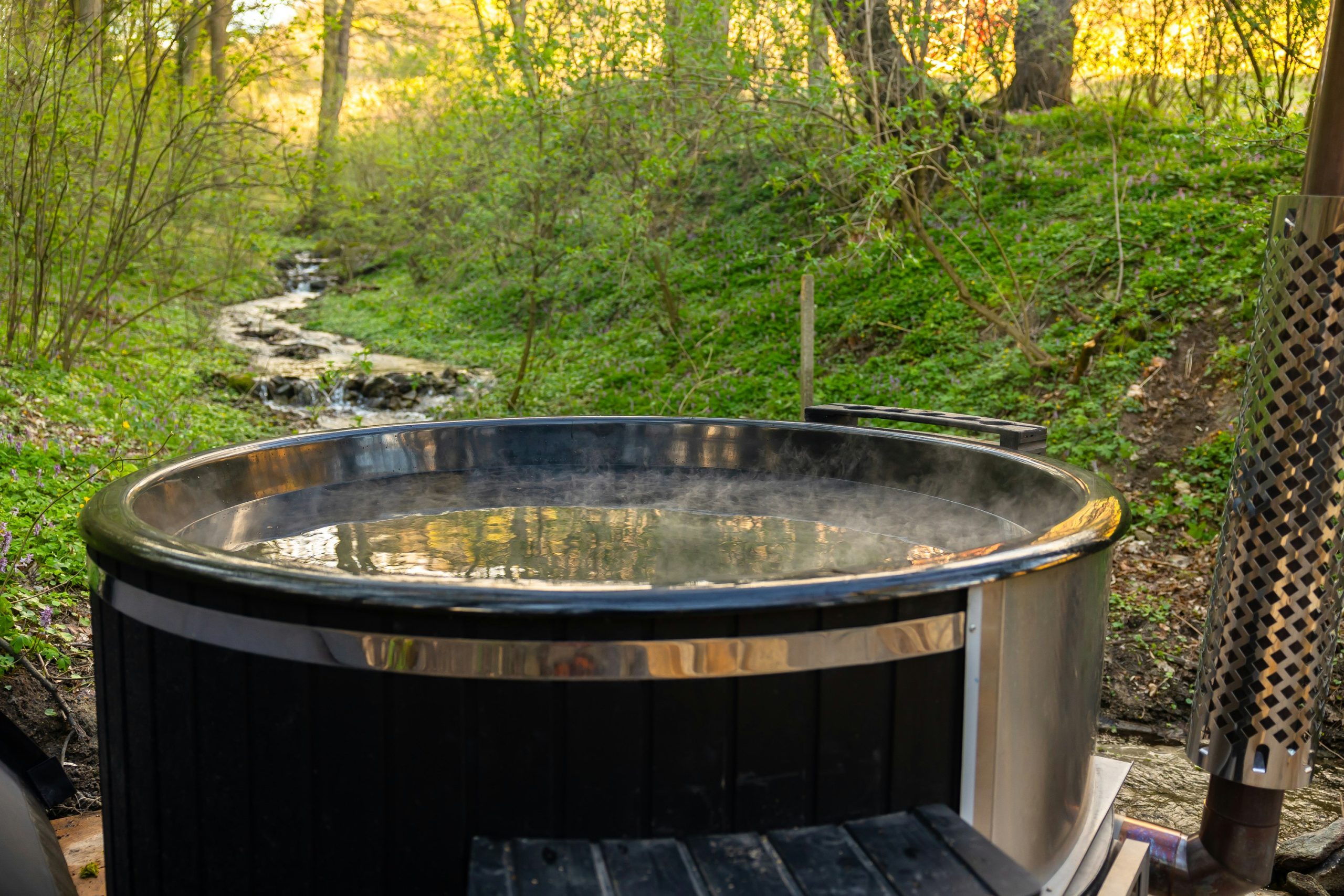
Okay, let’s get real about wood-fired hot tubs. They are romantic, but they are not convenient. It can take several hours and constant tending of the fire to get the water up to temperature, especially in a cold climate. You can’t just decide to hop in on a whim. There’s also the work of sourcing, splitting, and storing dry firewood. And forget about precise temperature control—you get what the fire gives you. This is for people who love the process, not for those who want instant gratification. It’s a wonderful, but demanding, choice. Compare this with the instant-on luxury of Idea #15.
9. Circular Wooden Jacuzzi with a Bright Yellow Planter
This look achieves a perfect balance between natural, industrial, and playful elements. The formula is roughly 50% natural materials + 30% sleek neutrals + 20% bold color. The warm woods of the jacuzzi and deck provide the natural base. The pale grey concrete wall and black industrial sconces bring in a sleek, modern-neutral vibe. And that vibrant yellow planter box is the 20% of pure joy that makes the whole thing pop. You could swap the yellow for a bright turquoise or hot pink for a different but equally successful result.
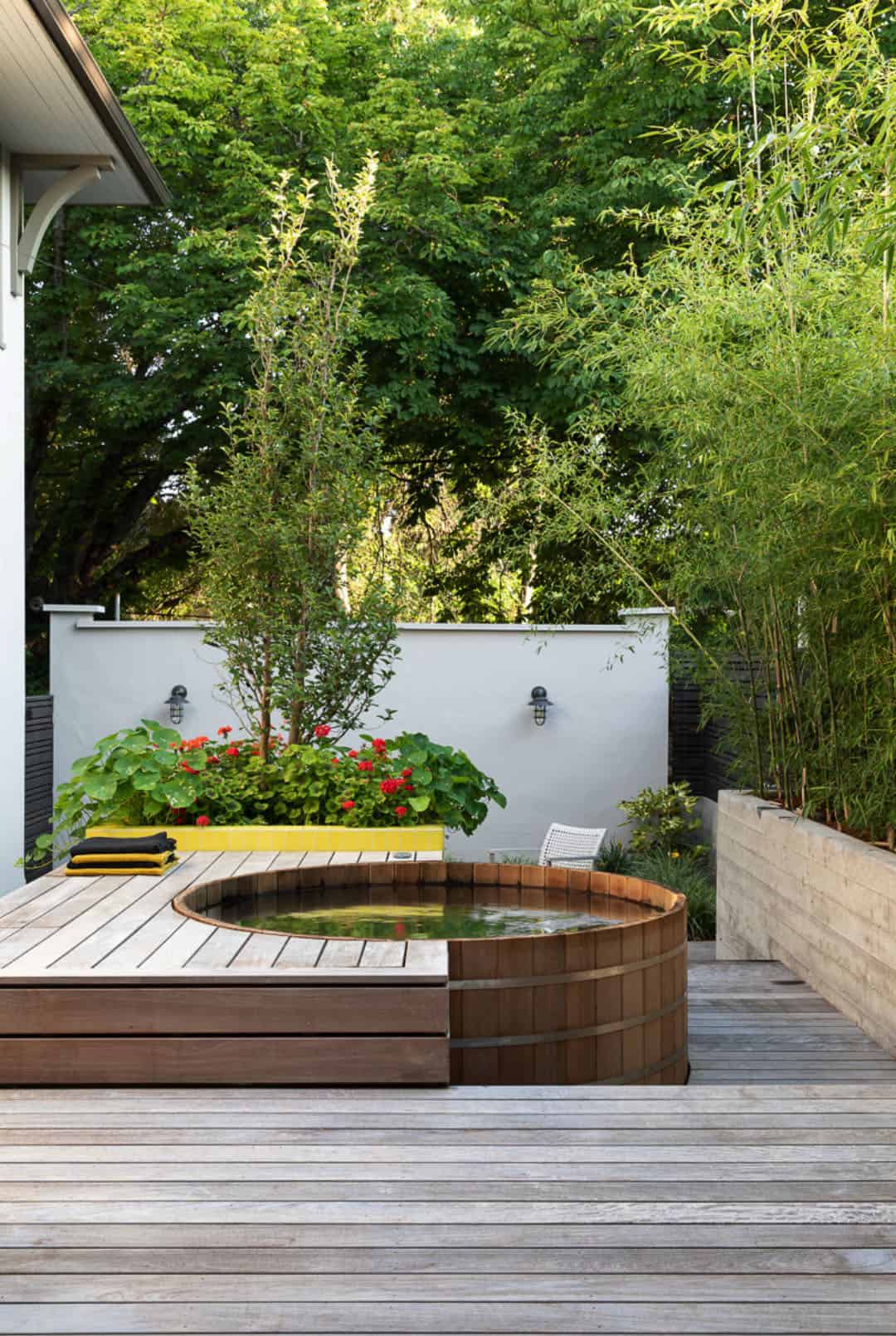
Want this secluded, colorful vibe for less? It’s totally doable. Start by looking for a used circular hot tub on Facebook Marketplace—they often go for $500-$2000. Build a simple DIY deck surround using standard pressure-treated pine instead of expensive cedar. You can paint a cinder block wall a light grey for that concrete look, and a a vibrant coat of exterior paint on a simple wooden planter box from Target or Walmart will give you that pop of color for under $50. The industrial sconces can be found on Amazon for less than $100 for a pair.
10. Family Entertainment Patio with a Blue Mosaic Jacuzzi
This space is a masterclass in zoning for a multi-use backyard. Instead of one vast, undefined patio, the design uses clever elements to create distinct “rooms” without walls. The jacuzzi area flows into tiered seating, which is separate from the fire pit conversation zones. The black metal screen enclosure acts like a sophisticated frame for it all, while the adjacent playground on its own turf clearly signals a kids-only zone. Every-one has a place to be, and every activity has its own space, which is the key to a truly functional family entertainment area.
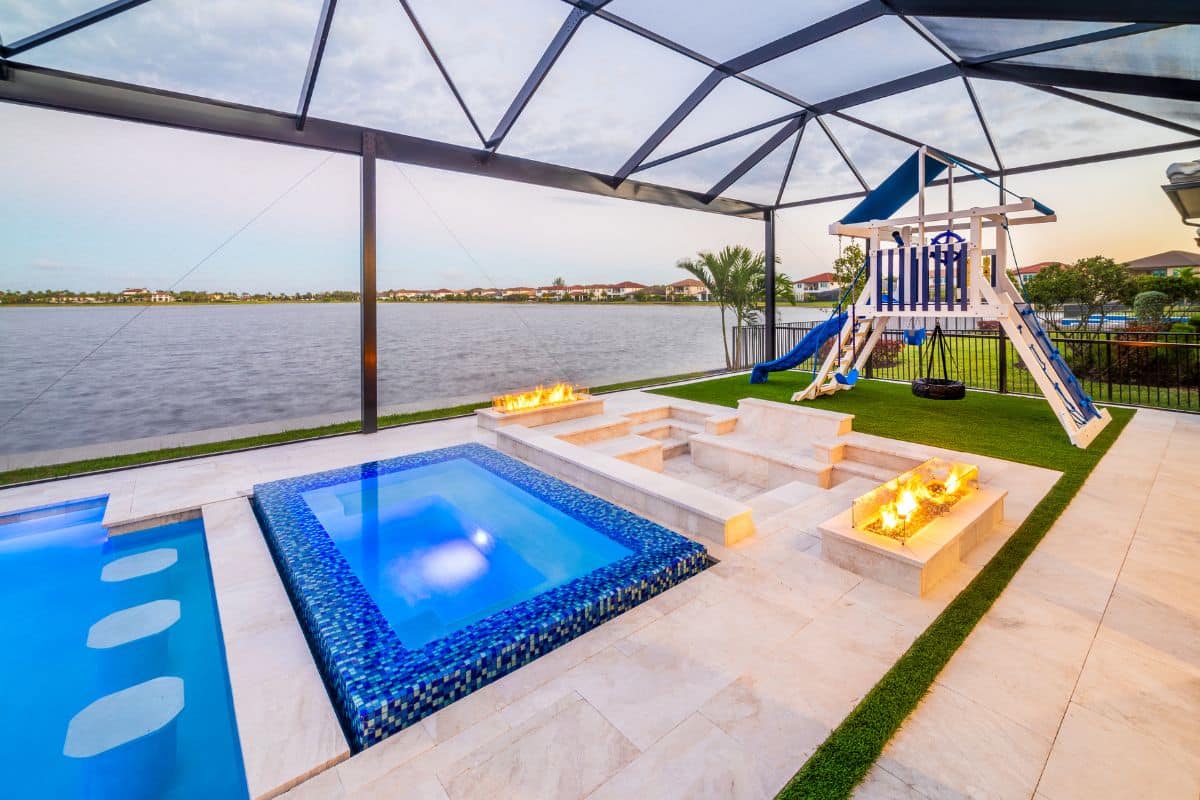
A design this ambitious requires a significant amount of space. To comfortably fit a jacuzzi, tiered seating, two fire pits, a walkway, and connections to a playground, you’re looking at a minimum patio footprint of 800-1,200 square feet. This is not a small backyard solution. This is for a property where the outdoor living space is as large and important as the indoor living space, likely overlooking a lake or other large open area as shown. For a more compact but still luxurious feel, check out Idea #26.
11. Recessed Jacuzzi in a Modern Tropical Deck
Want to recreate that lush, dense green border wall? It’s easier than you think and adds incredible privacy and tropical flair. Here’s a quick guide:
- Estimate Time & Cost: 1-2 days, $300-$800 for a 20-foot section.
- Build the Bones: Securely install a series of tall, slim planters (or build a continuous planter box) along your wall. Make sure they have good drainage.
- Choose Your Plants: For a lush look, layer plants by height. Use tall, slender varieties in the back (like bamboo or majesty palms) and fuller, shorter plants in the front (like bird of paradise, elephant ears, or large ferns).
- Plant & Mulch: Fill with good quality potting soil, arrange your plants, and top with a thick layer of mulch to retain moisture.
- Install Irrigation: The secret to keeping it lush is consistent water. Run a simple drip irrigation line through the planters and connect it to a timer.
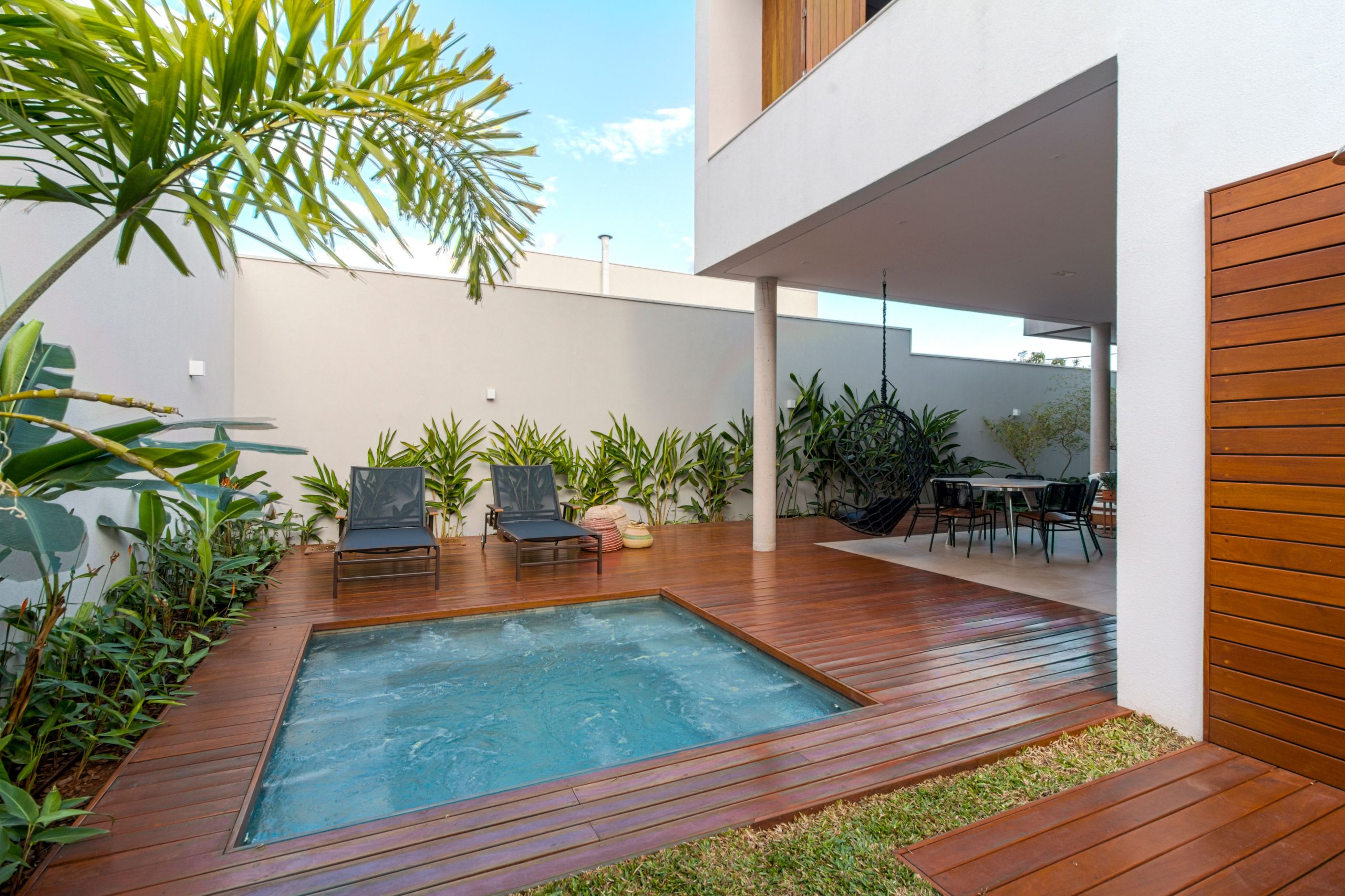
The key to making a recessed jacuzzi look truly sleek and integrated is to minimize the “lip” or coping around the edge. In this design, the wooden deck runs almost perfectly flush with the top of the jacuzzi shell. This requires precise construction of the support structure underneath the deck. Aim for a gap of no more than 1/4 inch between the deck boards and the jacuzzi shell for that clean, professional finish. It’s a small detail that makes a huge difference in achieving a modern aesthetic.
12. Integrated Pool and Jacuzzi with White Planter Accents
This design succeeds by using strong, repetitive geometric forms. Notice the crisp rectangles everywhere: the pool, the jacuzzi, the planters, the concrete stepping stones. This repetition creates a powerful sense of rhythm and order, making the space feel calm and intentionally designed. The organic, free-flowing shapes of the plants inside the planters provide the perfect contrast, preventing the design from feeling too rigid or cold. It’s a beautiful dialogue between clean lines and natural forms.
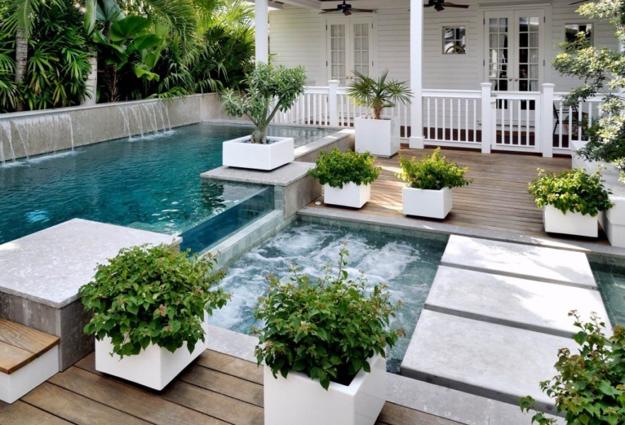
While those floating concrete stepping stones over the jacuzzi look incredibly chic, they can be a bit of a hazard. They can be slippery when wet, and the gaps between them are a potential trip-and-fall risk, especially for kids or after a glass of wine. Also, cleaning the jacuzzi and balancing the water chemistry becomes more of a chore when you have to work around these heavy, fixed elements. It’s a high-style choice that definitely sacrifices some practicality and safety.
13. Rustic Round Hot Tub on a Flagstone Patio
This entire look feels natural and achievable, and you can get it for less than you think. The star is a classic wood-clad, plug-and-play hot tub, which you can find for $4,000 – $7,000, far less than a custom in-ground spa. Creating a flagstone patio can be a fantastic DIY project; irregular pavers are very forgiving for beginners and can be sourced for a few dollars per square foot. The wooden steps and cart can also be weekend DIY projects. This is a perfect example of getting a high-end rustic vibe on a mid-range budget.
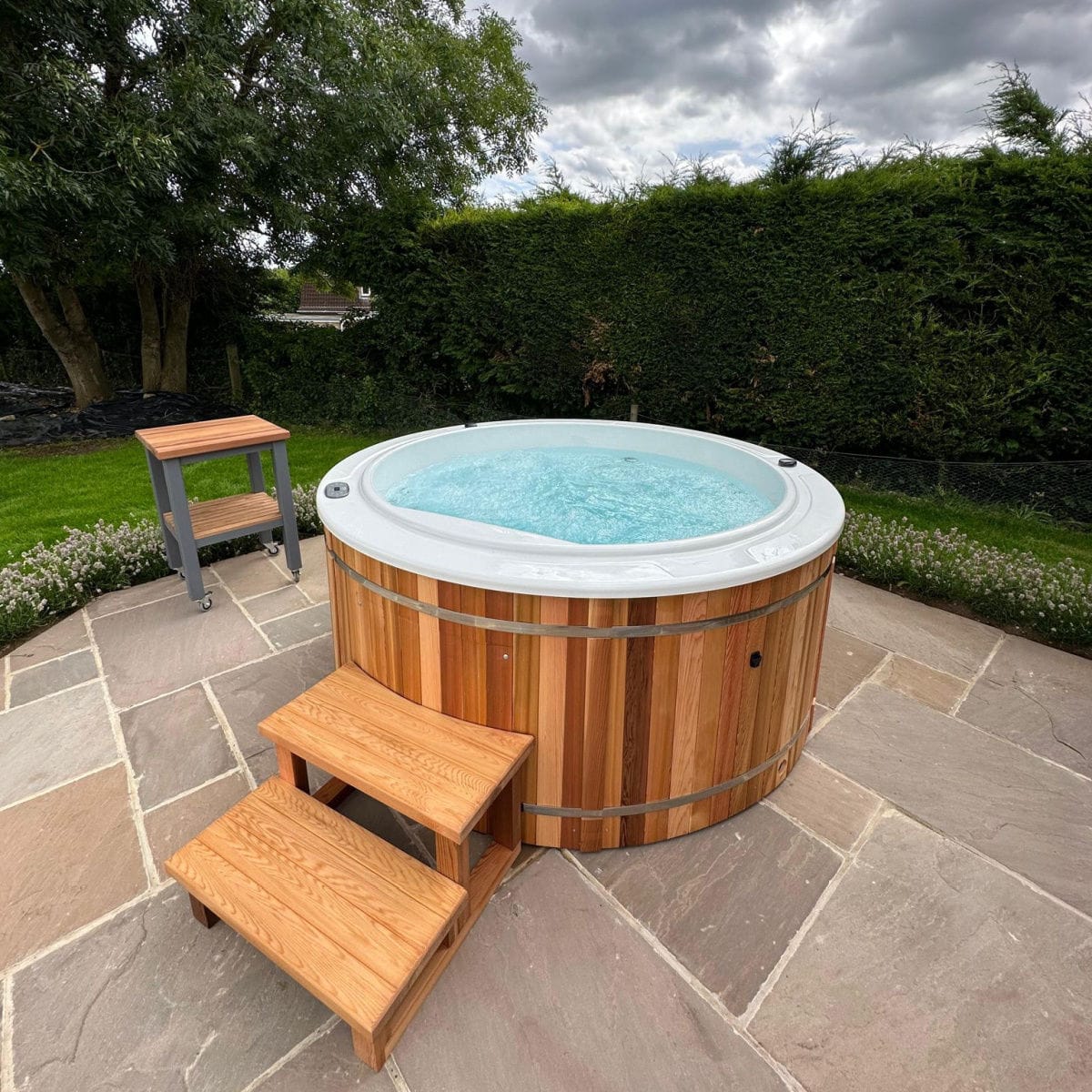
The single thing that gives this setup its charm is the irregular flagstone patio. If this same hot tub were placed on a boring concrete slab or a standard wooden deck, it wouldn’t have the same rustic, “found-in-nature” feel. The uneven shapes and earthy tones of the stone are what ground the entire scene and make it feel like it truly belongs in a garden setting. It’s the foundation—literally—for the entire aesthetic, blending the man-made tub seamlessly into the natural surroundings.
14. Modern Balcony Jacuzzi with Wooden Sliding Doors
This design masterfully blends textures for a warm, modern look. The formula is roughly 40% cool materials + 40% warm woods + 20% lush greenery. The cool factor comes from the light grey building facade, dark grey jacuzzi tiles, and glass railing. This is perfectly balanced by the warmth of the wooden sliding doors and the light brown stone coping. The final touch is the view of the green foliage, which adds life and softness. This balance of warm and cool is what makes the space feel both sleek and incredibly inviting.
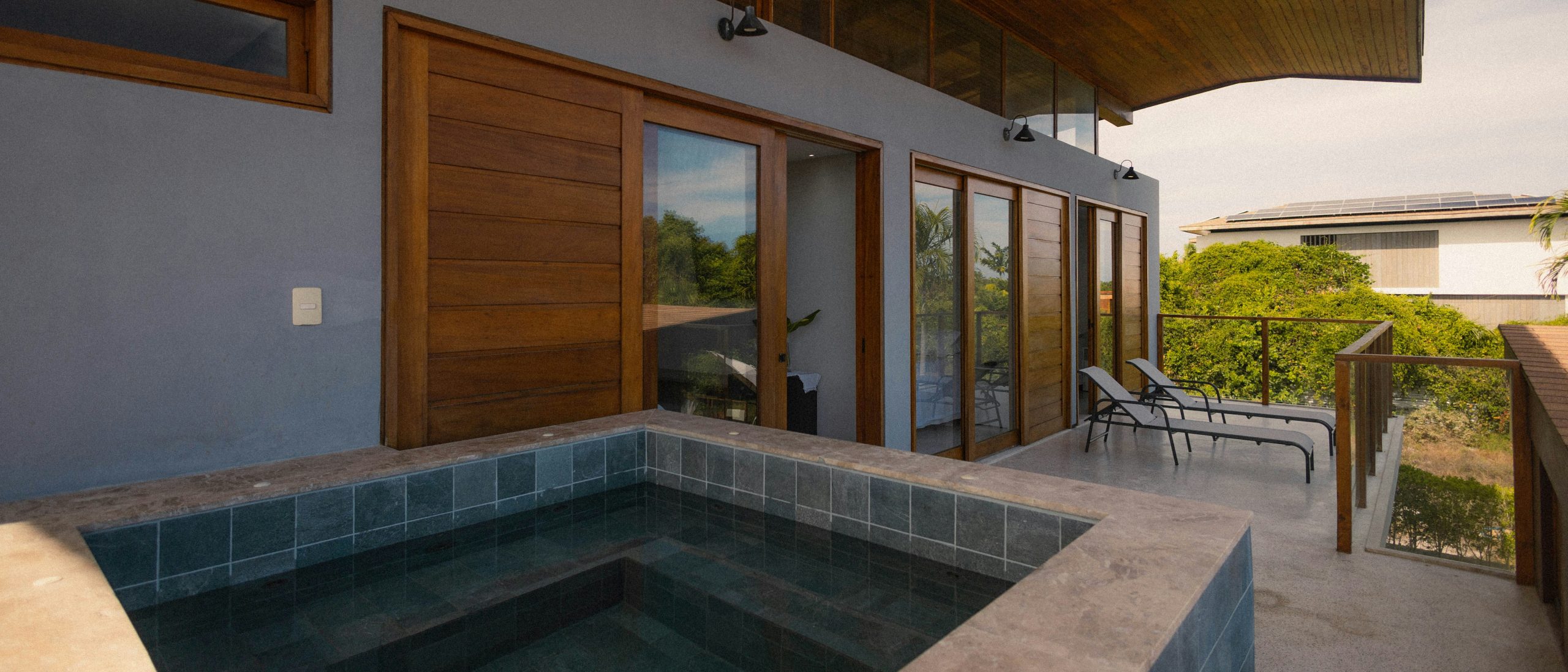
A built-in jacuzzi on a balcony is the height of luxury, but the maintenance is no joke. Leaks are the biggest fear. Even a small leak can cause major structural damage to the building over time. You need a professionally installed, flawless waterproof membrane beneath the entire setup. Access to the pumps and mechanicals for service is also a challenge and must be planned for with hidden access panels. This isn’t a DIY-friendly project; it requires experienced engineers and builders to execute safely.
15. Rooftop Hot Tub with a Sunset Cityscape View
What makes this rooftop scene so captivating is the smart use of a raised platform. By lifting the hot tub and daybed area onto a dark wood deck, the design accomplishes two things. First, it creates a defined “room” on the rooftop, separating the relaxation zone from the rest of the space. Second, and more importantly, it lifts the occupants just high enough to see over the edge railing, allowing for an unobstructed, panoramic view of the city skyline. It’s a subtle but powerful choice that maximizes the location’s primary asset: the view. This is a much more elegant solution than the full glass railings we see in Idea #2.
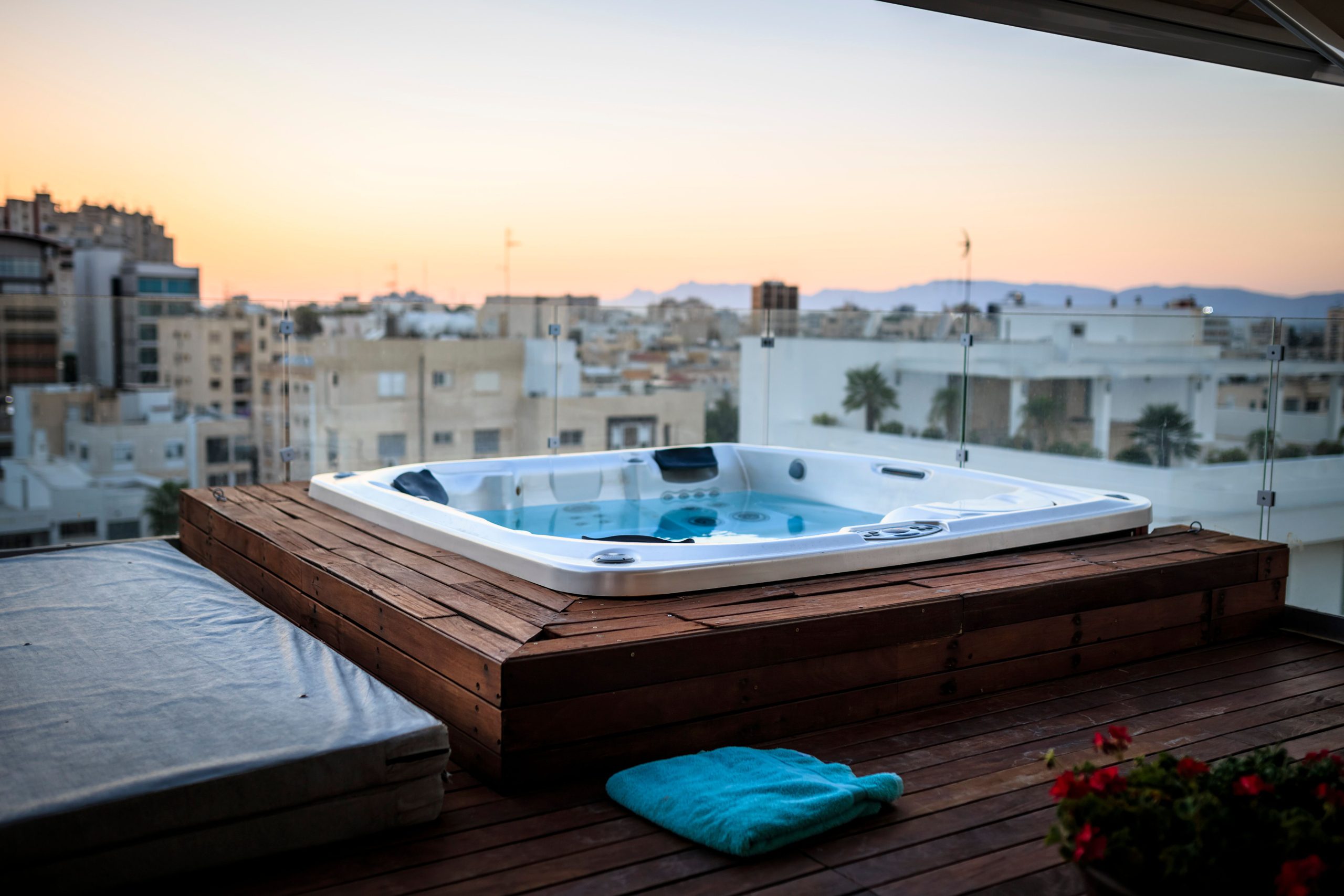
As urban living continues to densify, maximizing every square inch of space—including rooftops—has become a major design trend. A rooftop hot tub is the ultimate expression of creating a private, luxurious escape in the middle of a bustling city. It taps into the wellness and self-care movement, offering a personal sanctuary high above the stress of the streets. This trend has staying power because it’s not just about aesthetics; it’s about fundamentally changing the way city dwellers experience their homes.
16. Sunken Hot Tub in an Elevated Mahogany Deck
Look closely at the deck construction. The boards for the main deck, the steps, and the hot tub surround are all running in different directions. This is a high-level design technique used to add subtle visual interest and define different zones without changing materials. Running the boards parallel to the longest dimension of a space makes it feel longer; running them perpendicular makes it feel wider. A skilled carpenter can use this to play with perception and add a layer of custom sophistication that sets the project apart.
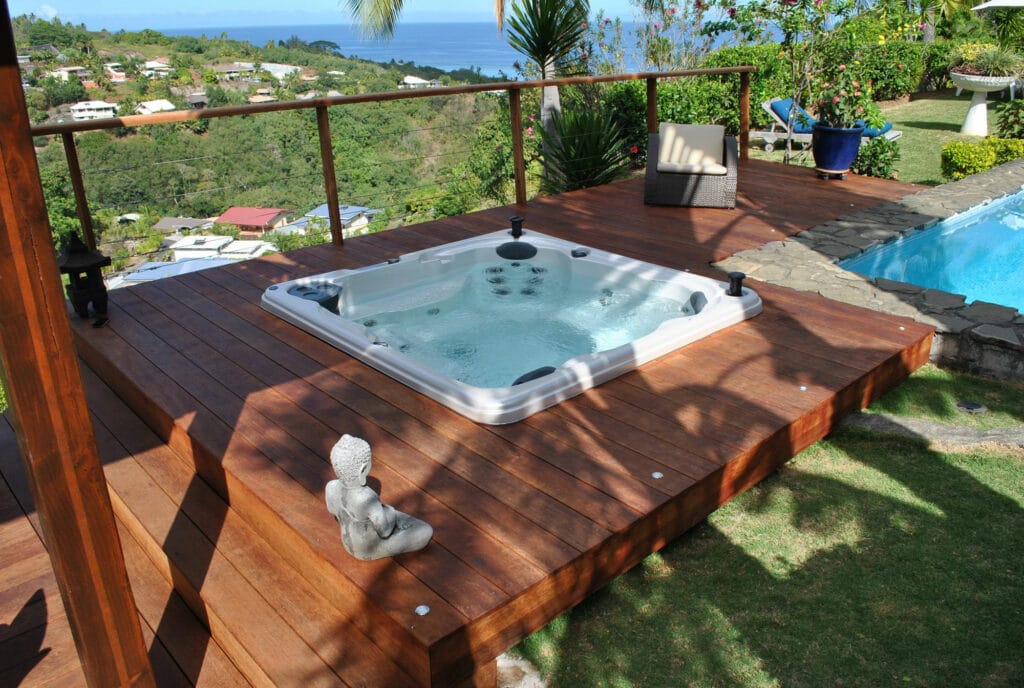
While the whole setup is beautiful, the one thing that truly makes it feel like a tropical sanctuary is the placement amidst the lush green lawn and foliage. The seamless transition from the rich mahogany deck to the vibrant green grass is what sells the fantasy. Without this generous green space, it would just be a nice deck with a hot tub. With it, it becomes an oasis, blurring the lines between a manicured structure and the wildness of nature. That interplay is everything.
17. Focus on an Integrated Jacuzzi and Patio Layout
Based on the available information, this idea centers on the overall design of an outdoor jacuzzi patio. Before you begin, a solid plan is more important than the specific tub you choose. Here are the key questions to answer:
- What is the main purpose? Is it for quiet relaxation for two, or for entertaining larger groups? This will determine the size and placement.
- How will it flow with the rest of your yard? Consider sightlines from your house, pathways to and from the spa, and how it connects to other features like a grill or seating area.
- What are the technical needs? You need a solid, level foundation (usually a concrete pad) and access to electrical. Don’t forget lighting for nighttime use!
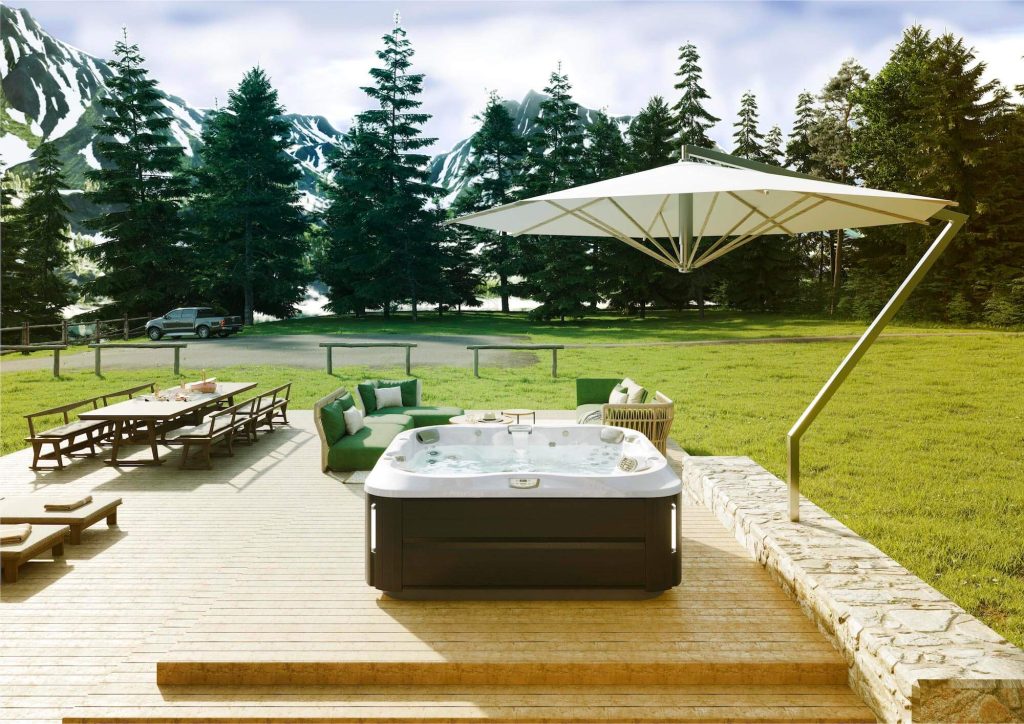
Let’s be honest: the term “patio design” can be misleading. You don’t just design the patio; you have to design the entire experience. This includes thinking about privacy from neighbors, wind direction, sun exposure throughout the day, and ease of maintenance. A beautifully designed patio is useless if it’s uncomfortably windy or puts you on full display for the entire neighborhood. Think through the practicalities of how you will actually *use* the space before you fall in love with a design.
18. Modern Jacuzzi Deck at a Forest A-Frame House
This design is all about the powerful contrast between the man-made and the natural. The sharp, geometric lines of the A-frame house, the black metal railing, and the clean white jacuzzi stand out boldly against the soft, organic, and sprawling green forest. It’s a statement of luxurious comfort embedded within a wild landscape. The extensive use of glass on the house is key, as it prevents the structure from feeling like a bunker and instead invites the natural world inside, bridging the two.
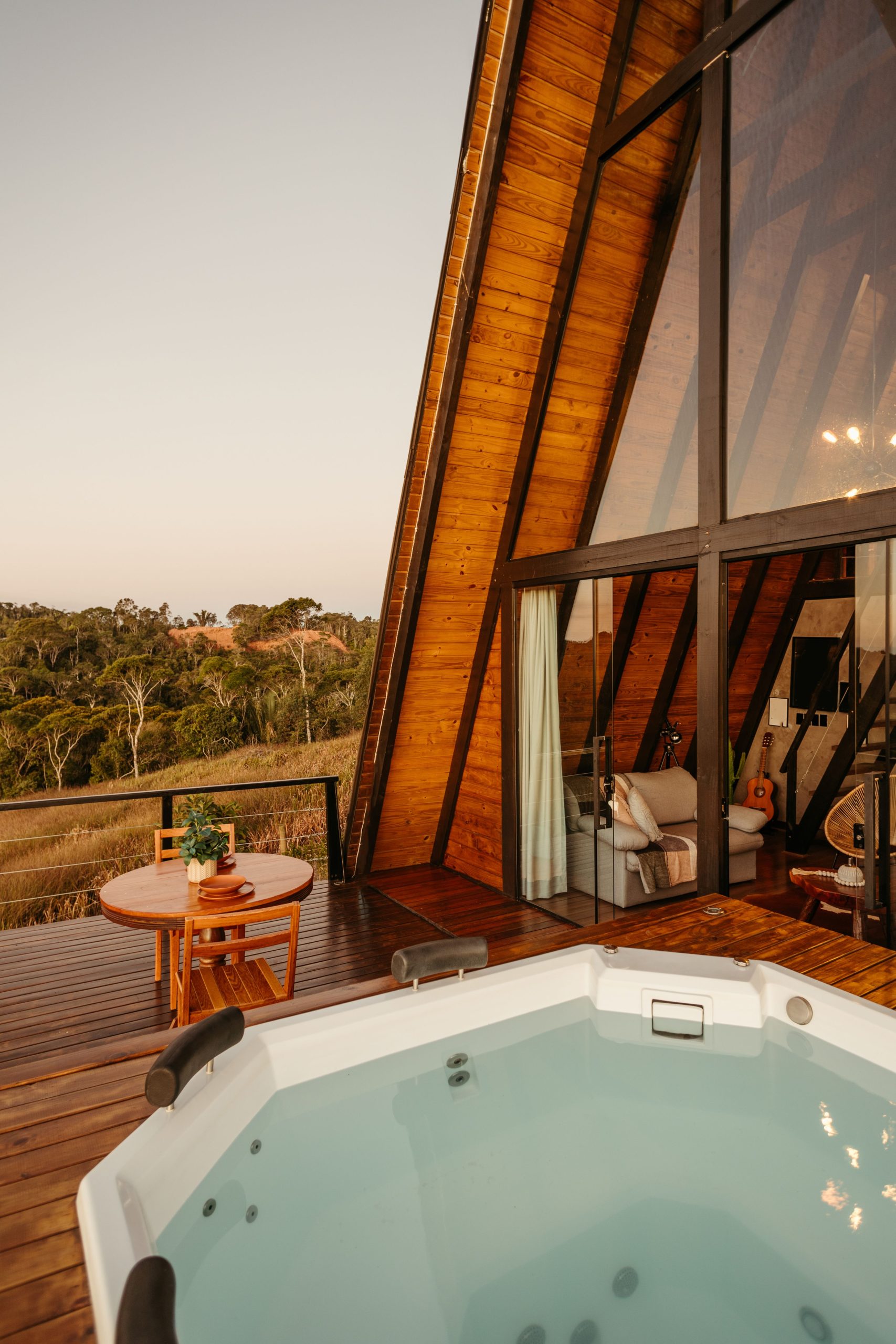
This concept is tailor-made for a grander scale. The A-frame structure and expansive deck require a generous footprint to not feel cramped. To get this look right, you need a setting where the house and deck can be surrounded by a significant amount of natural landscape. This isn’t for a standard suburban lot. The idea is to feel secluded and enveloped by nature, so the more space you have to create that buffer of forest, the more successful the design will be. Minimum property size would likely be at least half an acre, if not more.
19. Covered Patio Hot Tub with Lakeside Views
Building a covered patio and deck adds significant value and usability. Here’s a potential cost breakdown for a setup like this.
- Jacuzzi & Cover Lifter: $9,000 – $16,000
- Covered Patio Structure: $15,000 – $35,000 (highly variable based on size and materials)
- Composite Decking & Railing: $8,000 – $20,000
- Outdoor Furniture & Rug: $3,000 – $7,000
- Lighting & Fan: $500 – $1,500
- Budget Alternative: A pre-fabricated gazebo kit ($3k-$8k) instead of a custom patio roof, and a smaller, high-quality plug-and-play hot tub can provide a similar experience.
- TOTAL: $35,500 – $79,500
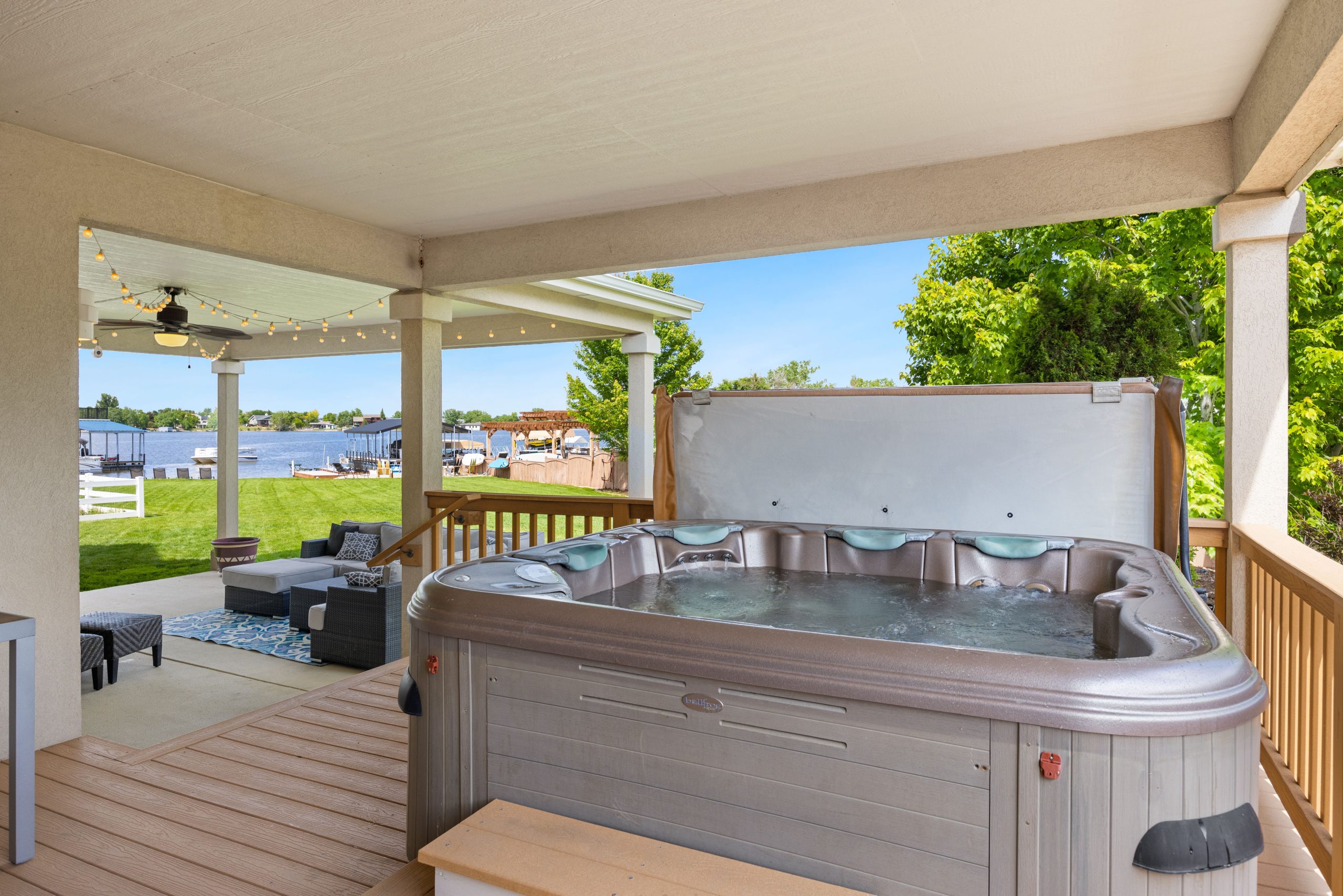
When you have a multi-level or multi-material outdoor space like this (composite deck for the tub, concrete for the seating), the key to making it feel cohesive is repetition of color. Notice how the warm brown of the hot tub siding is echoed in the composite deck and the railing. The grey of the furniture cushions connects to the tones in the concrete slab. And the pop of blue in the decorative rug ties directly into the lake view. This color story is what holds the two distinct zones together.
20. Cozy Wood-Paneled Jacuzzi Room
The formula for this cozy, spa-like space is simple and effective: 80% warm wood + 15% clean white + 5% dark accents. The light brown wood cladding on the tiered platform, floor, and ceiling beams creates an enveloping sense of warmth. The white jacuzzi shell, slatted ceiling panels, and sheer curtains keep the space from feeling too dark or heavy. The final 5% comes from the black headrests, which provide a necessary point of contrast and definition. Keeping the palette this tight is the secret to its serene feel.
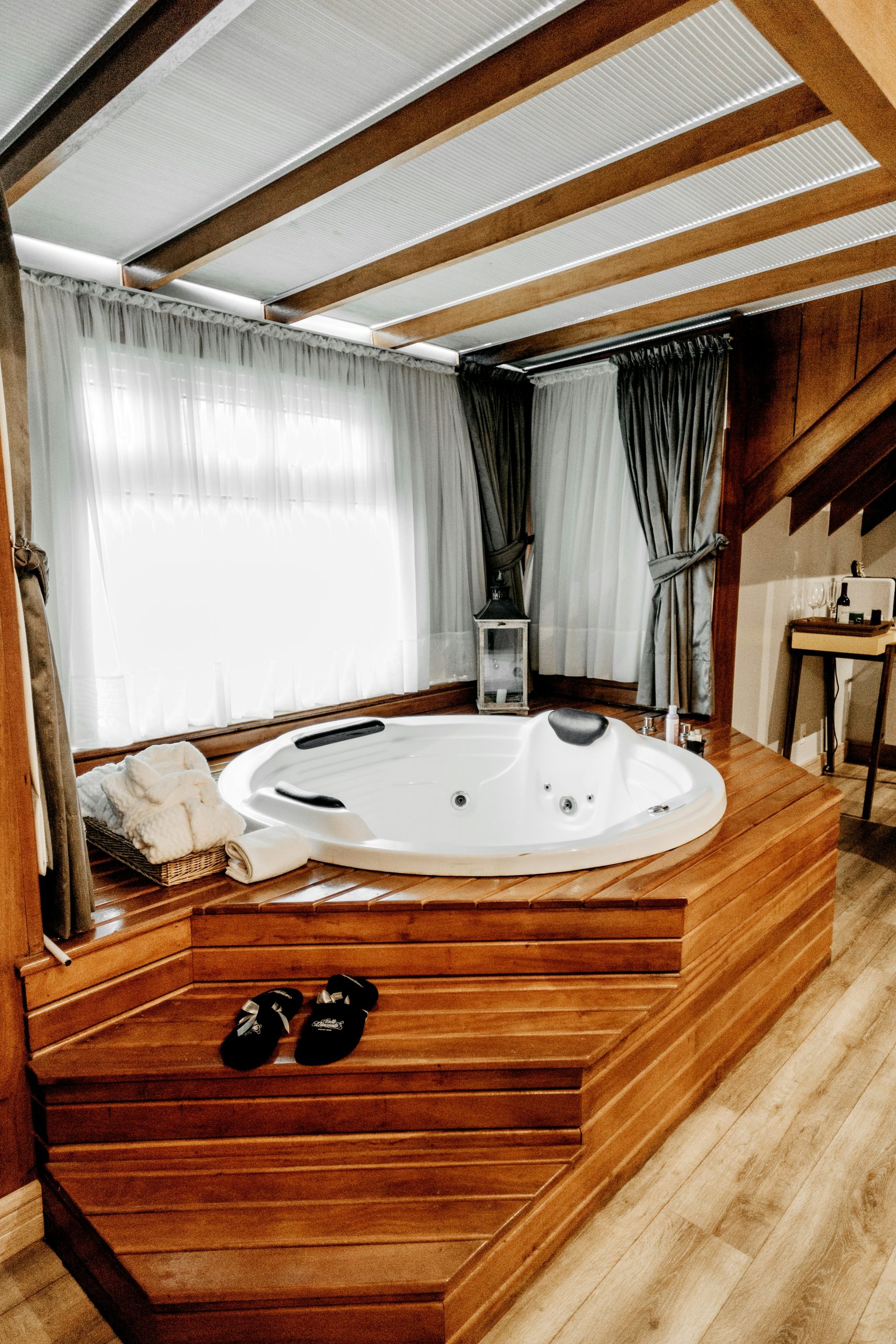
A fully wood-clad indoor spa room looks incredible, but it is a moisture-management nightmare waiting to happen if not done perfectly. Every single surface must be treated with marine-grade sealants. More importantly, you need a powerful, properly sized ventilation system (an exhaust fan) to get the humid air out of the room immediately. Without it, you are guaranteed to have problems with mold, mildew, and wood rot. This is a job for an experienced contractor who understands waterproofing and ventilation, not a simple DIY.
21. Elevated Jacuzzi on a Sunny Stone Patio
This design feels luxurious and vibrant because of its smart use of contrast and repetition. The most obvious is the bold, graphic punch of the black and white striped umbrellas against the earthy, natural stone patio. This high-contrast element is repeated in the dark blue of the jacuzzi tile against the light tan stone. The vibrant pink of the potted flowers adds a tertiary layer of color that keeps the whole scene feeling lively and joyful. It’s a well-balanced composition.
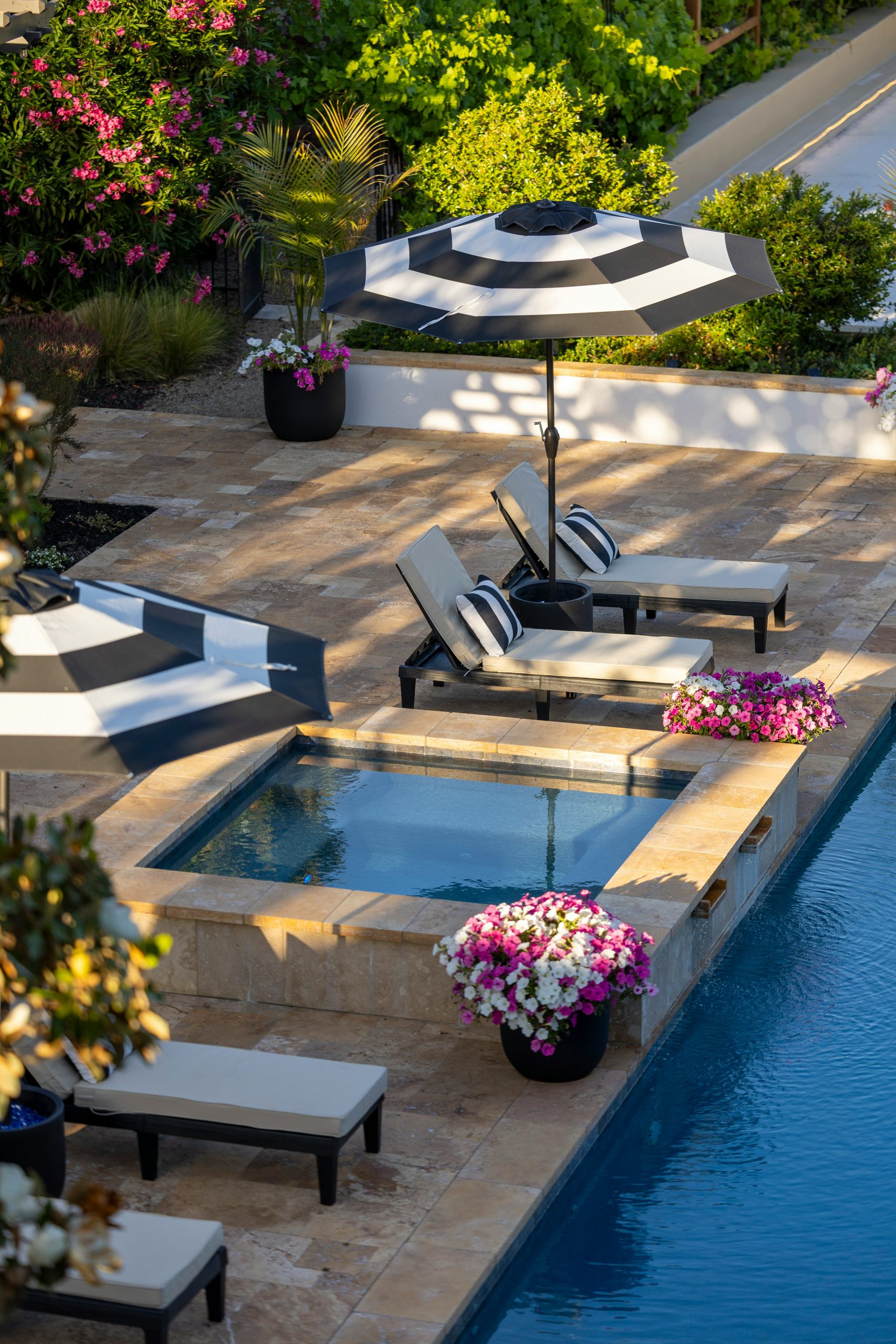
To give an elevated or above-ground jacuzzi a more permanent, integrated feel, cladding it with the same material as your main patio is a great move. Here, the dark blue tile of the jacuzzi is a feature, but imagine if the exterior sides of the jacuzzi were also clad in the same light brown stone as the patio. This would make it feel like a solid, custom-built feature that has always been part of the landscape. It’s a way to make a standard jacuzzi look like a million bucks.
22. Strategies for Sunken and Above-Ground Hot Tubs
Let’s talk about the reality of sunken vs. above-ground tubs. A fully sunken jacuzzi looks incredibly sleek, but it can be a safety hazard for pets and small children who might not see it. It also makes service and repairs extremely difficult and expensive, as technicians need access to the side panels. Above-ground models are far easier to install, service, and are generally safer. A popular compromise is a partially-recessed tub, like in Idea #11, which gives a custom look while keeping the equipment accessible.
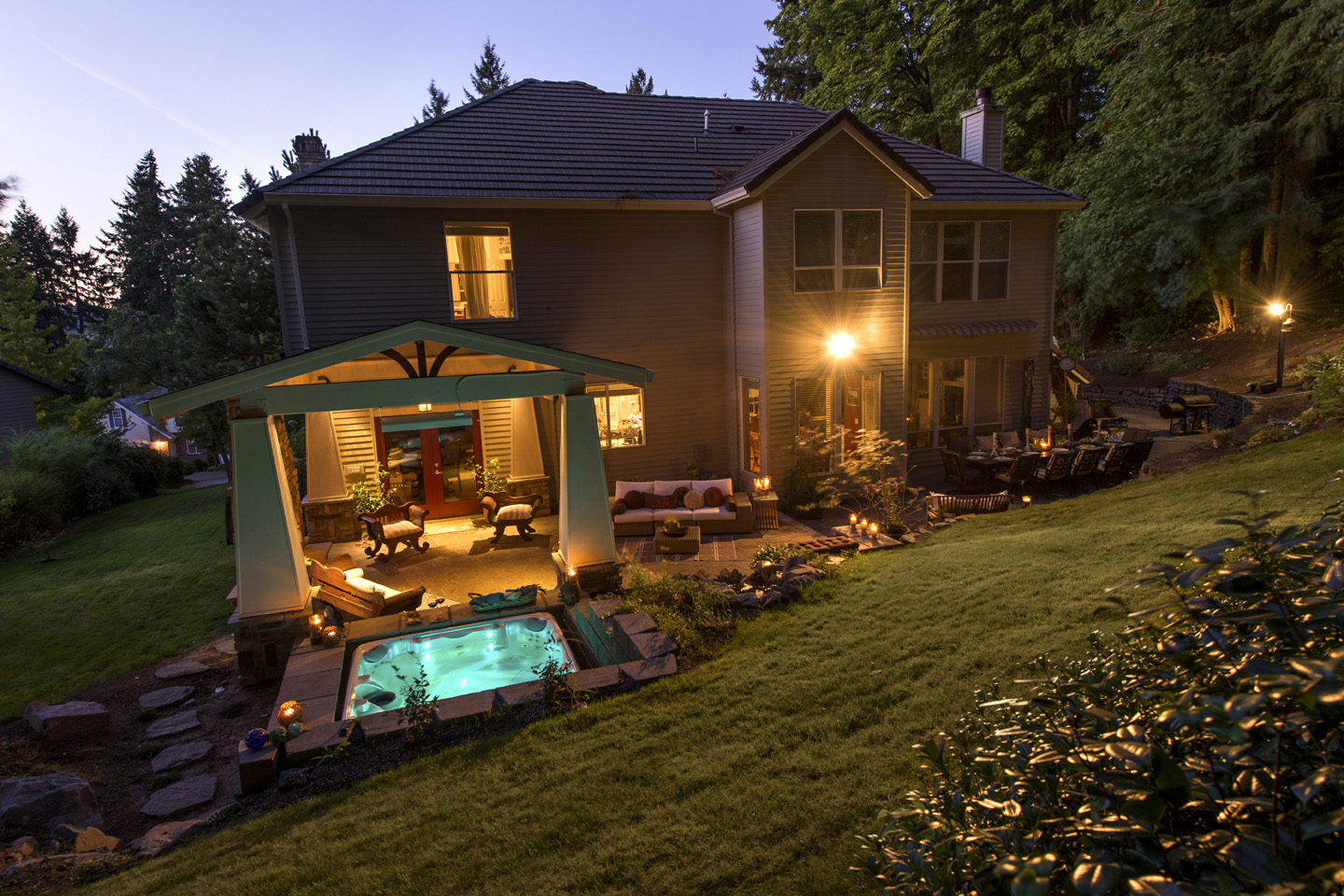
that determines the success of any hot tub installation—sunken, above-ground, or in-between—is the foundation. It absolutely must be a perfectly level, solid surface that can support the immense weight of the tub, water, and occupants (often over 5,000 pounds). A reinforced concrete pad is the gold standard. A poorly prepared foundation will cause the tub to warp, crack, and fail. Don’t cut corners here; it is the most critical part of the entire project.
23. Poolside Patio with a Stacked Stone Fireplace
This scene works because it’s a symphony of textures and light. The rough, earthy texture of the stacked stone fireplace contrasts beautifully with the smooth, reflective surface of the pool. The soft, woven texture of the sofa provides a comfortable middle ground. Lighting adds the next layer of magic: the warm, flickering firelight, the cool, serene blue light from within the pool, and the festive glow of the overhead string lights. Together, these elements create a rich, inviting, and dynamic atmosphere.
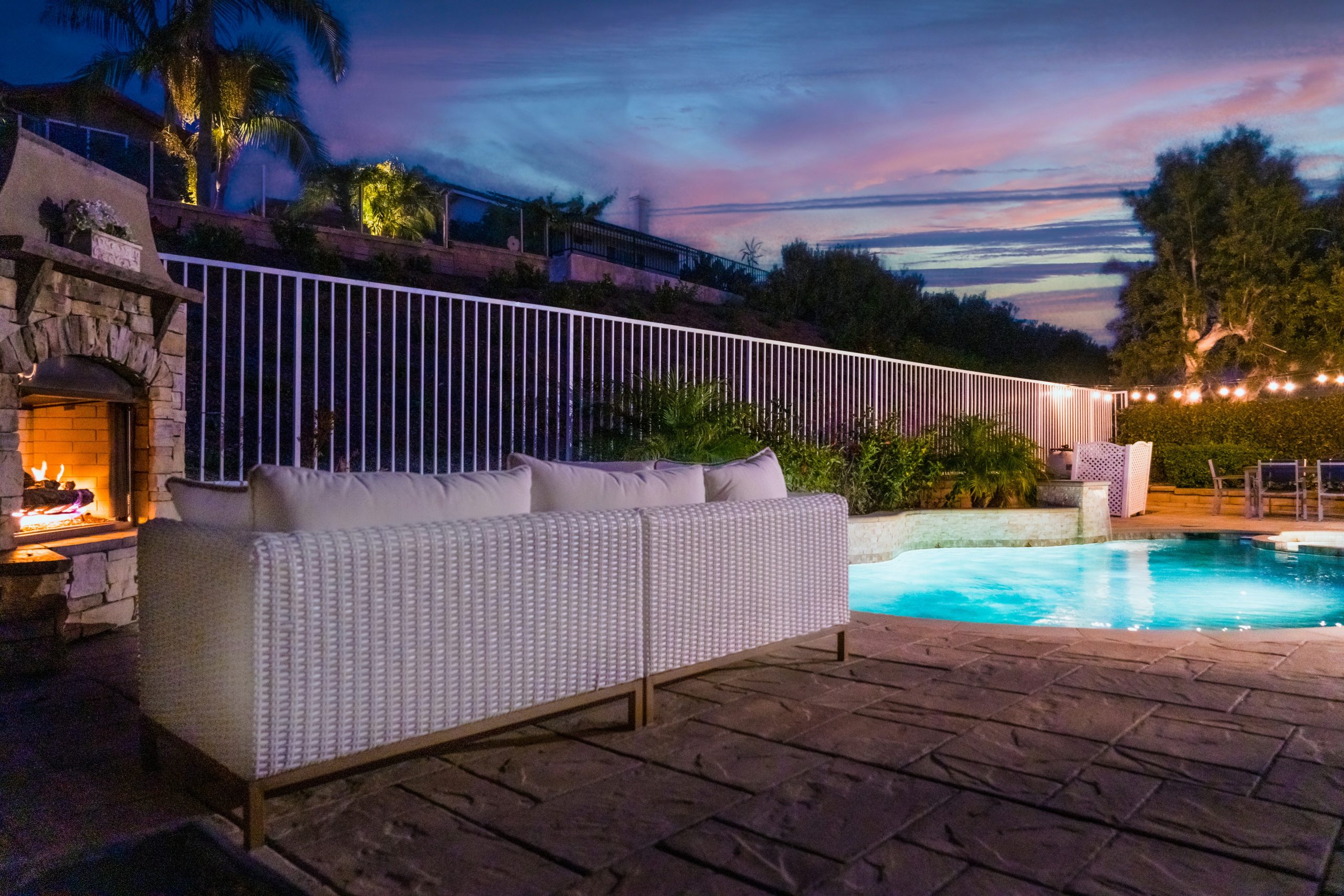
The concept of “fire and water” is a classic design pairing that is seeing a huge resurgence. As people spend more time entertaining at home, they want outdoor spaces that feel like a true extension of their house, complete with multiple amenities. Combining a pool or spa with a fireplace or fire pit creates a multi-season destination in your own backyard, allowing you to enjoy the space on cool summer nights and even into the fall. It transforms a simple patio into an all-hours resort experience.
24. Round Wooden Hot Tub on a Lakeside Deck
The single most important element in this idyllic scene is the worn, imperfect wooden deck. Its slightly weathered appearance tells a story of time and use. If this were a perfect, brand-new composite deck, it would lose all its rustic charm. The character of the aged wood is what makes the whole thing feel authentic and relaxed. It’s a powerful reminder that sometimes, a little bit of patina is more beautiful than pristine perfection. It has a similar spirit to the rustic tub in Idea #8, but in a more accessible deck setting.
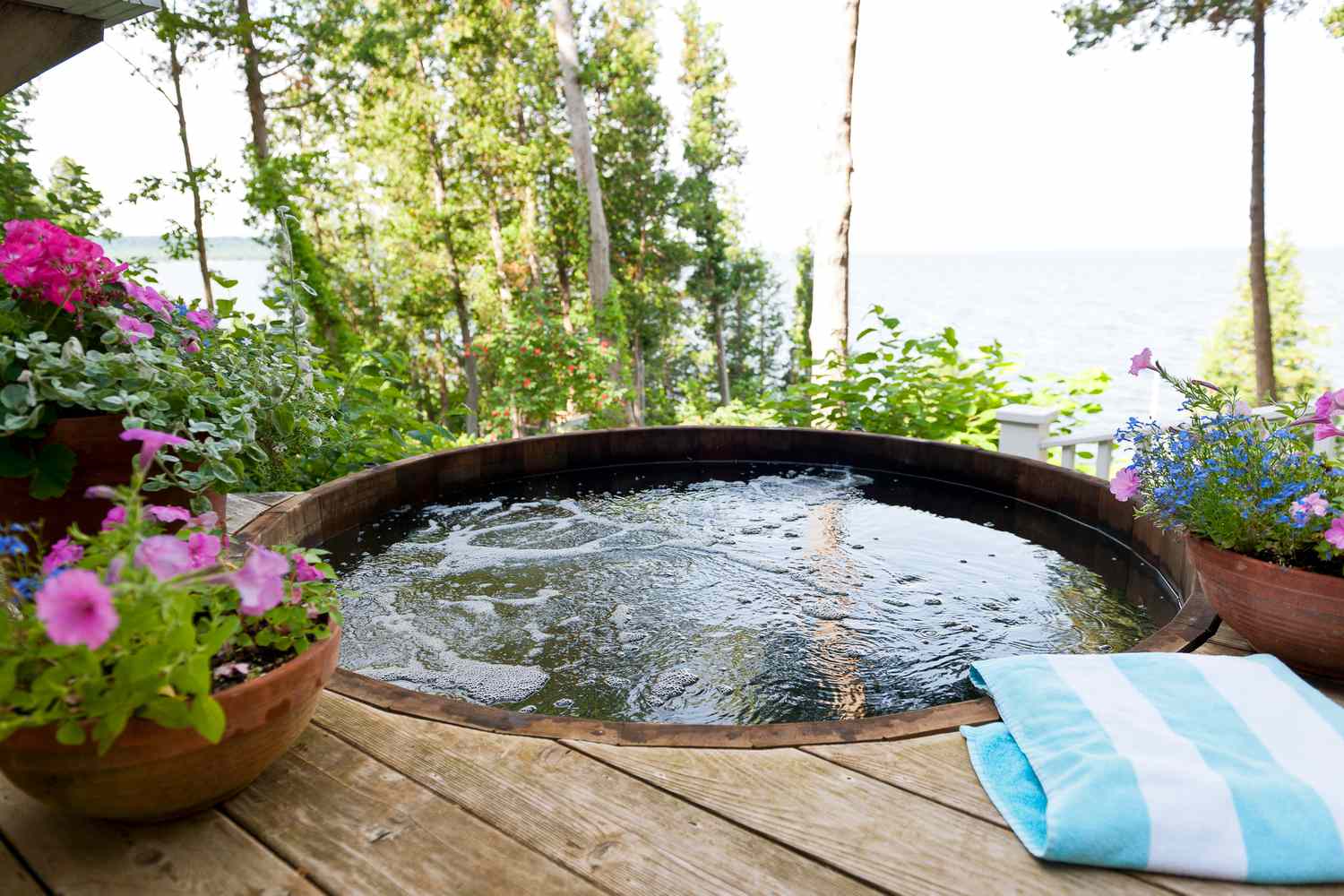
Love this rustic, waterside look? You can create it on a smaller budget. Search for a used round wooden hot tub; they are often available for a fraction of the new price. For the deck, consider using reclaimed lumber or even new pressure-treated pine that you can artificially age and distress. The potted flowers are an inexpensive way to add tons of color and charm—check local nurseries for end-of-season sales on perennials. A simple striped towel from Target or Walmart completes the look.
25. Backyard Entertainment Hub with Swim Spa and Pergola
Adding a pergola is a fantastic way to define an outdoor “room”. Here’s how to plan for one:
- Estimate Time & Cost: A DIY kit takes a weekend and costs $1,500-$5,000. Custom-built can be $5,000-$15,000+.
- Choose Your Location: Decide what you want to define. Is it a seating area, an outdoor dining space, or a transition zone? Use its footprint to anchor your furniture layout.
- Select a Material: Wood (like cedar or a stained pressure-treated pine) offers a classic, warm look but requires maintenance. Vinyl or aluminum are virtually maintenance-free but have a more modern feel.
- Anchor It Properly: This is critical for safety. The posts must be securely anchored to a concrete patio or set in concrete footings to withstand wind. Don’t just place it on top of pavers!
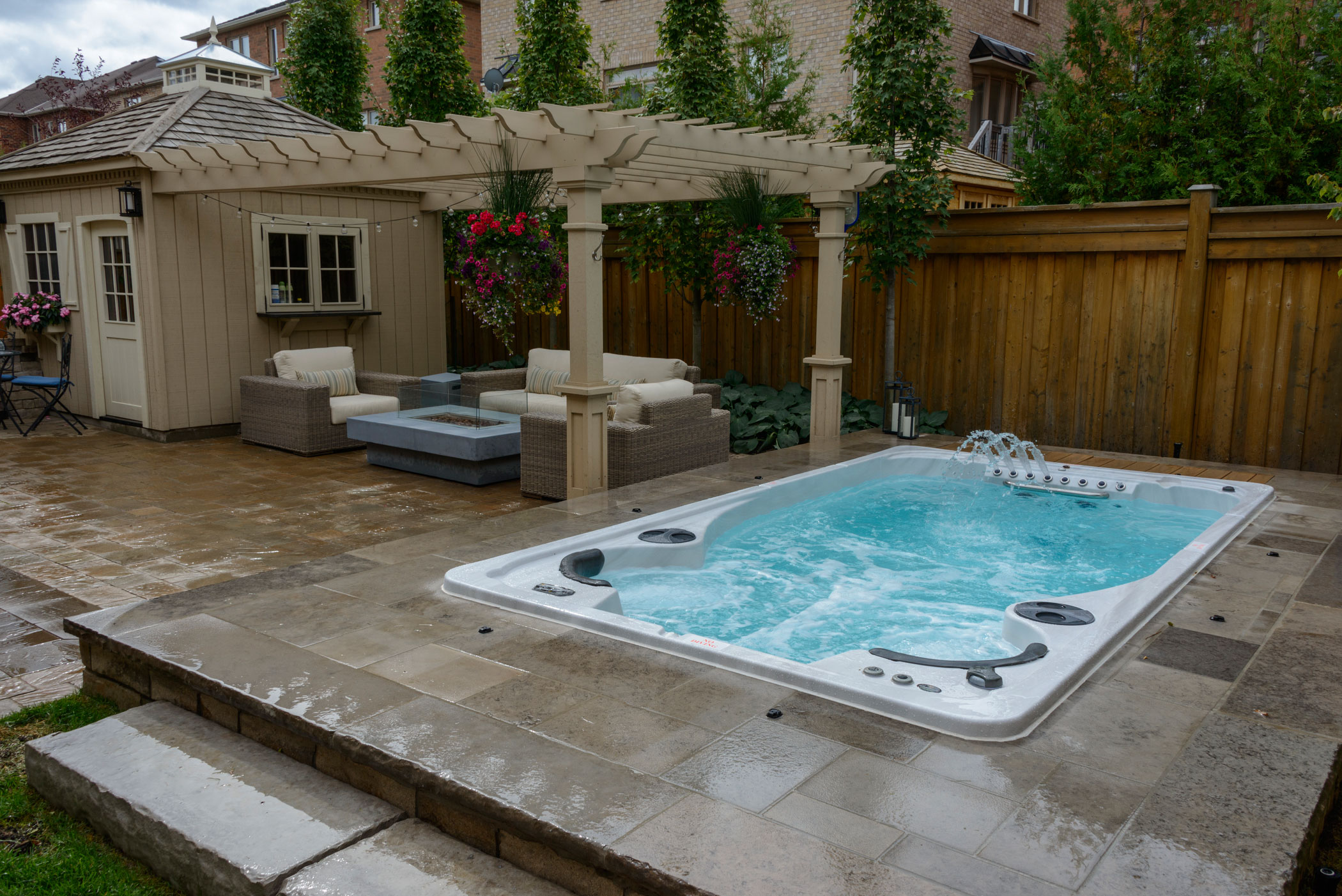
This backyard is a perfect example of creating “destinations.” It’s not just a patio; it’s a collection of specific zones with clear purposes. You have the “active zone” (swim spa), the “lounge zone” (sofa under the pergola), the “utility zone” (shed), and the “transition zones” (the pathways connecting them). This approach breaks down a large, potentially overwhelming space into manageable, functional areas, making the entire yard feel more useful and thoughtfully planned.
26. Split-Level Deck with an Integrated Hot Tub
When you have a multi-level deck, lighting is not just for ambiance—it’s for safety. The best way to light stairs is with low-voltage recessed lights installed into the stair risers. This illuminates the treads so you can see where you’re stepping without creating glare in your eyes. Spacing them every 3-4 feet provides even, gentle illumination. It’s a professional touch that elevates the design and prevents trips and falls after dark.
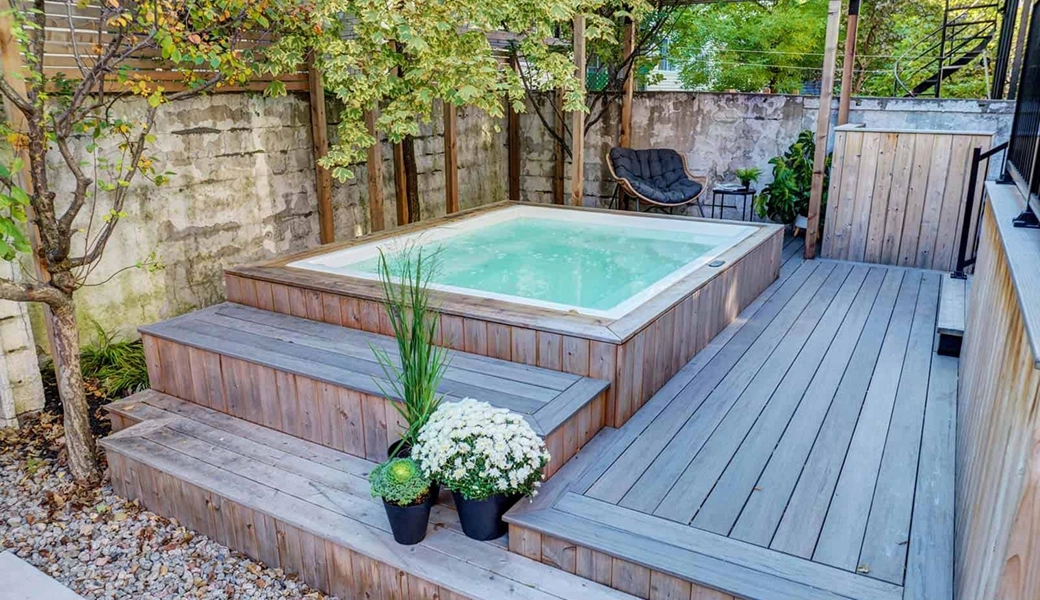
The most compelling part of this design is the smart use of different wood finishes. While some might insist on everything matching perfectly, the contrast between the natural, light wood surround of the hot tub and the grey-washed finish of the main deck boards is what gives this space its unique character. It shows a design that has evolved over time, or at least has the confidence to look like it has. This mix-and-match approach feels more authentic and visually interesting than a uniform, single-color deck.
27. Minimalist White Jacuzzi with a Terraced Tile Patio
This serene, modern look is all about a restrained and disciplined color palette. The formula is approximately 70% warm neutrals + 20% lush greens + 10% sharp accents. The warm, light beige tiles and the white jacuzzi structure form a calm, neutral base. The deep green of the surrounding foliage provides the essential softness and connection to nature. The final 10% is the critical part: the crisp black trim on the jacuzzi, which adds a graphic punch and keeps the design from looking washed out. This is minimalism done right.
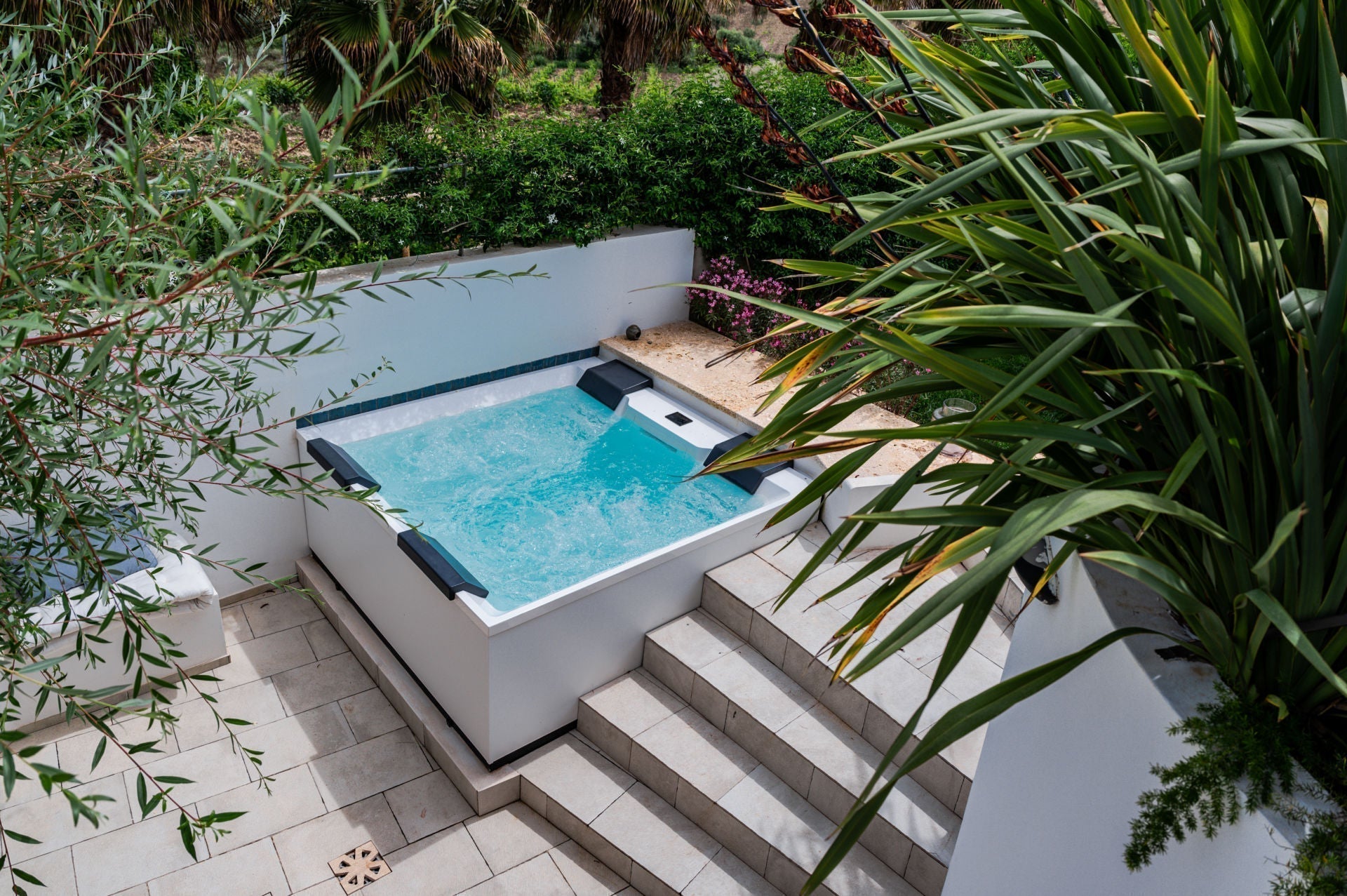
Light-colored tile and grout on an outdoor patio can be a challenge to keep clean. The grout lines are notorious for collecting dirt, mildew, and stains from leaves or soil. To combat this, opt for a high-performance, stain-resistant grout and have it sealed professionally after installation, and resealed every few years. Also, choose tiles with a slightly textured, non-slip surface for safety around a wet area, but avoid deeply textured tiles, which can be even harder to clean.
Your Backyard Retreat Awaits
Whew, that’s a lot of inspiration! But the main takeaway is that there is a perfect jacuzzi idea for every style and every space, from a tiny balcony to a sprawling lakeside property. The key is to be honest about how you want to use it and to choose a design that feels like a true extension of your home. Now the fun part begins: planning your own personal oasis. Don’t forget to save your favorites to Pinterest to start building your dream board!