
You know that feeling when you finally find the patio shade idea that looks *exactly* right for your space? That perfect blend of function and style you’ve been saving to your Pinterest boards for months? We’re chasing that feeling. After filtering through hundreds of options from high-end designers to budget-friendly finds at places like IKEA and Target, we narrowed it down to what’s genuinely worth your attention, with ideas ranging from a few hundred dollars to over $20,000.
Inside, you’ll find 29 curated ideas covering everything from modern pergolas and classic awnings to breezy, renter-friendly sail shades. For 2026, the focus is all on creating true outdoor rooms—spaces that feel just as intentional and comfortable as your living room. It’s less about just blocking the sun and more about defining a stylish, functional extension of your home. And stay until the end — we break down the most common mistakes that can ruin these looks.
📌 Save this to Pinterest for later — you’ll want to revisit these ideas.
1. Modern Wood Pergola with a Translucent Roof
This setup is the best of both worlds. The substantial wooden pergola brings a natural, grounding warmth to the patio, preventing the modern grey tiles and clean lines from feeling too sterile. The translucent roof is the key—it blocks the harsh glare of direct sun and offers rain protection without plunging the space into darkness. It keeps the area bright and airy while still providing functional shelter. The contrast between the dark grey tiles and the light beige furniture also helps define the seating zone as a distinct ‘room’ within the larger patio.
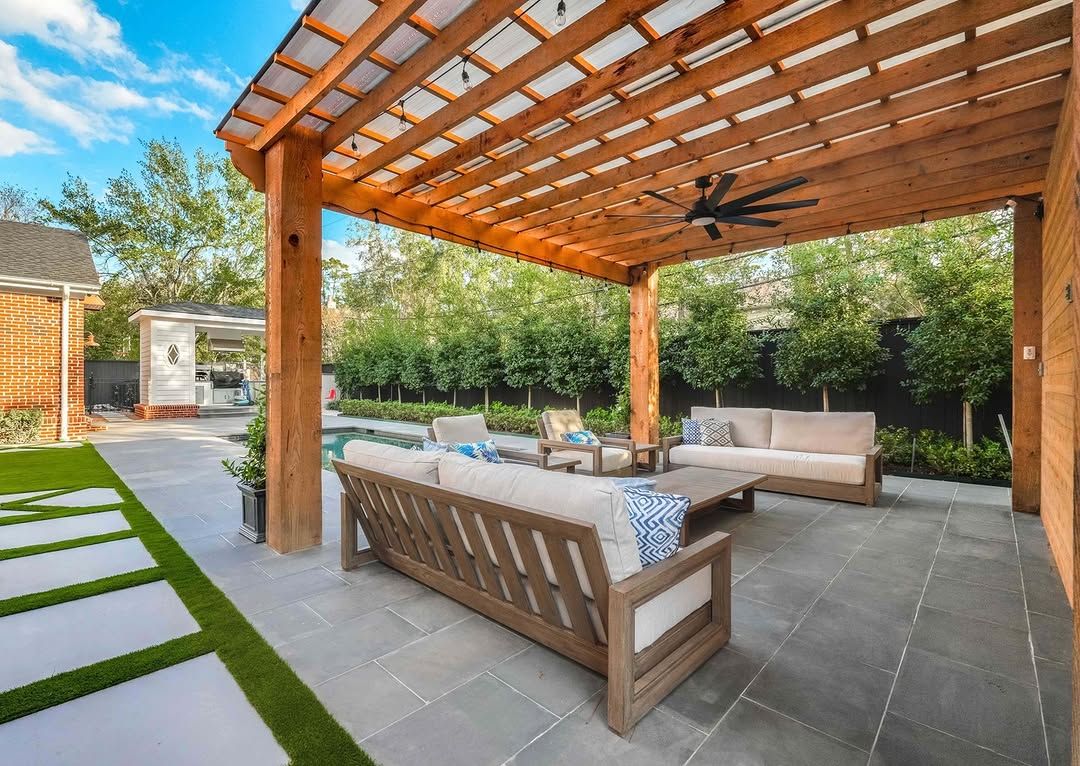
A structure like this requires some upkeep. The translucent corrugated panels, while durable, will need to be cleaned at least once or twice a year to remove pollen, leaves, and accumulated grime that can make them look dingy and reduce light transmission. A pressure washer on a low setting or a soft brush with soapy water does the trick. The wood itself, unless it’s a highly resilient species like cedar or teak, will need to be re-sealed or re-stained every 2-3 years to protect it from moisture and UV damage, preserving that rich, warm color.
2. Sleek Retractable Awning with a Glass-Railed View
When you have a view you don’t want to obstruct, a retractable awning is often a better choice than a permanent structure. For maximum flexibility, choose a motorized model with a wind sensor. These automatically retract the awning during high winds, preventing catastrophic damage to the fabric and arms. It’s a feature that seems like a luxury until the first time it saves you from a multi-thousand dollar repair bill. Also, match the awning’s frame color to your window and door trim for a seamless, built-in look.
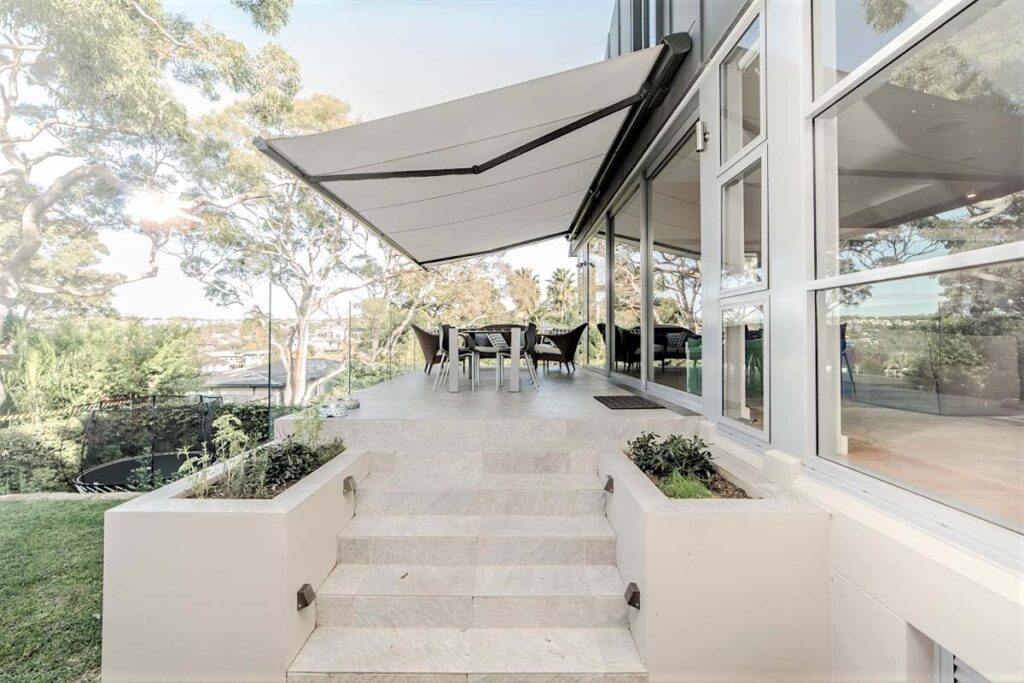
This idea is best suited for patios with a significant horizontal span—at least 15-20 feet wide—to justify the scale of a large retractable awning. For the glass railing to have this clean, unobstructed effect, it works best on a second-story deck or a raised patio where the view is the main attraction. On a ground-level patio, the glass can feel less impactful. The open, airy feel is dependent on having at least 10 feet of depth from the house to the railing, allowing for a full-size dining set without feeling cramped.
3. Vibrant Multicolored Striped Awning for Outdoor Dining
The visual success here comes from a simple formula: 60% neutral backdrop (the cream exterior wall and grey dining set) + 30% bold pattern (the striped awning) + 10% accent color pop (the orange cushions). This math makes the space feel vibrant but not chaotic. You could easily swap the accent color—imagine saturated teal or lime green cushions—and the look would still feel balanced because the neutral base and the dominant pattern provide the structure. The key is pulling one of the less-dominant colors from the stripes for your accent.
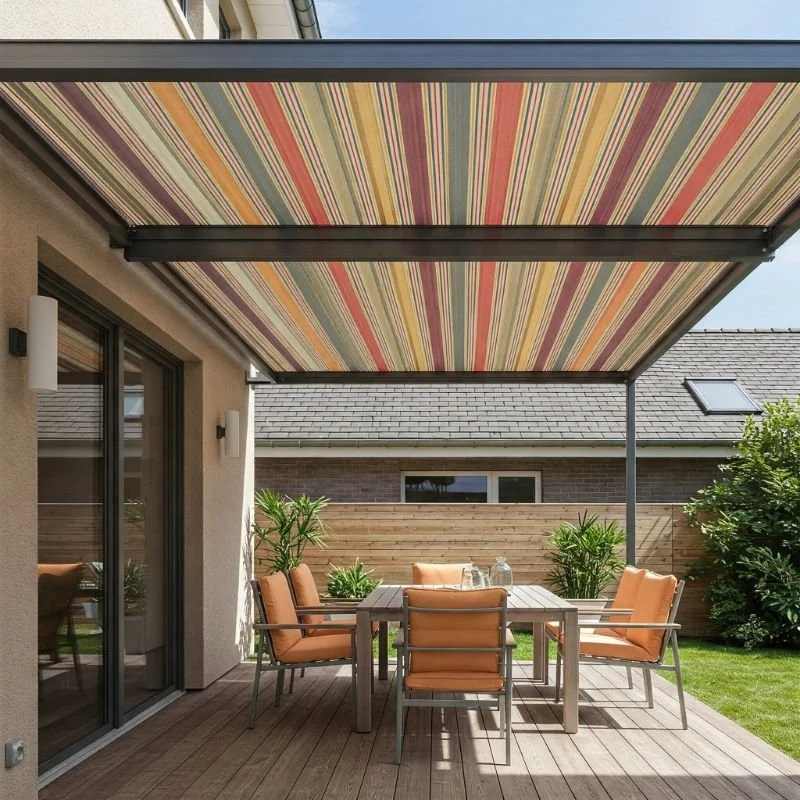
that makes this entire patio come alive is the multicolored awning. Without it, you’d have a perfectly nice, but fairly standard, grey dining set on a wooden deck. The awning injects personality and a dose of cheerful, retro energy. It serves as the main decorative element, reducing the need for lots of other accessories or decor. It’s a single, high-impact choice that defines the entire zone’s aesthetic, proving that your shade solution can also be your primary design statement.
4. Minimalist Gazebo for a Stylish Pergola Look
There’s a growing movement toward ‘less is more’ in outdoor design, and this minimalist gazebo approach taps right into it. Homeowners are looking for clean lines and functional shade without the visual bulk of a traditional, heavy-duty pergola. This trend favors simple, open-frame structures that define a space and offer light shade without completely blocking the sky. It’s popular because it integrates well with modern architecture and doesn’t overwhelm smaller backyards or patios, feeling more like a suggestion of a room than a full-blown enclosure.
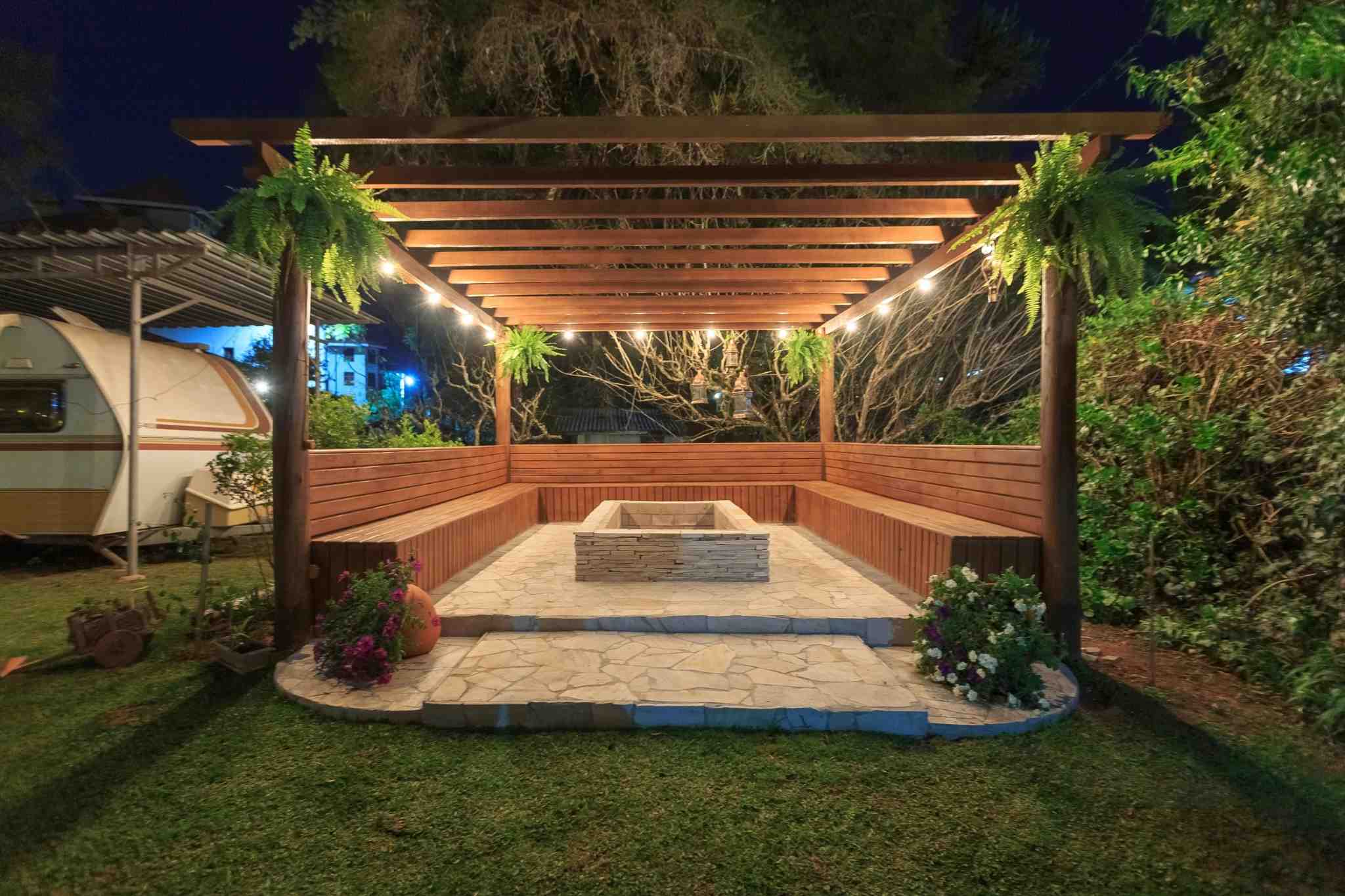
Let’s be honest: many ‘minimalist’ gazebos, especially at lower price points, prioritize form over function. A very spare frame might look chic online, but it might not provide substantial shade during the hottest parts of the day. Furthermore, lighter-weight metal or wood can be vulnerable to high winds or heavy snow loads. Before you buy, check the material specs and consider if you need a structure that offers serious sun protection or one that simply frames a space beautifully.
5. Rooftop Pergola with Weathered Wood and String Lights
Here’s a look at what it would cost to bring this urban oasis to your rooftop. The material choices, especially for a rooftop application where weight and weather-resistance are key, drive the price.
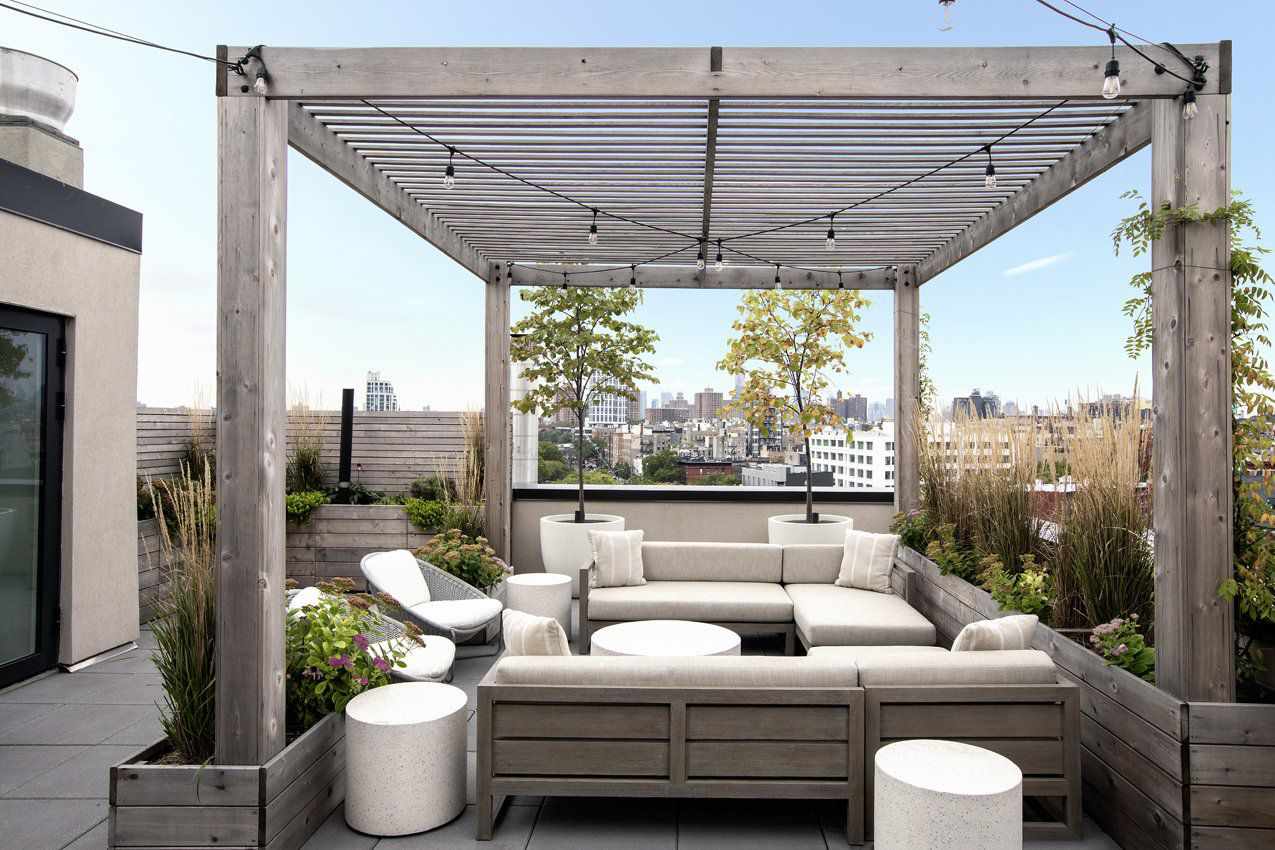
- Main Furniture: Weather-resistant sectional sofa: $3,000 – $7,000
- Structure: Weathered wood or composite pergola (installed): $8,000 – $15,000
- Lighting: Commercial-grade string lights & installation: $400 – $800
- Decor/Accessories: Integrated planters, side tables, grasses: $1,500 – $3,000
- Flooring: Concrete pavers: $10 – $25 per sq. ft. installed
- Budget Alternative: DIY a simpler cedar pergola ($3k), find a sectional on Facebook Marketplace ($1k), and use pre-fab planters ($500).
- TOTAL: $15,000 – $30,000+
This design works so well because the raw, weathered texture of the wood pergola provides a beautiful organic contrast to the hard, clean lines of the urban environment. The concrete pavers and modern furniture are cool and sleek, but the wood and the tall, swaying grasses introduce a much-needed natural element. It’s a masterful mix of materials that makes the space feel like a true escape, softening the surrounding steel and glass skyline. The string lights add the final touch, creating warmth and intimacy against the vast city backdrop.
6. Classic Retractable Awning Over Wicker Furniture
The single element holding this classic, inviting scene together is the retractable awning. Take it away, and you have a beautiful but sun-blasted deck that’s only usable in the early morning or evening. The awning makes the space genuinely livable during peak daylight hours. It protects the wicker furniture and fabric cushions from fading and weather damage, extending their life significantly. It’s the functional heart of the patio, transforming it from a simple deck into a shaded outdoor room ready for an afternoon coffee or a nap.
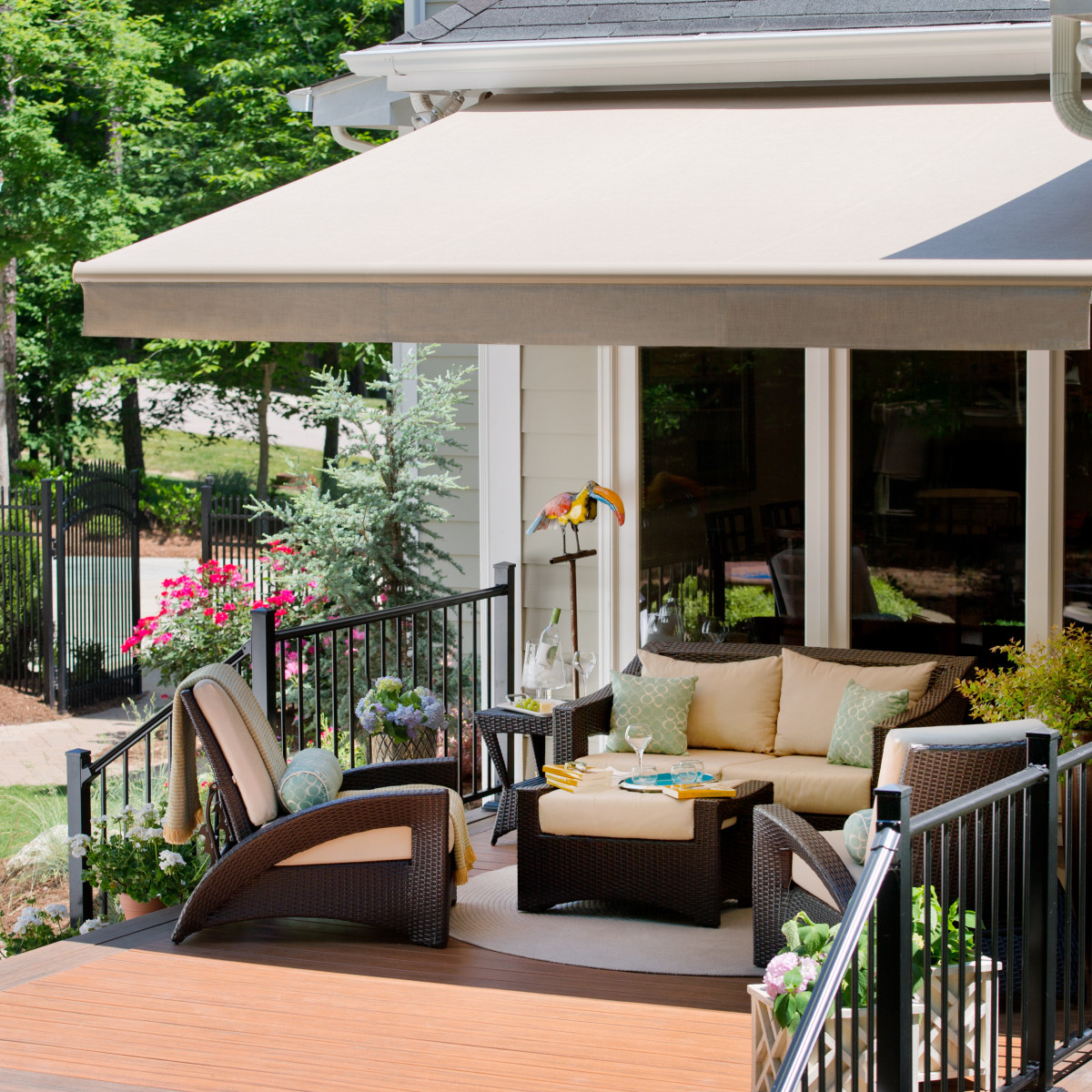
You don’t need a custom-installed awning that costs thousands to get this vibe. A similar effect can be achieved for much less. Look for manual, non-retractable ‘awning-in-a-box’ kits from home improvement stores for around $300-$600. For the furniture, stores like Walmart and Target offer all-weather wicker sets starting around $400. You could recreate this entire comfortable look for under $1,000, especially if you find a second-hand furniture set and give the cushions a good cleaning. It’s a very achievable and timeless setup. This is a great budget-friendly take, similar in spirit to the custom setup in Idea #1.
7. Modern Poolside Shade with Dual Triangular Sails
This look is all about geometric balance. It’s roughly 50% hard surfaces (the light concrete pavers) + 40% natural elements (the blue water and green turf) + 10% bold geometry (the overlapping shade sails). The key is the layering and angularity. By using two sails and overlapping them, you create more dynamic shadows and a much more interesting visual from above and below. The formula is flexible: you could swap the turf for a wooden deck or use two sails of the same color, and the core concept of geometric layering would still hold strong.
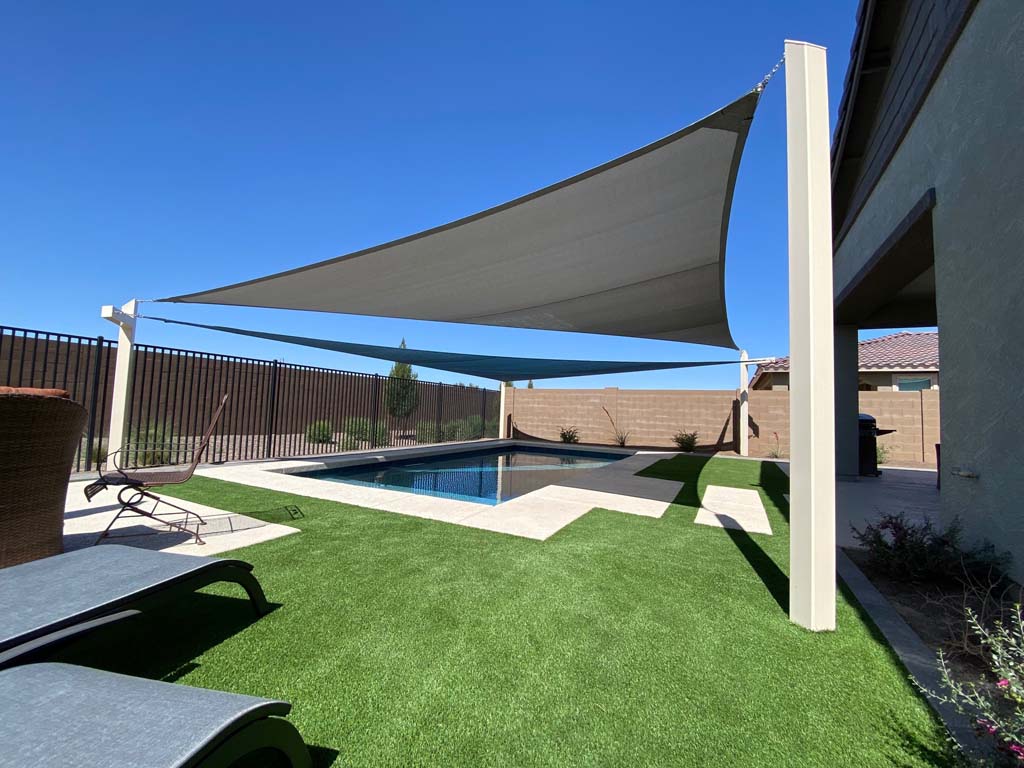
While shade sails are fantastic for a modern, airy look, they are not a set-it-and-forget-it solution. They need to be installed with significant tension to prevent sagging and flapping in the wind, which can lead to tearing. This requires very secure anchor points—either deeply buried heavy-duty poles set in concrete or professional-grade brackets bolted into your home’s structural frame. Simply screwing them into the fascia board is a recipe for disaster. Also, they should be taken down in areas with heavy snowfall.
8. Rustic Stone Patio with a Bright Orange Awning
What makes this small corner so charming is the interplay of color and texture. The rough, earthy texture of the stone wall and pavers creates a rustic, timeless base. The vibrant, smooth fabric of the orange awning provides a delightful contrast. The color orange is opposite blue on the color wheel, so on a bright, sunny day, the orange feels extra saturated and cheerful. It’s a bold choice that signals this is a space for fun and relaxation. It turns a simple stone corner into a destination.
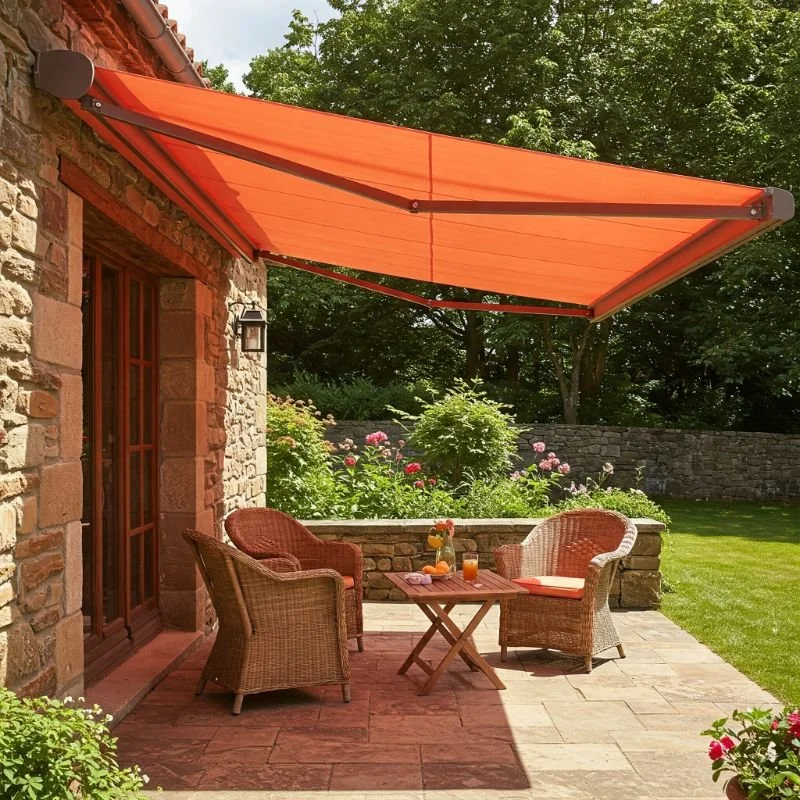
When using a brightly colored fabric like this, make it the undeniable star. Keep the furniture neutral and rustic—the simple wicker and wood here are perfect. Avoid adding other strong colors or busy patterns in pillows or rugs, as this will create visual chaos. The orange is doing all the work. To balance the brightness, incorporate plenty of natural greenery in the surrounding garden beds as green is a complementary color that soothes the eye and grounds the vibrant shade.
9. Neutral Sail Shade Over a Rooftop Dining Deck
The sail shade is the hero of this rooftop design. A pergola would have felt too heavy and visually boxed-in the space, while umbrellas would have been too small and cluttered the floor plan. The sail provides a massive area of coverage with a minimal physical footprint—just a few anchor points. Its gentle curve softens the hard angles of the deck and surrounding buildings, and the light cream color allows filtered, glowing light to pass through, keeping the atmosphere bright and cheerful, not dark and gloomy. Compare its effect to the structured shade in Idea #10.
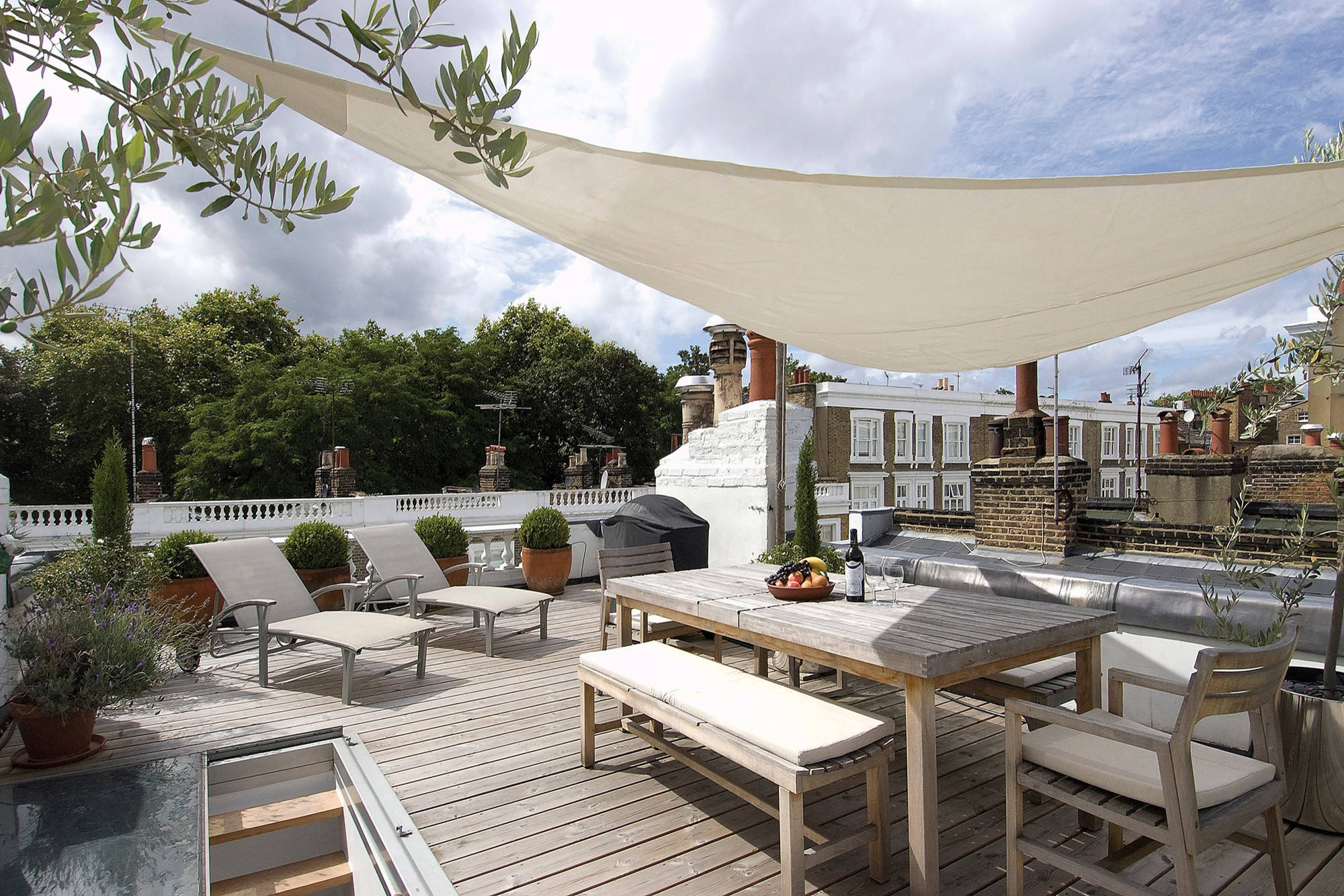
A large sail shade like this is ideal for open areas of at least 20×20 feet. It needs this much space to look intentional and not just like a tarp stretched across a too-small deck. The success hinges on having enough height for the anchor points. You need at least one or two points to be 10-12 feet high to create the dramatic pitch that allows rain to run off and gives it that architectural feel. A flat, low-slung sail looks sad and can pool water, as we mention in our mistakes section.
10. Ultimate Entertainment Patio with a Black Louvered Pergola
Creating a high-tech outdoor room like this is a significant investment. The technology and high-end materials are what drive the cost. Let’s break it down:
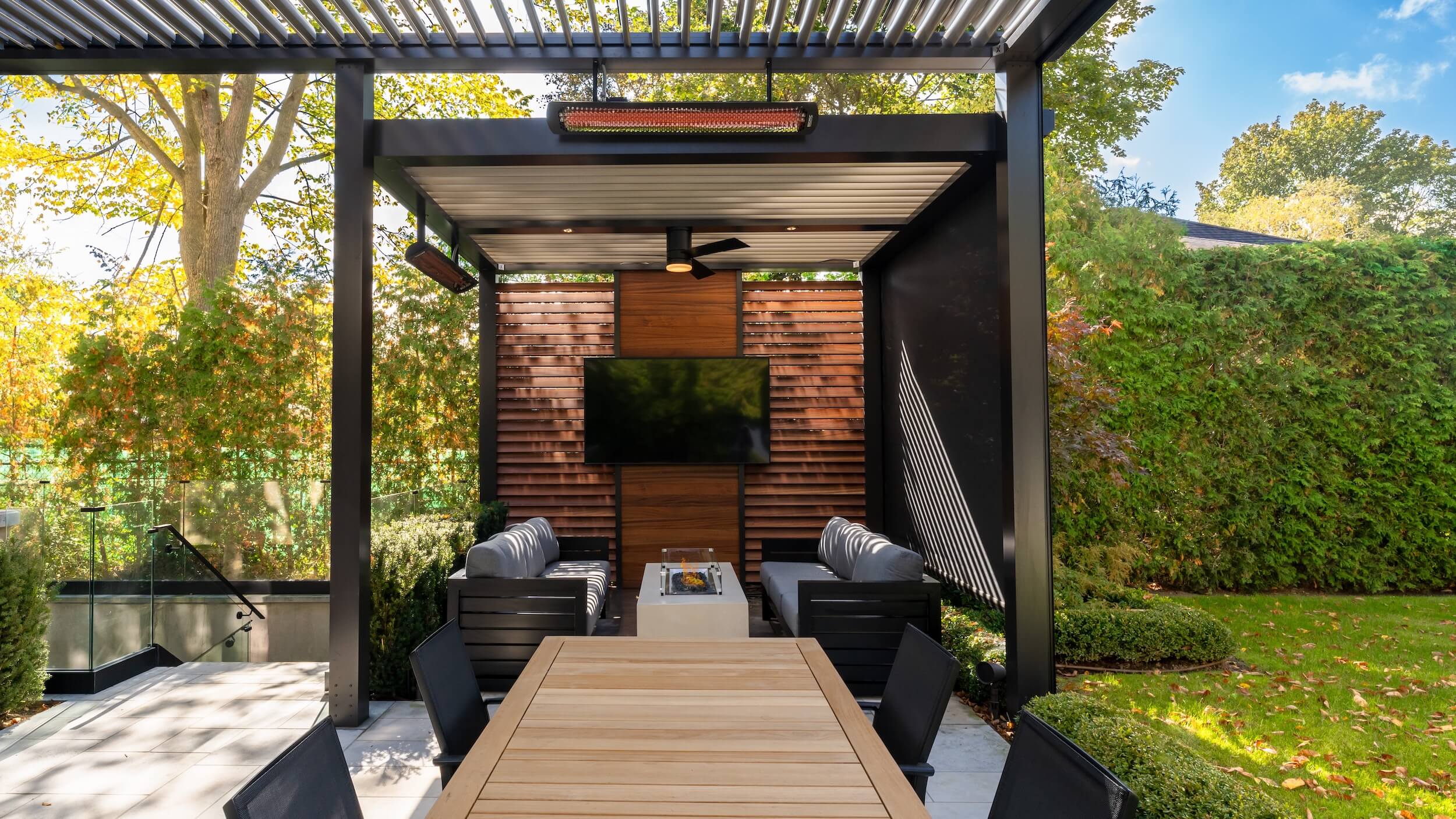
- Main Structure: Motorized louvered aluminum pergola (installed): $15,000 – $40,000+
- Furniture: High-end outdoor sofas and dining set: $7,000 – $15,000
- Features: Outdoor-rated TV, overhead heaters, fire pit: $5,000 – $12,000
- Finishes: Slatted wood accent wall, professional installation: $3,000 – $8,000
- Budget Alternative: A static wood pergola ($4k), a DIY slatted wall ($1k), and more affordable furniture ($3k) can give a similar feel for much less.
- TOTAL: $30,000 – $75,000+
This space feels so luxurious because it successfully merges technology with natural textures. The sleek, black metal of the pergola, TV, and furniture frames establishes a modern, sophisticated mood. However, the warmth of the slatted wood walls and teak dining table prevents it from feeling cold or clinical. The adjustable louvered roof is the master stroke, allowing the users to control the precise amount of sun or shade, making the space functional in almost any weather. It’s the ultimate expression of the ‘outdoor room’ trend.
11. Designing with a Retractable Patio Awning
Accurately measuring for a retractable awning is crucial for a perfect fit. Here’s a quick guide to getting it right.
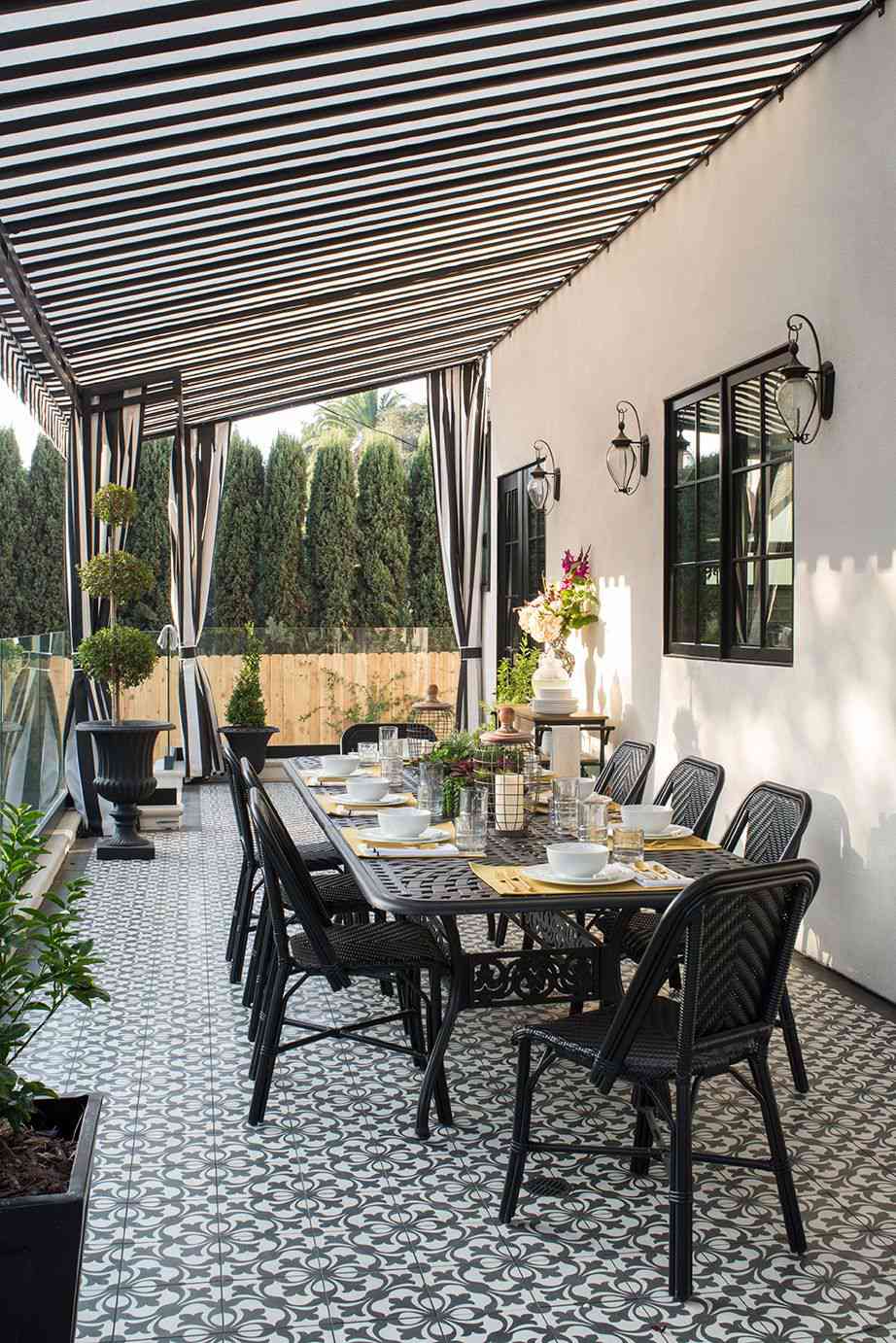
- Estimate Time & Cost: 30 minutes to measure. Pro installation can be $500-$1500.
- Measure Width: Decide on the area you want to cover. For a 12-foot wide patio door, an awning of 14-16 feet is ideal. The width should be wider than the opening it covers for best results.
- Determine Projection: This is how far out the awning will extend. A standard projection is 10 feet, which provides a good amount of shade for a small seating or dining area. For larger spaces, you can go up to 14 feet.
- Check Mounting Height: You need at least 8 feet of clear, unobstructed wall space from the bottom of where the awning will mount to the ground. For walk-under clearance, the front bar should be at least 6’8″ high when extended.
- Verify Wall Structure: Knock on the wall to ensure it’s solid. A retractable awning exerts significant force. You must mount it to structural members like studs, joists, or headers, not just siding or brick veneer.
Before you even get a quote, check off these critical points. Is there a clear, flat vertical surface for the mounting bar? Do you have at least 8-10 inches of vertical space free of obstructions like light fixtures or downspouts? Will the awning, when extended, interfere with tree branches or rooflines? Finally, confirm the direction your wall faces; a south- or west-facing wall gets the most intense sun and will benefit the most from an awning.
12. Playful Pink & White Pergola with a Striped Floor
This patio’s success is a lesson in joyful maximalism, but it still follows a formula. Let’s call it: 50% clean white structure + 40% bold color fields + 10% patterned accents. The white pergola, house, and furniture create a crisp, gallery-like canvas. The painted floor stripes and the pink umbrella are the huge blocks of color that define the mood. The geometric screen and smaller plants are the final-layer details. The key is that the wildest element—the floor—is contained by the simple, clean structure of the white pergola.
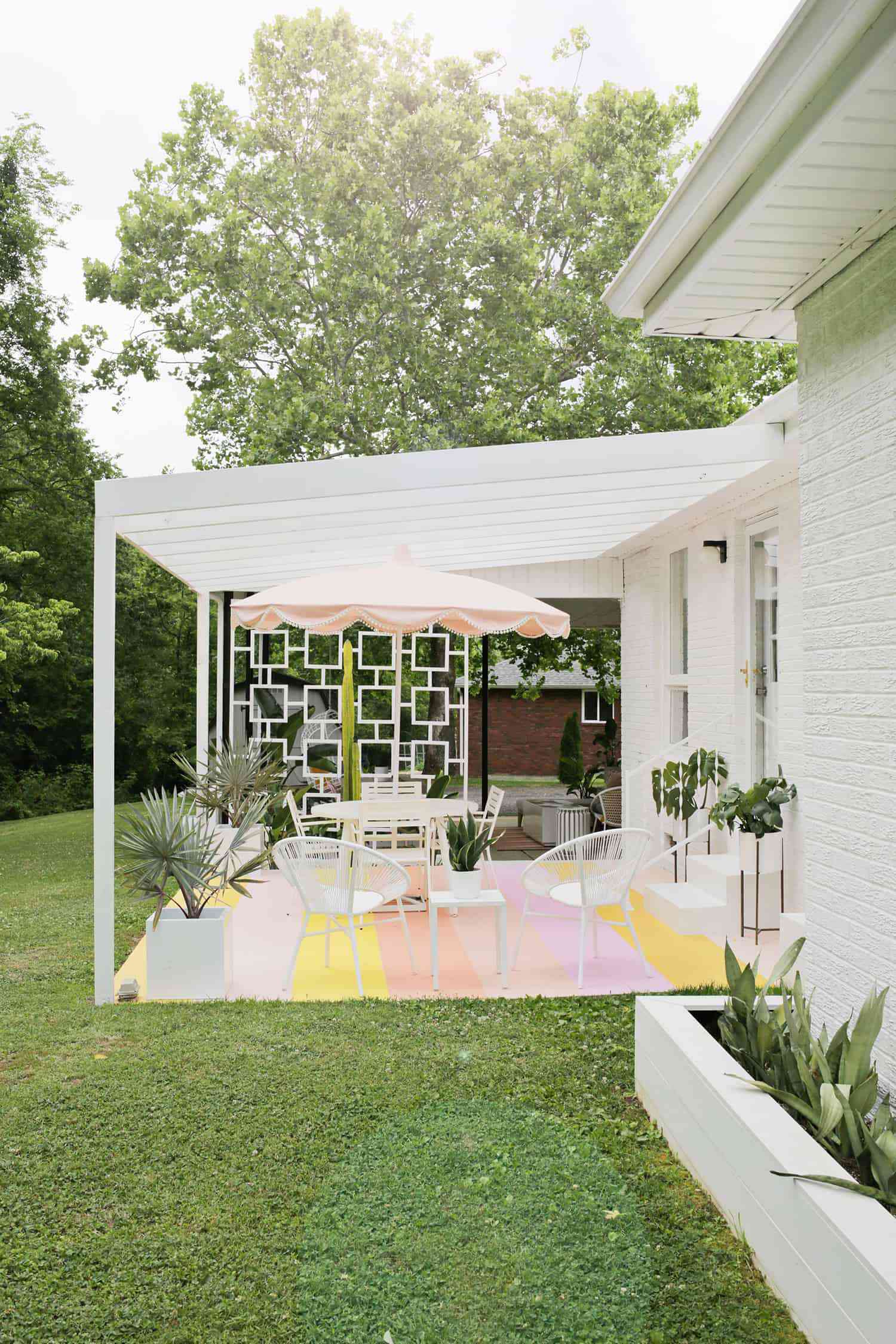
A look this bold and specific requires commitment. Painting a concrete patio is a fantastic DIY project, but it’s not without its challenges. You must use dedicated concrete porch and patio paint after thoroughly cleaning and possibly etching the surface. Be prepared for touch-ups every couple of years, as foot traffic will inevitably lead to scuffs and wear. Also, a bright pink umbrella will be more prone to visible fading from the sun than a neutral beige or grey one, so investing in high-quality, UV-resistant fabric is a must.
13. White Wood Pergola Paired with a Cantilever Umbrella
This design demonstrates a smart layering of shade solutions. The white wood pergola provides architectural definition and dappled, all-day shade that moves with the sun. It creates the ‘feel’ of an outdoor room. However, the slats can’t provide full protection during the hottest part of the day or during a light rain. That’s where the large cantilever umbrella comes in. It offers a solid, concentrated block of shade exactly where it’s needed—over the seating area—and can be tilted and rotated as the sun moves. It’s a perfect pairing of aesthetic and practical shade.
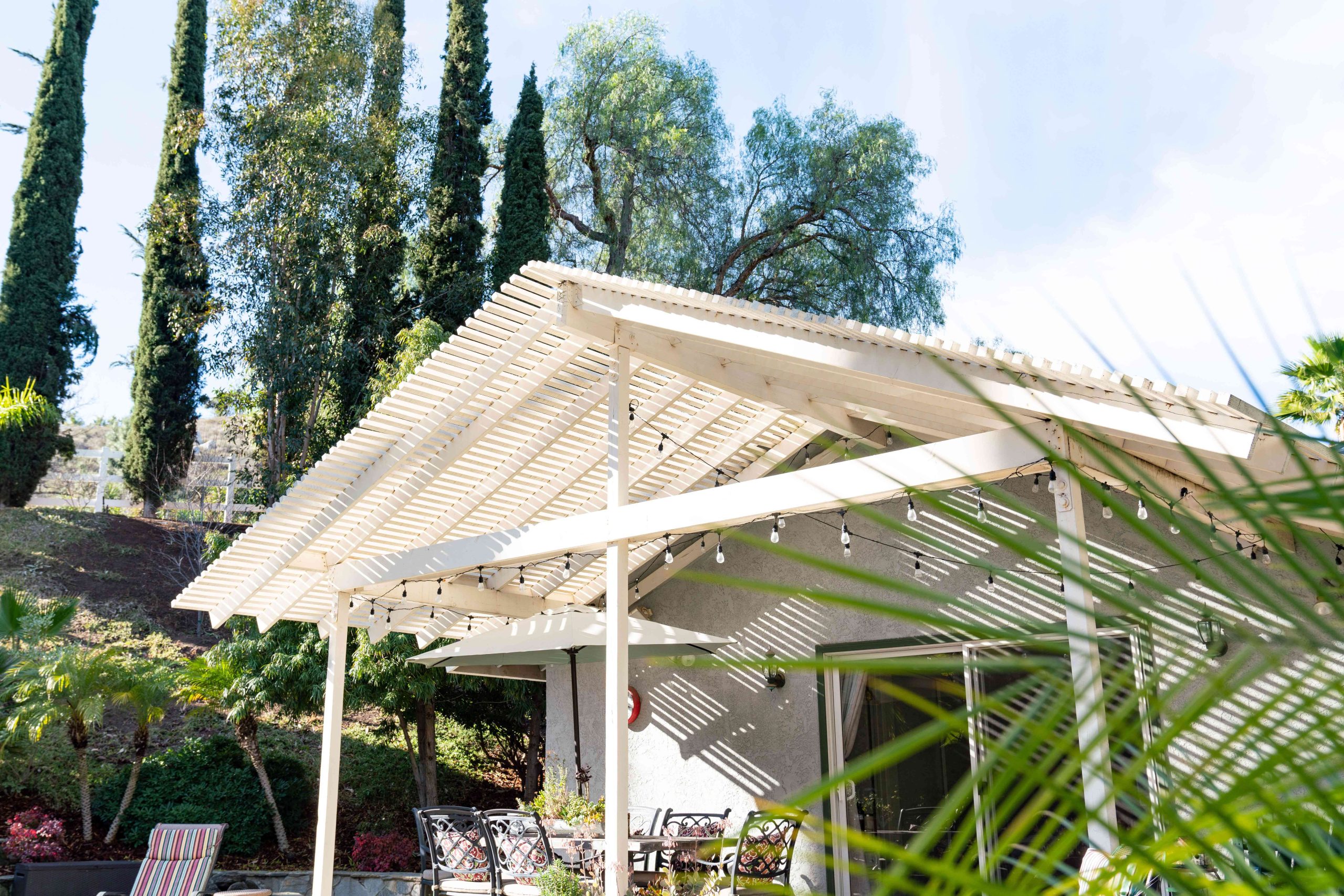
For a pergola and umbrella combination to work without looking cluttered, scale is key. Your cantilever umbrella should be large enough to cover the entire seating arrangement—a 10 or 11-foot canopy is standard. Position the base of the umbrella just outside the main traffic flow so it’s not a tripping hazard. Match the umbrella fabric to a neutral tone from your home’s exterior (like the beige here) rather than trying to make a bold color statement, allowing the pergola to remain the primary architectural feature.
14. Rustic Slatted Gazebo with a Built-in Picnic Table
The defining feature of this structure is its smart integration of function. This isn’t just a gazebo; it’s a complete, self-contained destination. The built-in picnic table and benches mean you don’t have to worry about finding separate furniture that fits the space or style. It’s an all-in-one solution for creating a shaded dining or activity spot in a backyard. The slatted walls offer a sense of enclosure and privacy while still allowing breezes to flow through, making it feel protected but not stuffy.
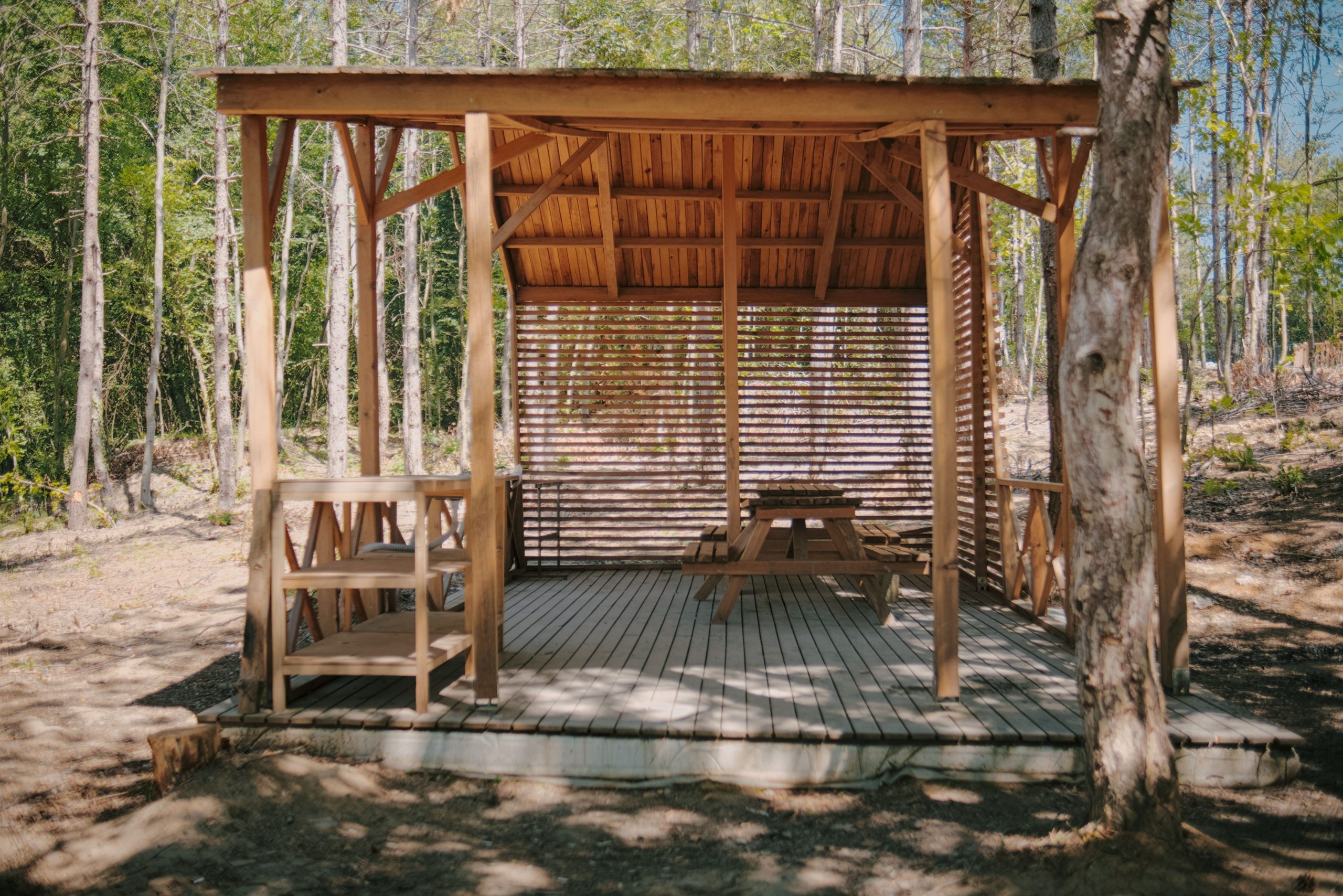
A structure with this much presence works best when it’s set apart from the house, acting as a destination in a garden or yard. It requires a relatively level footprint of about 12×14 feet. Its rustic, all-wood design fits seamlessly into a more natural or traditional landscape. In a very small, modern courtyard, it might feel a bit bulky. Consider this a great solution for a larger suburban or country-style yard where you want to create a specific zone away from the main patio. Compare its rustic feel to the sleek, modern gazebo in Idea #27.
15. Modern Deck with Sail Shade and Outdoor Kitchen
This space is a masterclass in blending indoor convenience with outdoor living. The large sail shade is crucial; its sweeping curve and massive coverage area unify the separate dining and kitchen zones into one cohesive space. The choice of rich, reddish-brown wood for the deck provides a warm, organic foundation that grounds the sleek, white kitchen island and stainless steel appliances. The abundance of lush, tropical foliage surrounding the deck creates a sense of a private oasis, completely screening out neighbors and enhancing the resort-like feel.
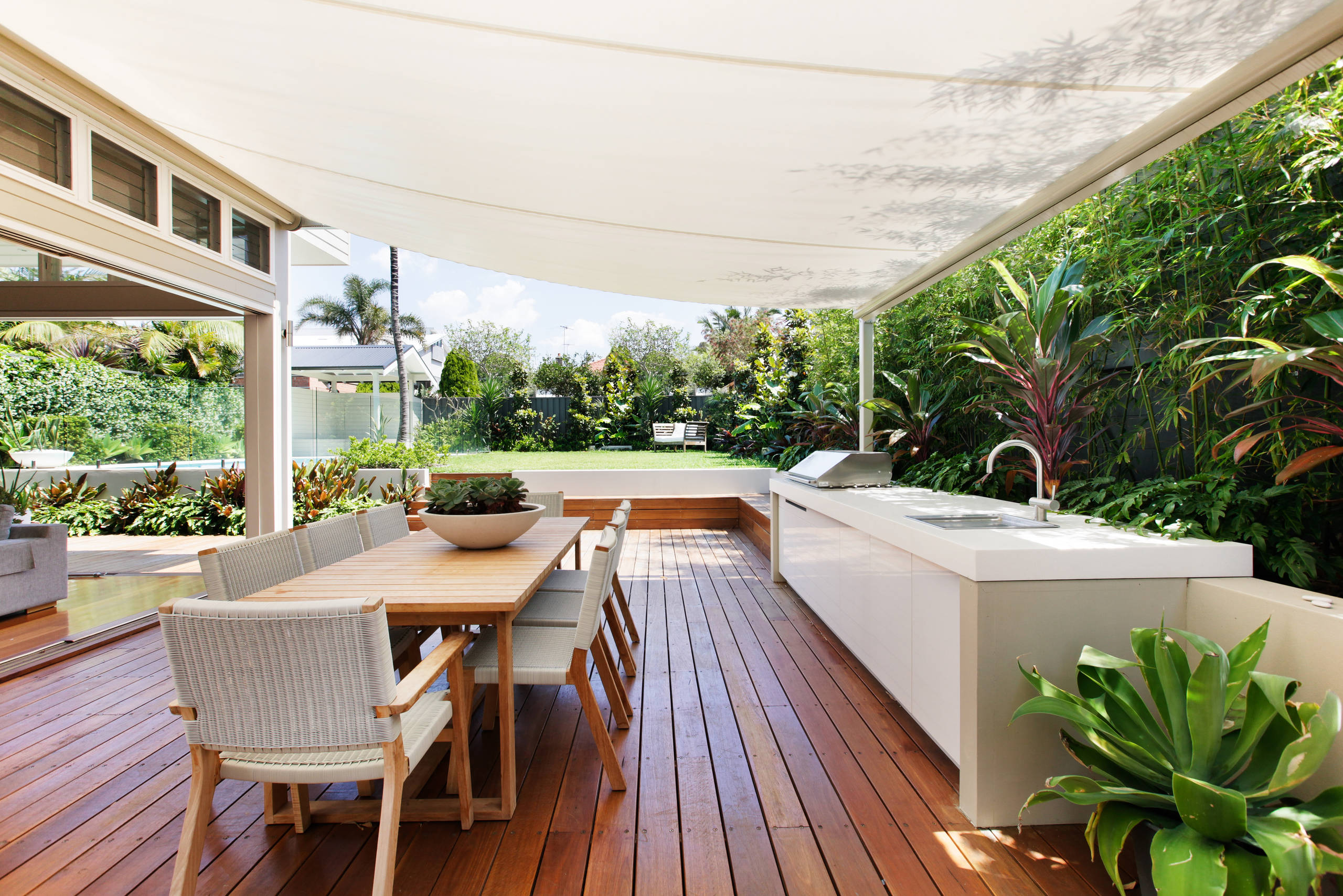
An outdoor kitchen and a large tensioned sail require regular upkeep. The sail will need to be cleaned of bird droppings, pollen, and tree debris at least once a season to maintain its bright white appearance. Wooden decks, especially in a sunny spot, require annual cleaning and re-staining/sealing every 2-3 years to prevent splintering and fading. The outdoor kitchen appliances and countertops need to be wiped down after every use and covered during the off-season to protect them from the elements and extend their lifespan.
16. Industrial Patio with a Concrete Fireplace
The formula for this industrial-chic look is all about texture: 40% raw materials (the concrete fireplace and rusty planters) + 40% warm woods (the slat ceiling and Adirondack chairs) + 20% sleek metal (the black structural beams). The success of the design lies in the balance. The concrete and metal provide the edgy, industrial foundation, but the extensive use of wood on the ceiling and in the furniture choice keeps the space from feeling cold or uninviting. The final touch of rusty metal adds a layer of aged, weathered patina.
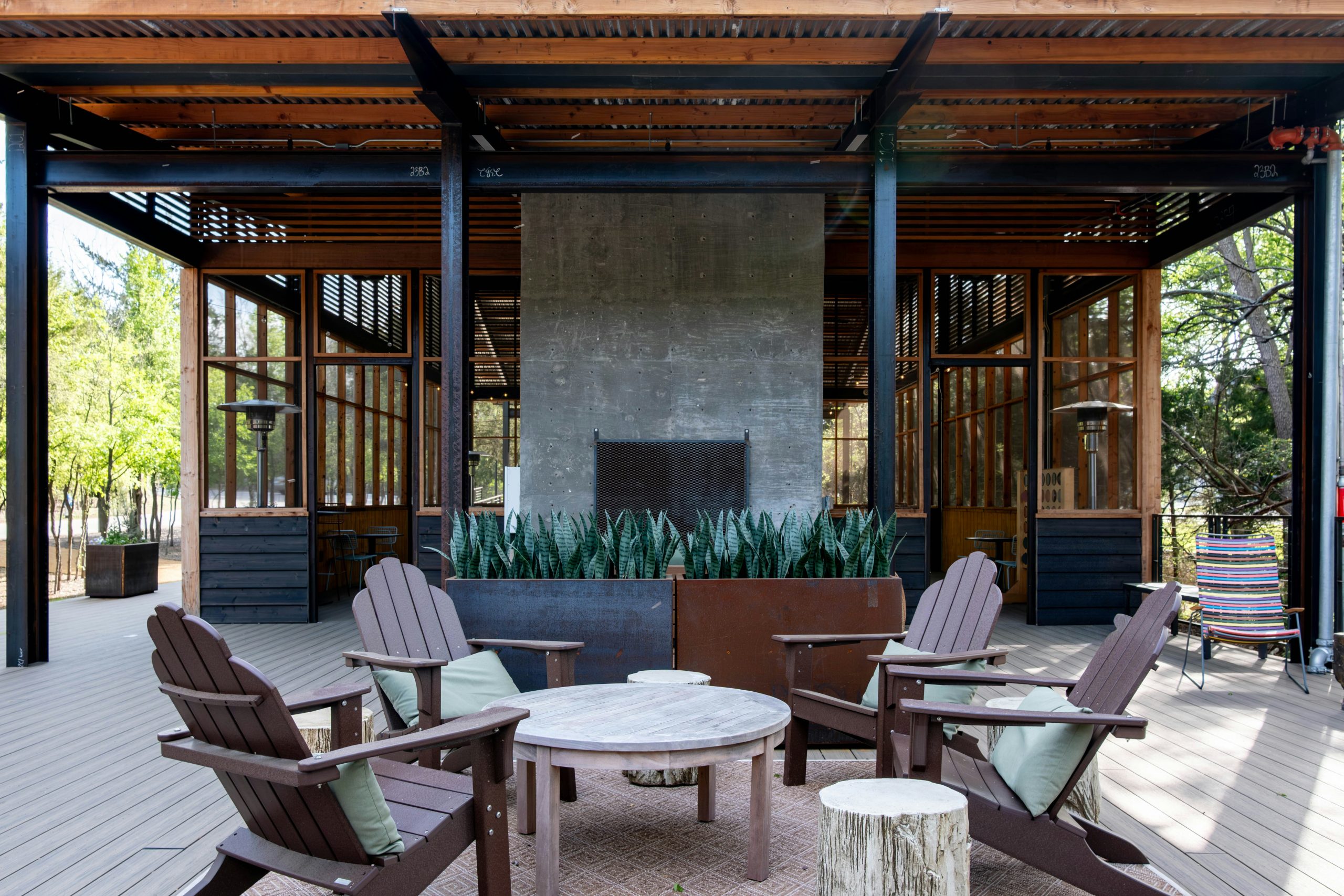
This look taps into the ‘Japandi’ and ‘Industrial Loft’ trends that have been dominating interior design and are now moving outdoors. People are craving authenticity and are tired of flimsy, generic patio sets. The use of substantial, honest materials like concrete, steel, and solid wood reflects a desire for permanence and quality. This isn’t a temporary setup; it’s a true extension of the home’s architecture. This trend has serious staying power as it focuses on timeless materials rather than fleeting colors or patterns.
17. Off-White Retractable Awning for Evening Ambiance
This design beautifully illustrates how a shade solution can enhance a patio’s evening mood, not just its daytime function. The off-white awning acts as a soft ceiling, reflecting the warm light from the wall sconces and the interior of the house. This creates a gentle, ambient glow over the entire seating area, making it feel intimate and cozy. A dark-colored awning would have absorbed the light, creating a much more shadowy, cavernous effect. The light fabric turns the patio into a welcoming, luminous space after sunset.
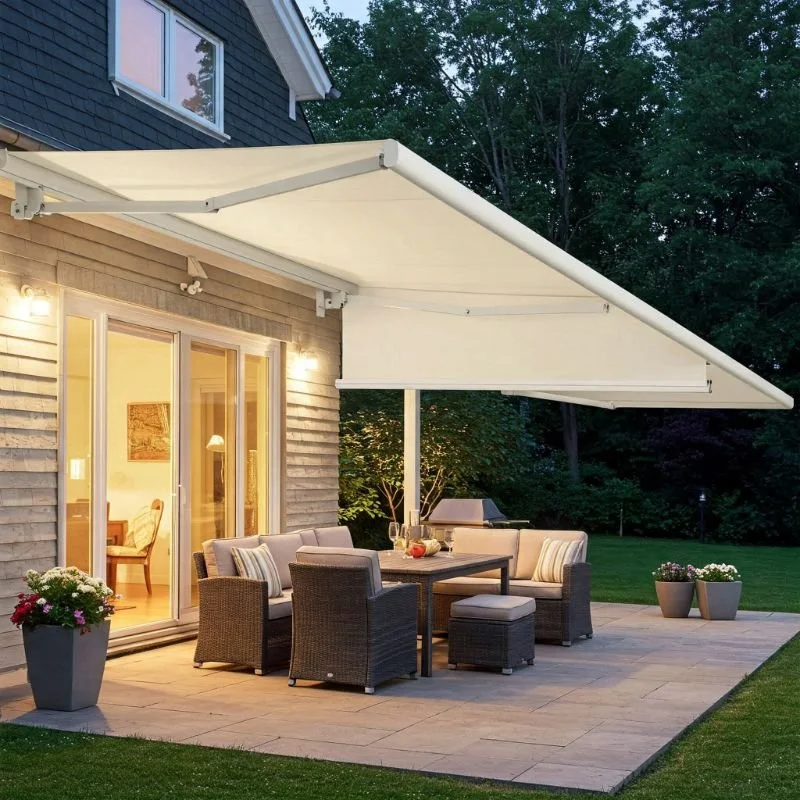
While light-colored awnings are fantastic for creating a bright, airy feel, they are the toughest to keep clean. Every bit of pollen, leaf stain, bird dropping, and mildew spot will be highly visible. If you live in an area with a lot of trees or birds, be prepared to clean your awning fabric at least twice a season with a specialized cleaner. If that level of maintenance sounds like a chore, you might be happier with a medium-grey or taupe fabric, which offers a similar neutral feel with a lot more forgiveness for dirt.
18. Classic Striped Awning Over French Patio Doors
The striped awning is the single element that sets the tone for this whole vignette. Without it, you have a lovely but simple back door. With the awning, you have a scene that feels like it was plucked from a French cafe or a charming coastal cottage. The beige and grey stripes are classic and sophisticated, lending an air of an established, timeless garden. It elevates the simple wooden chair and stone patio into a thoughtful, intentional design moment rather than just a place to sit.
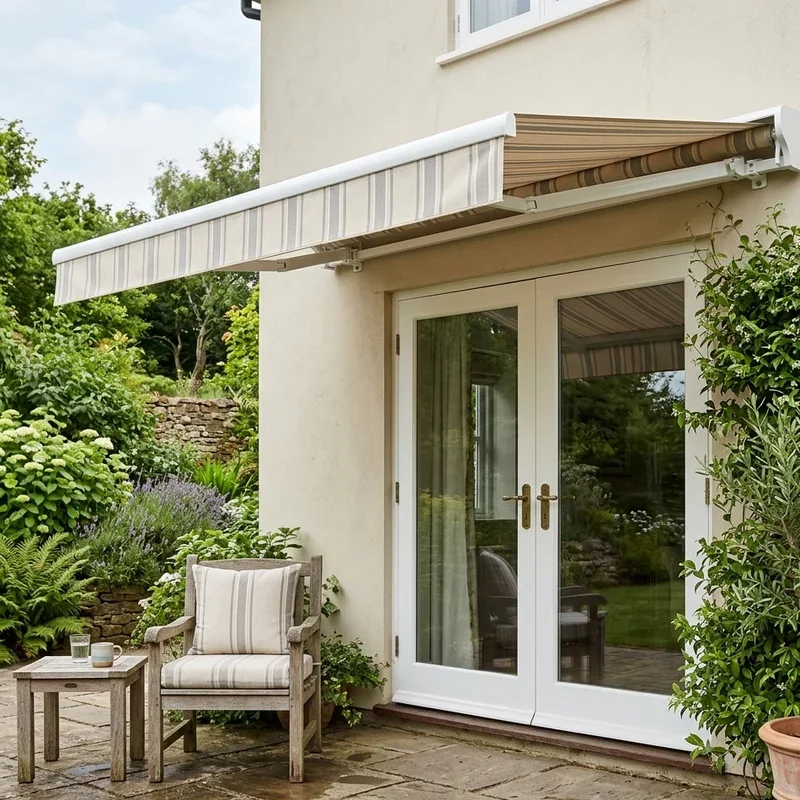
For a truly cohesive look, coordinate your accessories with your awning stripes. Notice how the cushion on the armchair has a similar striped pattern, reinforcing the design choice. When you have a pattern on your awning, keep other textiles relatively simple. A solid-colored cushion in beige, grey, or white would also work perfectly here. Avoid introducing competing patterns like florals or bold geometrics, which would detract from the awning’s classic appeal and make the small space feel busy.
19. Cozy Evening Patio with a Scalloped Awning and Curtains
This space excels at creating a sense of enclosure and intimacy, essentially making a ‘soft room’ outdoors. The dark, scalloped awning acts as the ceiling, while the white privacy curtains function as walls. This combination blocks views from neighbors and creates a psychological feeling of a safe, private space. The string lights draped underneath are key; they provide a warm, low level of light that enhances the cozy atmosphere, making it the perfect spot for late-night conversations around the fire pit.
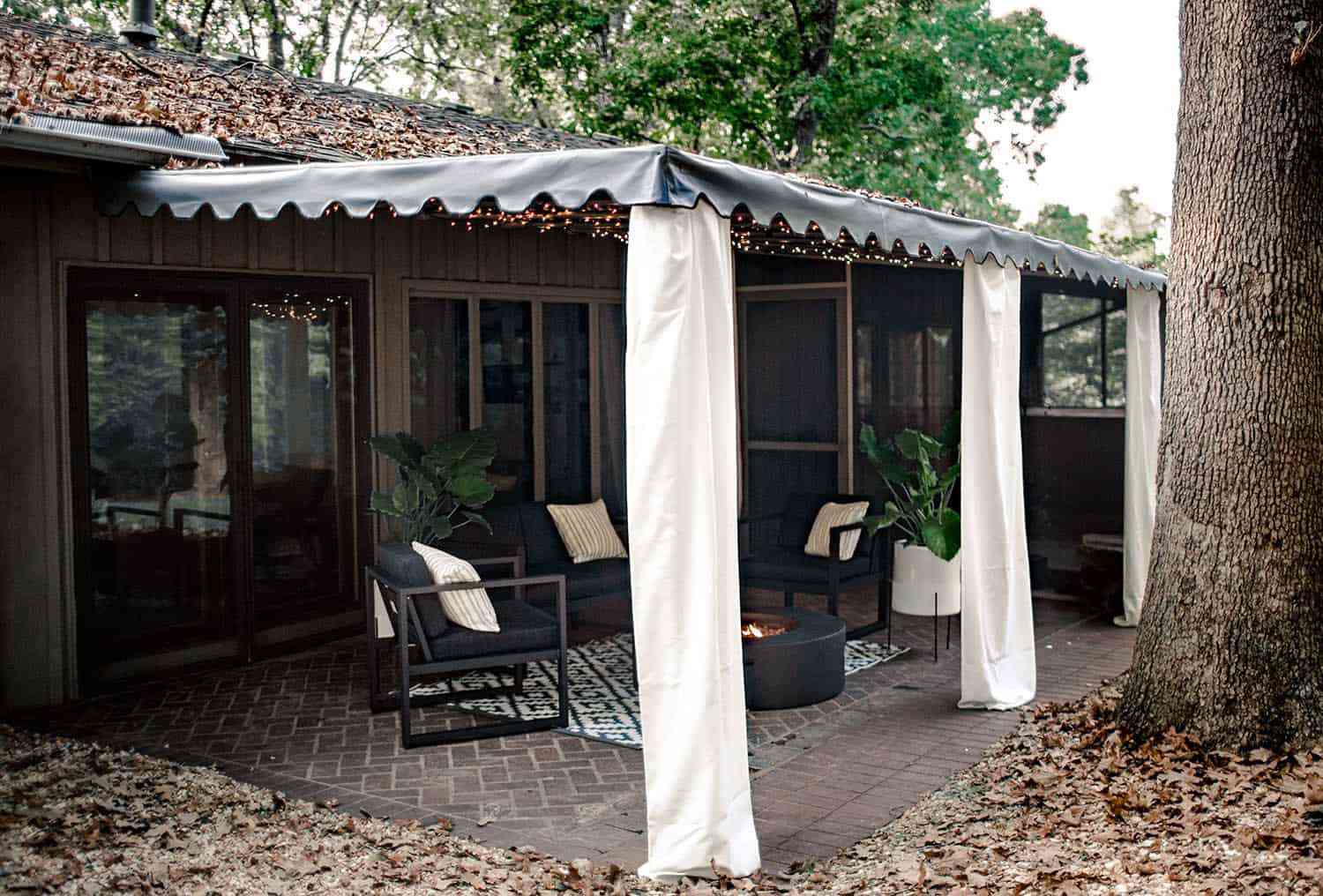
You can create a similar curtained enclosure with a few basic materials. It’s a great renter-friendly project.
- Estimate Time & Cost: 2 hours. Cost: $150 – $400.
- Install a Wire Rope: Get a length of vinyl-coated stainless steel wire rope and heavy-duty screw eyes. Securely install the screw eyes into the pergola, awning frame, or house wall.
- Tension the Wire: Attach the wire to one screw eye, thread it through the grommets of your outdoor curtains, and then attach it to the other screw eye using a turnbuckle. This allows you to get the wire nice and taut.
- Choose Curtains: Use curtains specifically made for outdoor use. They are water-repellent, mildew-resistant, and have grommets that won’t rust.
- Add Weights: To stop them from blowing around, you can either buy curtain weights or simply sew a small chain into the bottom hem.
20. Sleek Black Pergola with an Outdoor Kitchen and Media Wall
A full-service outdoor living zone like this requires serious planning. Before you break ground, work through this checklist:
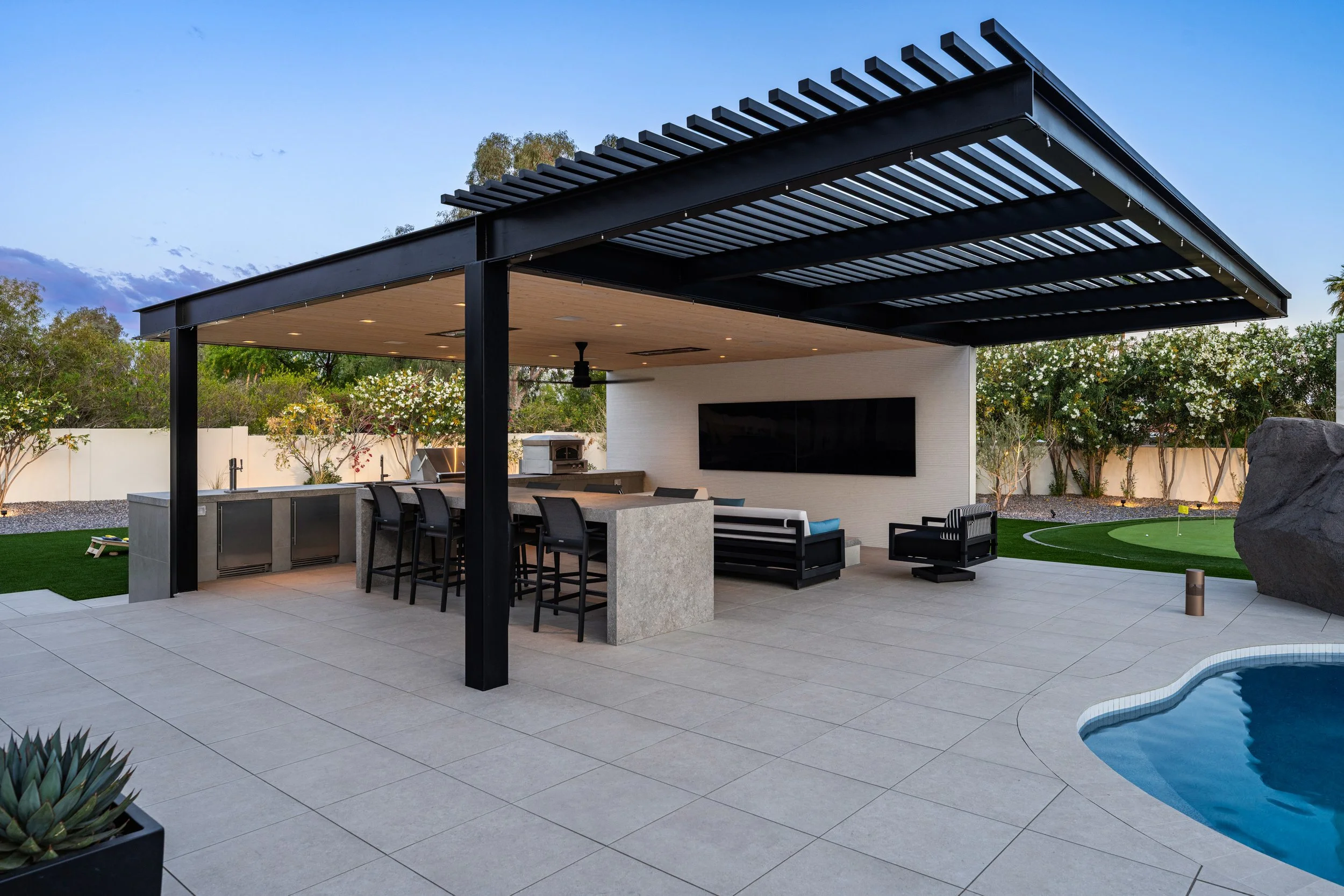
- Utilities Check: Have you planned for running electrical for the TV, appliances, and lighting? What about gas lines for the grill and plumbing for the sink? This often requires licensed professionals and permits.
- Foundation Plan: A structure this heavy, with tile flooring and a kitchen island, needs a proper concrete slab foundation, not just pavers laid on sand.
- Appliance & Furniture Layout: Do you have precise measurements for your grill, fridge, sofas, and tables? The pergola and kitchen island must be built to accommodate them perfectly.
- Sun & Weather Patterns: Observe how sun, shade, and wind move through the space at different times of day to ensure the pergola is oriented for maximum effectiveness and the TV isn’t in constant glare.
This is not a small-patio solution. To accommodate a distinct kitchen zone, a media/lounge zone, and comfortable circulation space, you need a minimum footprint of 20×30 feet. The grand scale is part of what makes it feel so luxurious. Attempting to cram this much function into a smaller space would result in a cramped and awkward layout where nothing has room to breathe. This is a design that is meant to connect seamlessly with a large home via expansive sliding doors, as shown in the notes for Idea #25.
21. Bohemian Tropical Deck with a Slatted Pergola
The inviting, bohemian vibe of this deck comes from a rich textural formula: 50% warm wood (the deck and pergola) + 30% woven natural fibers (the wicker furniture, rattan lights, macrame hammock) + 20% lush greenery. The wood provides a solid, earthy base. The variety of woven textures adds a handmade, collected-over-time feel. The final layer of dense, tropical foliage is what transports you, creating a sense of being in a jungle hideaway. The different seating options—sofa, chairs, hammock—make it feel relaxed and communal.
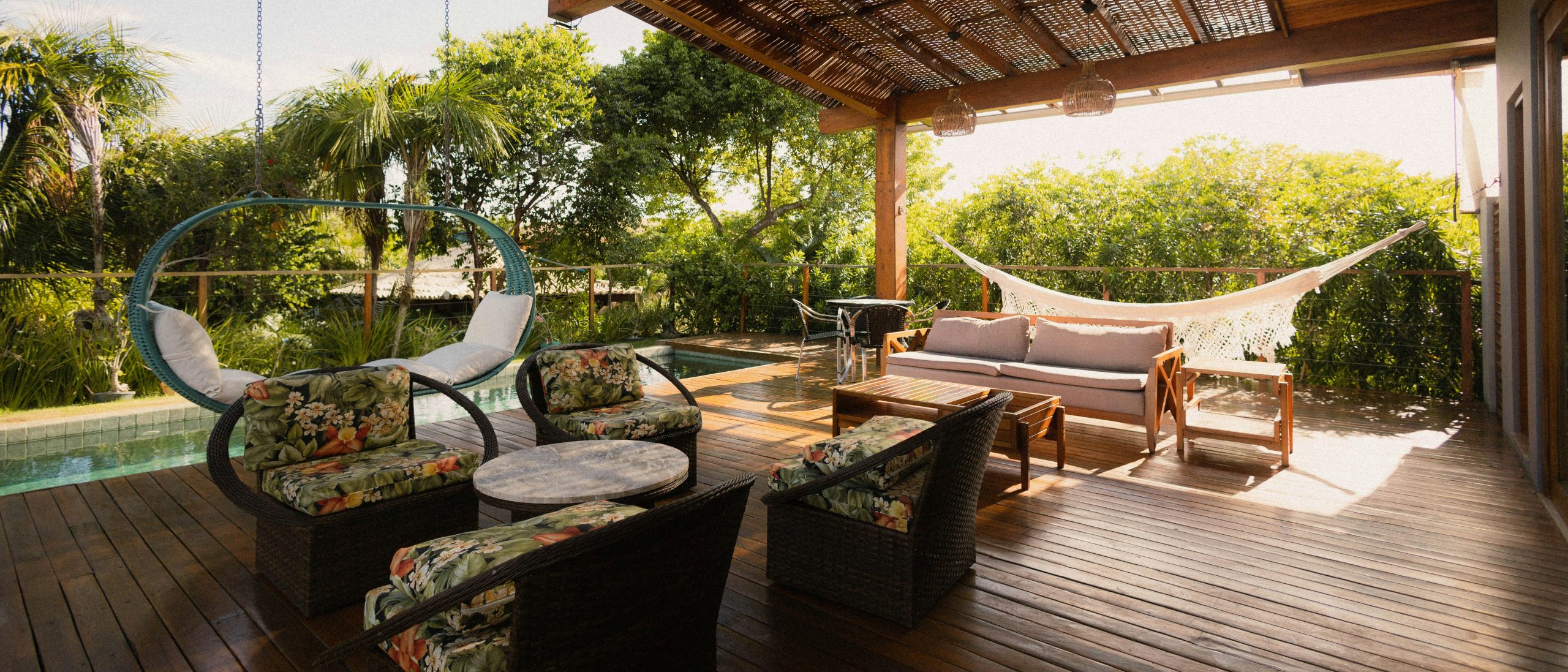
The single element that gives this space its distinctly relaxed, tropical character is the abundance of lush green foliage. Without the dense backdrop of plants, the wooden deck and pergola would feel much more conventional. The plants create privacy, add vibrant color, and cast soft, dappled light. They are the ingredient that transforms a simple deck into an immersive, transportive environment. If you want this look, prioritize your plant budget—it’s more important than any single piece of furniture.
22. Modern Pergola with Horizontal Slat Walls
This pergola design is effective because it provides shade and privacy without creating a solid, oppressive wall. The horizontal wood slats are spaced to allow air and light to filter through, preventing the seating area from feeling dark or stuffy. This semi-enclosed structure creates a strong sense of a designated ‘room’ in the open yard. The combination of dark metal, warm wood, and light pavers is a classic modern palette that feels sophisticated and connected to nature. The contrast in Idea #23 shows a more traditional take on the pergola concept.
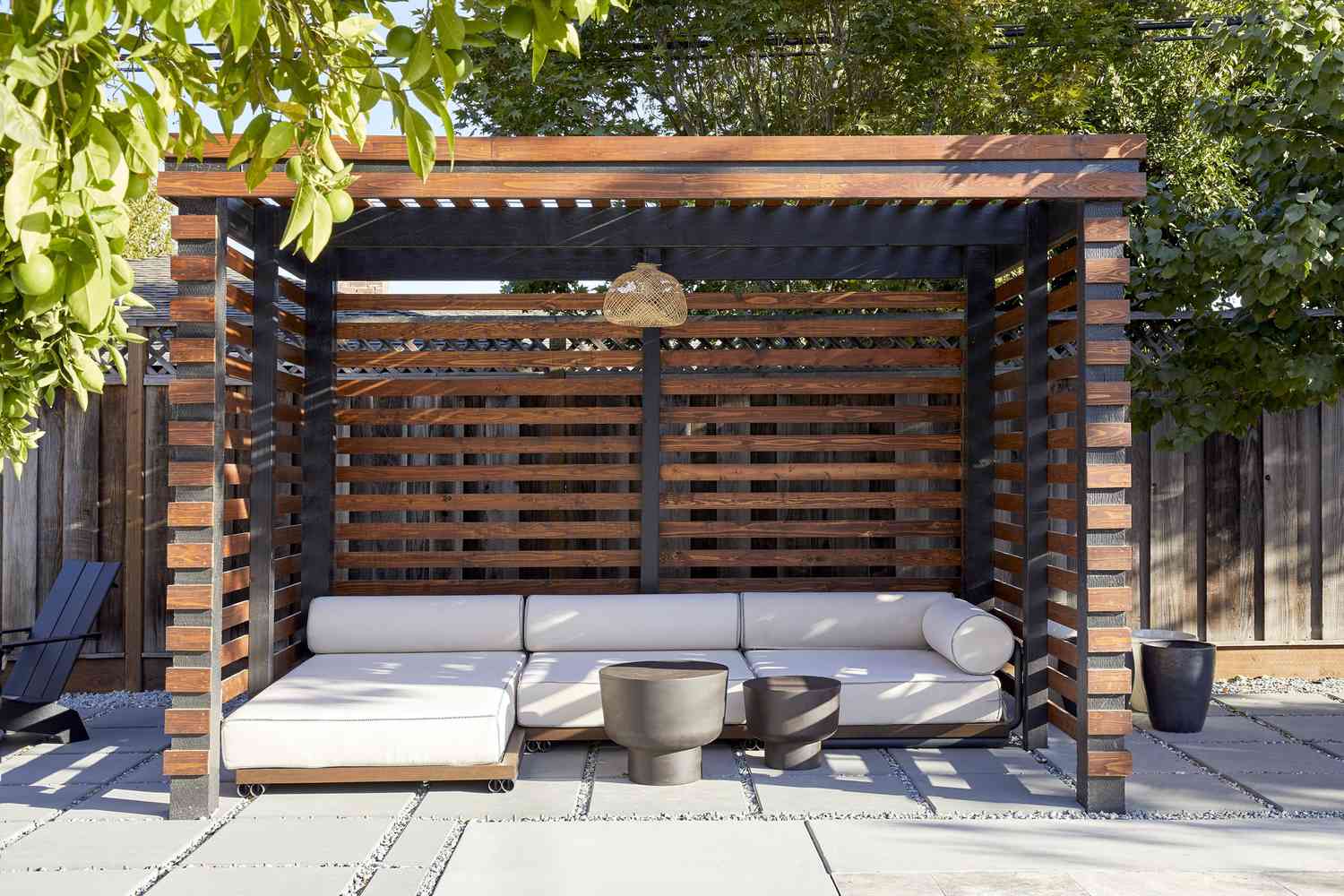
While slatted walls are beautiful, they can be a maintenance headache. The gaps between the slats are perfect for collecting dust, pollen, and spiderwebs. Cleaning them requires more than a quick hose-down; you’ll likely need to wipe each slat individually a few times a year to keep it looking sharp. Also, the combination of wood slats and a metal frame can be tricky. Over time, as the wood expands and contracts, you may need to tighten fasteners to keep everything secure and prevent rattling.
23. Dark Wood Pergola with Moroccan Lanterns
The success of this lush, exotic patio lies in its visual layering. The formula: 50% dark, moody structure (the dark-stained pergola and black furniture) + 30% soft, light textiles (the light grey cushions and striped pillows) + 20% organic elements (the climbing vines and surrounding palms). The dark base creates a sense of drama and enclosure, while the light cushions provide a comfortable and inviting contrast, preventing the space from feeling too heavy. The greenery and intricate lanterns are the final touches that add life and personality.
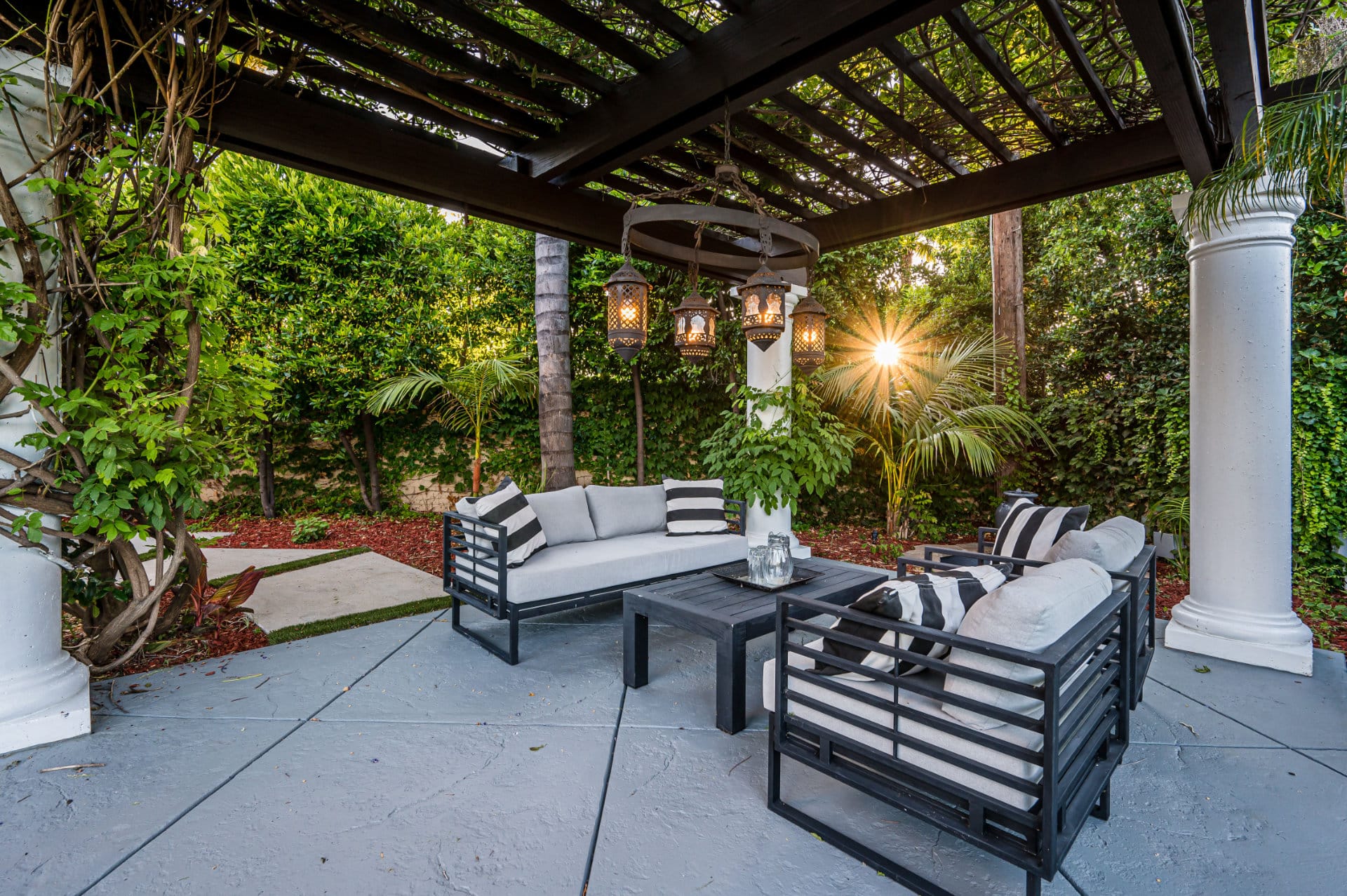
The ornate, Moroccan-style lanterns are the undeniable element that elevates this patio from simply ‘nice’ to ‘special’. Remove them, and you have a stylish, modern outdoor lounge. But with them, the space gains a touch of exoticism and a hint of worldly, collected style. They are a decorative choice that also serves a functional purpose, casting intricate, beautiful shadows in the evening and acting as jewelry for the entire structure. They signal that this is a space designed with personality and a point of view.
24. Monochromatic Grey Patio with a Retractable Awning
This space feels so serene and sophisticated because of its commitment to a monochromatic palette. By using various shades of grey—from the light grey of the awning and deck to the medium grey of the sofa and the charcoal of the furniture frames—the design creates a calm, cohesive, and uncluttered look. The texture comes from the weave of the furniture, the grain of the deck, and the softness of the cushions. The green plants provide the only color, making them pop and feel more vibrant against the neutral backdrop.
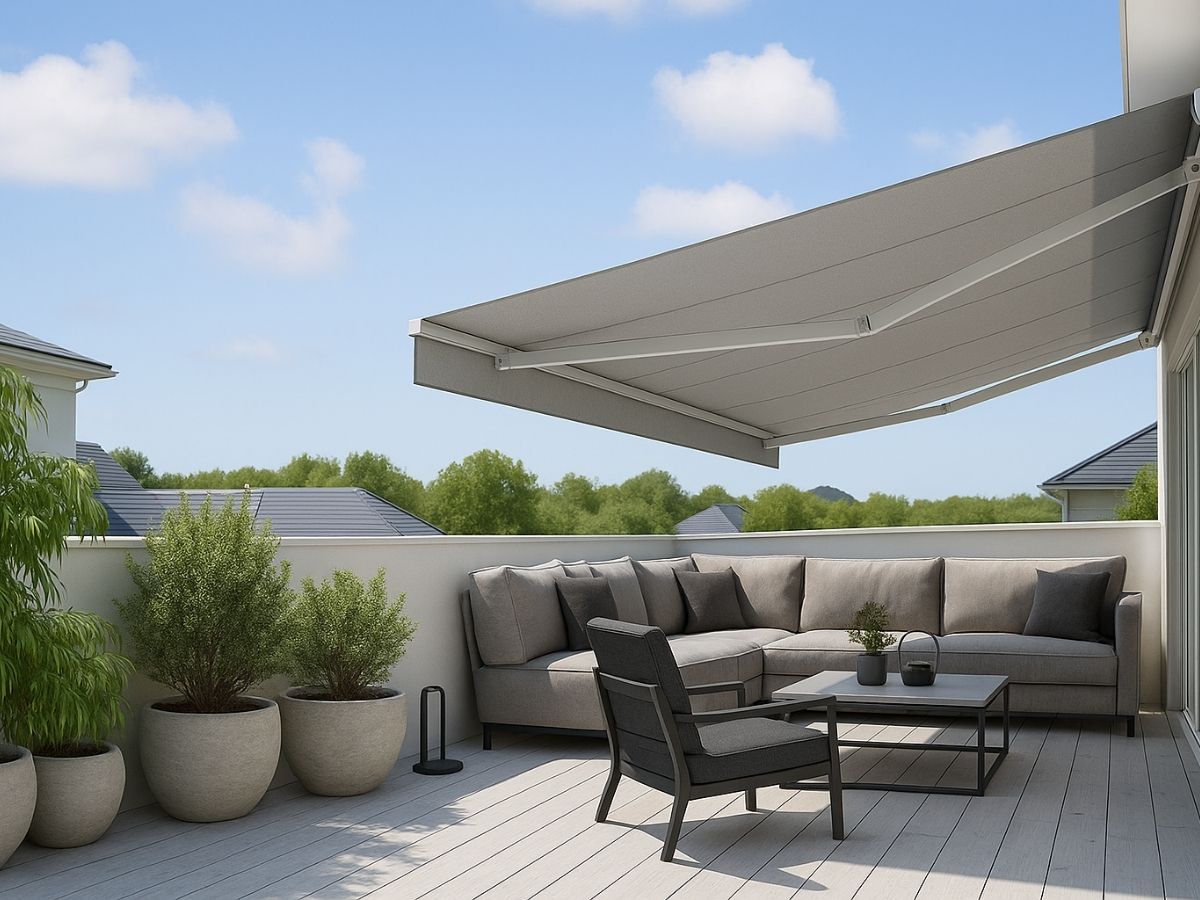
You can achieve this sleek, monochromatic look on a much tighter budget. IKEA’s SOLLERÖN or ÄPPLARYD outdoor sectional series offers a similar grey, modular design for a fraction of the cost of high-end brands (around $1,000-$1,500). For the shade, instead of a motorized awning, consider a large, grey cantilever umbrella from a store like Target or Wayfair, which can provide ample coverage for around $300-$500. Add some grey planters from a home improvement store, and you’ve captured the essence of this look for under $2,000.
25. Modern Black Pergola with a Retractable Red Shade
The retractable red fabric shade is, without a doubt, the element that makes this design unforgettable. The house and patio are a sophisticated mix of grey, black, and natural wood—a beautiful but safe modern palette. The slash of brilliant red is a shot of pure energy and confidence. It’s a deliberately bold, almost rebellious choice that turns the entire backyard into a statement. It proves that a functional element like a shade can also be the most powerful decorative feature.
![23 Deck Awning Ideas: Shade and Style [2025]](https://felvane.com/wp-content/uploads/2026/06/23-deck-awning-ideas-shade-and-style-202-1.webp)
When using a color this strong, a little goes a long way. The key to this design’s success is that the red is isolated to the shade itself. The designers wisely kept the furniture neutral with grey sofas. If they had tried to add red pillows or other red accessories, the look would have become much less sophisticated and a bit too ‘matchy-matchy’. If you’re going to make one giant, bold statement, let it stand on its own and let everything else play a supporting role.
26. Natural Wood Pergola with Checkered Shadows
The beauty of this simple structure lies in its interaction with the sun. The slatted top doesn’t provide solid, heavy shade. Instead, it creates a moving, dynamic pattern of light and shadow on the deck floor. This ‘dappled light’ effect feels more natural and gentle than total shade, mimicking the feeling of sitting under a leafy tree. The structure itself is minimal, acting primarily as a frame for the sky and a tool for sculpting the sunlight. It defines the space without enclosing it. This is a much more open feeling than the solid roof in Idea #1.
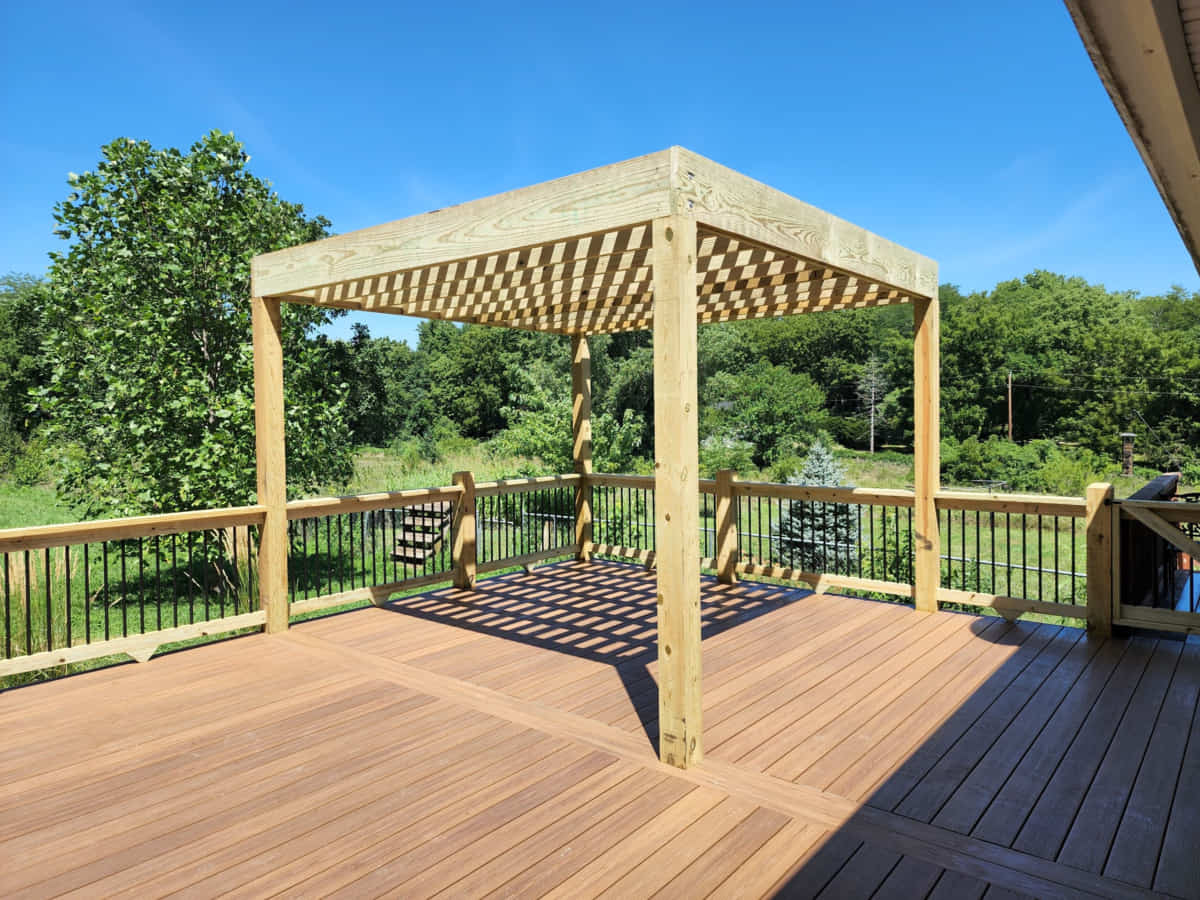
A pergola with a slatted top like this is for atmosphere, not for all-weather protection. It will not keep you dry in the rain. It will also not provide full shade during the middle of a hot, sunny day. It’s a structure best suited for climates with moderate sun or for people who enjoy being in the sun but want to cut the harshest glare. If you need serious, deep shade or rain protection, you’ll need to add a retractable canopy underneath or opt for a solid-roofed structure instead.
27. Modern Gazebo with a Dark Metal Roof
A high-quality gazebo kit like this offers a permanent feel without the cost of a custom build. Here’s a typical cost breakdown to get this poolside look:
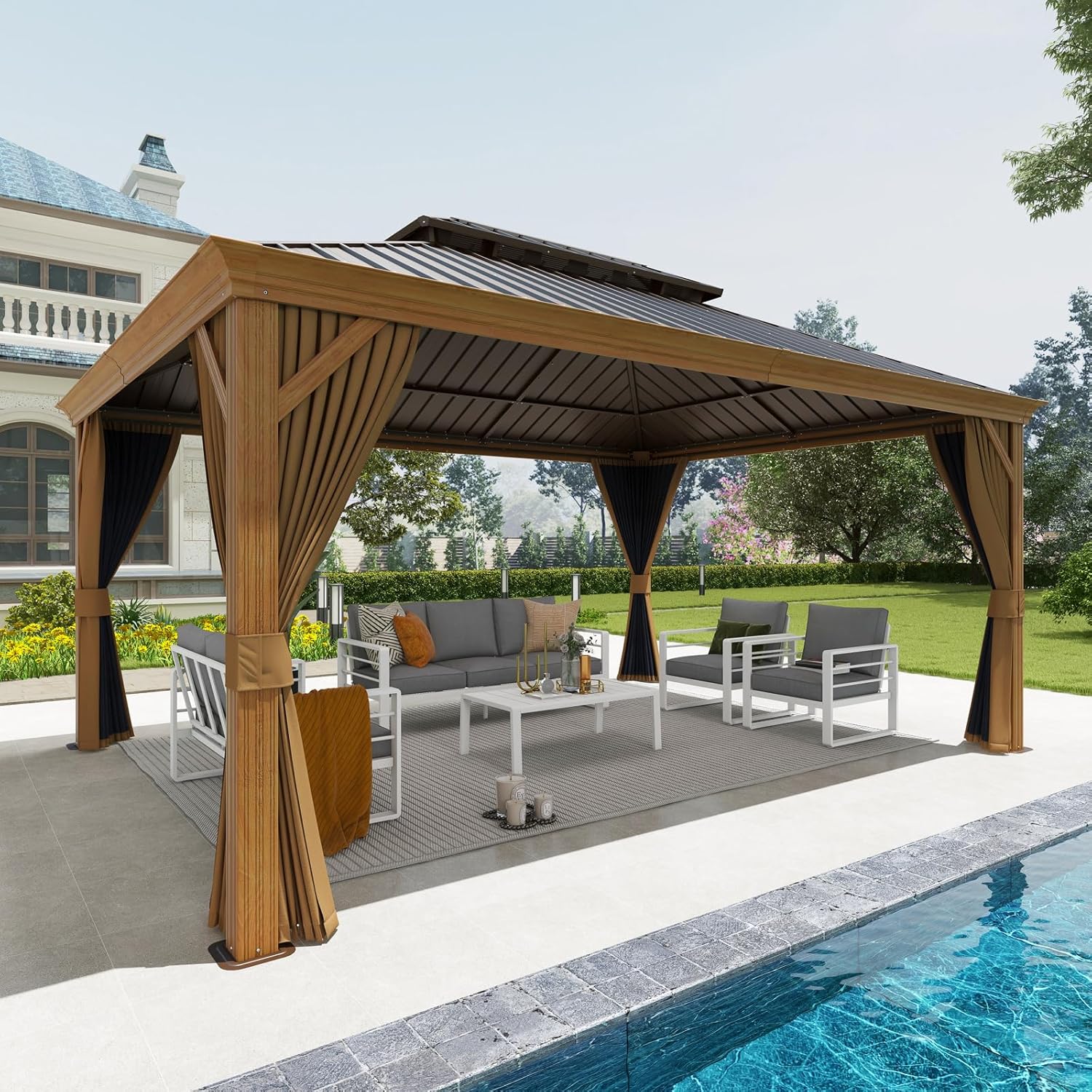
- Structure: Wood-look aluminum/steel gazebo kit (12’x16′): $2,500 – $5,000
- Furniture: Mid-range outdoor sofa set with tables: $1,500 – $3,000
- Floor Covering: Large outdoor rug: $200 – $500
- Accessories: Privacy curtains, pillows, decor: $300 – $600
- Installation: Pro assembly (optional, but recommended): $500 – $1,000
- Budget Alternative: A smaller, simpler soft-top gazebo ($500) and a basic bistro set ($300) can create a shaded spot for much less.
- TOTAL: $5,000 – $10,100
When buying a gazebo kit, pay close attention to the roof material. A dark gray metal roof, as seen here, is far superior to a fabric canopy. It offers 100% UV protection, complete rain protection, and can withstand a significant snow load in winter climates, making the structure a true four-season feature. Fabric canopies often need to be removed in the winter and replaced every few years, while a metal roof will last for decades. It’s a feature worth paying a premium for.
28. Lush Garden Patio with Beige Shade Sails
This design is successful because it places a man-made shade element within a completely natural, almost wild-looking garden. The clean, taut lines and simple beige color of the shade sails offer a modern, architectural contrast to the untamed, organic shapes of the lawn, flower beds, and surrounding trees. This juxtaposition is what creates the visual interest. The sails define a clear spot for human relaxation amidst the vibrant chaos of nature, feeling like a calm harbor in a sea of green.
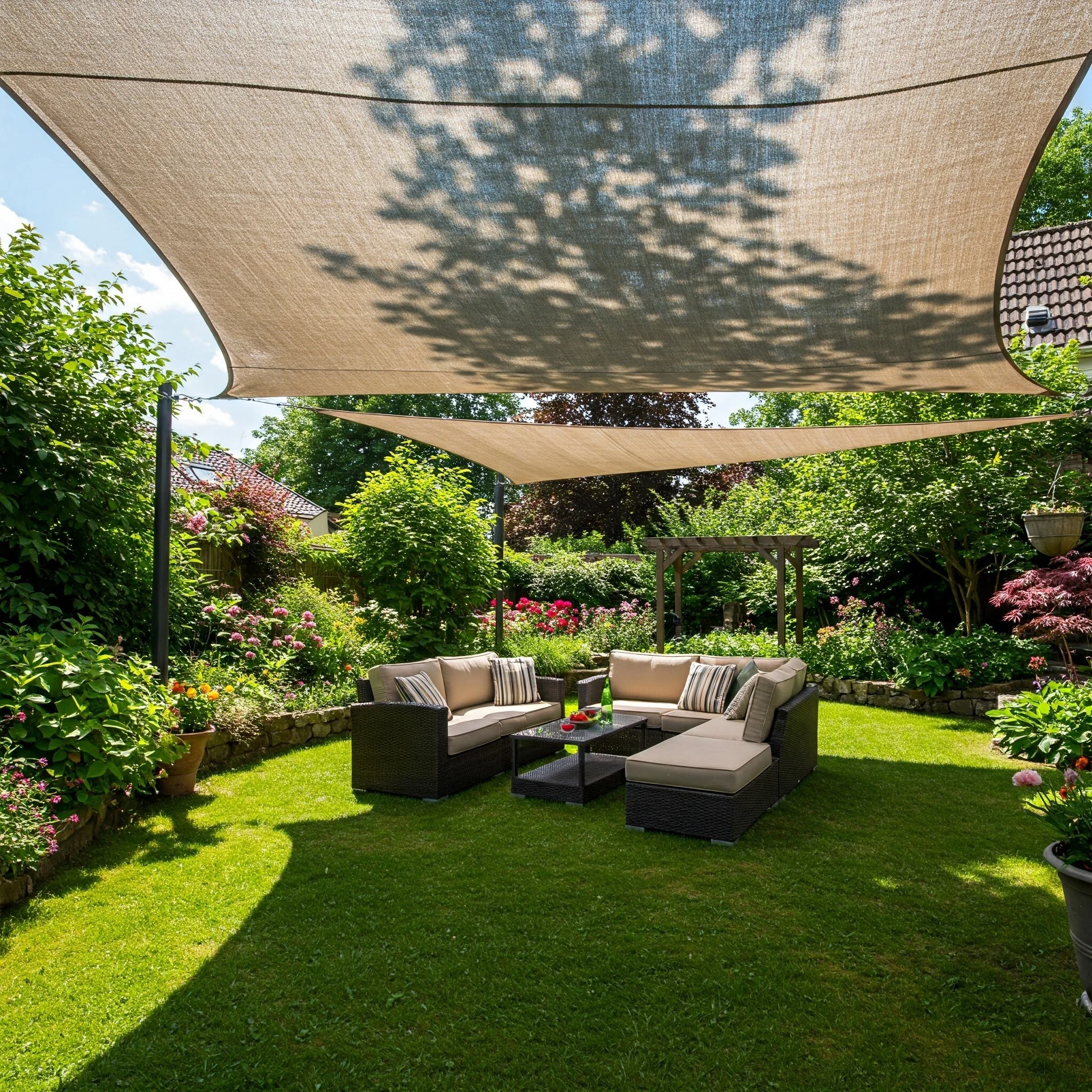
Shade sails are one of the most affordable ways to cover a large area. You can find quality sails online or at home improvement stores for $100 to $300, depending on the size. The main cost is in the installation. If you’re handy, you can set the support posts in concrete yourself for a few hundred dollars in materials. For furniture, Facebook Marketplace is a goldmine for dark wicker sets that just need a good cleaning. This entire inviting look can be recreated for well under $1,000 if you’re willing to do some DIY.
29. Modern Aluminum Pergolas in Commercial Design
When choosing a modern pergola, the material matters more than you think. Aluminum, especially powder-coated, has become the go-to for high-end residential projects mimicking commercial designs. Unlike wood, it will not rot, warp, or require re-staining. Unlike steel, it will not rust. It’s lightweight yet incredibly strong, allowing for longer spans and thinner profiles, which is key for achieving a sleek, minimalist aesthetic. While the upfront cost can be higher than wood, the near-zero maintenance makes it a worthwhile investment for a clean, modern look.
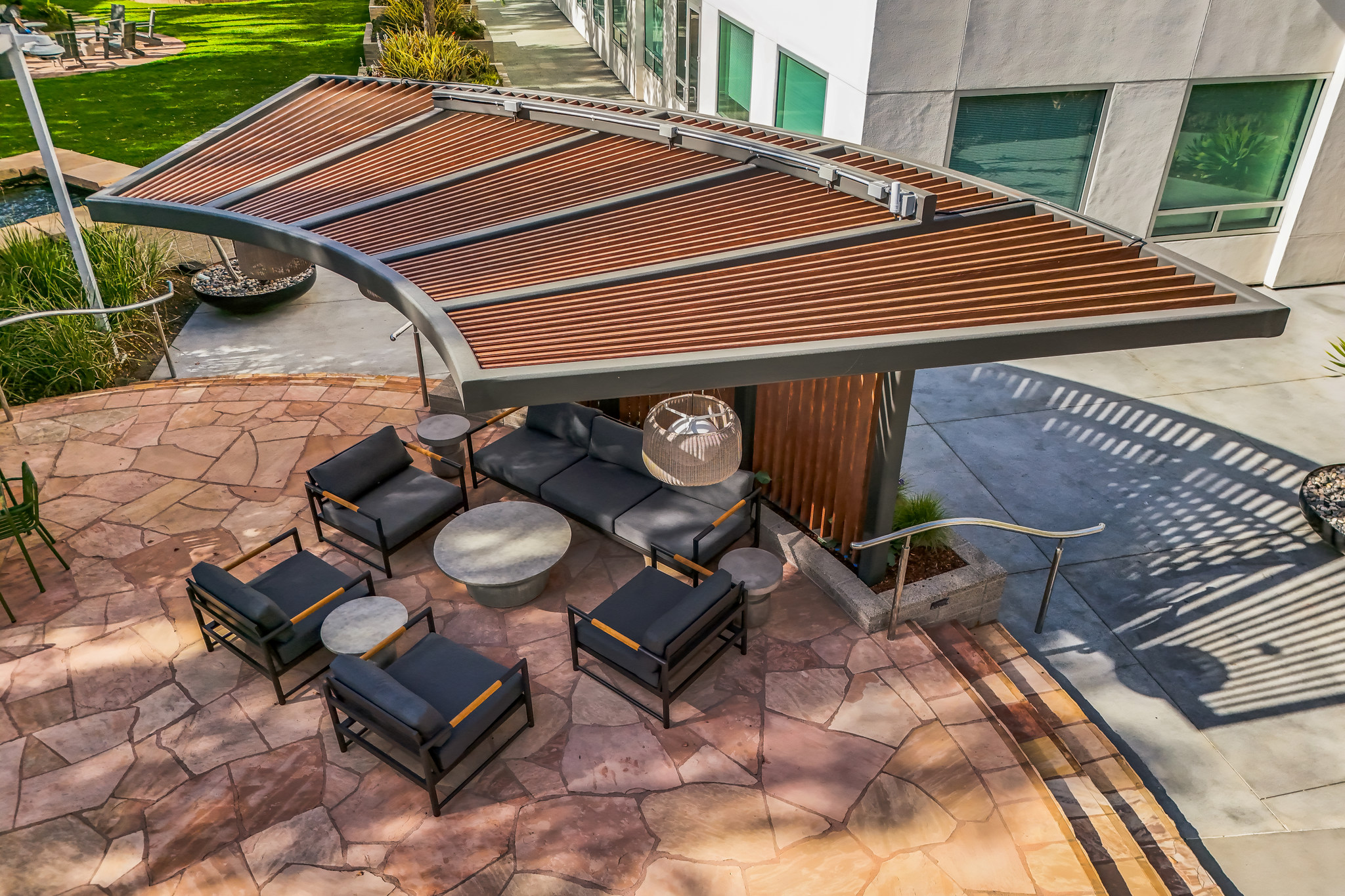
We’re seeing a significant trend of ‘commercial-grade’ design principles trickling down to residential patios. Homeowners, inspired by boutique hotels and upscale restaurants, are demanding more durable, lower-maintenance, and more architecturally significant outdoor products. This move toward aluminum pergolas is part of that shift. People are thinking of their outdoor spaces as a long-term investment in their property and lifestyle, and are willing to pay for materials that will perform and look great for decades, not just a few seasons.
Your Perfect Spot in the Sun (and Shade)
Finding the right shade solution is about more than just escaping the heat; it’s about crafting the outdoor life you’ve been dreaming of. Whether it’s a simple sail for quiet afternoons or a full-on pergola for hosting the whole neighborhood, you’ve got this. Now, which one are you pinning to your ‘Dream Patio’ board on Pinterest first?