30 Jaw-Dropping Fence Design Ideas for 2026 You Absolutely Need to See

You know that feeling when you finally find the fence design that looks exactly right for your space? It’s a huge “aha!” moment. A great fence isn’t just a boundary; it’s a major design statement that frames your home and garden. After filtering through hundreds of options from home improvement stores and online retailers, we’ve narrowed it down to 30 incredible fence ideas that deliver on style, privacy, and personality. We’re covering everything from modern horizontal wood to classic wrought iron and even some creative budget-friendly options. The focus in 2026 is on creating private, personal oases, and your fence is the first step. And stay until the end — we break down the most common mistakes that can ruin these looks. 📌 Save this to Pinterest for later — you’ll want to revisit these ideas.
1. Weathered Dark Green Metal Fence with Spiked Finials
The One Thing: The magic of this fence is its authentic, weathered finish. The dark green paint, combined with natural rust and weathering, gives it a sense of history and permanence that a flat, new coat of paint could never replicate. It feels like it’s been part of the landscape for generations, creating a story rather than just a barrier. If you removed this patina, you’d lose the soul of the design, turning it from a character piece into a standard-issue metal fence. It’s a testament to how age can be a design element in itself.
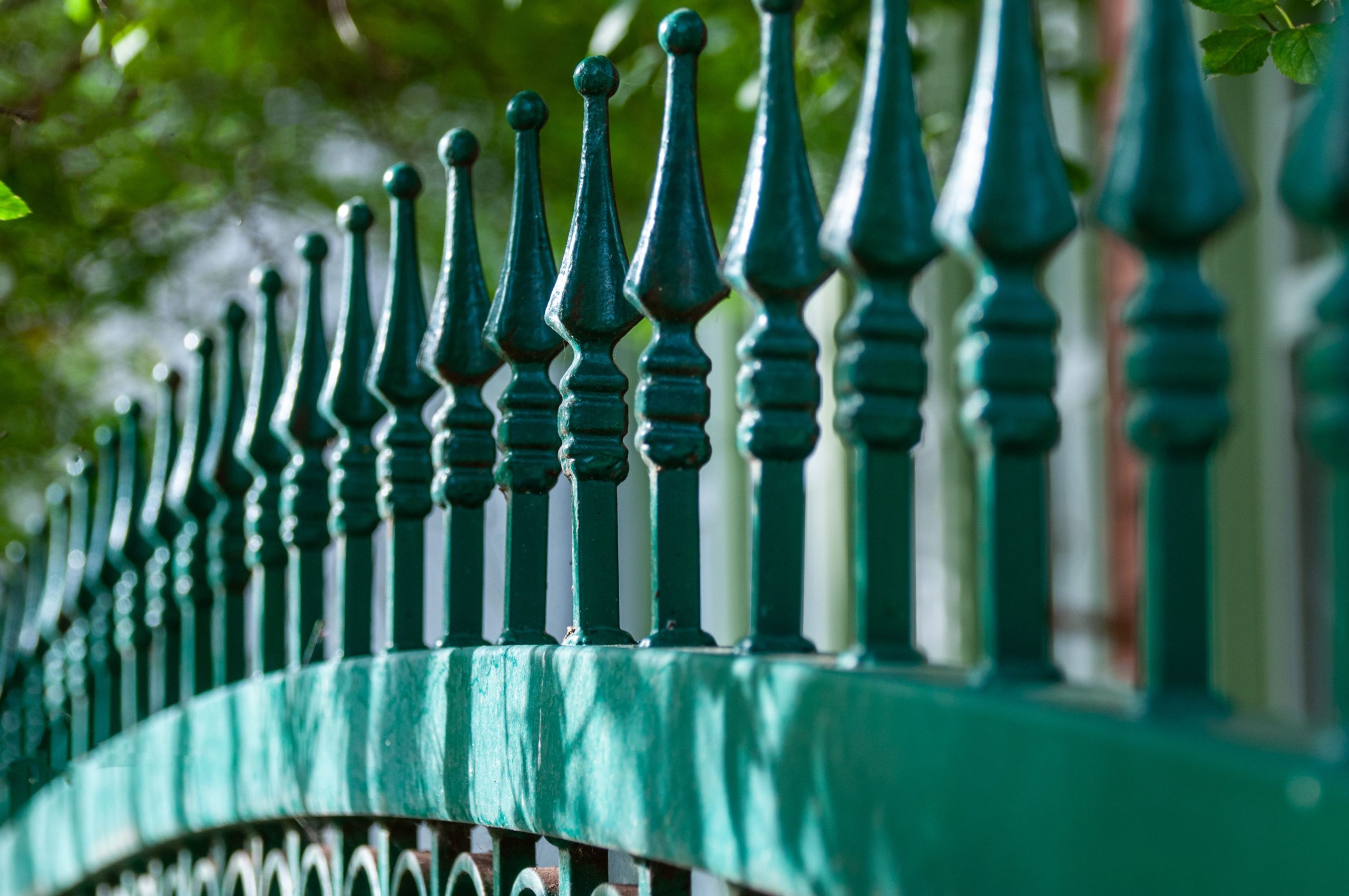
What Makes It Work: This design succeeds thanks to two key principles. First, repetition. The rhythmic pattern of the arched tops and pointed finials creates a pleasing visual cadence that is both secure and elegant. Second, there’s a beautiful harmony between the man-made structure and nature. The dark green color and rust spots perfectly echo the tones of the foliage and soil in a garden setting, allowing the fence to blend in and stand out at the same time. It isn’t fighting its environment; it’s gracefully surrendering to it.
2. Modern Grey Expanded Metal Fence Walkway
Style Math: This look achieves its sleek, modern feel with a simple formula: 50% structural minimalism + 30% monochromatic color + 20% integrated technology. The expanded metal fence provides see-through security without visual bulk. The color scheme is a tight study in grays, from the dark fence to the light tile. The final touch is the lighting embedded directly in the retaining wall, which adds function and a high-end feel. You could swap the metal for a slatted composite in the same dark grey and retain the core formula.
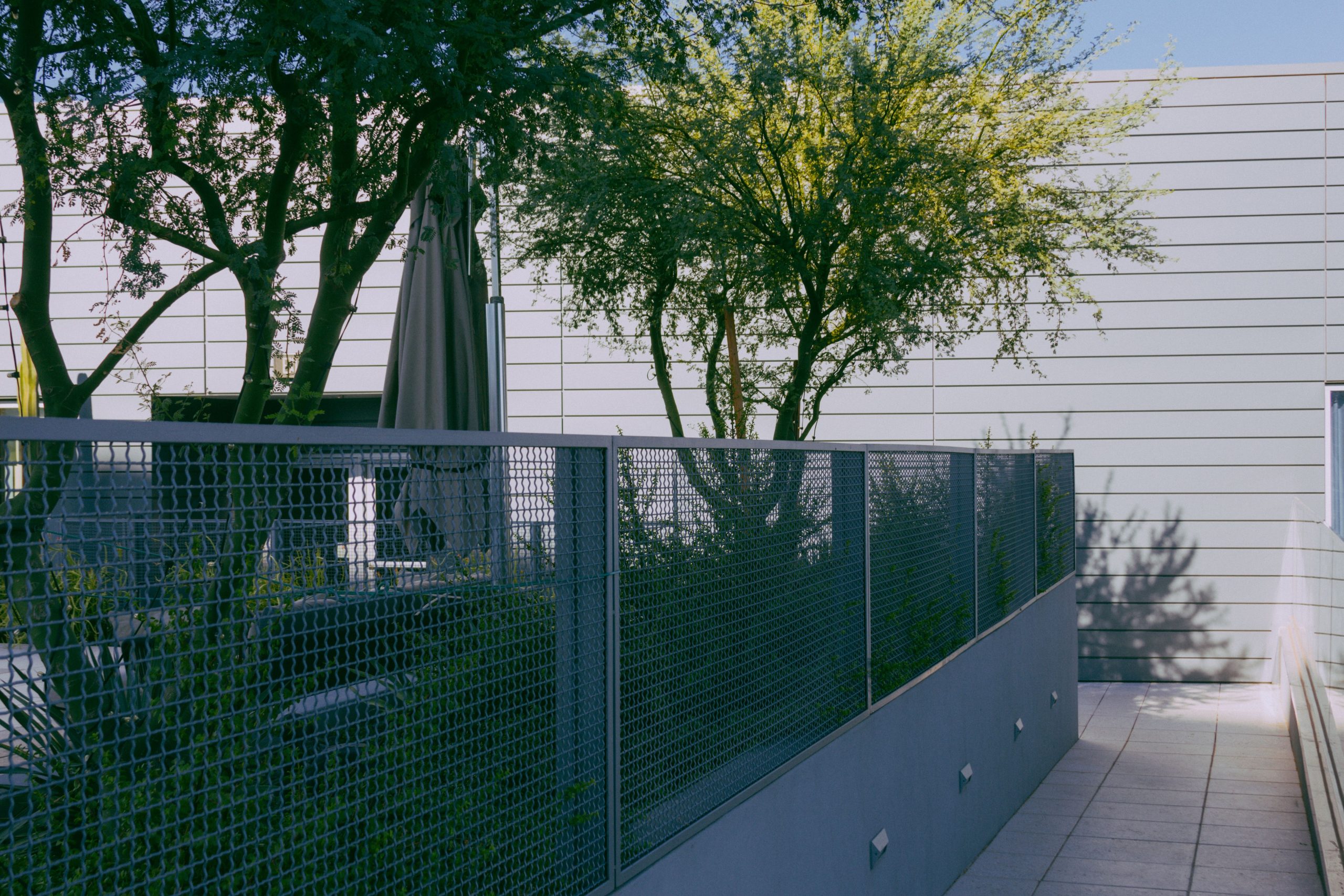
Real Talk: While a stunning modern choice, an expanded metal fence offers only semi-privacy. The see-through nature means it won’t completely block your yard from view, and it may not be the best choice if you have small pets that could see and bark at passersby. Also, depending on the material and finish (galvanized vs. powder-coated steel), it can be prone to rust in damp climates if not properly maintained. Be honest with yourself about how much of a visual barrier you truly need. For a similar vibe with more privacy, see the horizontal slat design in Idea #17.
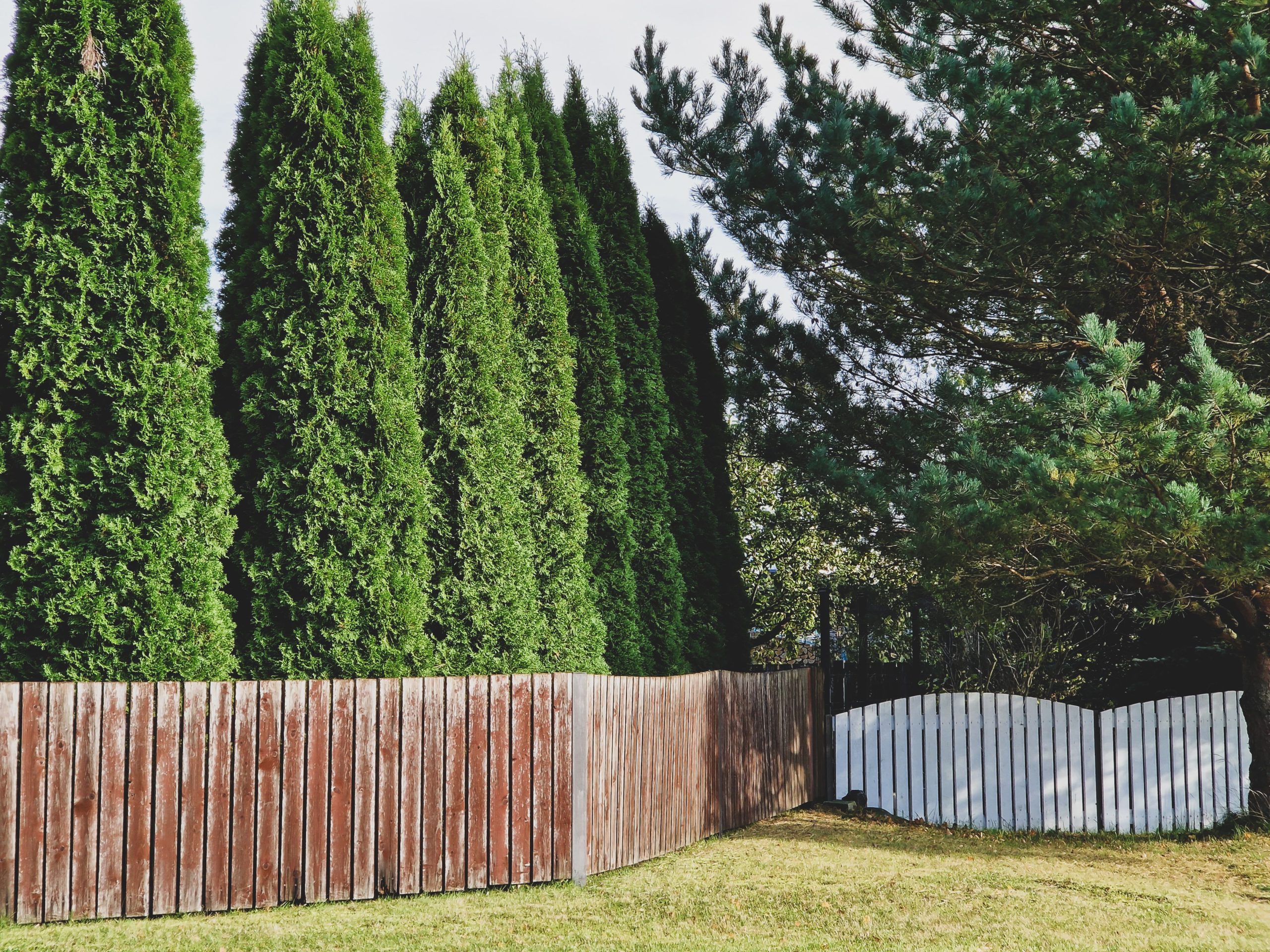
3. Mixed-Material Backyard Fence: Wood and White Picket
Designer Tip: Mixing fence styles can solve both aesthetic and practical problems. Use a tall, solid wood section for privacy where you need it most—like near a patio or neighbor’s window—and a shorter, more decorative picket style where you want to preserve a view or create a more open feeling. The key is to create a deliberate transition. Don’t switch styles randomly. Use a prominent post, a change in elevation, or a landscape feature like a large shrub or tree to mark the point where one style ends and the other begins, making the shift feel intentional.
4. Weathered Wooden Plank Fence with a Corrugated Metal Shed
What Makes It Work: This backyard setup feels so effortlessly functional because of its textural honesty. The weathered vertical wood planks of the fence have a soft, natural feel that contrasts beautifully with the clean, rigid lines of the light-colored corrugated metal shed. It’s a classic rustic-industrial pairing. The design also wisely uses layering; the shorter horizontal fence in the background adds depth to the yard, making the space feel larger than a single, uniform fence line would.
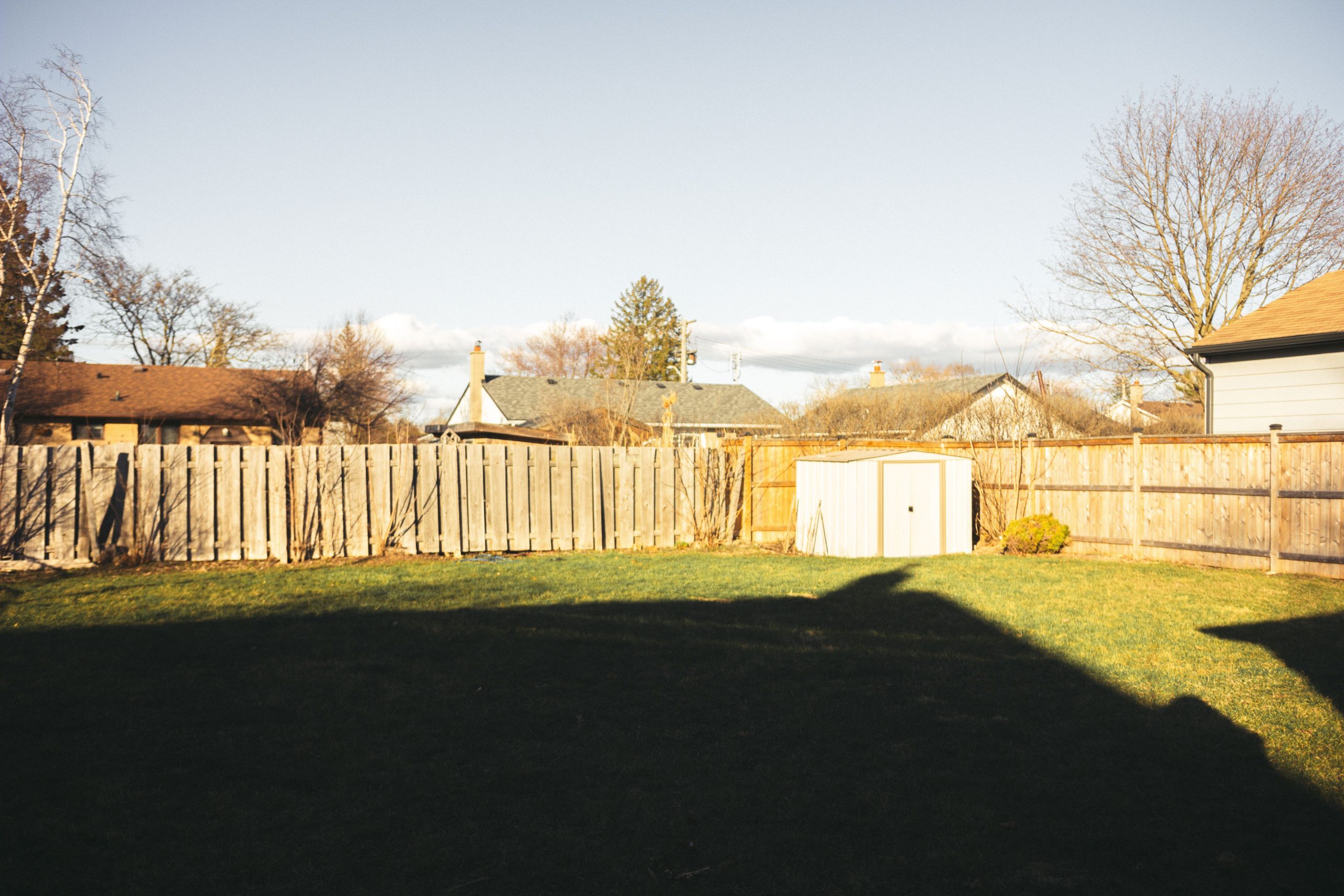
Get This Look For Less: The core of this look is simplicity and function. You can achieve this vibe on a tight budget. Look for reclaimed wood or pallets on Facebook Marketplace—often available for free—to build the fence. For the shed, instead of a brand new unit, look for secondhand metal tool sheds online. A weekend of cleaning, sanding, and maybe a fresh coat of rust-proofing paint on the shed can get you this exact functional, rustic charm for under $500, especially if you’re willing to put in the DIY effort.
5. Dark Wood Fence with Ornate Posts Atop a Stone Base
Maintenance Reality: A design this intricate requires commitment. The dark-stained wood will need to be re-sealed every 2-3 years, especially on the horizontal surfaces of the post caps, to prevent sun-fading and water damage. The light brown stone base, while durable, can attract moss or mildew in shady, damp areas, requiring an annual pressure wash on a low setting. Check the intricate carvings on the posts for trapped debris or pests a few times a year. This is a forever fence, but its longevity depends on regular upkeep.
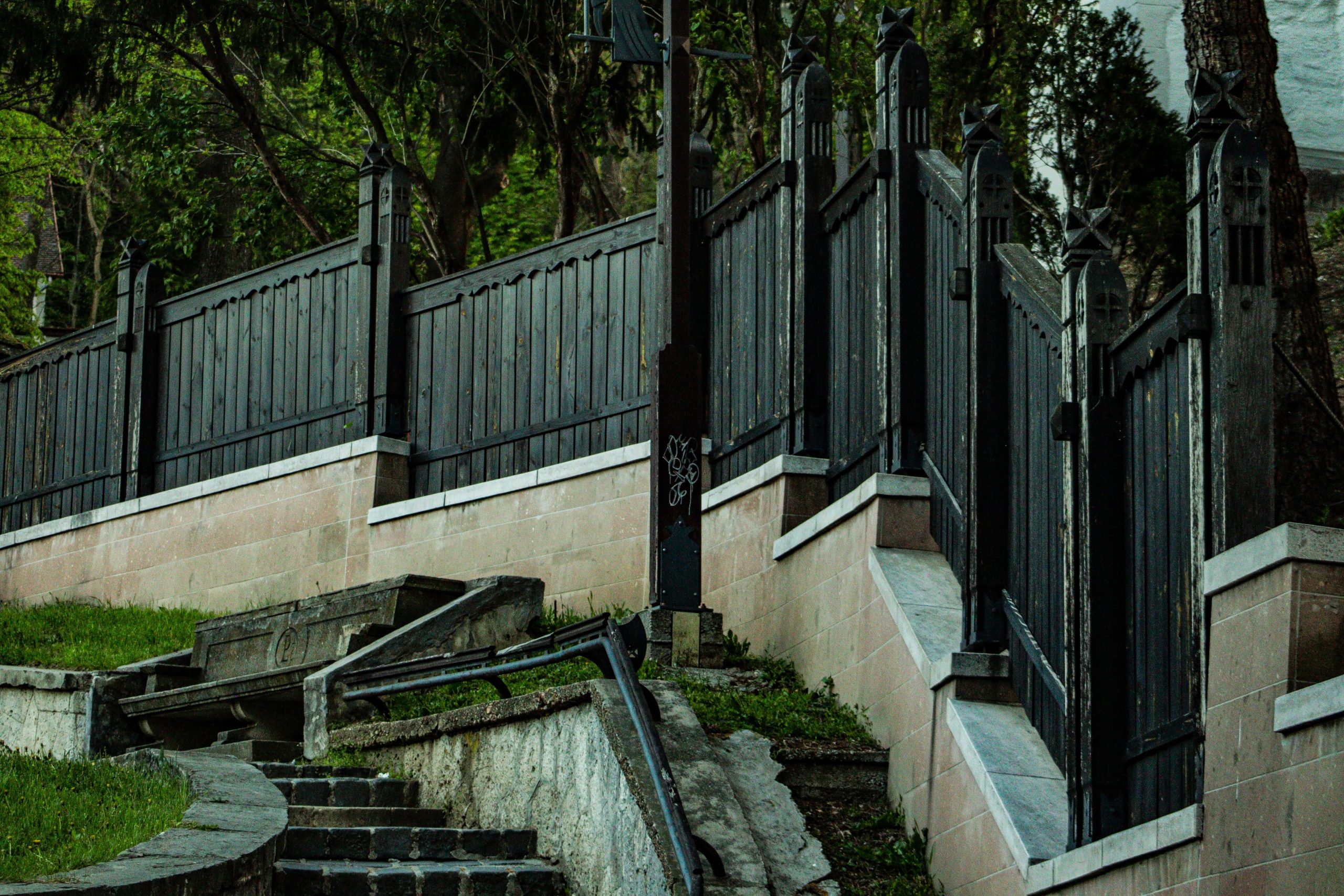
Scale Guide: This grand, substantial style is best suited for medium to large properties where it won’t feel overwhelming. A minimum lot width of 50 feet is ideal to allow the ornate details and heavy materials to breathe. The combination of a stone wall and fence works best on a property with some natural elevation change, like the integrated steps shown here. On a completely flat lot, the stone base can look overly imposing. For smaller spaces, consider the lighter feel of Idea #12.
6. White Slat Fence with Woven Greenery
How-To Brief: Creating a Living Fence Screen. Want to weave plants into your fence? Here’s a quick guide.
- Choose Your Plant: Select a flexible, non-invasive climbing vine or evergreen branch suitable for your climate (e.g., clematis, star jasmine, or trimming from arborvitae for a temporary look).
- Prep the Fence: Ensure your fence is sturdy and the paint is in good condition. You don’t want to do this on a fence that needs repairs.
- Weave Gently: Starting at the bottom, carefully thread the branches or vines through the gaps in your fence slats. Work in a gentle S-pattern.
- Avoid Force: Don’t pack the foliage too densely. This can trap moisture and damage the wood over time. Allow for air circulation.
- Secure if Needed: Use soft garden twine to loosely tie stems in place if they don’t stay put on their own.
Time: 1-2 hours. Cost: $0-$50 for plants.
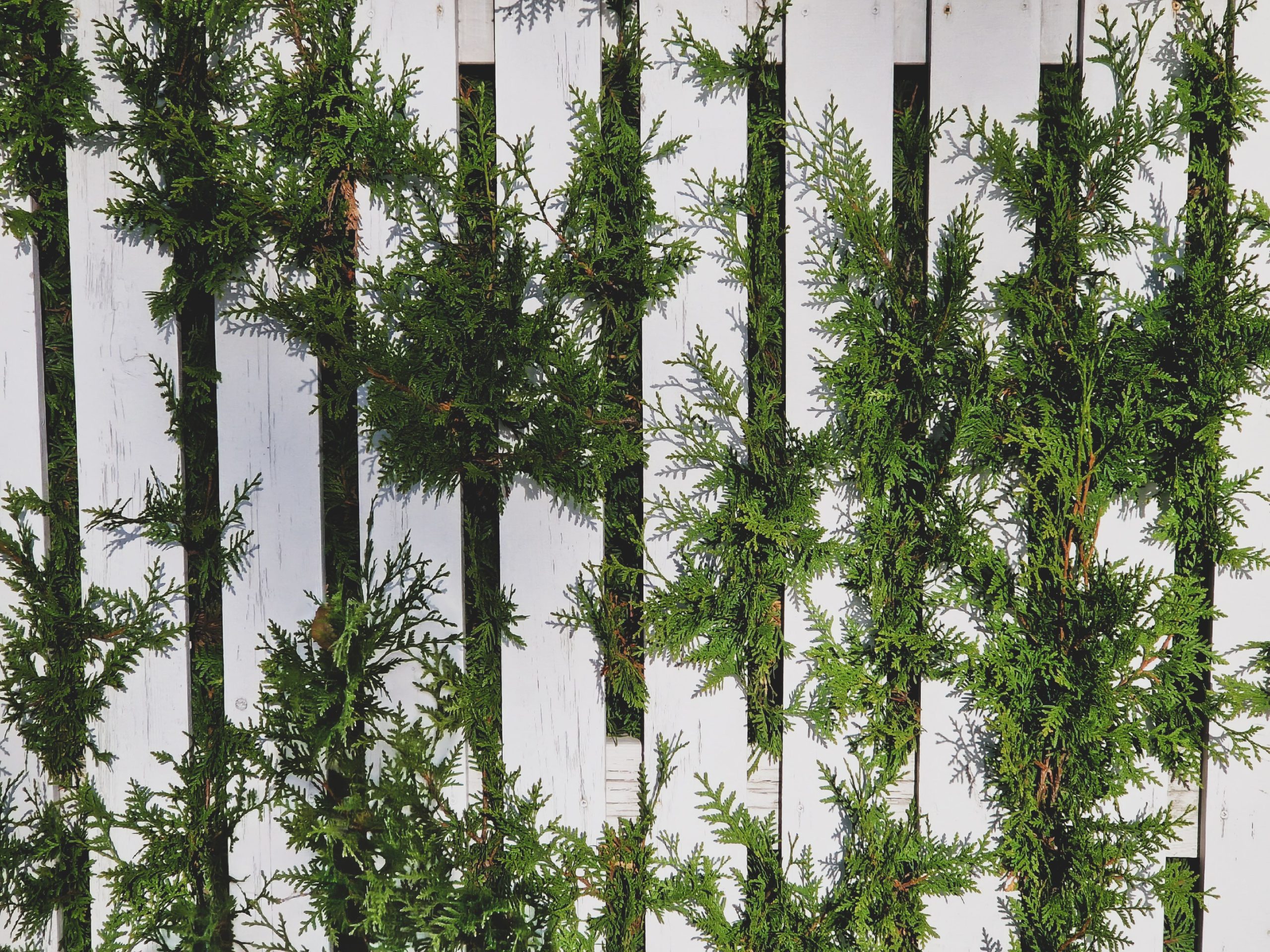
The One Thing: The interplay of shadow and light is what makes this simple concept so captivating. The dense green foliage, pressed against the bright white slats, creates a living tapestry. As the sun moves, the shadows of the leaves dance across the fence, adding movement and depth. Without this dynamic shadowing, the fence would be far less interesting. It’s a perfect example of how combining a simple structure with a natural, changing element can produce a result that is greater than the sum of its parts.
7. Brown Corrugated Metal Fence with Brick Pillars
Budget Breakdown: Recreating this mixed-material look has a moderate price point, with the brickwork being the main cost driver.
- Corrugated Metal Panels (40 ft): $600 – $1,200
- Brick Pillars & Foundation (Pro-Installed): $3,000 – $5,500
- Pedestrian Gate: $300 – $700
- Landscaping (Shrubs & Sod): $400 – $900
- TOTAL: $4,300 – $8,300
Budget alternative: Use pre-made composite fence posts with a faux-brick sleeve and install the metal panels yourself to get a similar look for around $2,000 – $3,500.
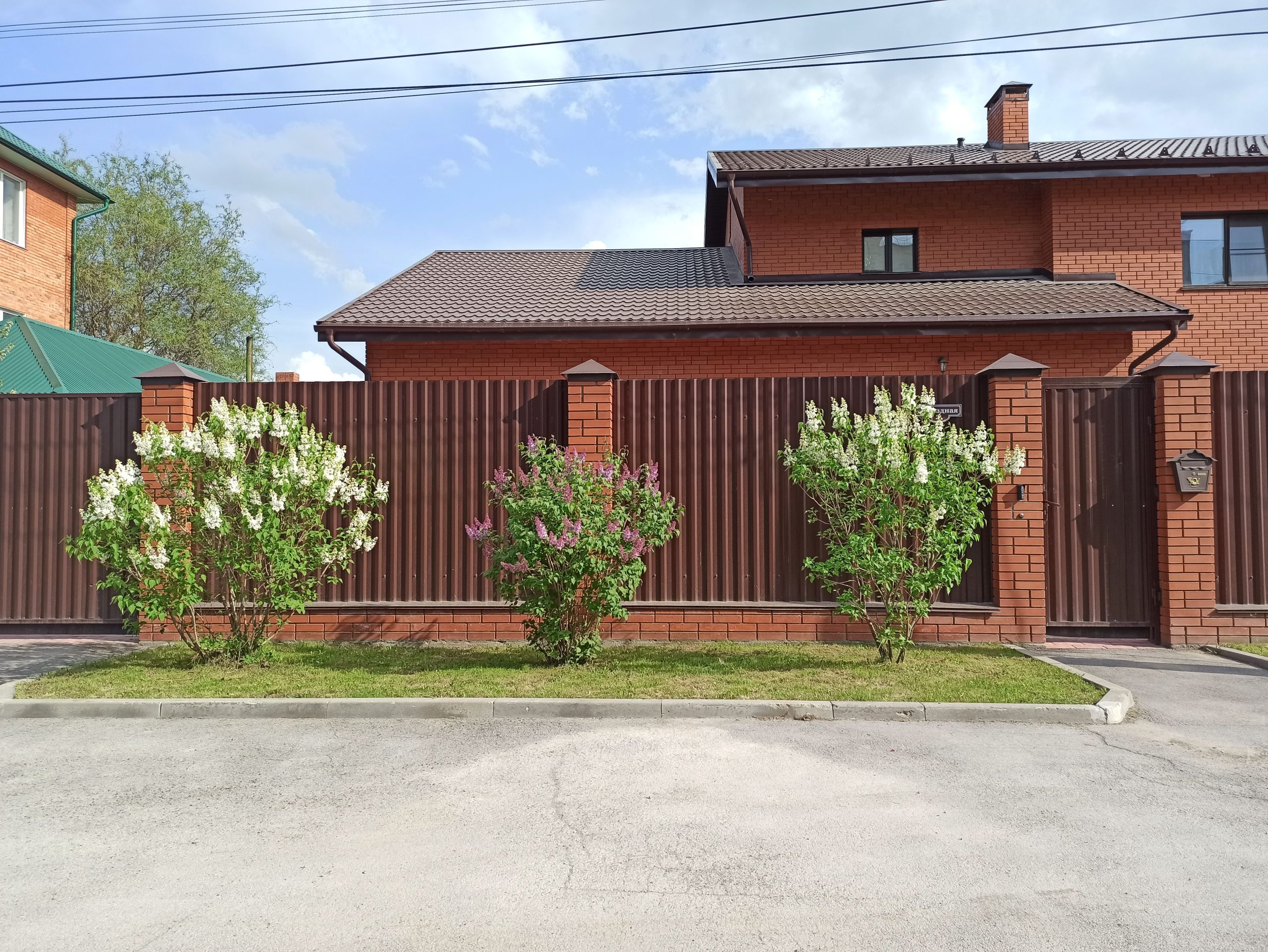
What Makes It Work: This design is a masterclass in balancing textures. The industrial, uniform lines of the brown corrugated metal could feel cold on their own. But framing them with classic, warm-red brick pillars adds a sense of permanence and tradition. The blooming lilac shrubs in front of the fence then add a layer of softness and organic beauty. This layering of textures—smooth metal, rough brick, soft petals—is what makes the overall composition feel so balanced and complete. It successfully merges industrial, traditional, and natural elements.
8. Weathered Black Iron Fence with Lush Green Hedge
Trending Context: This look, often called a

9. Dark Metal Picket Fence with Arched Tops in Autumn
Designer Tip: When installing a fence along a curved path, using pre-fabricated panels can be tricky and result in awkward angles. For a smooth, professional-looking curve like this one, it’s best to use individual components (pickets, rails, and posts) and assemble them on-site. This allows you to set each post precisely along the curve of the curb or walkway, ensuring the fence follows the flow of the landscape perfectly. It takes more time than panels but the result is infinitely more graceful.
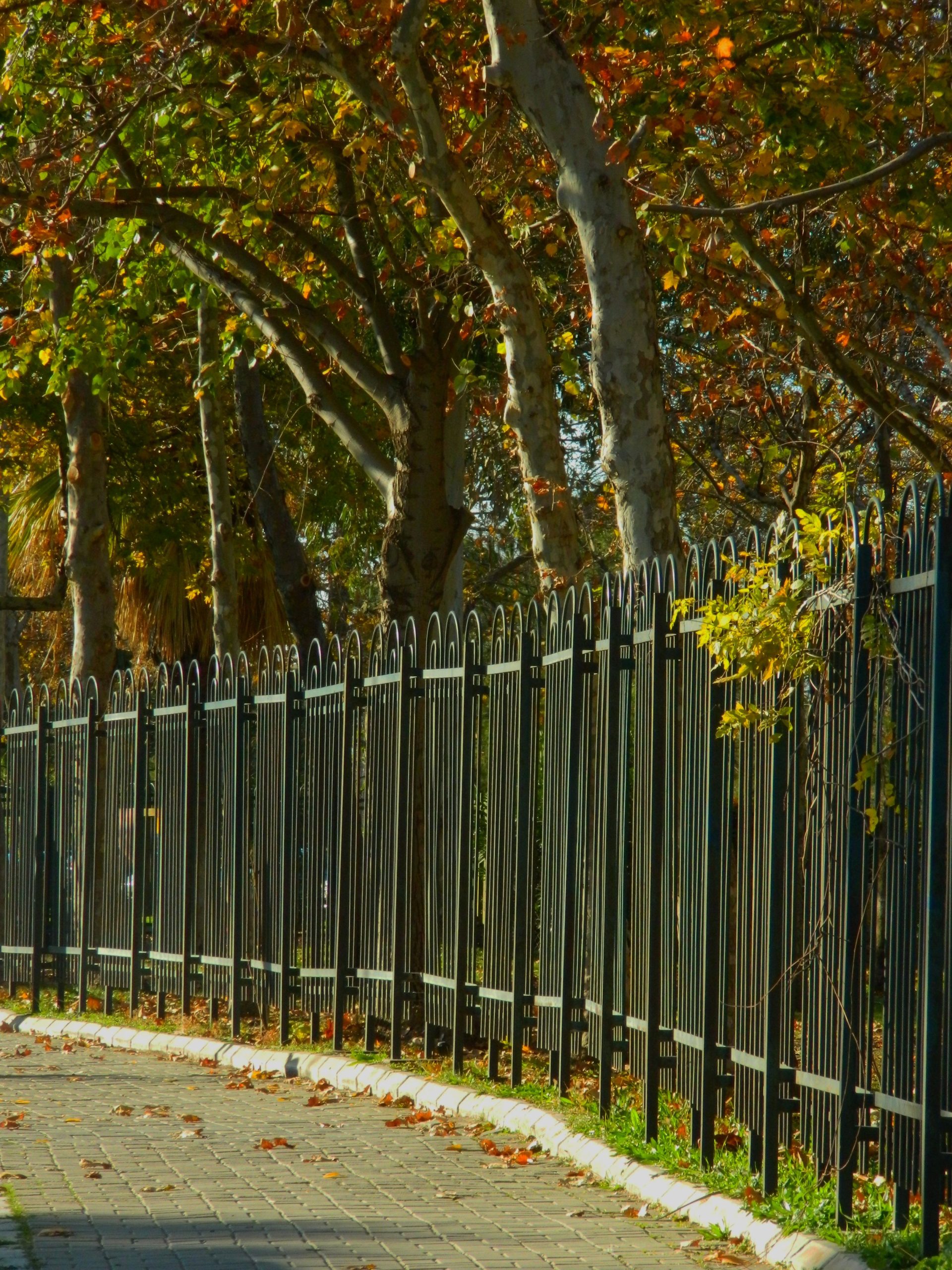
Style Math: The formula here is suburban classic: 70% simple structure + 20% decorative flourish + 10% landscape context. The bulk of the design is straightforward vertical pickets. The decorative element comes from the small, repeating arches at the top, which add elegance without being overly ornate. The final 10% is the context—the curving path, neat grass, and seasonal foliage—which the fence serves to frame and define. The falling autumn leaves add a layer of seasonal romance to the sturdy structure.
10. Ornate Iron Fence Covered in Ivy
The One Thing: The dense, climbing ivy is the undeniable heart of this look. It transforms a standard (albeit ornate) iron fence into a living sculpture. The way the greenery consumes the hard, dark metal, leaving only an impression of the pointed finials, creates a romantic, slightly mysterious atmosphere. Take away the ivy, and you have a beautiful historic fence. But with the ivy, you have a piece of garden art that tells a story of time and nature’s persistence. Compare the feel of this to the much cleaner iron fence in Idea #8.
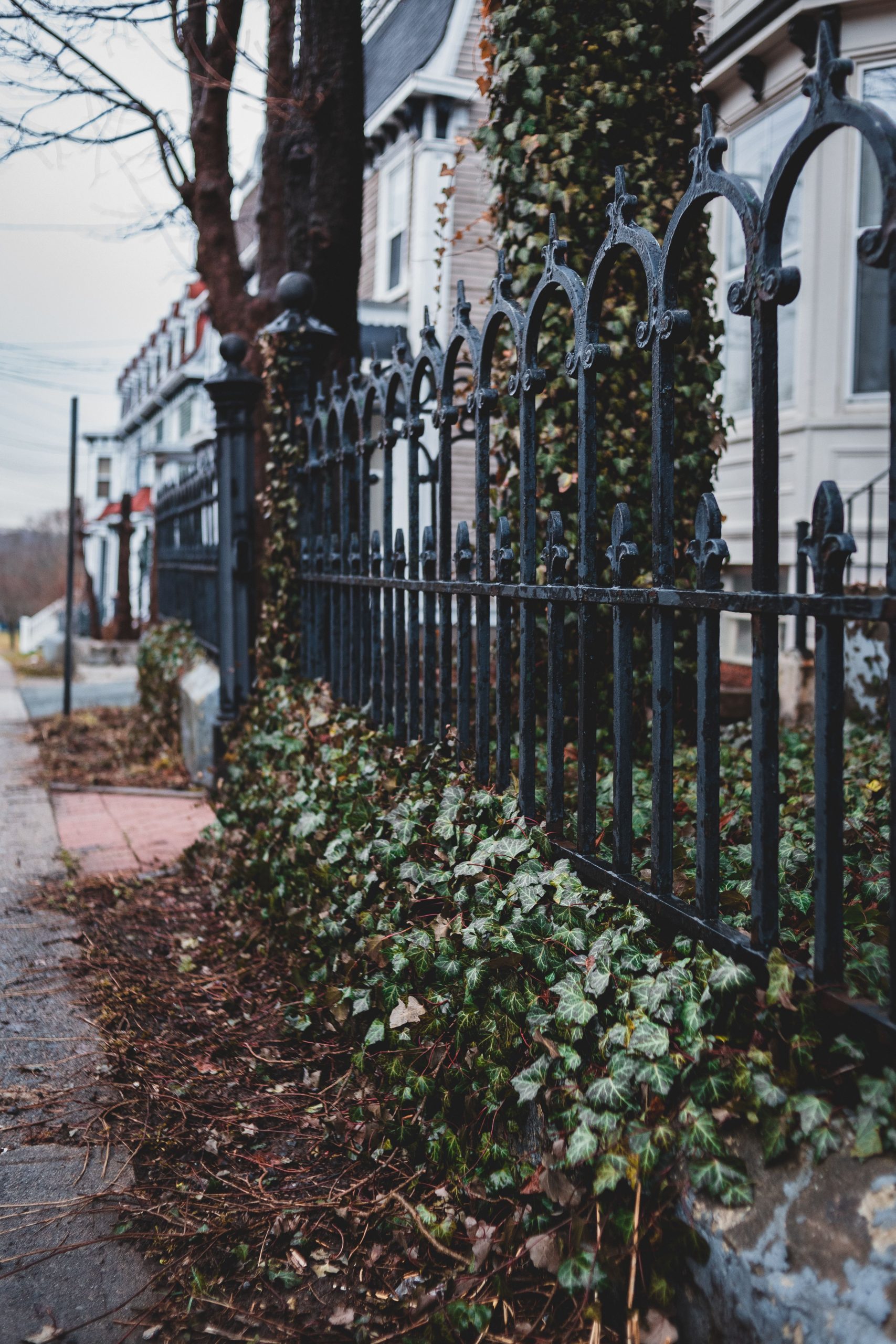
Maintenance Reality: This is gorgeous, but it’s a high-maintenance relationship. Ivy is an aggressive grower. To keep this look from becoming a destructive mess, you’ll need to prune it back from the sidewalk and any adjacent structures at least 2-3 times per year. The vines can retain moisture against the iron, accelerating rust. More importantly, if the fence is attached to a historic building, you must be vigilant to keep the ivy from getting into mortar and causing structural damage. It’s a commitment to active gardening, not a set-it-and-forget-it feature.
11. Rustic Fence of Weathered Vertical Wood Posts
What Makes It Work: The beauty of this fence lies in its imperfection. The posts aren’t perfectly uniform in height, color, or texture. Some are grayish, some are light brown, and some have a greenish patina of moss. This variation gives the fence an organic, rustic character that you can’t get from a box of identical, pre-stained pickets. It feels like it was built from materials sourced directly from the land it’s enclosing, giving it an authentic, settled quality that is incredibly calming.
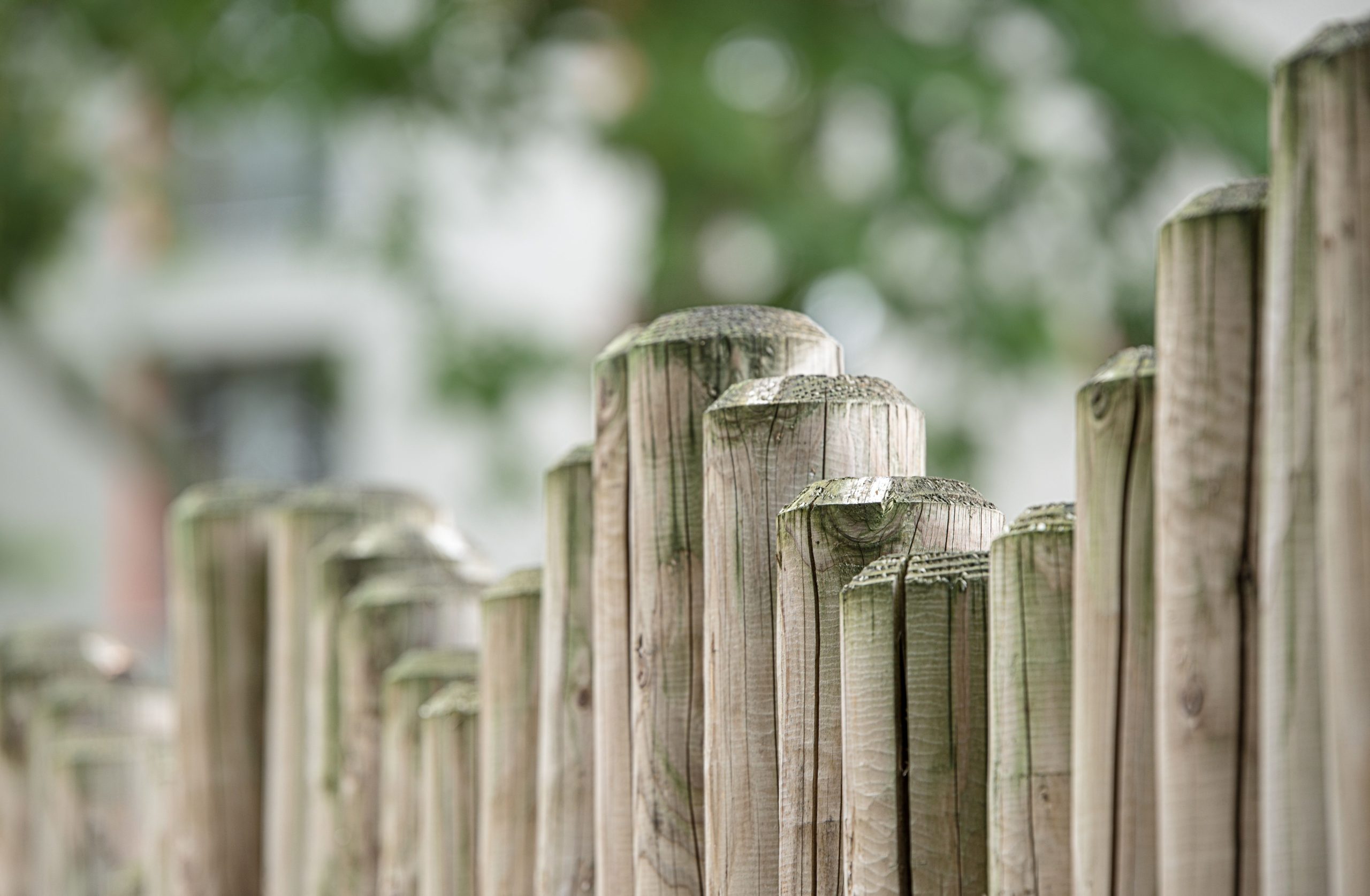
Get This Look For Less: This is one of the most budget-friendly fence styles possible. The key is sourcing the right materials. Contact local lumber mills or tree-trimming services; they often have leftover posts or logs that aren’t suitable for fine woodworking but are perfect for a rustic fence like this. You can also find untreated posts at farm supply stores for a low cost. The charm comes from the weathering, so you don’t need to spend money on expensive stains or sealants. Expect to pay just a few dollars per post if you’re sourcing creatively.
12. Classic White Picket Fence with Pointed Post Caps
Designer Tip: The details on a simple fence carry all the weight. With a white picket fence, the post caps are your primary opportunity to define its character. Simple, pointed caps like these create a clean, classic, almost coastal feel. Swapping them for a flat cap would give a more modern, minimal look. A more ornate, carved cap would lean traditional or Victorian. Spend time choosing your post caps—they may seem like a small detail, but on a minimalist design, they set the entire tone for the project.

13. Weathered Black Iron Fence with Spear and Spike Details
Style Math: This fence’s formidable character comes from a clear formula: 60% traditional structure + 40% aggressive ornamentation. The base is a classic vertical iron bar fence. The personality comes from the sharp, layered details on top—the combination of the spear-like finials, the curved secondary spikes, and the acorn-shaped elements below them. The weathered texture adds a sense of history and might. You could swap the spears for a fleur-de-lis to shift the vibe from

14. Weathered Gold and Dark Gray Spiked Metal Fence
What Makes It Work: The success of this design hinges on its sophisticated color contrast. The pairing of a weathered, muted gold with a dark, almost-black gray is unexpected and luxurious. It avoids the potential flashiness of bright, shiny gold. The textures—the slightly rough finish on the gray bars and the aged patina on the gold finials—add depth and a sense of history. It feels more like a piece of reclaimed architectural salvage than a new fence, which gives it instant character.

The One Thing: The two-tone color palette is the single most important element here. If the entire fence were black, it would be a handsome but standard security fence. If it were all gold, it might feel gaudy. It is the specific, confident combination of the dark, grounding gray and the accent of weathered gold that elevates the entire design into something special and memorable. This deliberate color choice turns a functional object into a decorative statement.
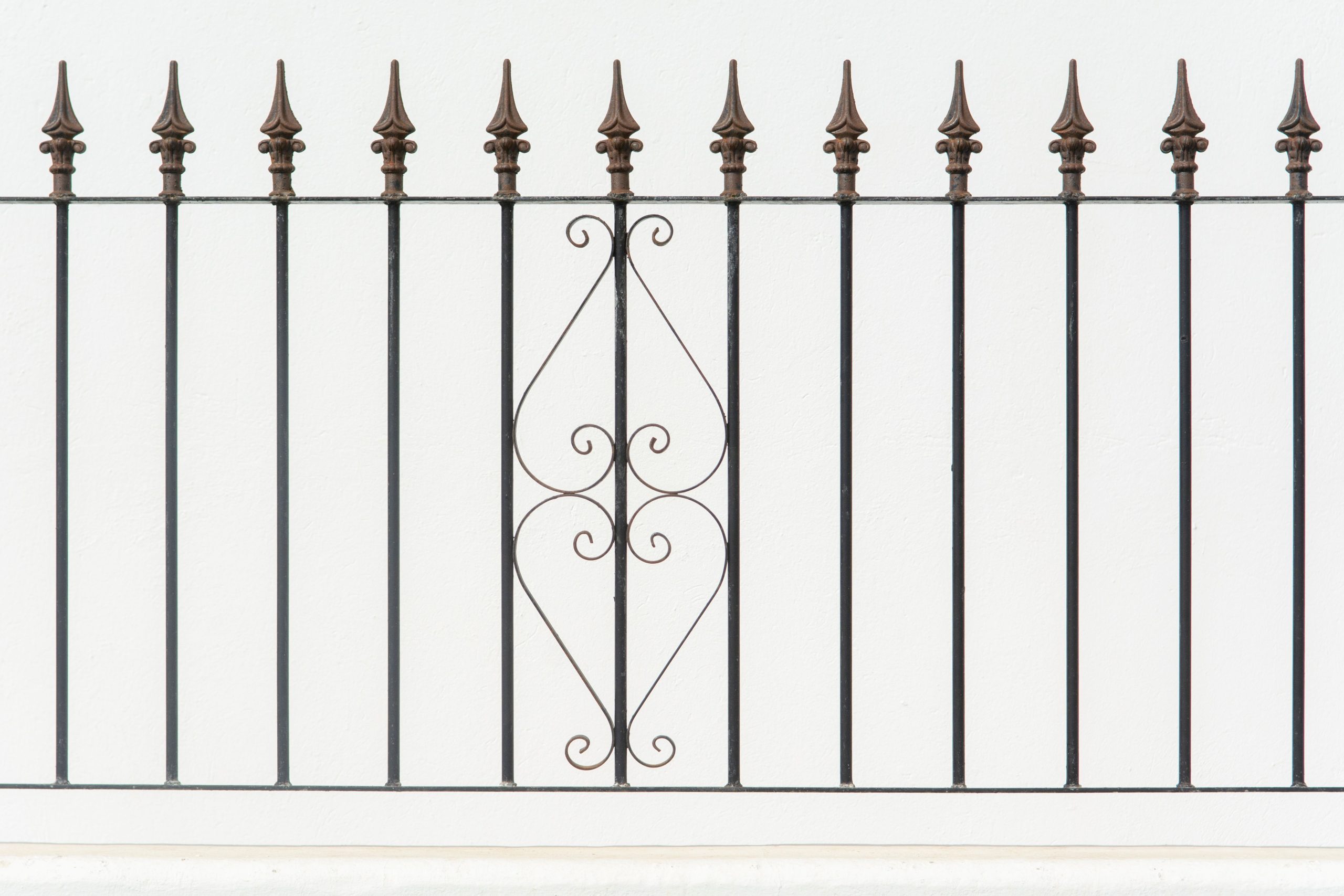
15. Decorative Wrought Iron Fence with a Heart Motif
Designer Tip: When incorporating a bold, central motif like this heart shape, balance is crucial. Notice how the designer kept the rest of the fence incredibly simple. The vertical bars are plain, and the finials are a classic, unobtrusive shape. This allows the heart to be the star without overwhelming the composition. If you’re using a decorative panel or motif, treat it like a piece of art and give it a clean, simple
16. Weathered Wood Fence with Green and Russet Ivy
What Makes It Work: This look is a beautiful example of analogous color theory in nature. The cool, gray-brown tones of the weathered cedar planks are the perfect neutral backdrop for the foliage. The plants themselves display a stunning range of adjacent colors on the color wheel, from deep teal-green to a warm, earthy russet. Because these colors are neighbors, the effect is harmonious and serene, not jarring. It creates a soft, painterly effect against the rustic texture of the wood.

17. Dark Stained Horizontal Plank Fence with Overgrown Ivy
Style Math: This look is a play of opposites. The formula is 50% rigid modern structure + 50% chaotic natural growth. The clean, straight lines of the dark horizontal planks provide a strong, contemporary framework. The ivy, with its wild, unpredictable growth and cascading leaves, offers a complete contrast. This high-tension pairing is what makes it so visually dynamic. The gaps between the planks are key, as they allow the ivy to weave through, truly integrating the two opposing elements into one cohesive design.

Real Talk: While this looks incredible, letting ivy grow this densely on a wooden fence is a risky game. The thick foliage traps moisture against the wood, which is a perfect recipe for rot, mildew, and insect infestations, especially with a stained finish. The weight of mature ivy can also put a strain on the fence structure itself. To do this more safely, consider using a metal trellis installed a few inches in front of your wooden fence and training the ivy on that instead. You get the look without the decay. Also, be sure to avoid costly issues like those in our common mistakes section.
18. Weathered Wood Fence with a Scalloped Top Edge
The One Thing: The scalloped top edge is the detail that gives this fence its gentle, cottage-style charm. Without it, this would be a standard, somewhat severe-looking weathered wood fence. The simple act of rounding the tops of the vertical planks and arranging them in a soft, repeating curve completely changes the personality of the design. It transforms it from a purely functional barrier into a decorative, welcoming frame for the garden behind it. It’s a small detail with a huge impact on the overall mood.
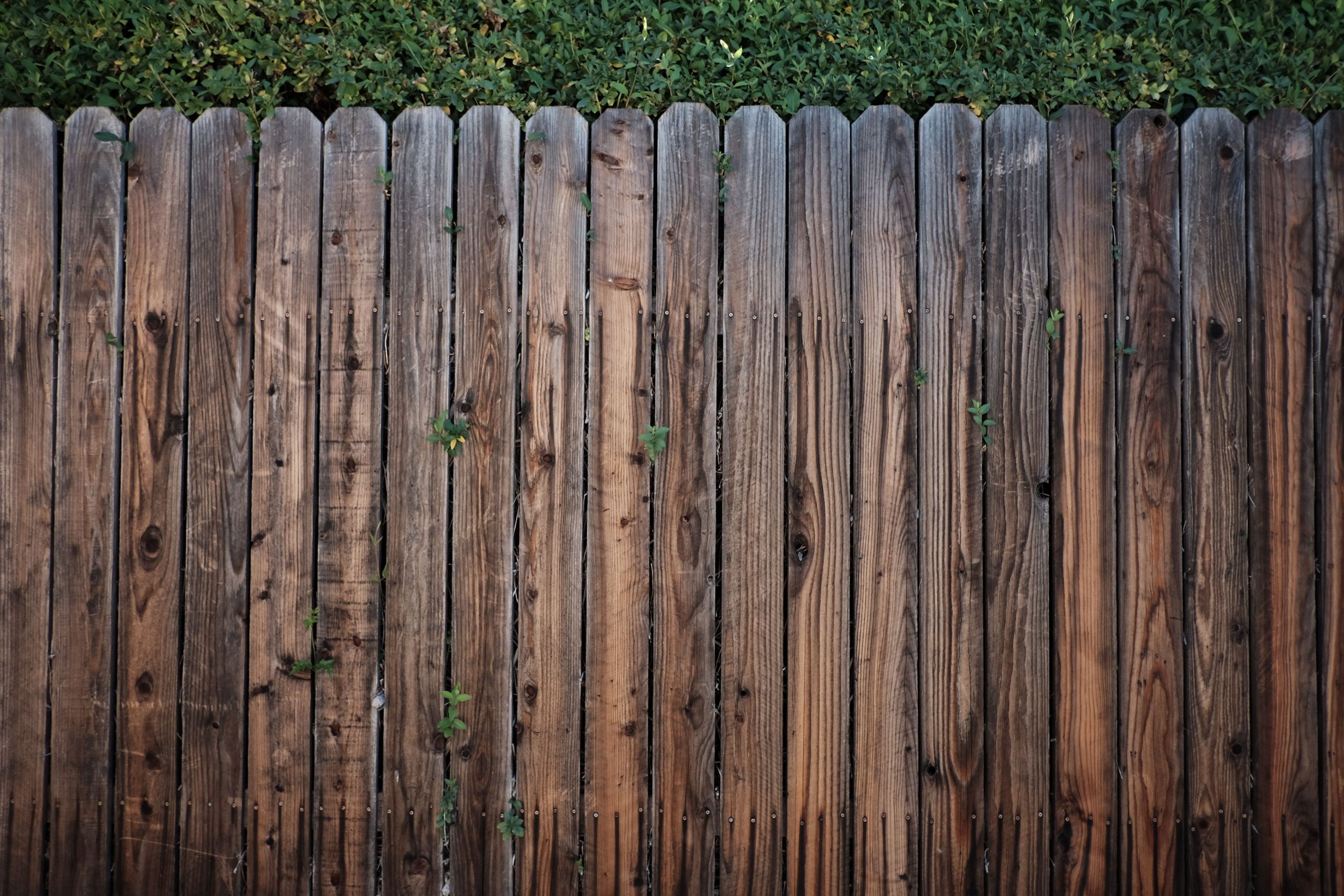
Get This Look For Less: Creating a scalloped top is a fantastic DIY trick to elevate a basic stockade fence. You can buy pre-made scalloped panels, but to save money, buy standard rectangular panels. Use a string and two nails to draw a perfect arch across the top of a panel, then cut along the line with a jigsaw. Use that first cut panel as a template for the rest. This extra hour of work can make an inexpensive fence from a big-box store look like a much more expensive, custom-built design.
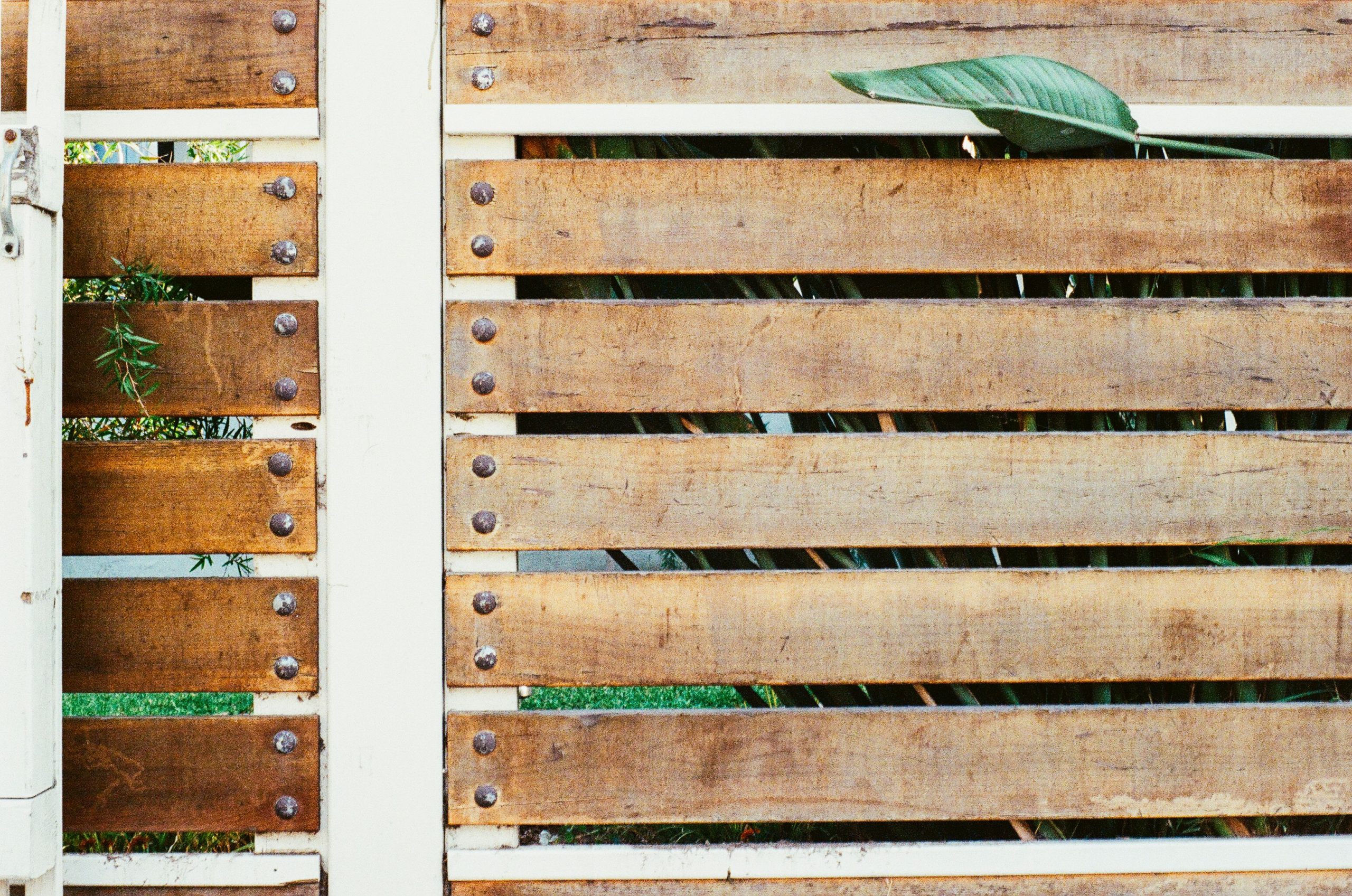
19. Horizontal Wood Slats with a White Frame and Exposed Fasteners
How-To Brief: Installing a Horizontal Slat Fence Panel. This is a great weekend project. Here’s the rundown.
- Set Your Posts: First, install your vertical posts (the white frame here) securely in concrete, ensuring they are perfectly plumb and spaced correctly for your panel width. For a fence this style, 6-8 feet apart is typical.
- Attach Bottom and Top Rails: Screw the horizontal rails to the inside of the posts. This creates the frame to which you’ll attach the slats. Use a level!
- Cut Your Slats: Cut all your horizontal wood slats to the desired length. For a more rustic look like this, you can vary the widths slightly. Lightly sand the cut edges.
- Fasten the Slats: Starting from the bottom, attach each slat to the vertical frame. Use a spacer block (e.g., a small piece of 1/2

20. Dark Stained Vertical Picket Fence with Exposed Fasteners
Designer Tip: When using a very dark stain or paint on a fence, texture becomes incredibly important. A solid, flat black can look like a monolithic void. Here, the subtle visibility of the wood grain, the small knots, and the metallic glint of the fasteners all serve to break up the dark surface and add visual interest. When you’re staining, use a semi-transparent or semi-solid stain rather than a solid paint to allow some of the natural character of the wood to show through. This adds depth and sophistication.
 💡 Designer Tip
Scale Guide: A tall, dark fence like this provides excellent privacy and works well for delineating property lines in suburban or urban settings. However, be mindful of its visual weight. For a smaller yard (less than 1,000 sq ft), a solid dark fence on all sides can feel oppressive. Consider using it on just one or two sides for privacy, and pairing it with a shorter or more open fence style on other sides. This approach will define the space without making it feel like a fortress. A similar principle of selective height is shown in Idea #3.
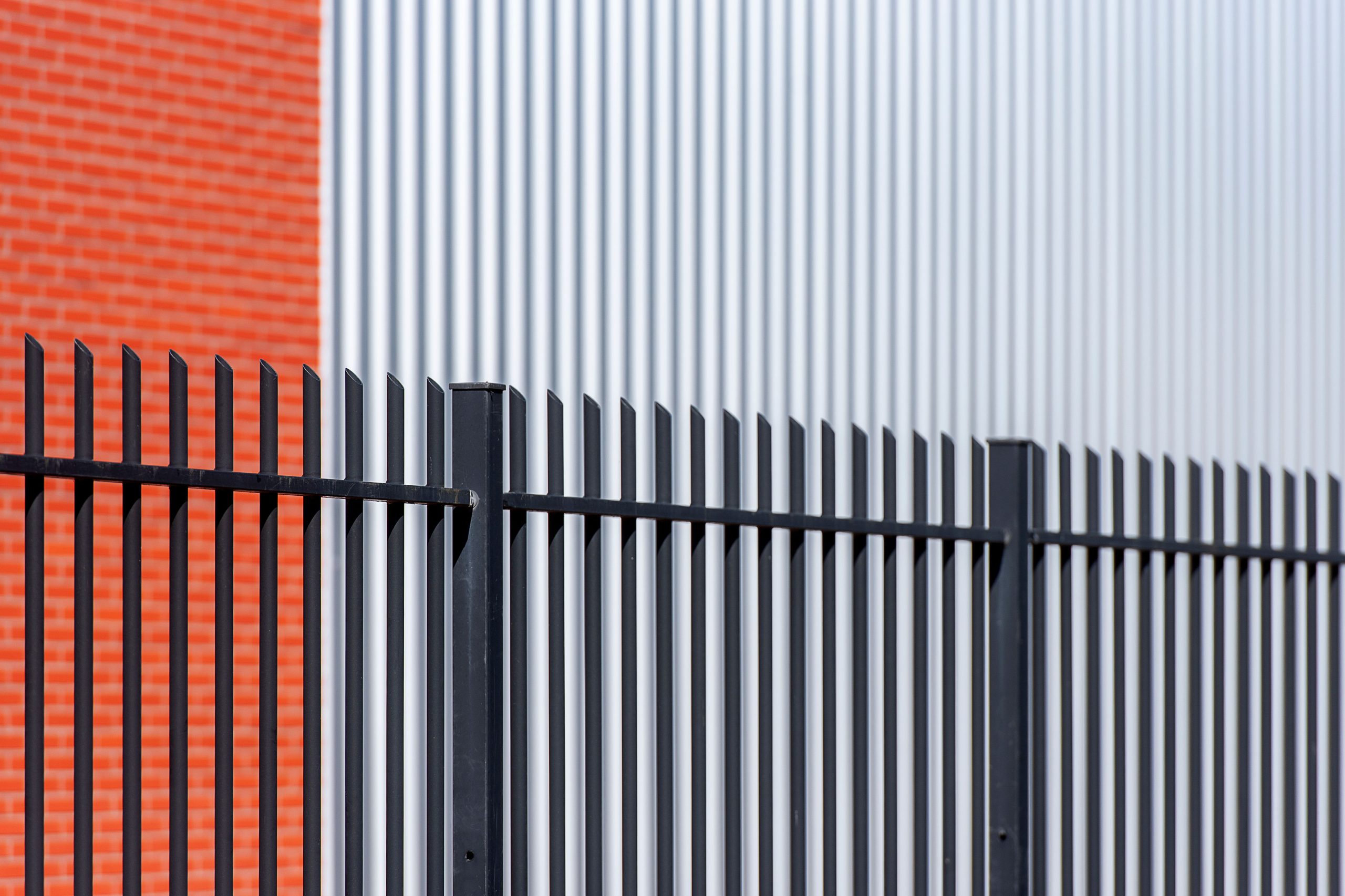
21. Black Metal Pickets Against Brick and Corrugated Metal
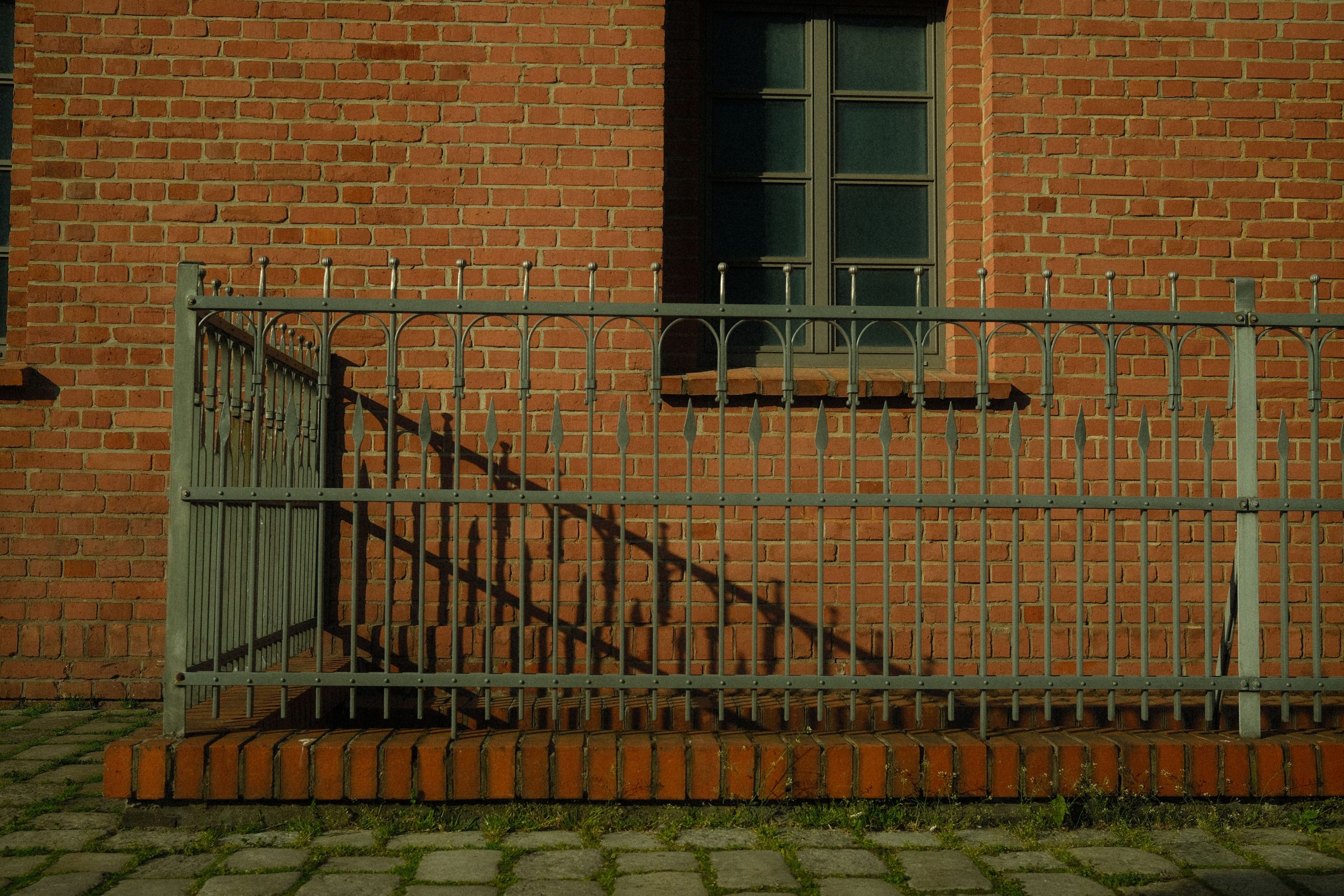
What Makes It Work: This composition is a powerful study in contrast and urban texture. The simple, clean lines of the black metal fence act as a unifying element against a chaotic backdrop. The fence’s sharp, pointed tops echo the vertical lines of both the brickwork and the corrugated metal, but its stark black color sets it apart. It functions as a bold graphic outline, bringing order to the visual jumble of the red brick and silver metal walls behind it. It’s a fence that is secure, but also highly graphic and modern.
 ✅ Before You Start
The One Thing: The background is what makes this photo, and the fence’s role in it, so compelling. The fence itself is a fairly standard design. But placing it in front of a split background—half traditional red brick, half industrial silver metal—transforms it. The fence becomes the mediator, the element that bridges two completely different materials and eras. Without this specific, textured backdrop, the fence would just be a fence. Here, it’s a key player in a complex visual story.
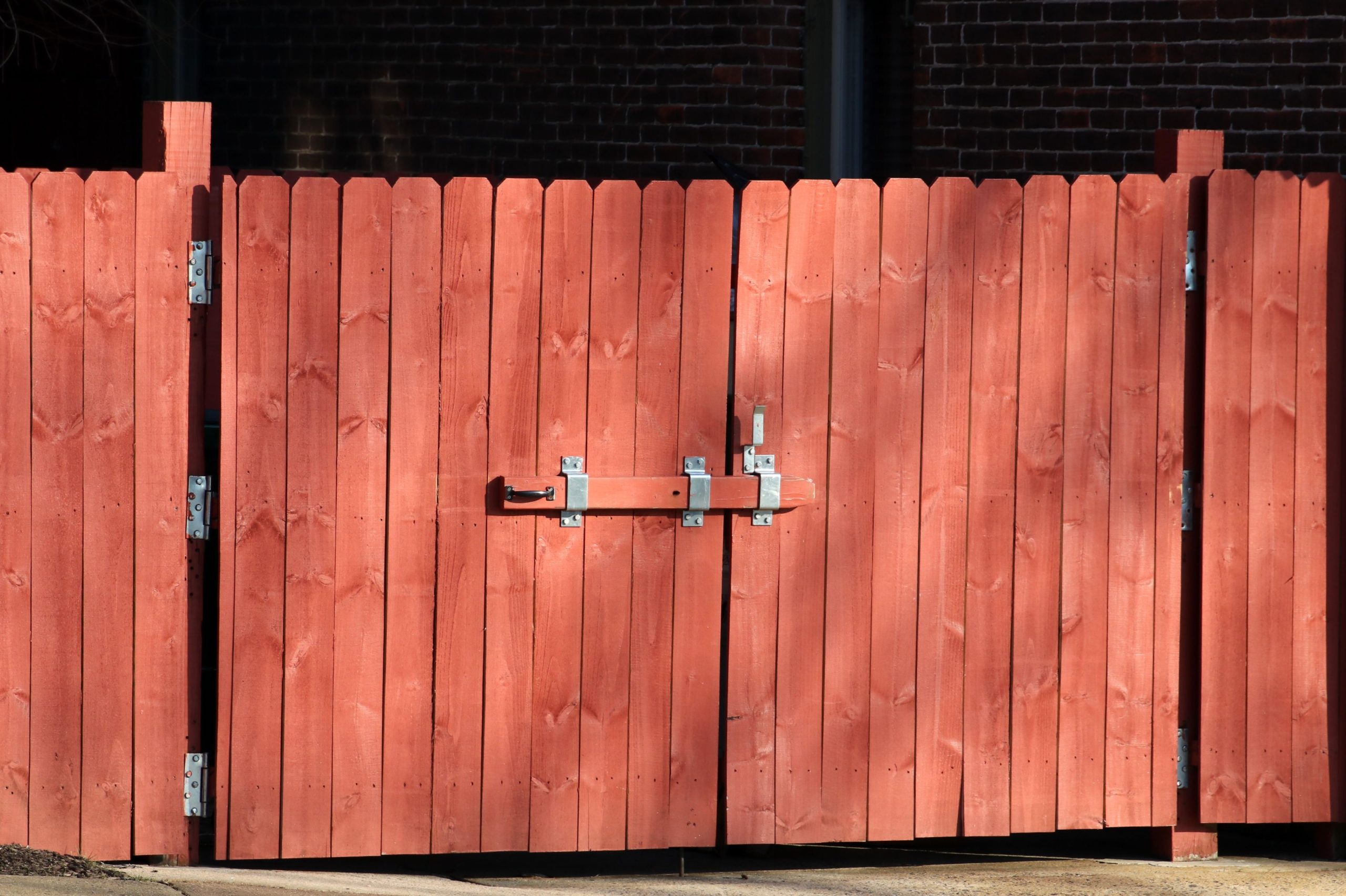
22. Red-Stained Picket Gate with a Silver Bolt Latch
Designer Tip: Your gate hardware is the handshake of your fence. It’s a primary touchpoint and deserves attention. With a simple, utilitarian gate like this, using slightly oversized, robust hardware like the silver bolt latch and hinges adds a sense of quality and security. Don’t skimp on the hardware. A cheap, flimsy latch will not only fail faster but will also undermine the sturdy look of the entire gate. For a wood gate, through-bolting the hinge and latch hardware is always superior to just using screws.
 🔧 How-To Brief
Style Math: This look achieves its simple, robust charm through a formula of 80% traditional form + 20% bold color & hardware. The double-gate picket design is a timeless, classic shape. The magic comes from the confident choice of a reddish-brown stain, which is warmer and more distinctive than a typical natural wood or white paint. The prominent, functional silver hardware provides a bright, metallic contrast that grounds the design in pure function. It’s a no-nonsense look that feels both classic and confident.
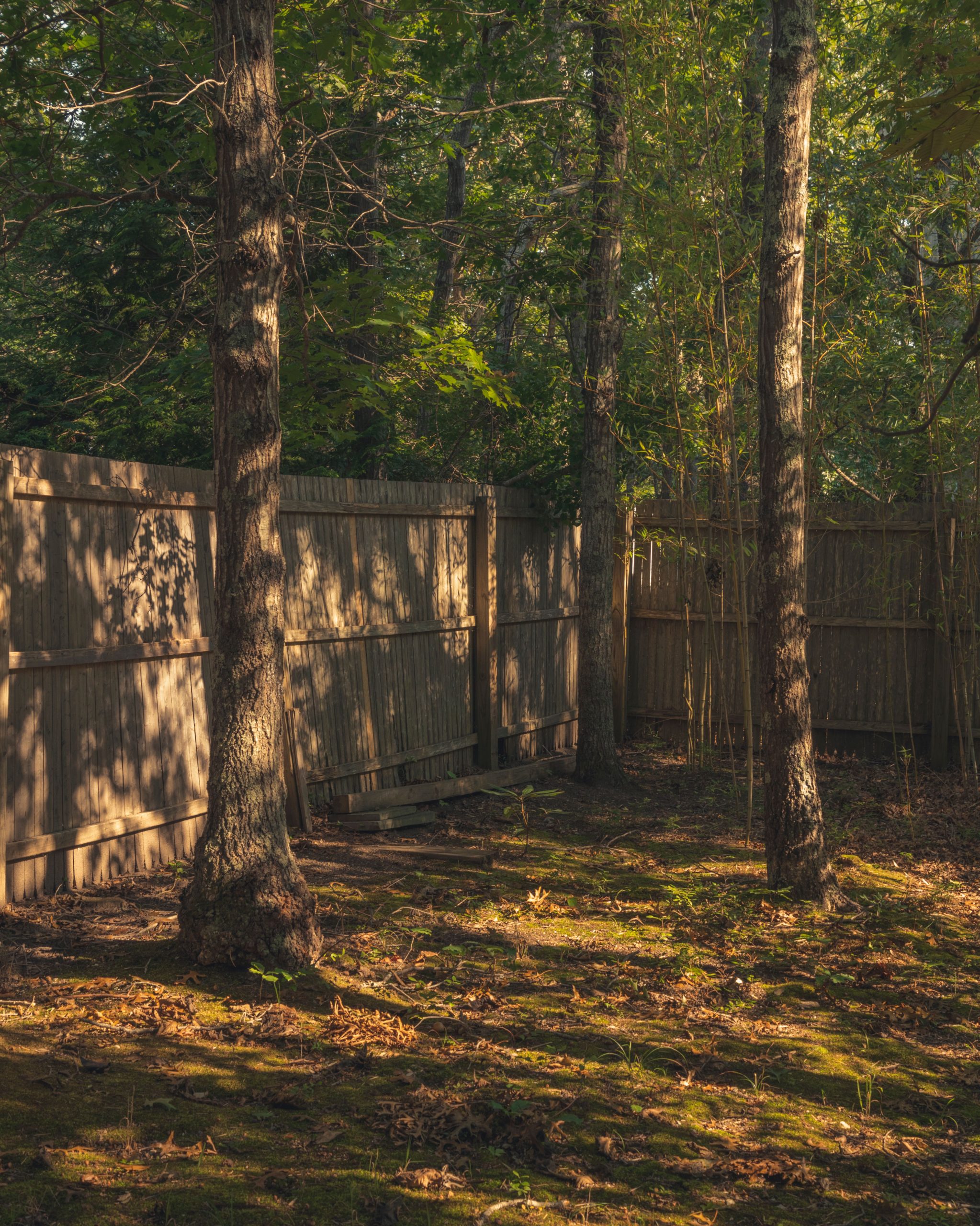
23. Weathered Wood Privacy Fence in a Shaded, Natural Setting
What Makes It Work: The serene, natural beauty of this scene is achieved through masterful use of light and shadow. The dappled sunlight filtering through the dense tree canopy creates a constantly shifting pattern on the weathered wooden fence. This turns a simple, flat surface into a dynamic canvas. The moss on the ground and the fallen leaves further integrate the man-made fence into its wild surroundings, making it feel like a long-standing, harmonious part of the ecosystem rather than a recent intrusion.
 💸 Get This Look For Less
Real Talk: This is a dream scenario for a rustic fence, but achieving it means leaning into nature, not fighting it. A wooden fence in a damp, shady spot like this *will* weather. It *will* grow moss or algae. It *will* get stained by falling leaves. If you are someone who wants a pristine, perfectly uniform fence, this is not the environment for you. The beauty here comes from embracing the imperfections and the natural aging process. Fighting it with constant power-washing and chemical treatments would destroy the very character that makes it so appealing.
24. Dark Gray Metal Fence with Spiked Arches on a Brick Wall
Scale Guide: This type of fence, installed on top of a half-wall (often called a
25. Vertical Corrugated Metal Fence Against a Blue Sky
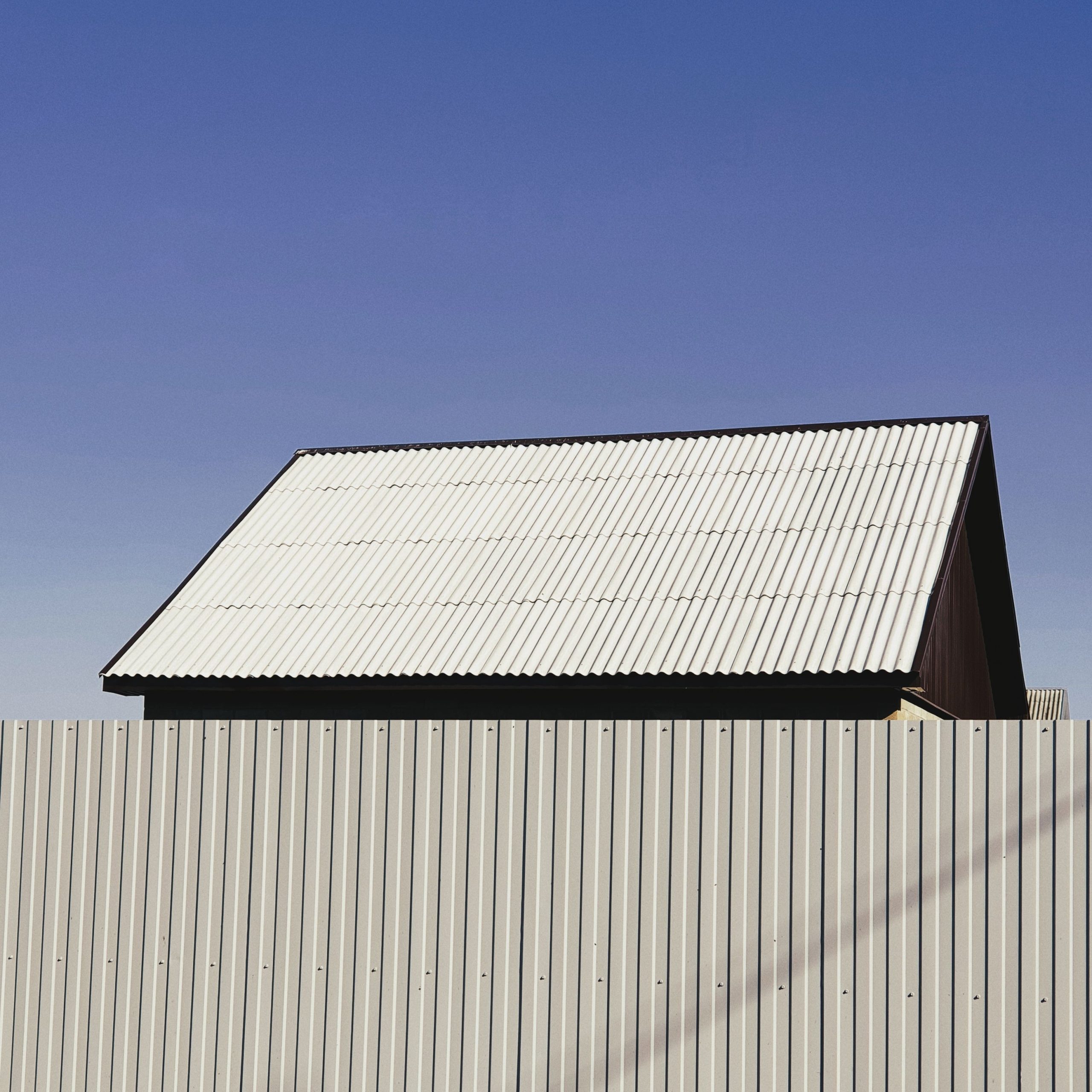
The One Thing: The stark, minimalist composition is what elevates this from a simple fence to a piece of graphic art. The clean, vertical lines of the light gray corrugated metal fence create a powerful contrast against the deep, uninterrupted blue of the sky. The simple geometry of the house’s roofline adds another layer of clean shapes. There is no fussy landscaping, no ornate detail. It’s a confident, bold statement made with the most basic industrial materials and pure, simple shapes. It’s a perfect example of

26. Dark Gray Corrugated Metal Wall with Overgrown Weeds
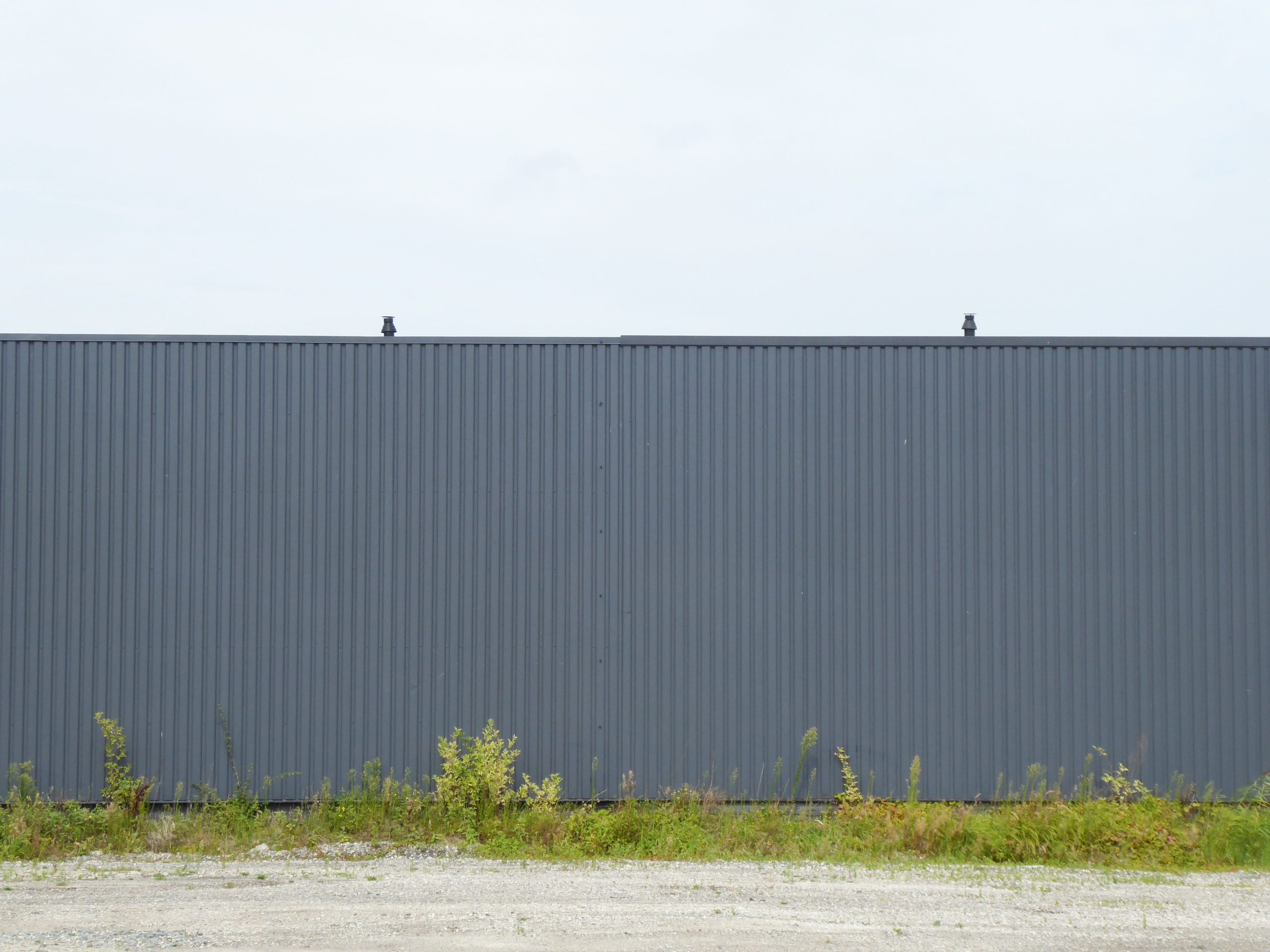
What Makes It Work: This image captures a compelling tension between the industrial and the organic. The dark gray corrugated metal wall is rigid, uniform, and man-made. The strip of weeds at its base is the exact opposite: wild, chaotic, and natural. This contrast is what makes the scene so visually interesting. The muted color palette of grays, greens, and yellows ties it all together, creating a moody, atmospheric quality. It’s a look that finds beauty in the overlooked and overgrown spaces.

27. Close-Up of a Weathered and Rusted Chain-Link Fence
The One Thing: Texture is the undisputed star of this image. The focus isn’t on the fence as a barrier, but as a surface. The intricate, repeating diamond pattern of the interwoven wire, combined with the rough, flaky texture of the rust, creates a rich visual tapestry. The way the rust concentrates at the joints and fades along the wires tells a story of time and exposure to the elements. It’s a celebration of the beauty that can be found in decay and industrial aging, a concept similar to the appreciation for the weathered green fence in Idea #1.
 📏 Scale Guide
Real Talk: While this aged look has a certain rustic or industrial-chic appeal, a rusty chain-link fence is also a safety hazard. The rusted, broken points can be very sharp, posing a risk to children and pets. It can also stain clothing that brushes against it. If you like the look but not the liability, you can get vinyl-coated chain-link in brown or black. It provides a similar dark, moody feel with a much safer, more durable, and maintenance-free finish that won’t require tetanus shots.
28. Tall Corrugated Metal Fence with Capping
Before You Start Checklist: A tall metal fence is a serious installation. Run through this list before you commit.
- Check Local Ordinances: Many cities have height restrictions for fences, especially front-yard fences. A fence this tall is likely only permissible in a back or side yard. Verify the maximum allowed height with your local planning department.
- Confirm Property Lines: For a permanent installation like this, it’s worth paying for a professional survey to know your exact property boundaries. Even a six-inch mistake can lead to costly legal disputes.
- Evaluate Wind Load: A tall, solid fence acts like a sail. Ensure your plan includes posts that are thick enough and set deep enough in concrete to withstand the wind load in your area.
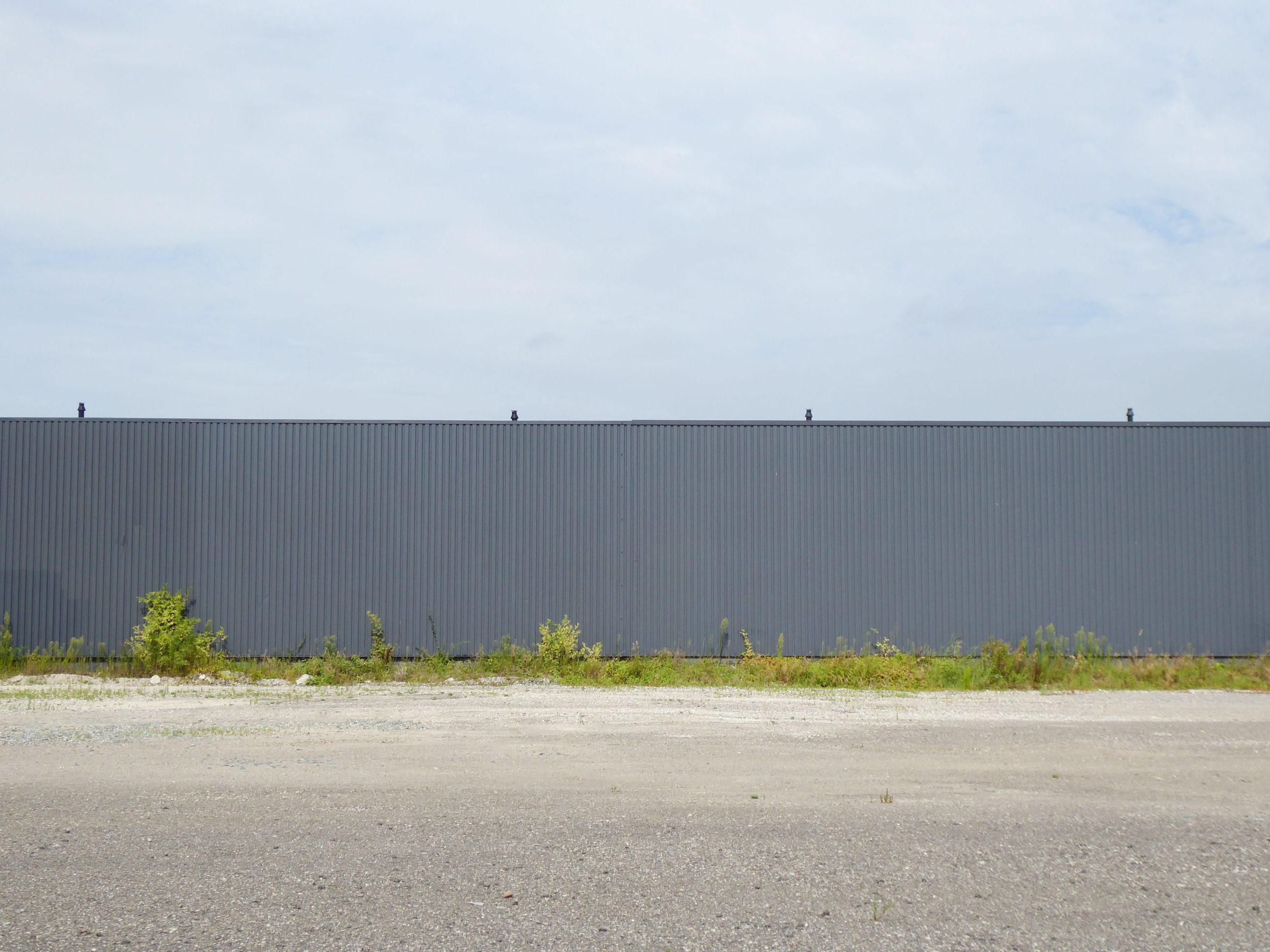
🔥 Trending ContextDesigner Tip: When installing a simple, utilitarian fence like corrugated metal, a finishing detail makes all the difference. The small, dark cap fittings along the top of this fence are a perfect example. They provide a clean, finished edge and break up the long, monotonous line. This simple addition makes the fence look intentional and professionally installed, rather than like a temporary construction barrier. You can also add a horizontal cap rail along the top for a more substantial, framed look. Don’t skip the finishing touches.
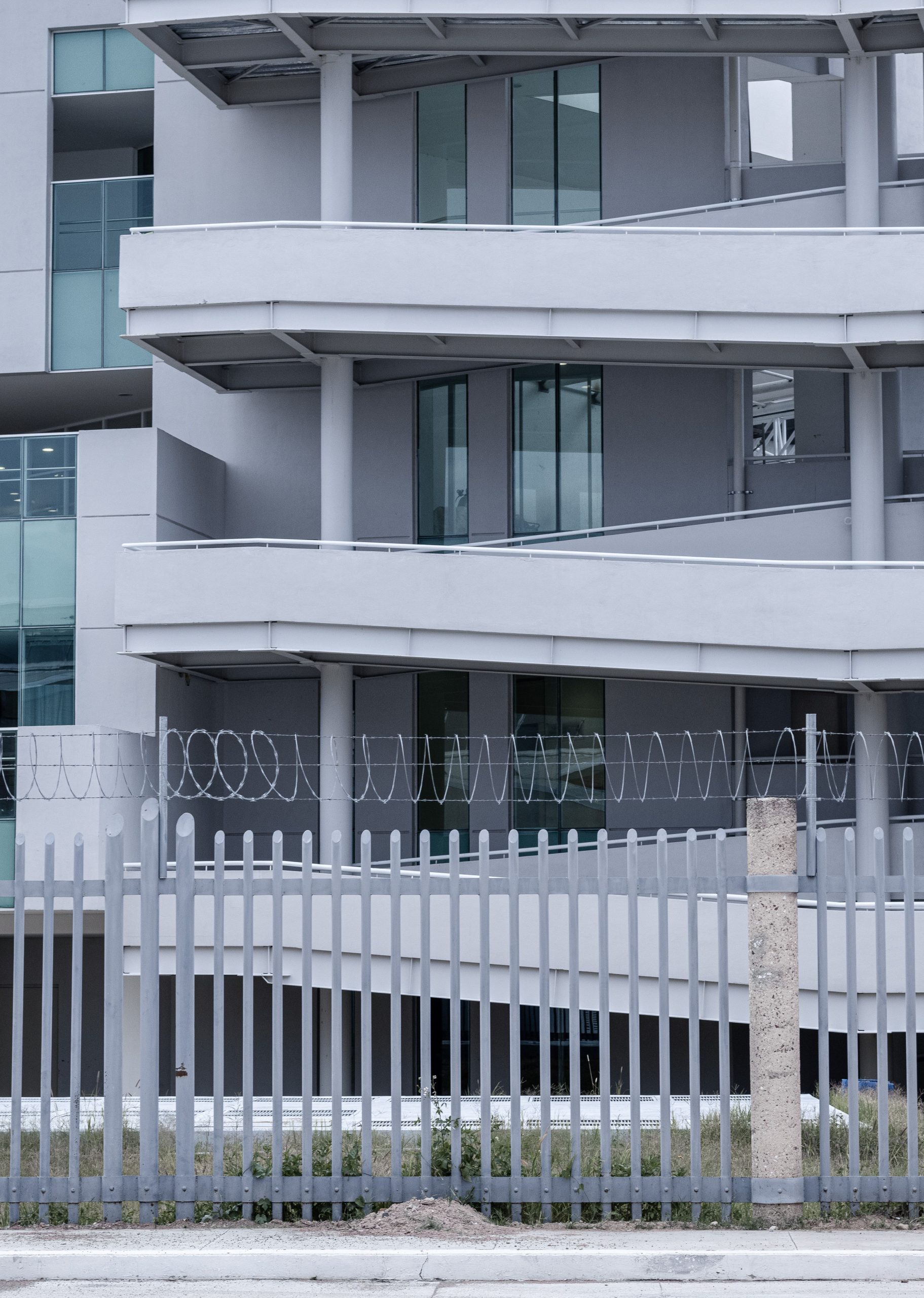
29. Modern Grey Picket Fence with Barbed Wire
Real Talk: Let’s be honest: barbed wire sends a very strong, unambiguous message. While effective for security, it creates an aggressive, almost correctional-facility aesthetic that can feel unwelcoming and may even be prohibited in many residential areas. Before considering this, ask yourself what level of security you truly need and what message you want your home to project. For most residential situations, a tall fence with pointed pickets (like Idea #21) or a security camera system offers a significant deterrent without the hostile appearance of barbed wire.
 💰 Budget Breakdown
Style Math: This look presents a formula of 90% modern minimalism + 10% overt security. The fence itself is a clean, contemporary design with its tightly spaced grey pickets and simple concrete posts. It’s calm and ordered. The coiled barbed wire is a stark, jarring addition. This isn’t a blend; it’s a deliberate contradiction. The juxtaposition of the clean, architectural fence with the raw, aggressive barbed wire is what defines its severe, high-security character. It’s a statement of function over form.
30. Teal Lattice Fence Against a Colorful Blurred Background
What Makes It Work: This design is all about the power of color to evoke emotion. The bright, cheerful teal of the fence lattice is playful and energetic on its own. When set against a vibrant, blurred background of pink, orange, and purple, the effect is pure joy. The teal acts as a cool counterpoint to the warm background colors, making both stand out even more. The subtle rust spots add a touch of texture, preventing the color from feeling too flat or artificial. It feels like the entrance to a playground or a festival.
⚠️ Real TalkThe One Thing: The vibrant, multi-colored background is the secret ingredient. The teal lattice fence is interesting, but placing it in this specific context transforms it. The out-of-focus shapes of pink, orange, and blue suggest a world of fun and activity just beyond the barrier. It creates a sense of joyful anticipation. If the background were a plain green hedge or a brown wall, the teal fence would still be nice, but it would lose that electric, candy-colored energy that makes this image so memorable and unique.
Your Property Line, Redefined.
A fence is so much more than a boundary—it’s the first impression your home makes and the backdrop for your outdoor life. Whether you’re craving a private natural oasis or a crisp architectural statement, the right design can completely redefine your space. We hope these ideas have sparked some inspiration for your own perfect perimeter. Ready to start planning? Pin your favorite looks to your board and make that vision a reality.