
Still scrolling through hundreds of gray floor pins on Pinterest and feeling more confused than when you started? It’s a classic design dilemma: you know you want gray, but you’re not sure how to make it feel right. We’ve done the deep dive for you, scouring everything from designer showrooms to the aisles of IKEA and Target to find what actually works. Inside, you’ll find 27 distinct ideas—from modern minimalist concrete to cozy, rustic wood looks—that show you exactly how to style gray floors for 2026. For this year, the biggest trend is about ‘warming up the gray,’ pairing it with natural textures and rich accent colors to create spaces that feel both sophisticated and incredibly inviting. Pin this guide for later—your future self will thank you when it’s time to actually pull the trigger.
1. Unite an Open Concept Space with Mixed Gray Flooring
What makes this open space feel so cohesive, even with two different flooring types? It’s the consistent color story. Using a light gray wood-look plank in one area and a gray speckled carpet in another cleverly defines the zones—this is the living area, that is the walkway—without visually chopping up the room. The shared gray palette, echoed in the light gray walls, creates a seamless flow. The white fireplace and dark wood kitchen island act as anchor points within this neutral landscape, adding just enough contrast to keep things interesting.
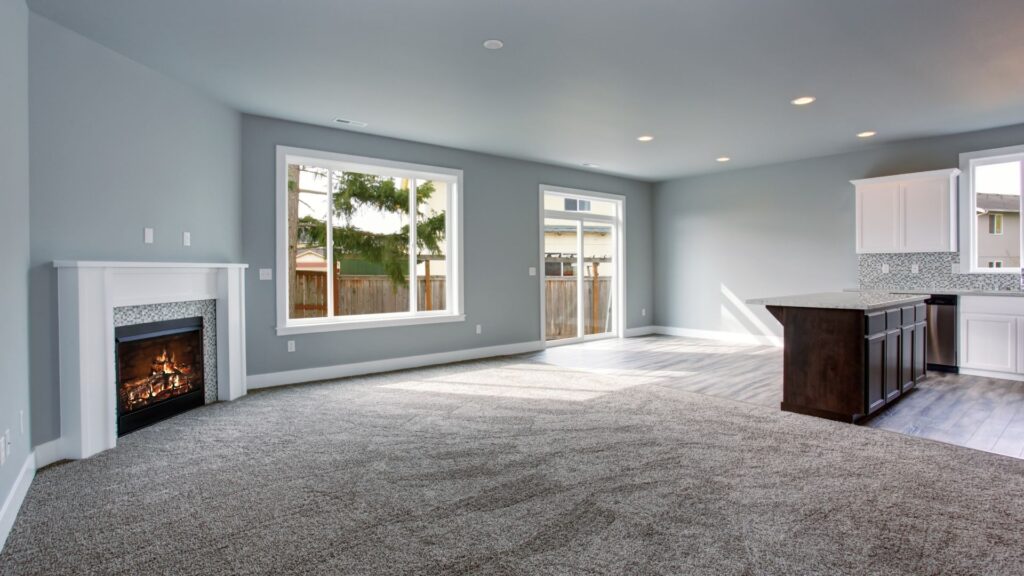
This flooring strategy is tailor-made for open-concept homes of 700 square feet or more. In a smaller space, using two different flooring types can feel jarring and make the area seem even smaller. The key is to have enough square footage to allow each flooring zone to “breathe.” This approach also requires high ceilings (9 feet or more) to prevent the visual separation at the floor level from making the space feel compressed. It’s an excellent way to add functional definition without putting up walls.
2. Achieve a Spa-Like Vibe with Marble-Look Tiles and Shiplap
To make affordable marble-look porcelain tiles appear more luxurious, the secret is in the grout. Opt for the thinnest grout line your tile installer allows (typically 1/16 or 1/8 inch) and match the grout color as closely as possible to the primary color of the tile. Here, the narrow white grout lines blend seamlessly with the white and light gray tiles, creating the illusion of a single, continuous slab of marble. This trick fools the eye and elevates the entire look for a fraction of the cost of real stone.
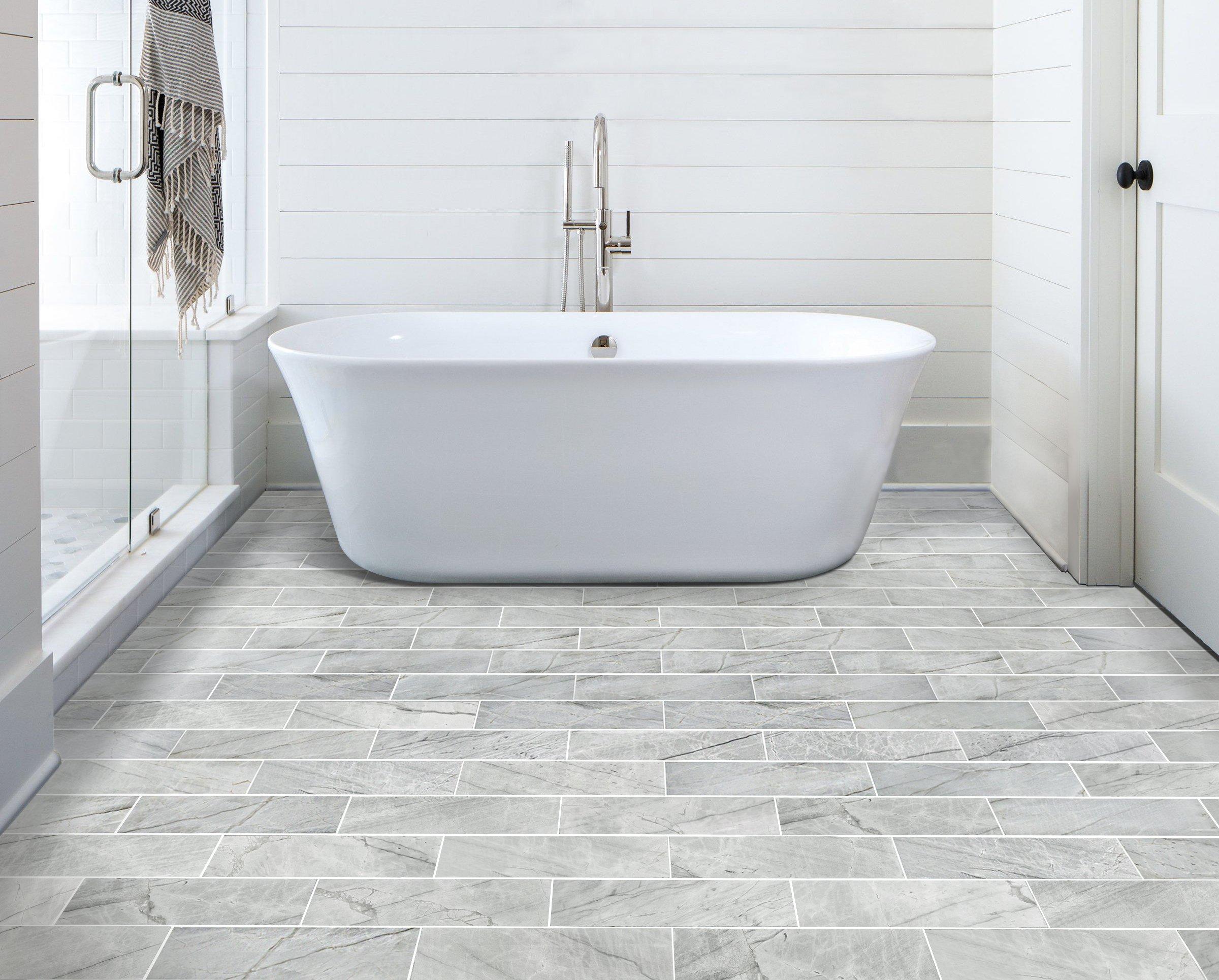
A bathroom this bright and white is stunning, but it requires commitment. White grout, especially in a high-traffic area like a bathroom, is notoriously difficult to keep pristine. It’s prone to staining from dirt, mildew, and cleaning products. To keep it looking fresh, you’ll need to seal the grout annually and clean it regularly with a pH-neutral cleaner and a small brush. For a lower-maintenance alternative that gives a similar look, consider an epoxy grout, which is more stain and water-resistant than traditional cement grout.
3. Layer Textures Over Gray Wood-Look Floors
The formula for this cozy, contemporary room is all about balance. Think of it as: 50% neutral foundation + 40% color + 10% texture. The medium gray wood-look floors and gray sectional sofa create a solid, neutral base. The two-toned green walls provide a rich block of color that brings life to the space. The final, crucial 10% comes from texture—the shaggy white area rug, the soft fabric of the wingback chair, and the smoothness of the glass-top dining table. You could easily swap the green for a deep navy or a warm terracotta and the formula would still work perfectly.
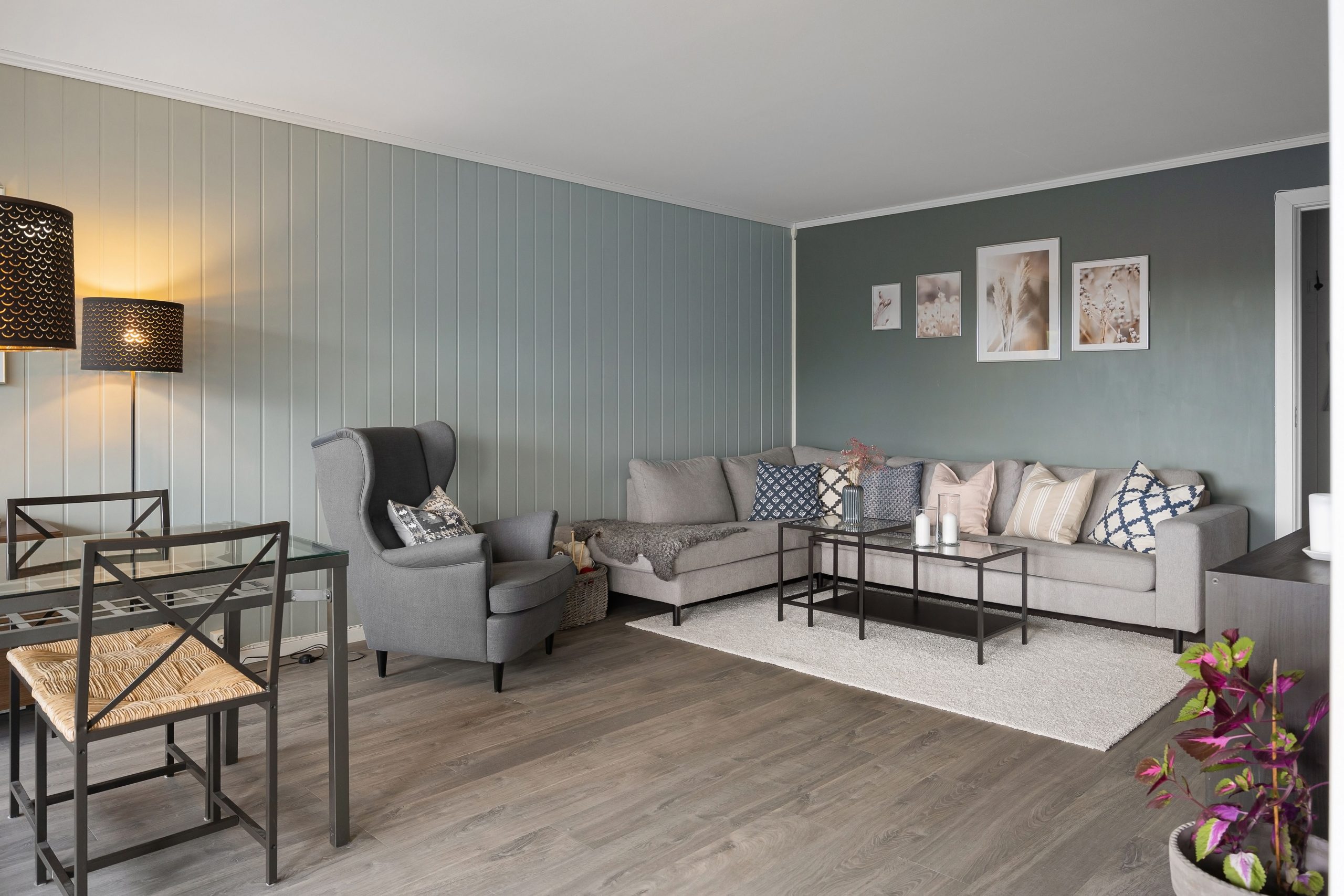
You don’t need a huge budget to pull off this layered look. Start with a gray laminate or LVP flooring from a big-box store, which can be had for $2-$4 per square foot. Find a comfy gray sectional on Facebook Marketplace or from a direct-to-consumer brand for under $1,500. The real key is the texture: an 8×10 shaggy rug from IKEA or Target is about $200-$300. A little bit of smart shopping can achieve this entire vibe for less than the cost of one designer sofa. For a similar look at a lower price, check out the budget-friendly approach in Idea #15.
4. Create Understated Cool with Light Wood Floors and a Dark Gray Sofa
The single element that makes this room feel effortlessly cool is the pair of black Acapulco chairs. Remove them, and you have a perfectly nice, but somewhat generic, modern living room. With them, the space gains an edge of minimalist, global-inspired style. They are visually lightweight, so they don’t block the natural light, but their strong geometric lines and black color provide a necessary graphic punch against the light gray walls and wood floors. They’re the punctuation mark on the whole design statement.
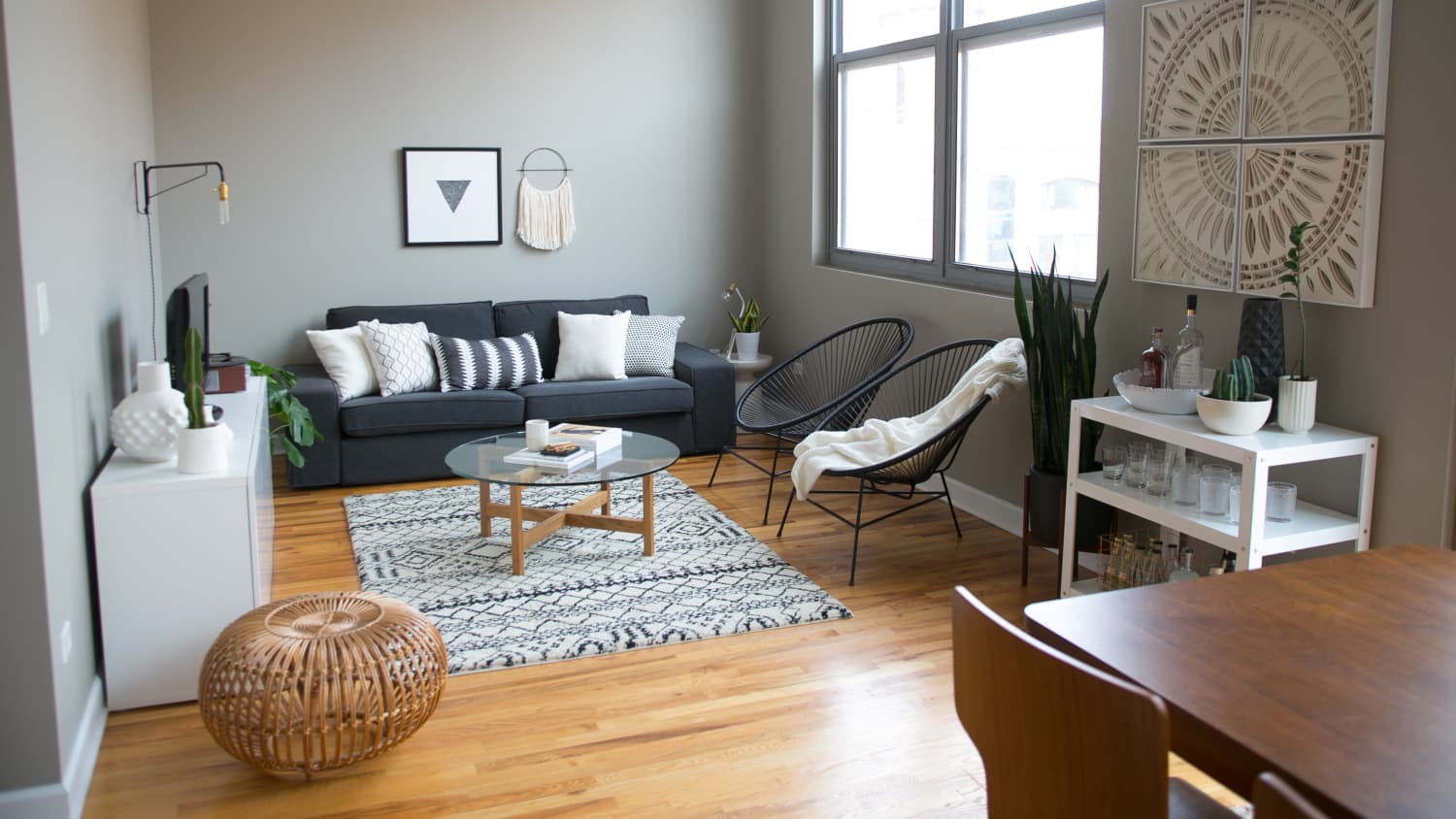
This look taps directly into the “Japandi” and “Organic Modern” trends that are huge on Pinterest right now. It’s about blending the clean, minimalist lines of Scandinavian design with the natural materials and warm, earthy feel of Japanese aesthetics. The combination of light wood, a neutral gray palette, and black accents is the essence of this style. It has staying power because it’s not about flashy decor, but about creating a calm, uncluttered environment with natural light and thoughtfully chosen, functional pieces. It feels both modern and timeless.
5. Define a Hallway with Light Gray Paneled Walls and Marble Tiles
This hallway feels so grand and elegant due to the clever use of repetition and scale. The repeating rectangular shapes in the wall paneling create a sense of rhythm and order, drawing your eye down the corridor. This motif is mirrored on a smaller scale by the grid pattern of the marble floor tiles, with their dark square inserts. The repetition provides structure, while the chrome sconces and abstract art break it up just enough to add personality. The tall, sculpted door frames exaggerate the height of the ceiling, making the entire space feel more expansive.
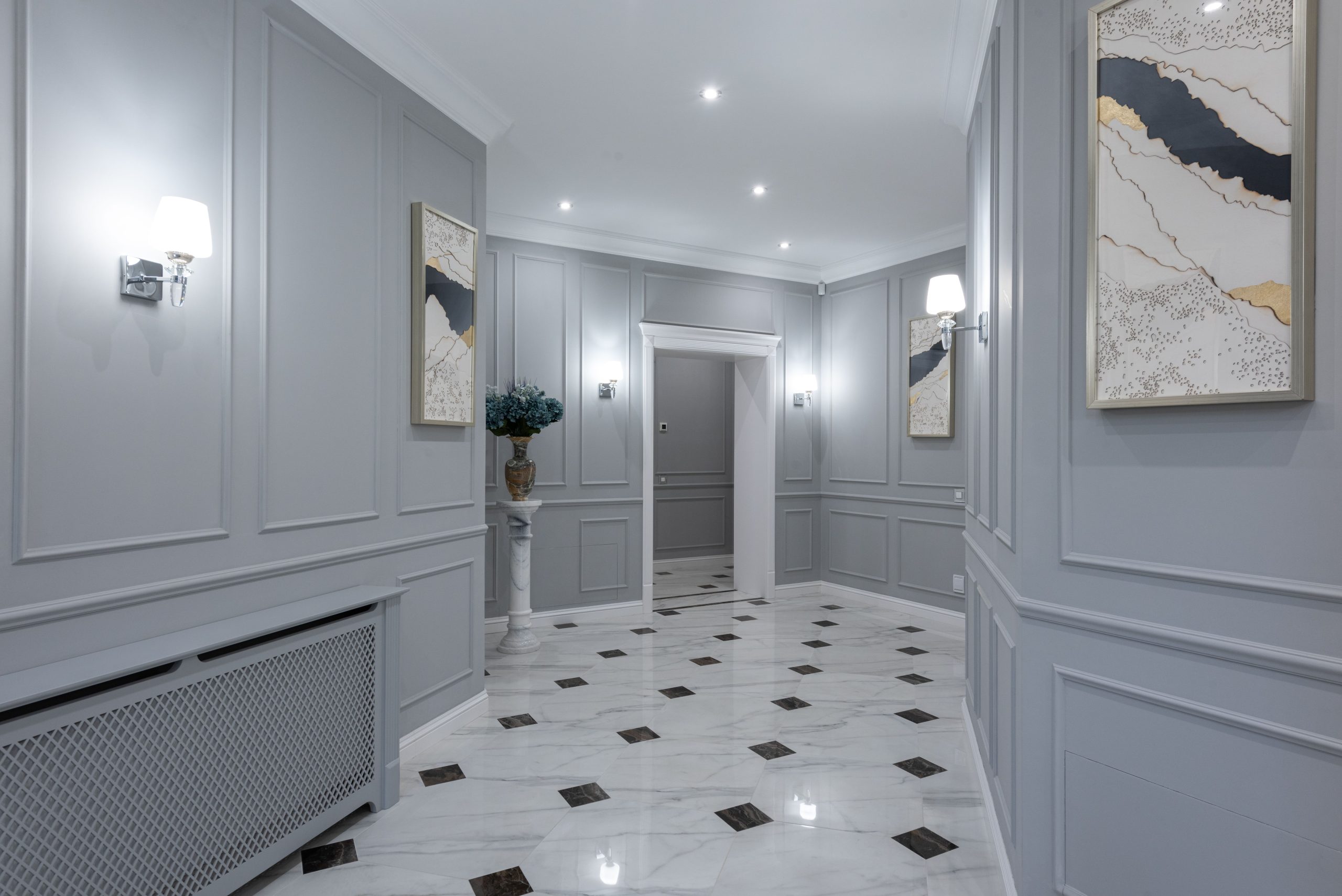
Polished marble floors are the definition of luxury, but they’re not for the faint of heart or the busy household. Marble is a relatively soft, porous stone, making it susceptible to scratching from shoes, pets, and dropped items. It can also be etched by acidic substances like wine, juice, or even certain cleaners. The high-gloss finish shows every speck of dust and requires frequent mopping to look its best. While undeniably beautiful, it’s a high-maintenance choice best suited for lower-traffic areas where you’re willing to put in the upkeep.
6. Warm Up a Modern Bathroom with a Wood-Paneled Ceiling
When mixing materials in a bathroom, create a clear hierarchy. Here, there are three main materials: dark gray slate, white fixtures/walls, and light natural wood. Instead of scattering them, the designer gave each material its own “zone.” The slate owns the floor, the white owns the vertical space, and the wood owns the ceiling. This creates a clean, intentional look that feels balanced, not busy. The brass fixtures and black ladder act as small, warm accents that pop against this strong, organized backdrop.
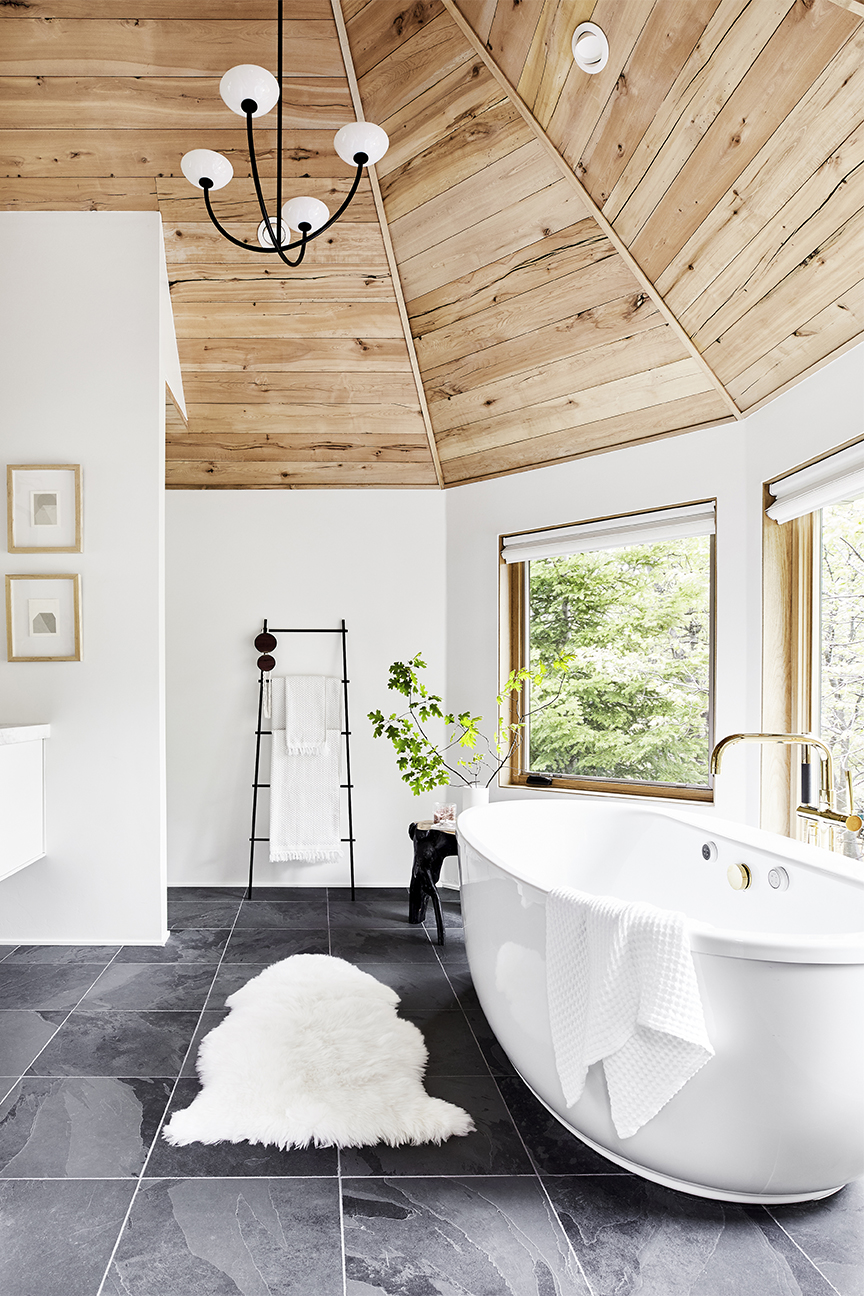
Want to recreate those dark gray slate floor tiles? It’s a project you can tackle in a weekend. Here’s a brief guide for a small bathroom (approx. 50 sq ft):
- Prep the Subfloor: Ensure your subfloor is clean, level, and rigid. Install a cement backer board for stability. (Time: 2 hours, Cost: $50)
- Dry Layout: Lay out the tiles without adhesive to plan your cuts and ensure a balanced look. (Time: 1 hour)
- Set the Tiles: Mix thin-set mortar and apply it with a notched trowel. Firmly press each tile into place, using spacers for consistent grout lines. (Time: 3-4 hours, Cost: $20 for mortar)
- Grout: After the mortar cures (24-48 hours), remove spacers and apply grout, pushing it into the joints with a grout float. (Time: 2 hours, Cost: $15)
- Seal: Clean off excess grout and let it cure fully. Apply a penetrating sealer to both the tile and grout to protect against stains and moisture. (Time: 1 hour, Cost: $25)
7. Opt for Simplicity with Wide-Plank, Gray Wood-Look Flooring
Before committing to this beautifully simple flooring, run through this quick checklist to ensure it’s the right fit for your space and lifestyle:
- Check Your Subfloor: Are your floors level? Wide planks are less forgiving of uneven surfaces and may require you to level the subfloor, adding cost and time.
- Order Samples: Gray tones can look dramatically different depending on your home’s lighting. Order at least three large samples and view them in the morning, afternoon, and evening.
- Consider Your Room’s Scale: Wide planks (6 inches or more) generally look best in larger, more open rooms. In a very small, narrow room, they can sometimes look out of proportion.
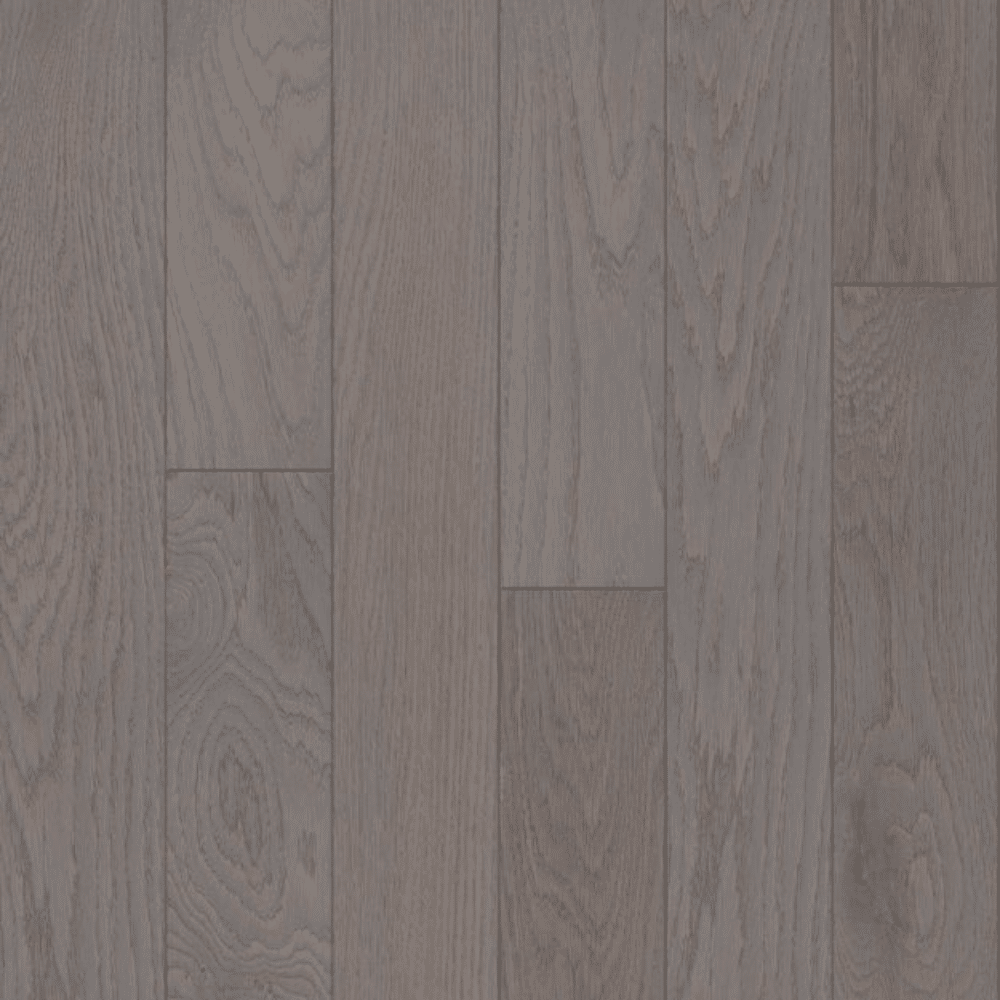
that makes this flooring feel so versatile and modern is its lack of variation. While some wood-look floors scream with high-contrast grain and knot patterns, this one is intentionally understated. The visible grain is subtle and the color is consistent across the planks. This creates a quiet, neutral canvas that doesn’t compete with furniture, rugs, or wall colors. It’s the ultimate supporting actor, allowing the rest of your decor to take center stage. Its simplicity is its greatest strength.
8. A Fresh Take on Traditional with White and Gray Kitchen Cabinets
To recreate this elegant and timeless kitchen look, here’s a potential cost breakdown. Prices can vary widely based on your location, material quality, and whether you DIY or hire professionals.
- Cabinetry: White upper and gray island shaker-style cabinets (semi-custom): $8,000 – $15,000
- Countertops: White and gray veined marble or high-end quartz: $5,000 – $10,000
- Flooring: Dark stained hardwood floors (installed): $3,000 – $6,000
- Backsplash: Light gray subway tile (professionally installed): $1,000 – $2,500
- Lighting: Ornate pendant lights: $500 – $1,500
- TOTAL: $17,500 – $35,000+
- Budget alternative: Use stock cabinets from a big-box store, laminate countertops with a marble look, and DIY the backsplash to get a similar vibe for 40-50% less.
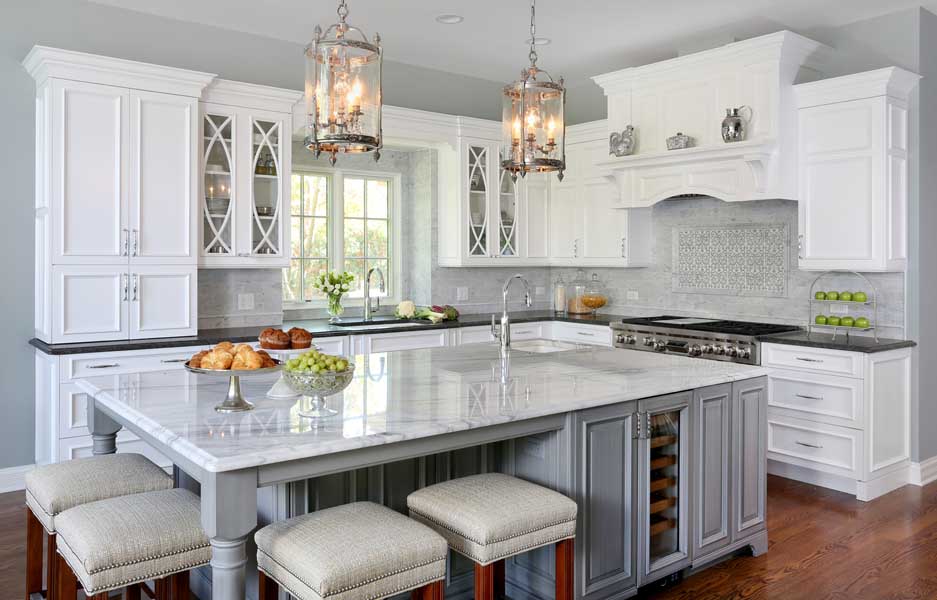
This kitchen strikes the perfect balance between classic and current. The design principle at play is contrast in both color and light. The dark wood floors provide a rich, grounding foundation that prevents the white and gray elements from feeling washed out. The light gray subway tile backsplash is a soft bridge between the crisp white upper cabinets and the deeper gray island. Finally, the ornate glass pendants add a touch of sparkle and glamour, reflecting light and preventing the traditional elements from feeling too heavy or dated.
9. Create Subtle Contrast with Dark Gray Stair Nosing
The most thoughtful detail in this space is the dark gray stair nosing. It’s a subtle but brilliant design choice. Instead of trying to match the light gray flooring exactly, the designer opted for a darker, contrasting color on the edge of the stair treads. This not only adds a touch of custom visual interest but also serves an important practical purpose: it clearly defines the edge of each step, improving safety. It’s a small detail that makes the whole staircase feel more intentional and well-designed.
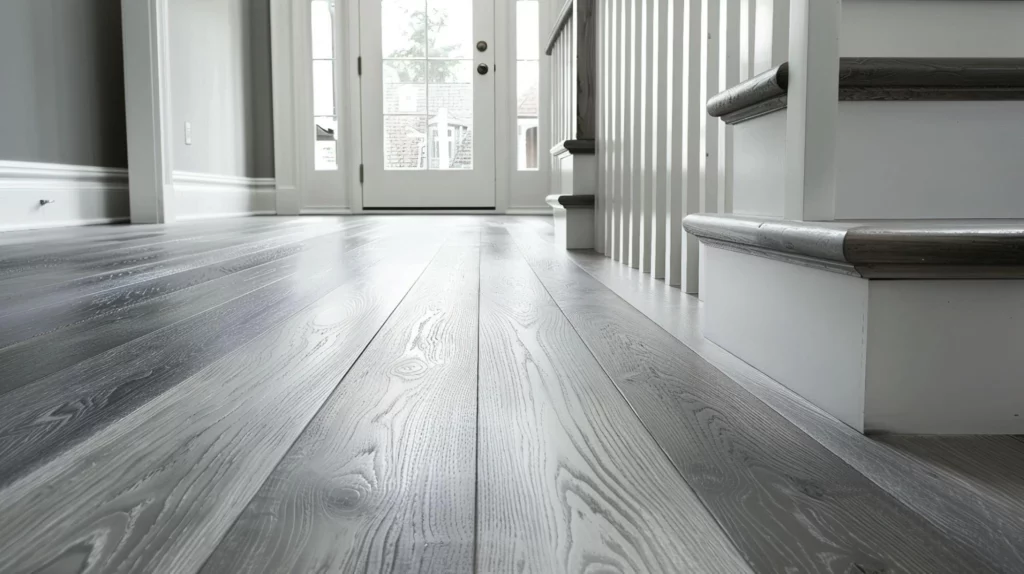
When transitioning flooring from a main level to a staircase, you have three primary options: 1) Use a coordinating stair nose piece from the same flooring manufacturer for a seamless look. 2) Use a solid wood tread and nosing that is stained to match the floor as closely as possible. 3) Do what’s done here and create intentional contrast. Using a contrasting color—like a dark gray against a light gray floor—is often the chicest and most forgiving option, as it avoids any “close but not quite” color matching issues.
10. Lay White and Gray Marble in a Classic Herringbone Pattern
A herringbone floor is absolutely stunning, but the installation is significantly more complex and costly than a standard grid layout. The pattern requires numerous precise, angled cuts, which means more material waste (plan on ordering 15-20% extra tile, versus the standard 10%). It also takes installers much more time, so labor costs can be double that of a simple tile job. While the end result is a showstopper, be sure to budget accordingly for both the extra material and the skilled labor required to get it right. Also remember, this much pattern works best in a space like this one, dominated by solid colors—compare it to the busier look of Idea #23.
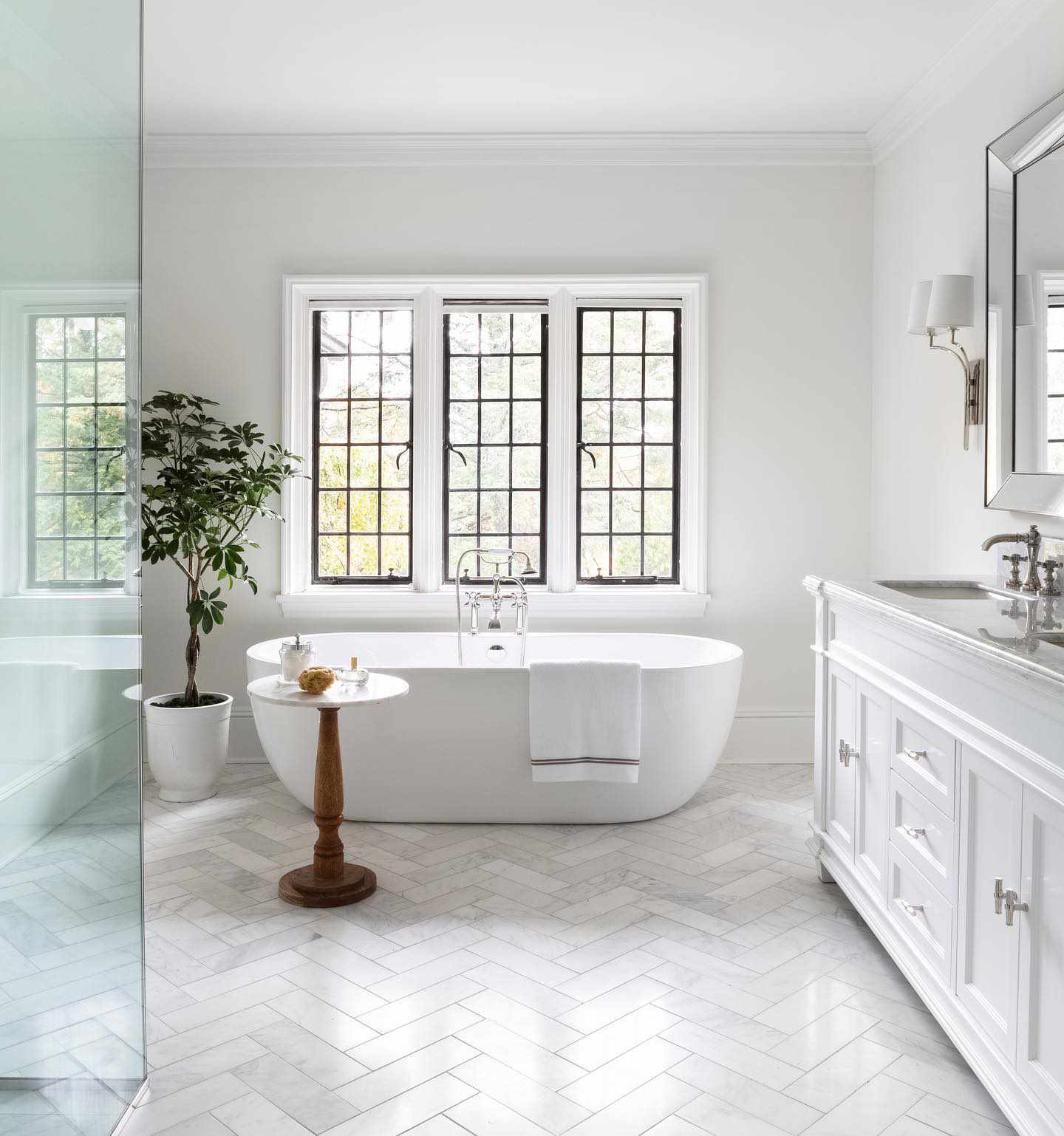
What makes this bathroom feel so serene and not overly busy, despite the patterned floor? It’s the disciplined color palette. The room is almost entirely white and light gray, from the floor tiles to the freestanding tub, vanity, and walls. This monochromatic scheme allows the herringbone pattern to be the star without creating visual chaos. The chrome fixtures and black window frames act as sharp, clean accents that define the space without adding more color, keeping the overall feeling bright, clean, and elegant.
11. Ground a Modern Room with Large-Format Gray Floor Tiles
This room’s inviting modernism can be broken down into a simple formula: 60% sleek surfaces + 30% natural texture + 10% metallic pop. The large gray floor tiles and clean lines of the sofa provide the sleek, contemporary base. The warmth and texture come from the tan leather of the sofa, the dark gray area rug, and the rough-hewn wooden side table. The final 10% is the chrome on the sofa’s feet, a small detail that adds a touch of polish and shine. You could swap the tan leather for a rich velvet and the chrome for brass, and the room would still feel perfectly balanced.
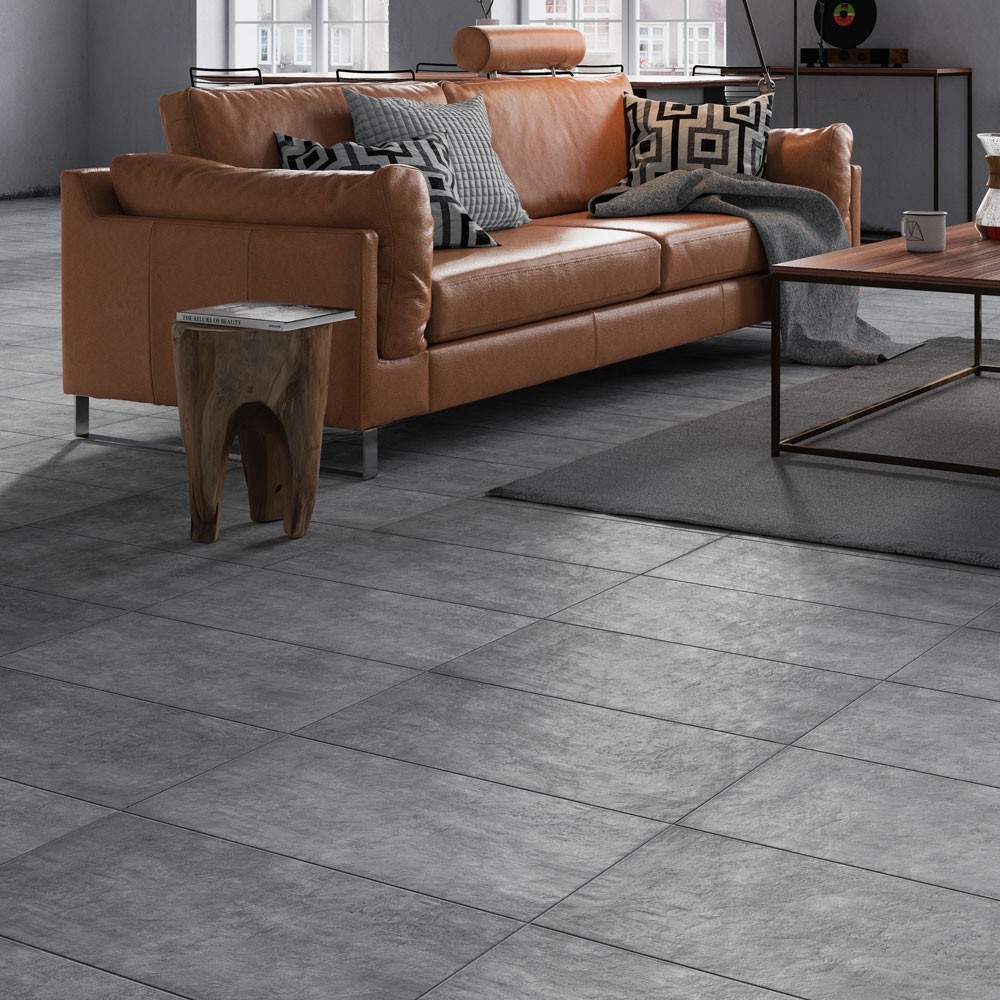
Large-format tiles with minimal grout lines offer a clean, modern look, and they’re generally easy to clean since there’s less grout to scrub. However, the texture of the tile itself matters. A completely smooth, polished tile will show every footprint and speck of dust. The subtle, slightly textured matte finish on these tiles is much more forgiving for daily life. It helps to hide minor smudges and dust, meaning you won’t have to clean it constantly to keep it looking sharp. Just be sure the texture isn’t so rough that it traps dirt.
12. Pair Light Herringbone Floors with Dramatic Dark Gray Cabinets
The success of this kitchen lies in its masterful use of contrast. The light, natural wood floor, laid in a dynamic herringbone pattern, provides a bright and textured foundation. This brightness allows the dark gray, shaker-style cabinetry to feel dramatic and sophisticated rather than heavy and oppressive. The high contrast between the light floor and dark cabinets creates instant visual impact. The white countertop and brass hardware act as the bridge, tying the two extremes together with touches of light and warmth.
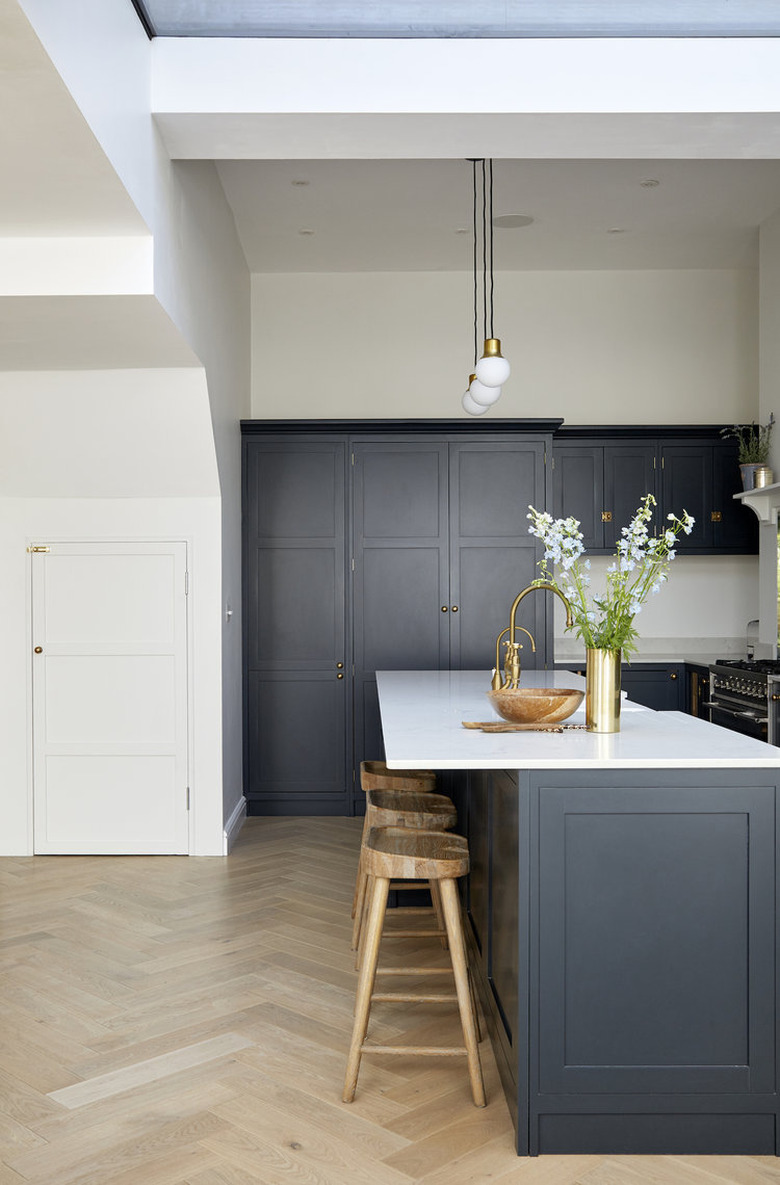
Want this high-end look without the custom price tag? The key is to source smartly. You can find light wood-look LVP (Luxury Vinyl Plank) flooring in a herringbone style for $4-$7 per square foot. Pair it with dark gray shaker cabinet fronts from a company like Semihandmade or The Cabinet Face, designed to fit standard IKEA cabinet boxes. This “IKEA hack” can save you thousands. Finish the look with brass hardware from Amazon or a specialty online retailer, and you can get this designer aesthetic for a fraction of the cost. Compare the floor pattern with the simpler planks in Idea #21 for a different feel.
13. Experiment with Two-Tone Cabinets on Gray Stone Floors
The element that elevates this kitchen from standard modern to something special is the unconventional use of lavender-gray on the island and a section of the main cabinetry. It’s a design risk that pays off. While the rest of the palette—light gray, stainless steel, dark gray floors—is safe and neutral, this subtle injection of a desaturated color adds personality and a custom feel. It proves that “neutral” doesn’t have to mean boring and that a whisper of an unexpected color can define a whole room.
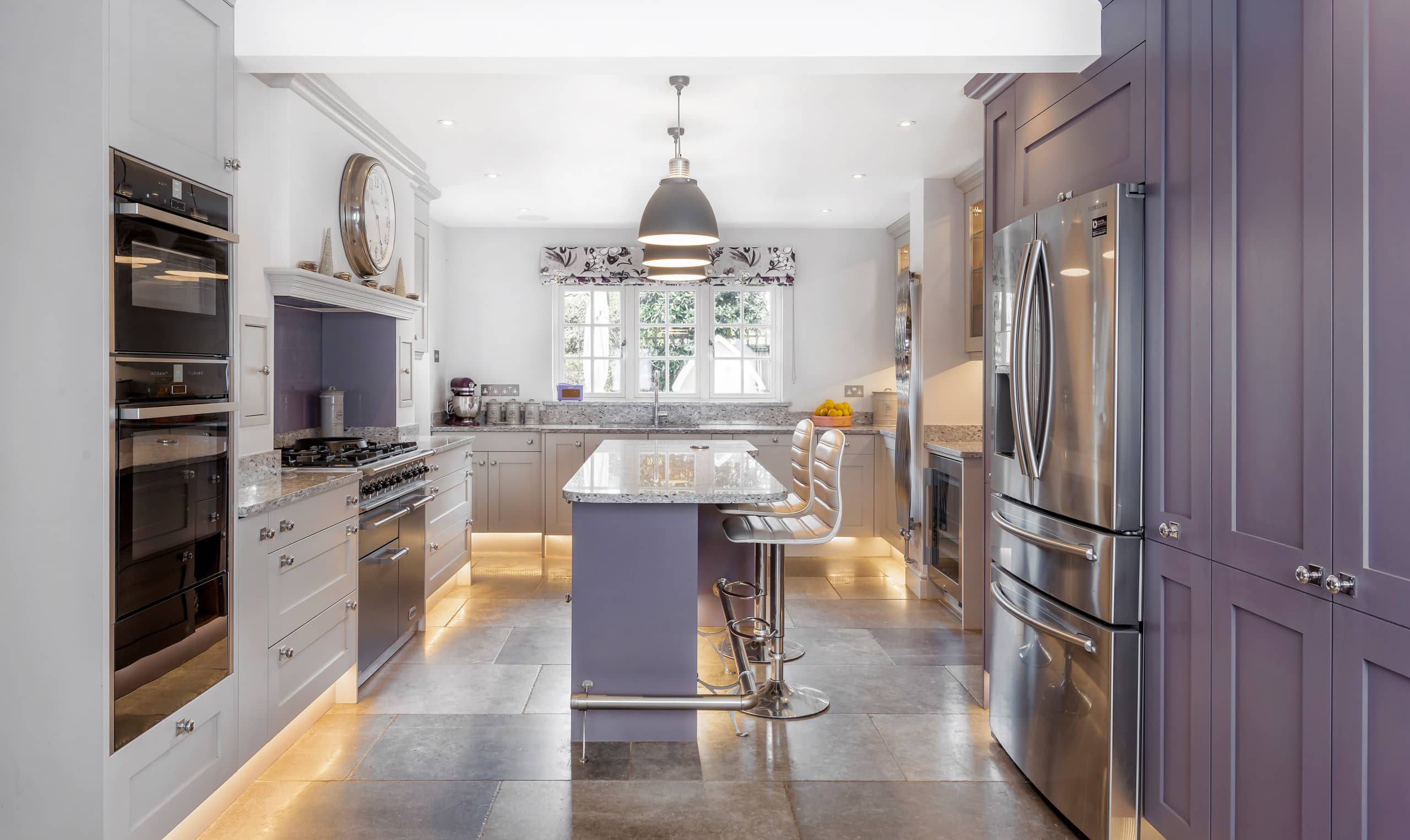
If you’re using under-cabinet lighting, especially LEDs that shine directly onto your floor as seen here, the finish of your flooring matters immensely. A high-gloss or polished floor will create harsh, reflected streaks of light, which can look jarring. These large, irregular gray stone tiles have a matte or honed finish, which allows the light to wash over them softly, creating a gentle glow around the perimeter of the cabinets. Always test your lighting with a flooring sample before you install.
14. Go Bold with Dark, Glam Walls and Light Gray Floors
A dark, sparkly wall treatment is a commitment, and it comes with a warning: it can be unforgiving. Textured and high-gloss wallpapers are notoriously difficult to install perfectly, showing every seam and bubble. They are also much harder to patch or repair than a simple painted wall. And when it comes time to redecorate, removal can be a serious, wall-damaging chore. This look is a showstopper, but be prepared for the practical realities of both the installation and its eventual removal.
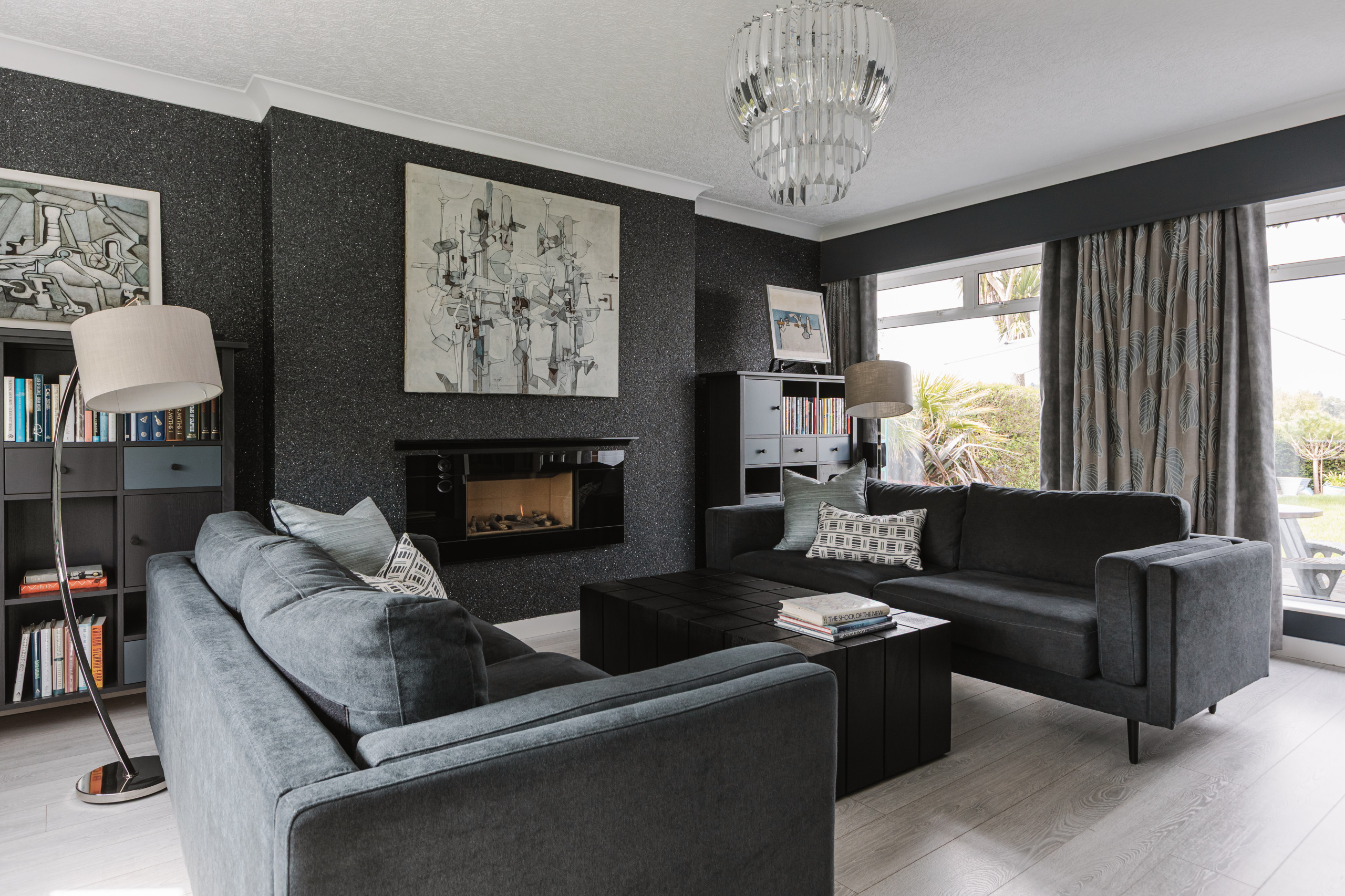
This dramatic, high-contrast look works best in a room with generous proportions and high ceilings (10 feet or more). The dark walls will naturally make a space feel smaller and more intimate, so you need to start with a room that can afford to “lose” a bit of visual space. Abundant natural light from large windows is also key to preventing the room from feeling like a cave during the day. In a small, dark room, this same design could feel oppressive and claustrophobic. For a lighter approach, see Idea #4.
15. Warm Up Dark Floors with a Light Gray Rug and Green Accents
Here’s the recipe for this fresh, modern bedroom: 50% moody neutrals + 30% light neutrals + 20% vibrant accents. The dark wood floors and gray tufted headboard make up the moody base. The light gray walls and distressed area rug lift the space and keep it from feeling too dark. The magic comes from the 20% of accents: the crisp white bedding provides a clean backdrop for the pops of hunter green on the pillows and the floral pattern on the bench. Brass and gold elements add a final touch of warmth.
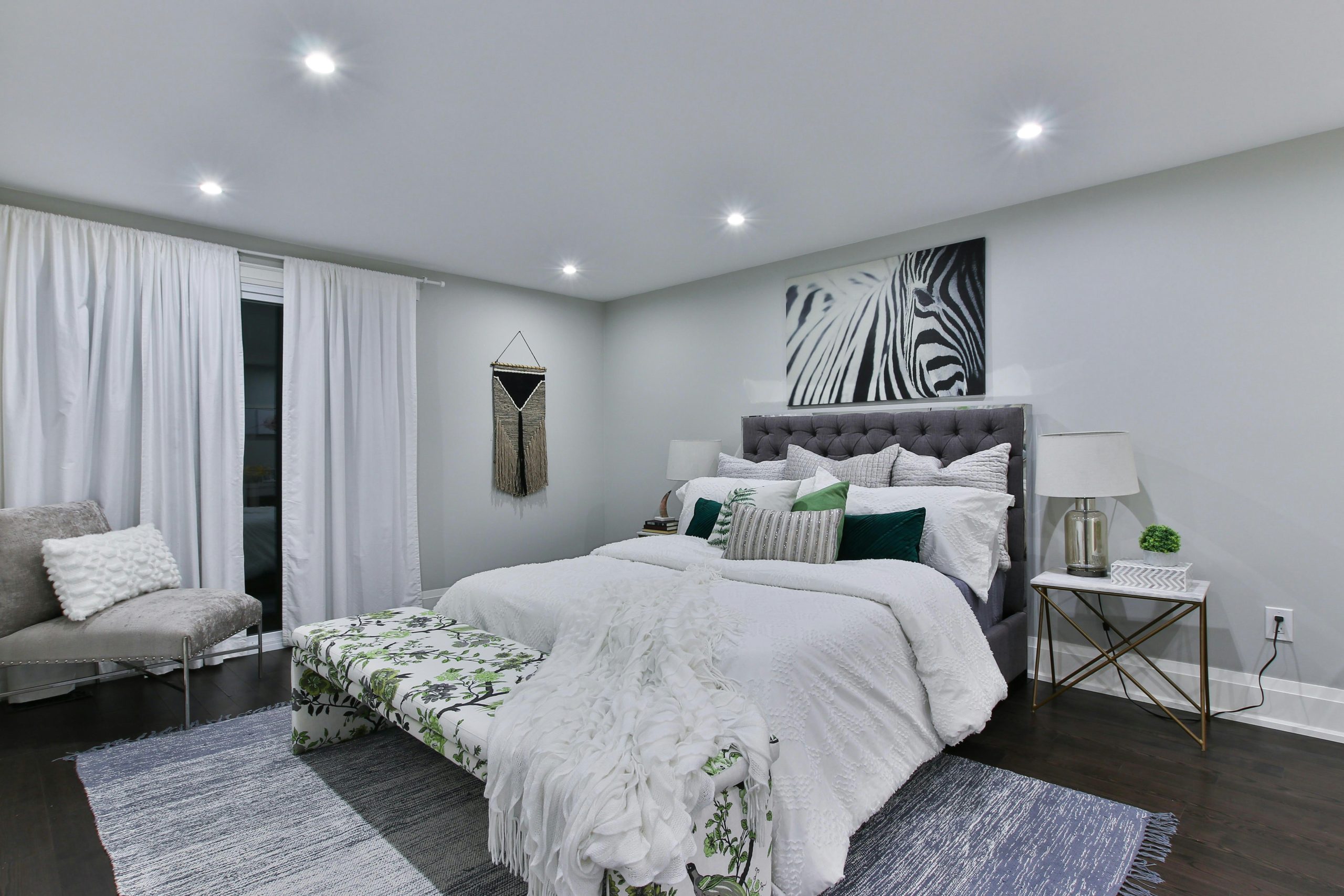
You can capture this serene and stylish bedroom vibe on a tight budget. The key is the layering. Start with your existing dark floors. Find a light gray distressed-look area rug from an online retailer like Wayfair or Rugs USA during a sale for around $150-$250. The real savings come from the accents. A set of hunter green pillow covers for your existing inserts can be found on Amazon or Etsy for under $30. Shop thrift stores or HomeGoods for a simple bench and update it with a yard of floral fabric, a staple gun, and a can of spray paint.
16. Create a Sleek Look with Dark Gray Cabinets and a Marble-Patterned Wall
The single most impactful choice in this kitchen is the decision to run the gray marble-patterned material from the countertop all the way up the wall. This is often called a “slab backsplash.” It creates a seamless, monolithic look that feels incredibly sleek and luxurious. By eliminating the visual break of a different backsplash material, the entire wall becomes a single, dramatic feature. It’s a bold move that makes the kitchen feel custom-built and high-end, and it allows the under-cabinet lighting to wash dramatically down the continuous surface.
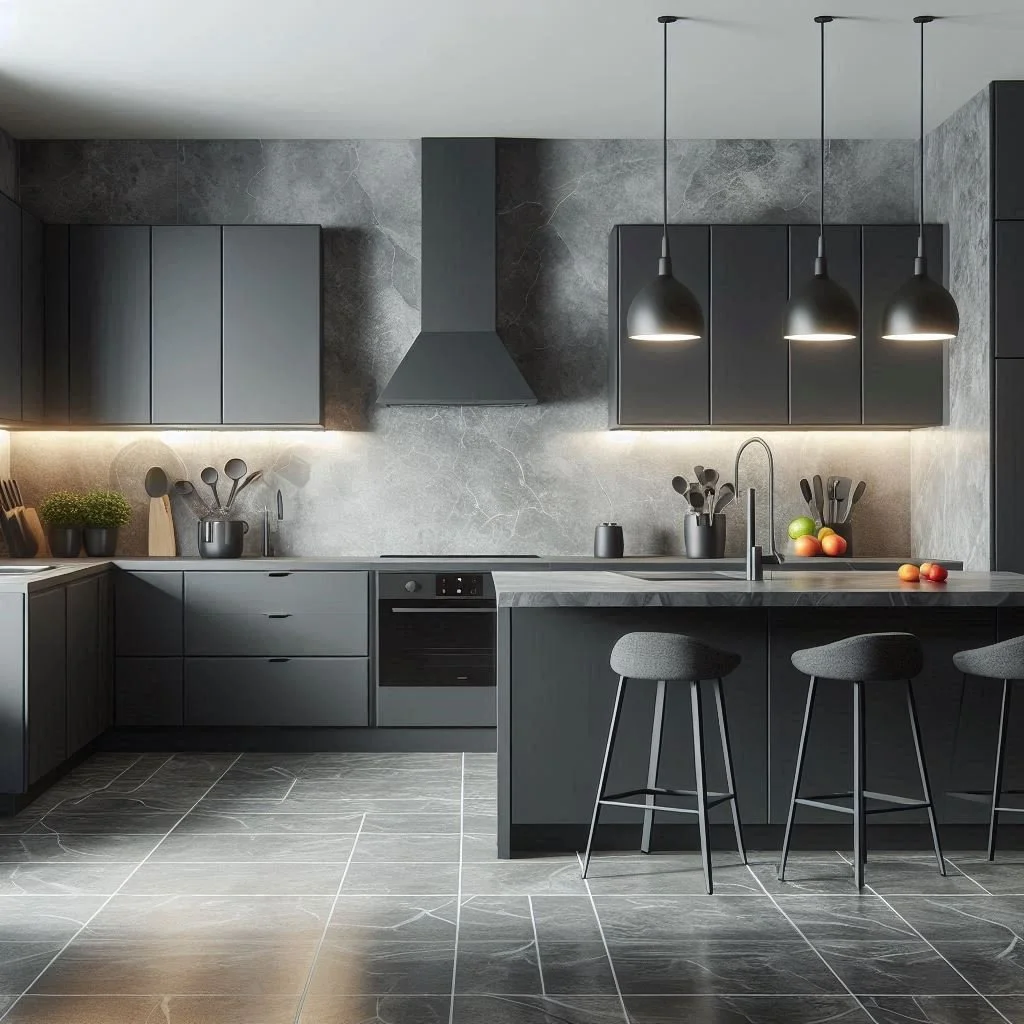
Adding under-cabinet LED strip lighting is a high-impact DIY project that can transform your kitchen. Time: 2-3 hours. Cost: $50-$150.
- Measure and Plan: Measure the lengths of your cabinets and decide where you want the lights. Most kits are plug-in, but you can also opt for a hardwired version if you’re comfortable with electrical work.
- Choose Your Lights: Select an LED light strip kit. Look for one that allows you to choose the color temperature (a warm white, around 3000K, is usually best for kitchens).
- Clean the Surface: Thoroughly clean the underside of your cabinets where the strips will be placed to ensure good adhesion.
- Install the Strips: Most LED strips have a peel-and-stick backing. Press them firmly into place, usually towards the front of the cabinet to best illuminate the counter.
- Manage the Wires: Use small adhesive clips to hide the wires, running them along the inside edges of the cabinet frames to the power source.
17. Add Subtle Texture with a Dark Gray Herringbone Wood Floor
This floor adds a layer of quiet sophistication because the pattern and the color have a low contrast. The dark gray color is consistent across the planks, so the herringbone pattern reads as a textural element rather than a busy graphic. You notice the elegant “V” shape and the way it catches the light, but it doesn’t scream for attention. This allows the floor to add a sense of movement and quality to a room without overwhelming it or dictating the rest of the decor. It’s a trick that makes a space feel more luxurious and thoughtfully designed.
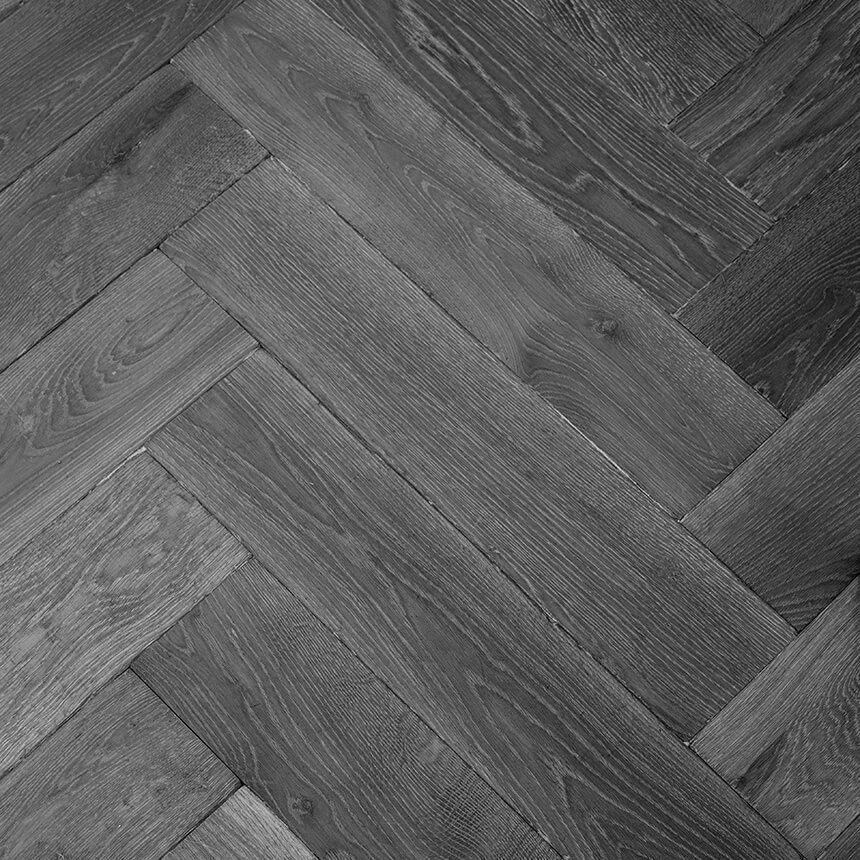
A dark wood floor, especially one with a matte or satin finish like this, can be a bit of a double-edged sword. On one hand, the dark color is excellent at hiding dirt and stains. However, it’s notorious for showing every speck of dust, light-colored pet hair, and footprints. If your home is prone to dust or you have a golden retriever, you may find yourself sweeping or vacuuming more often than you’d like. Regular use of a microfiber dust mop can be a lifesaver for daily touch-ups between deeper cleans.
18. Embrace Classic Elegance with Dark Gray Marble Herringbone Tile
When working with a dark, patterned tile like this gorgeous dark gray marble herringbone, lighting is your most important tool. Without adequate light, the beautiful veining and intricate pattern will be lost, and the floor will just look like a dark, flat surface. Be sure to incorporate multiple layers of light: bright overhead ambient light, task lighting (like vanity sconces), and maybe even accent lighting. A dimmer switch is essential, allowing you to adjust the intensity and mood, from bright and functional to soft and dramatic, highlighting the floor’s natural beauty.
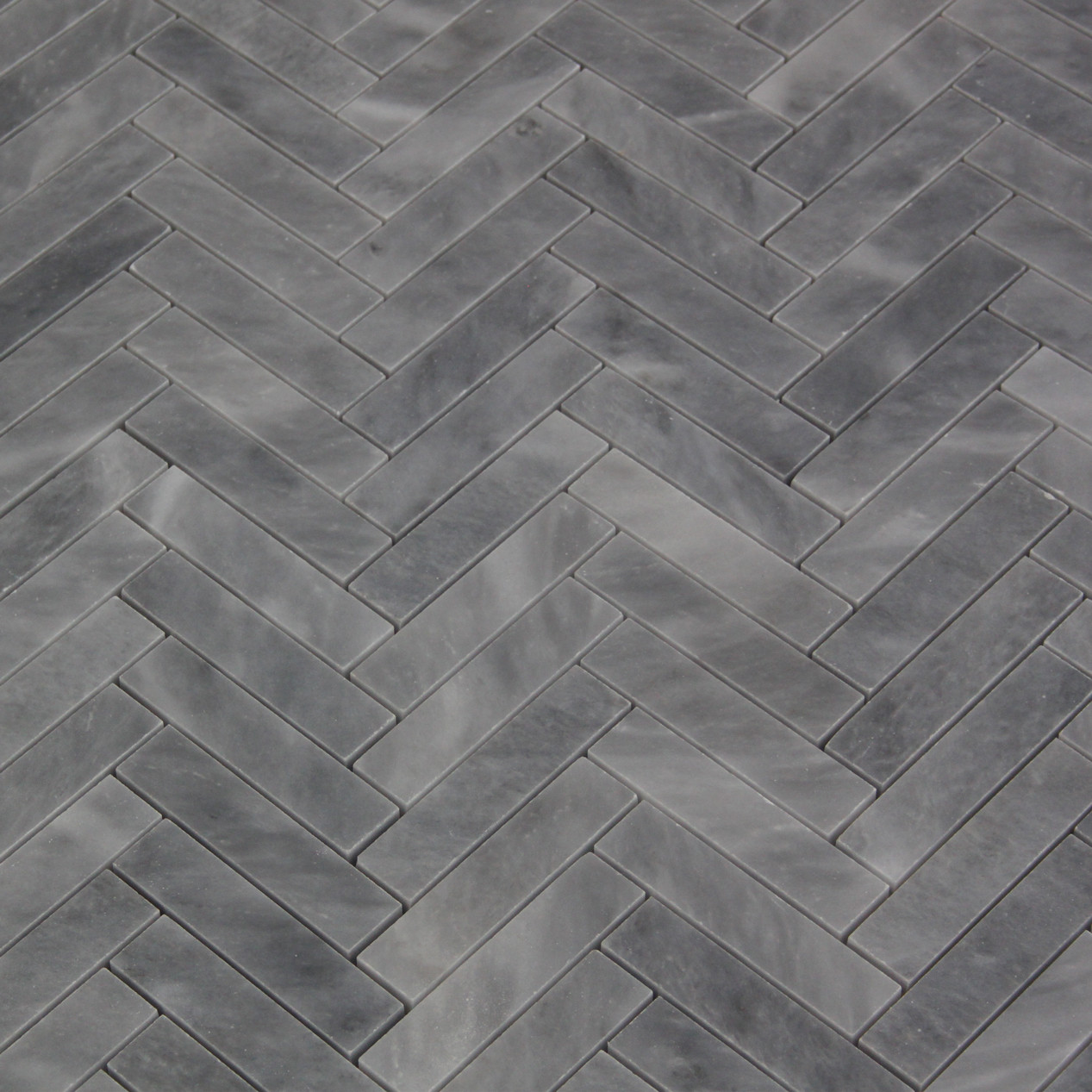
This look is part of the “dark academia” and “moody interiors” trends that continue to gain momentum. People are moving away from the all-white-everything aesthetic of the past decade and embracing deeper, richer tones that create a sense of history and coziness. A floor like this feels substantial and timeless, like it could have been in a Parisian apartment or a historic hotel for a century. It’s a choice that leans into classic patterns and natural materials, suggesting a desire for longevity over fleeting trends. It feels both current and classic, which is why it has such appeal.
19. A Timeless Shower with Gray Subway Tile and a White Mosaic Floor
The combination of classic 3×6 inch subway tiles on the walls and small, 1-inch mosaic tiles on the floor is a masterclass in playing with scale, and it works in almost any size shower. In a small stall shower (e.g., 3’x3′), the larger wall tiles create a less busy look, making the space feel bigger, while the small floor tiles provide necessary grip and can easily slope towards the drain. In a large walk-in shower, the same combination feels balanced and intentional. The key is the contrast in size between the wall and floor materials.
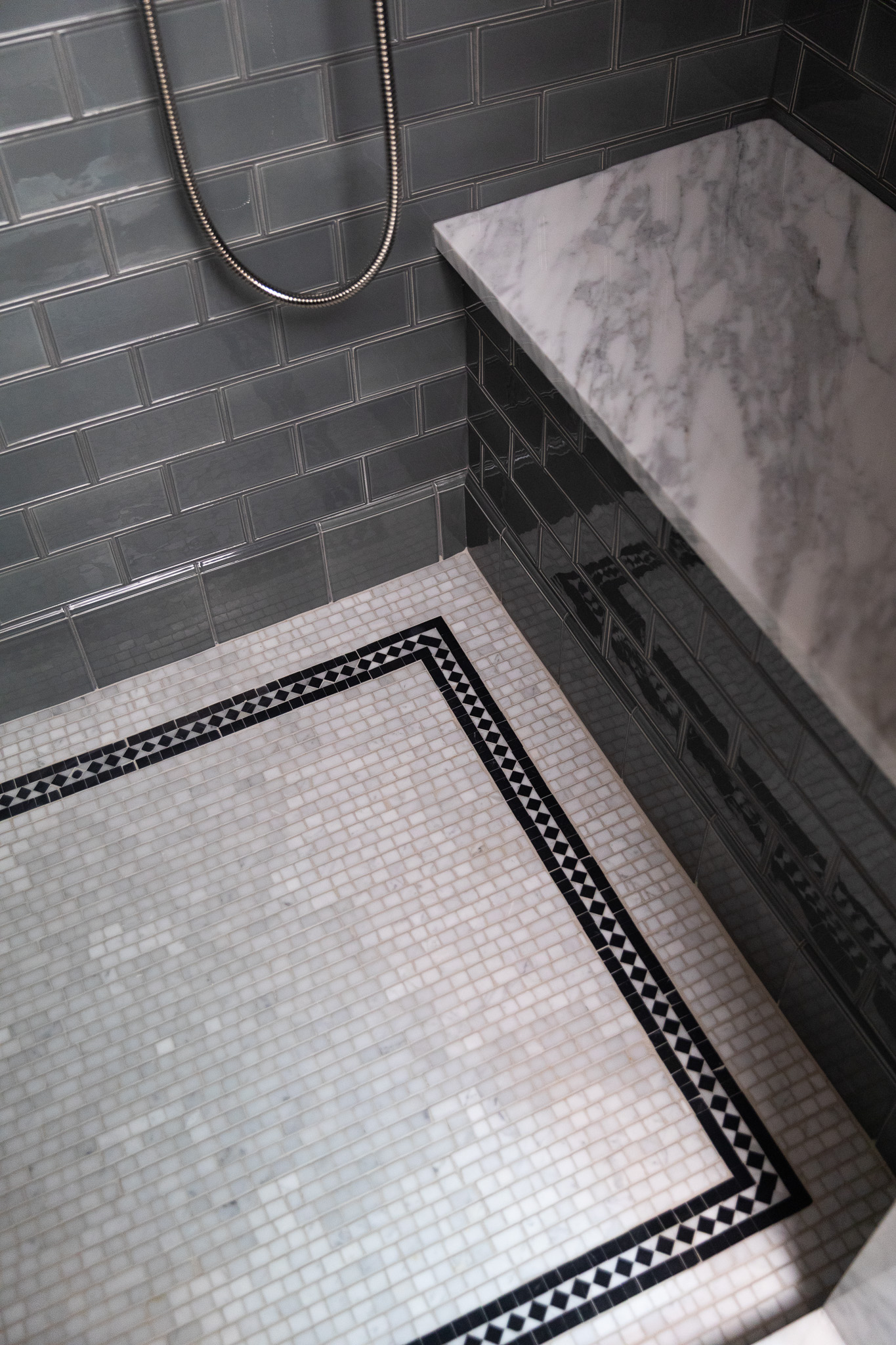
A shower like this oozes classic style, but you don’t need marble to get the look. For the walls, a standard ceramic gray subway tile is incredibly affordable, often coming in at under $3 per square foot. For the floor, instead of a marble mosaic, look for a simple white porcelain mosaic, which will give you the same small-scale texture and anti-slip properties for a fraction of the cost. The black and white diamond border can be recreated with basic square mosaic tiles. With savvy shopping, you can achieve this entire look for under $500 in materials.
20. Make a Statement with Glossy Black Floor Tiles and Red Accents
Glossy black floors are the definition of high drama, but you need to be honest with yourself about your tolerance for cleaning. This is the highest-maintenance floor imaginable. The high-gloss, dark surface will show every single drop of water, every crumb, every speck of dust, and every footprint. To keep it looking like this, you will need to clean it daily—no exaggeration. It’s a stunning choice for a rarely used space or for someone who truly loves to clean, but for a busy family kitchen, it can quickly become a source of constant frustration.
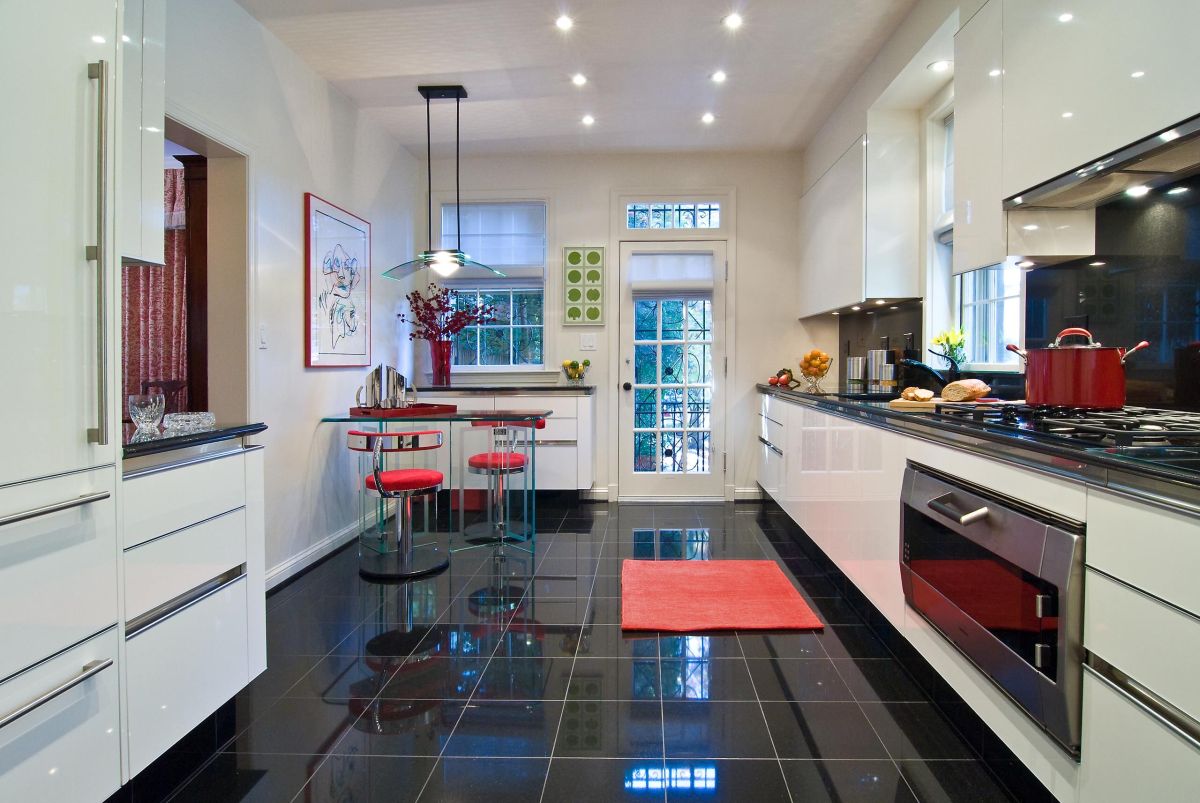
This kitchen’s bold personality comes from a confident and simple formula: 80% monochrome + 20% primary color pop. The glossy black floors, crisp white cabinets, and black countertops create a powerful black-and-white canvas. This high-contrast neutrality is the perfect stage for the injection of a single, vibrant accent color. The 20% of fire-engine red, seen in the bar stools, rug, and accessories, feels intentional and exciting. You could swap the red for a bright yellow or a vibrant cobalt blue for a completely different but equally successful result.
21. Combine Dark Charcoal Wood Floors with a Gray Marble Waterfall Island
This space feels so sophisticated because it masterfully layers multiple shades of gray and black, a technique called tonal layering. The floor is a dark charcoal gray wood, the cabinets are a soft, light gray, the bar stools are matte black, and the track lighting is also black. The marble island ties it all together, featuring veins of both light and dark gray. This creates a look that is cohesive and calming, yet full of depth and subtle complexity. It’s monochromatic without ever being boring.
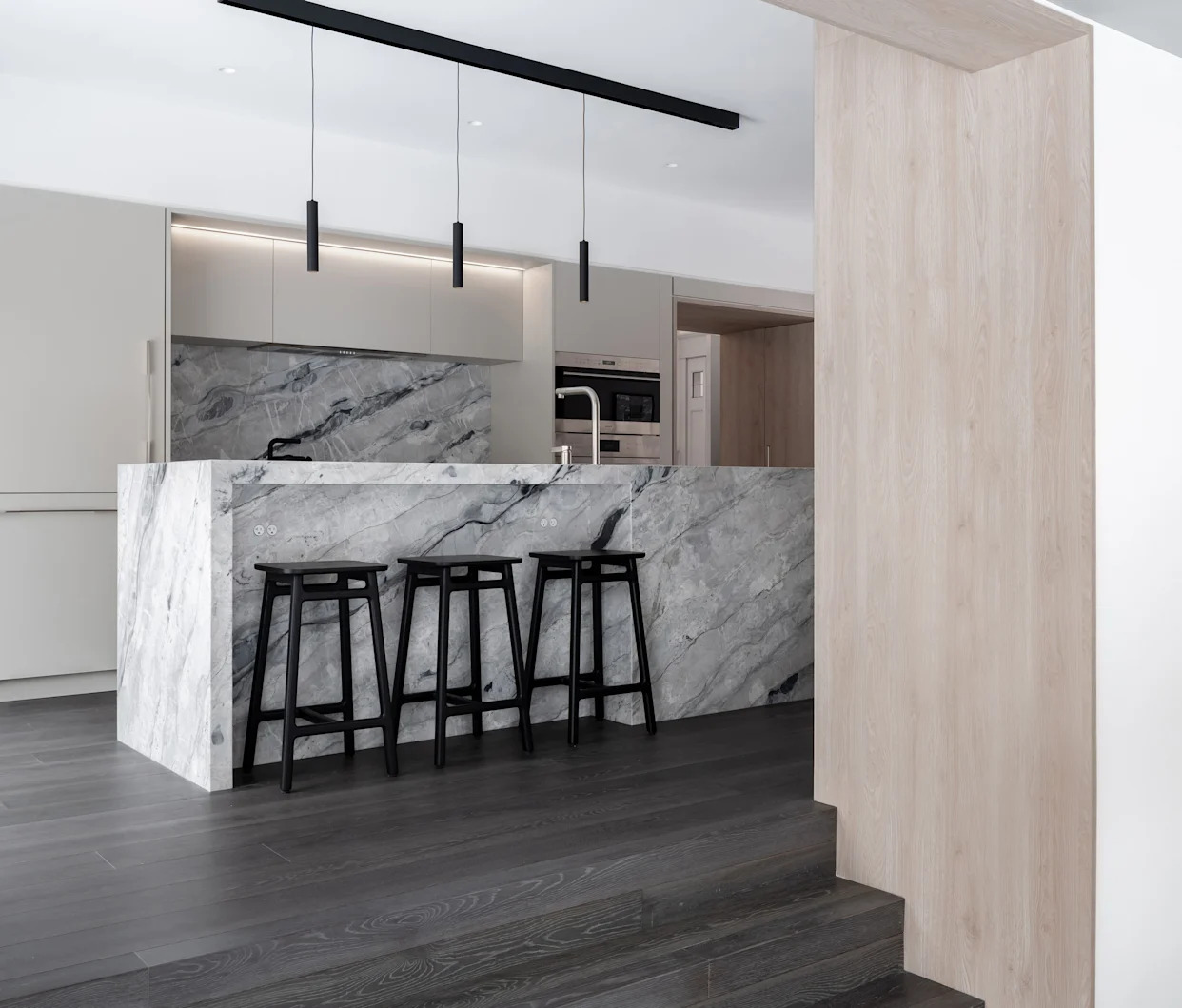
The waterfall edge on the kitchen island is the single design choice that defines this entire space. By wrapping the light gray marble from the countertop down the side of the island to the dark wood floor, it creates a stunning, continuous flow of material. It’s an expensive detail, as it requires more slab material and expert fabrication, but it transforms the island from a simple piece of furniture into a sculptural, architectural element. It’s the undisputed star of the room, and what makes the kitchen feel truly high-end.
22. Achieve Calm with Light Gray Floors and Soft, Neutral Tones
Planning a serene, neutral bedroom like this one? Run through this checklist before you start buying paint and furniture.
- Assess Your Light: Neutral schemes are heavily dependent on natural light. Does your room get warm southern light or cool northern light? This will affect how your gray floors and taupe walls look. Test large paint swatches.
- Measure for Texture: This look relies on layering. Do you have enough space for a bed, side tables, and other pieces like the rattan chest without it feeling cramped? A cluttered neutral room loses its calming effect.
- Set a “Warmth” Budget: A common mistake is going too cool and sterile. Earmark part of your budget specifically for “warming” elements like the woven rattan furniture, brass lamps, and soft textiles to ensure the room feels inviting.
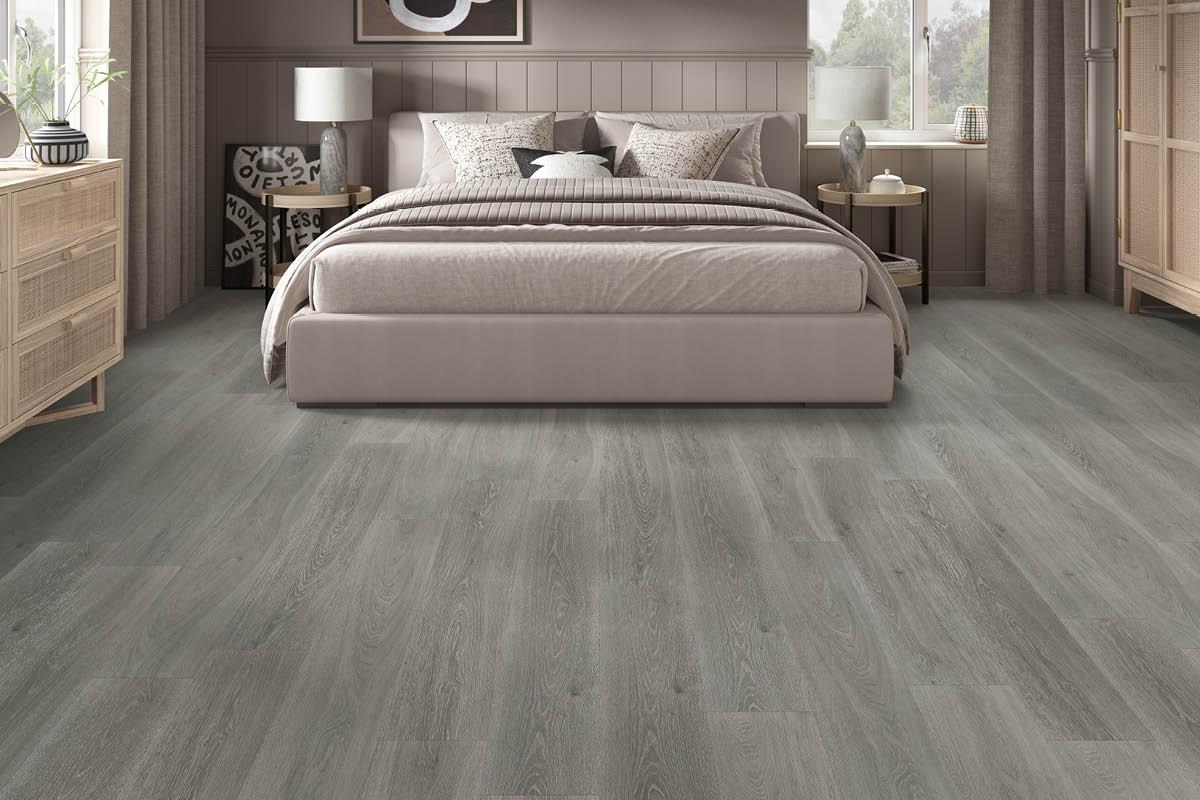
When designing a room with a limited, neutral color palette, texture becomes your most important tool. Notice how many different textures are at play here: the smooth, matte finish of the light gray wood-look floor, the soft weave of the upholstered bed frame, the vertical lines of the wall paneling, the natural grain of the rattan furniture, and the plushness of the bedding. Without these varied textures, a room with this much gray, beige, and taupe could feel flat and boring. The texture is what makes it feel rich and layered.
23. Add Movement with a Light Gray Chevron Wood Floor
The chevron floor pattern is what gives this bedroom its sense of quiet energy. The repeating “V” shapes create diagonal lines that lead the eye through the space, making it feel more dynamic and expansive. Because the wood itself is a soft, light gray with minimal color variation, the pattern adds sophisticated movement without being overwhelming. This is contrasted beautifully with the rough, horizontal lines of the white brick wall and the soft, tufted texture of the leather bed, creating a space that is rich in visual interest.
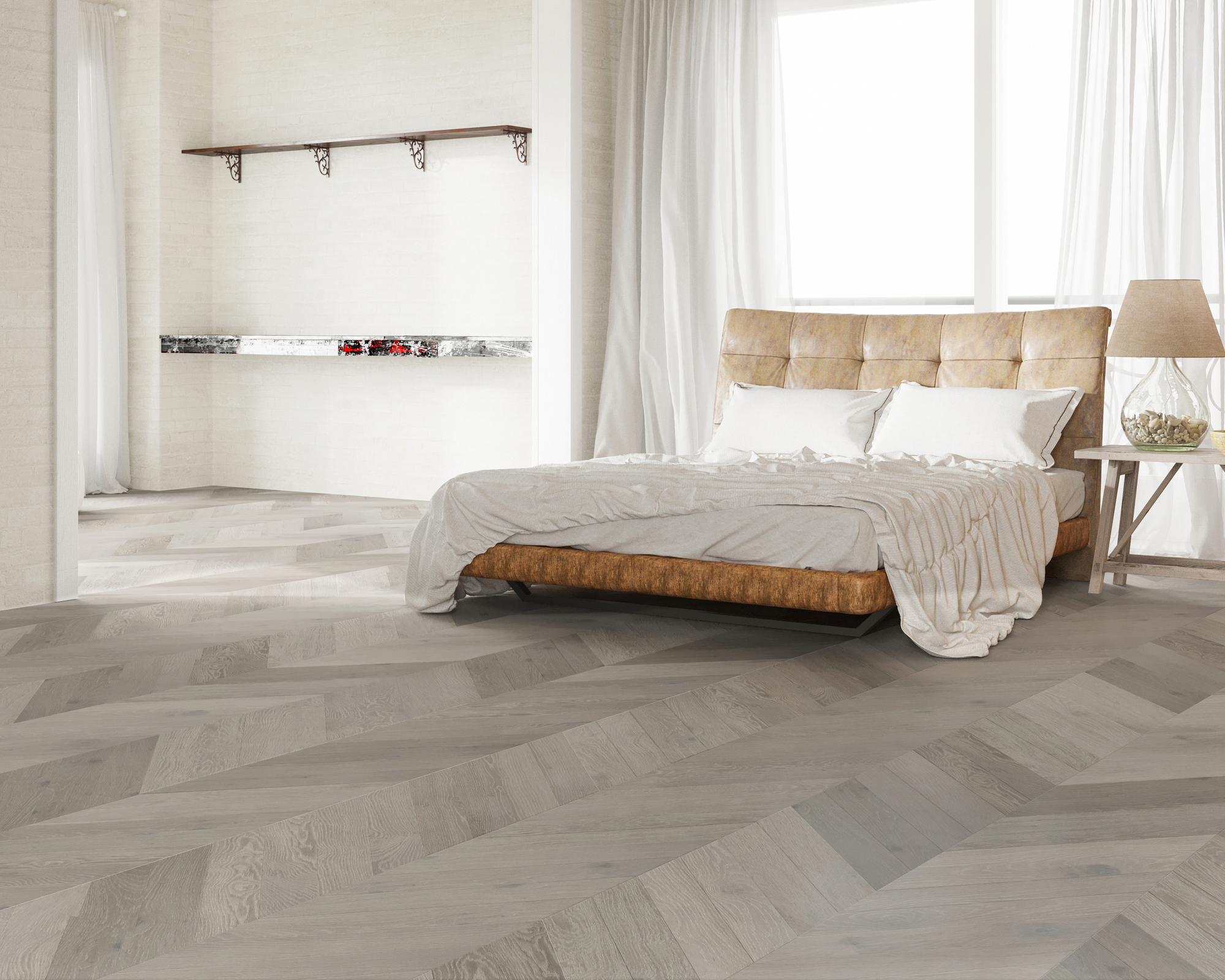
A solid wood chevron floor can be prohibitively expensive. To get this incredible look for less, explore Luxury Vinyl Plank (LVP) or laminate options. Many brands now offer collections specifically designed to be laid in chevron or herringbone patterns, with planks that have the correct end-cuts. This can reduce the cost of the material by 50-70% and also lowers installation costs, as LVP is often a floating floor that clicks together, avoiding the need for expensive adhesives and labor. You get the high-impact pattern without the high-end price tag.
24. Style a Light Gray Herringbone Floor with Modern, Neutral Decor
This room proves that an elegant, patterned floor can still feel relaxed and modern. The formula is: 40% statement floor + 30% soft upholstery + 20% hard surfaces + 10% pattern play. The light gray herringbone floor is the clear star. The large white sofa provides a soft, comfortable counterpoint. The marble coffee tables and wooden slat wall bring in sleek, hard surfaces. Finally, the houndstooth ottoman introduces a second, smaller-scale pattern that adds a layer of visual wit without competing with the floor. It’s a sophisticated, balanced mix.
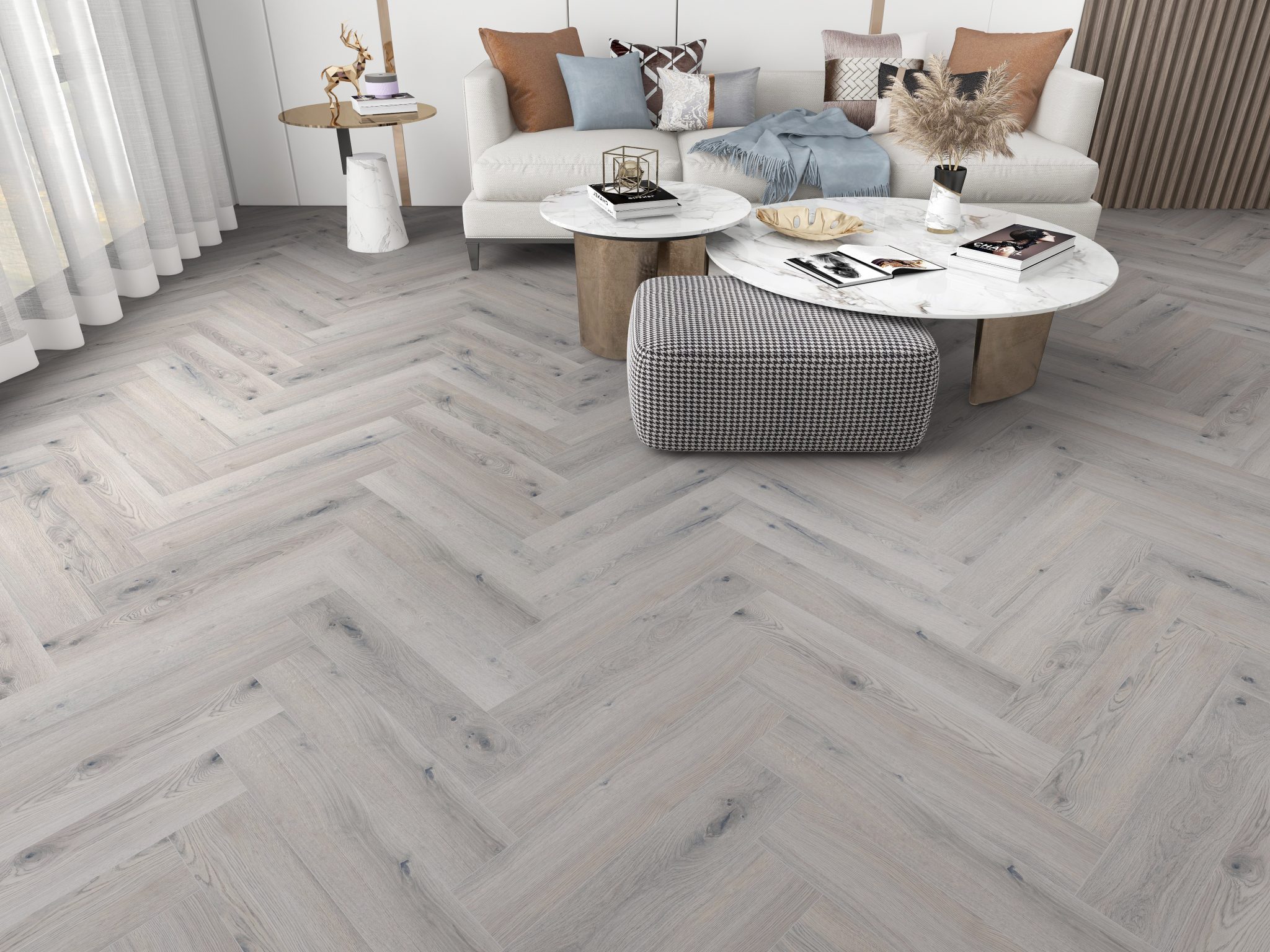
A big, beautiful white sofa is a staple of high-end design for a reason: it looks fantastic. However, let’s be honest about what it takes to live with one. If you have kids, pets, or enjoy red wine on the couch, a pure white sofa can be a source of constant low-grade anxiety. Look for fabrics marketed as “performance velvets” or “performance weaves,” which are treated to repel stains. Alternatively, invest in slipcovered furniture that can be professionally cleaned or even machine-washed. Otherwise, you might be spending more time worrying about stains than enjoying your beautiful room.
25. Layer Shades of Gray in a Bedroom with White-Washed Floors
To successfully layer multiple gray tones without the room feeling flat, you need to vary not just the shade but also the texture. Here, the light, white-washed floor has a visible wood grain. The main wall has a subtle, mottled finish, while the accent wall behind the bed introduces a strong, vertical line texture. The bedding adds even more texture with its houndstooth pattern and woven fabric. This combination of different shades *and* different textures is what creates a rich, sophisticated, and dynamic monochromatic space.
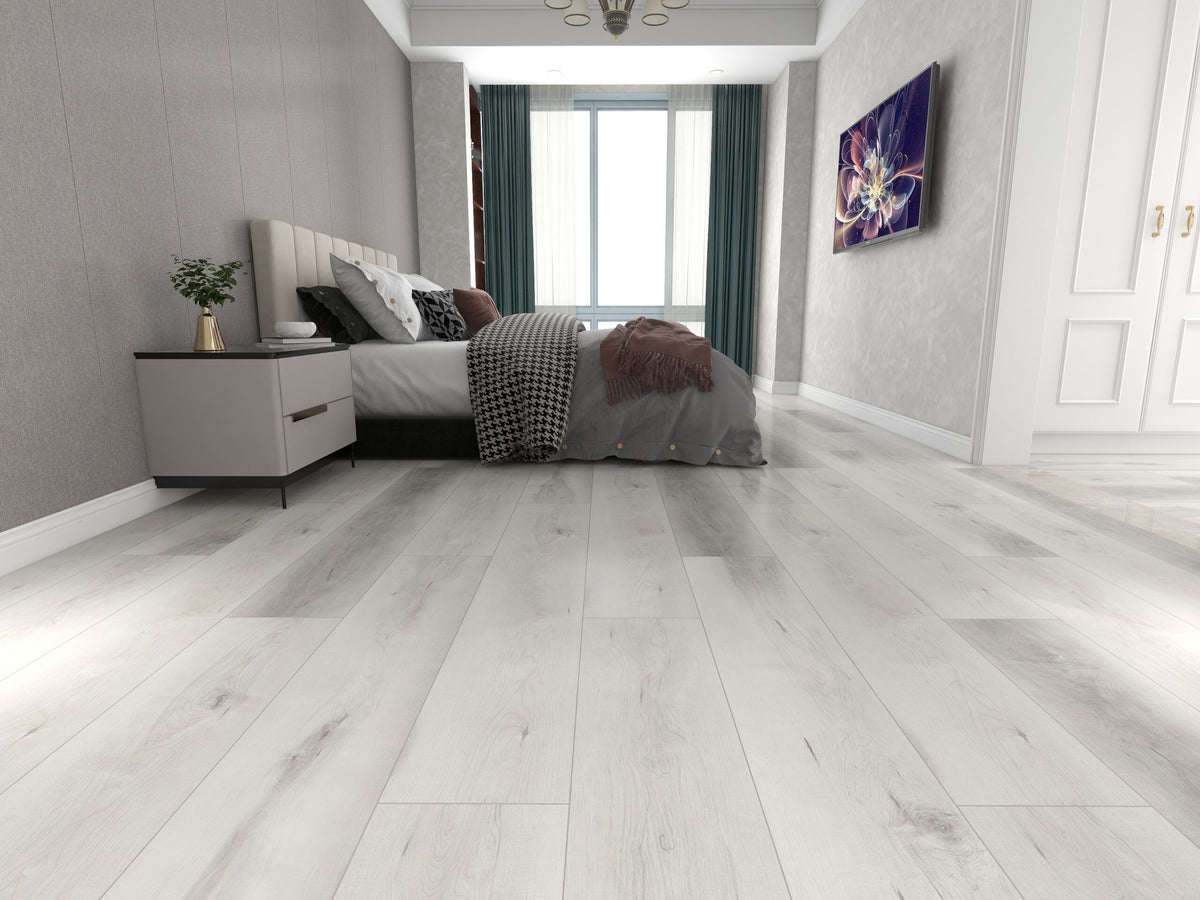
The use of a strong vertical pattern on the wall behind the bed is a clever trick for rooms with standard-height ceilings (8-9 feet). The distinct vertical lines draw the eye upward, creating the illusion of more height and making the entire room feel taller and more spacious than it actually is. This technique is particularly effective in bedrooms, where the bed can often be a large, horizontal element that dominates the room. The verticality of the wall provides a much-needed counter-balance.
26. Embrace Minimalism with a Light Gray Concrete Floor
Polished concrete floors are at the heart of the industrial and minimalist design movements that are trending heavily. As people look to simplify their homes and reduce clutter, concrete offers a clean, seamless, and unadorned surface that acts as a perfect neutral background for a minimalist aesthetic. It feels honest and architectural. Paired, as it is here, with handleless white cabinetry and simple dark furniture, it creates a look that is calm, intentional, and completely free of unnecessary ornamentation. Compare its sleekness to the textured tile in Idea #11.
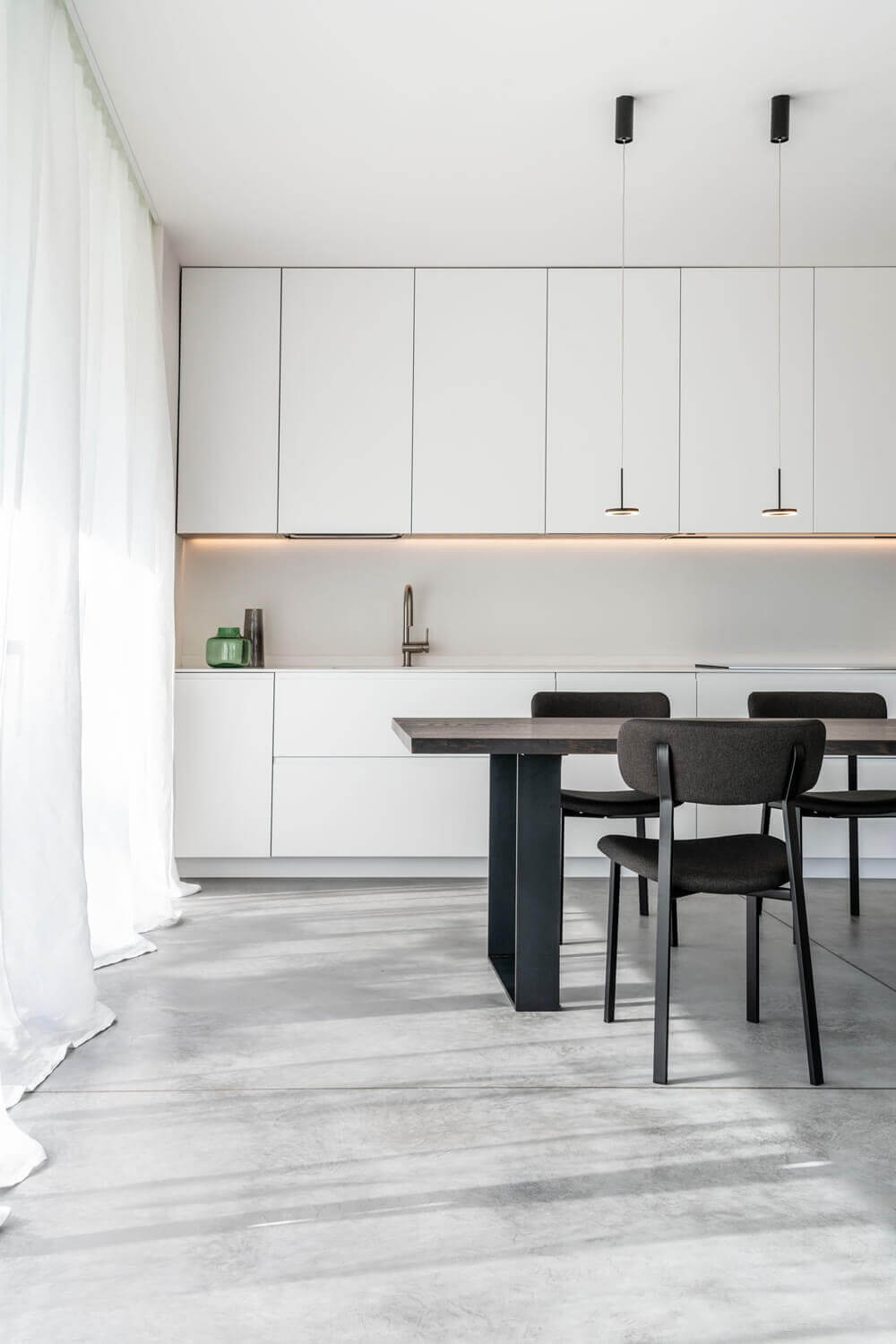
While concrete floors are incredibly durable, they are not zero-maintenance. A polished concrete floor needs to be properly sealed to protect it from stains and moisture—especially in a kitchen. The sealer will need to be reapplied every few years. Also, concrete is, of course, very hard. Dropped glasses will shatter instantly. It can also be tough on your joints if you’re standing for long periods, which is why pairing it with area rugs in standing zones (like in front of the sink) is often a good idea for comfort.
27. Build a Serene Bedroom on Light Gray Wood-Look Floors
Creating this calm, natural bedroom is very achievable on a budget. The key is focusing on affordable materials and decor that deliver on texture and tone.
- Flooring: Light gray wood-look laminate or LVP flooring: $300 – $600 (for a 12×12 room)
- Area Rug: Plush beige 8×10 area rug: $200 – $400
- DIY Headboard: Light wood slats (e.g., pine 1x2s) attached to the wall: $100 – $150
- Bedding & Decor: Soft green and white duvet set, botanical prints (from Etsy), and a large plant in a basket: $200 – $350
- Used Furniture: Simple wooden wardrobe from Facebook Marketplace or a thrift store: $50 – $150
- TOTAL: $850 – $1,650
- Budget alternative: The entire look is already budget-friendly, but you could save more by thrifting the frames for the art and finding a plant cutting from a friend.
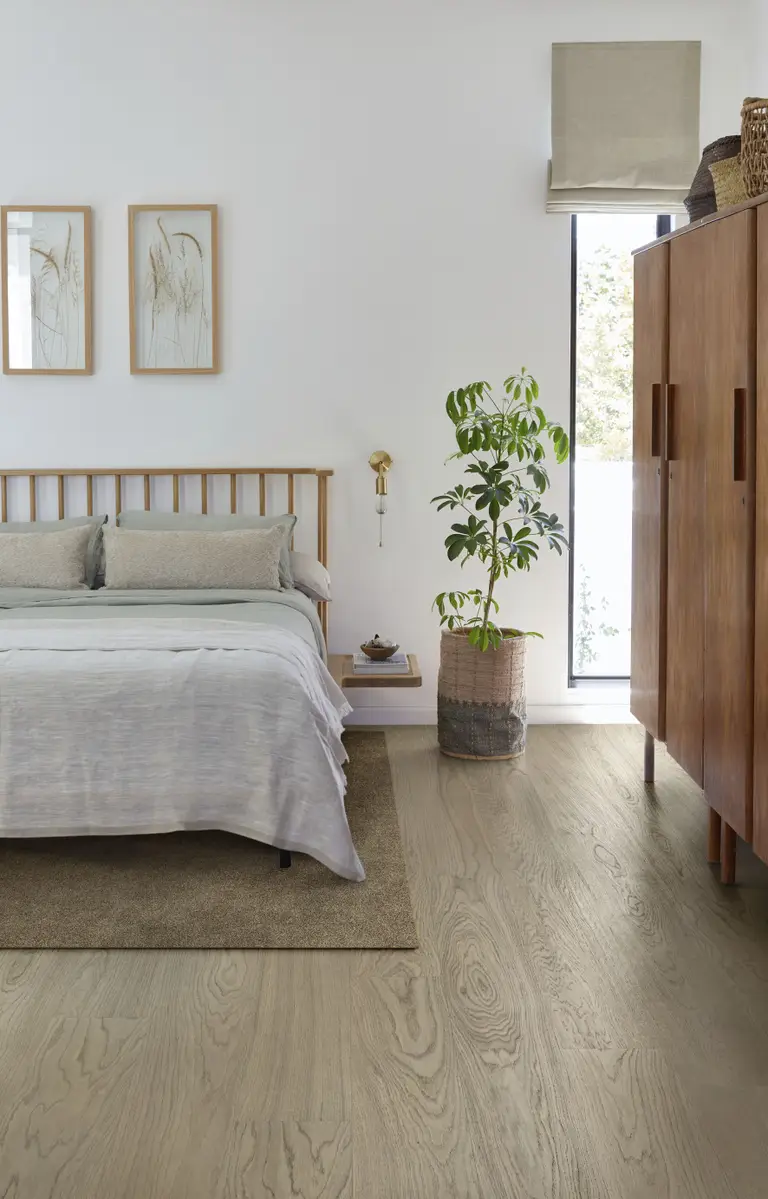
This bedroom feels so relaxing because it follows a core principle of biophilic design: connecting with nature. The design achieves this through both direct and indirect means. The tall leafy plant is a direct connection to nature. The indirect connections are just as important: the light wood of the slatted headboard and wardrobe, the natural texture of the woven basket and beige rug, the soft green of the bedding that evokes foliage, and the botanical prints on the wall. All these elements work together on a subconscious level to create a space that feels calm and restorative.
Your Foundation Is Set. Now, What’s the Story?
Gray flooring isn’t just a passing trend; it’s a versatile canvas waiting for your personal touch. Whether you’re drawn to warm woods, sleek concrete, or elegant marble, the perfect gray floor is the first step in telling your home’s unique story.
Feeling inspired? Head over to Pinterest and start a board for your favorite looks from this article. The perfect room is just a few pins away!