27 Jaw-Dropping Modern Driveway Ideas for 2026 That Will Elevate Your Property

Let’s be honest, you’ve probably spent hours scrolling through “Modern Driveway Ideas 2026” on Pinterest, wondering how to get that perfect curb appeal. It’s the first thing people see, and getting it right can feel like a huge challenge. But what if the secret wasn’t just about picking the right material, but understanding how it connects to your home’s story? We’ve filtered through hundreds of designs to bring you the 27 that really matter this year. Inside, you’ll find everything from sustainable gravel paths and sleek geometric pavers to illuminated entrances perfect for large properties. And stay until the end — we break down the most common mistakes that can ruin these looks. 📌 Save this to Pinterest for later — you’ll want to revisit these ideas.
1. Light Concrete Driveway with a Dark Modern House
What Makes It Work
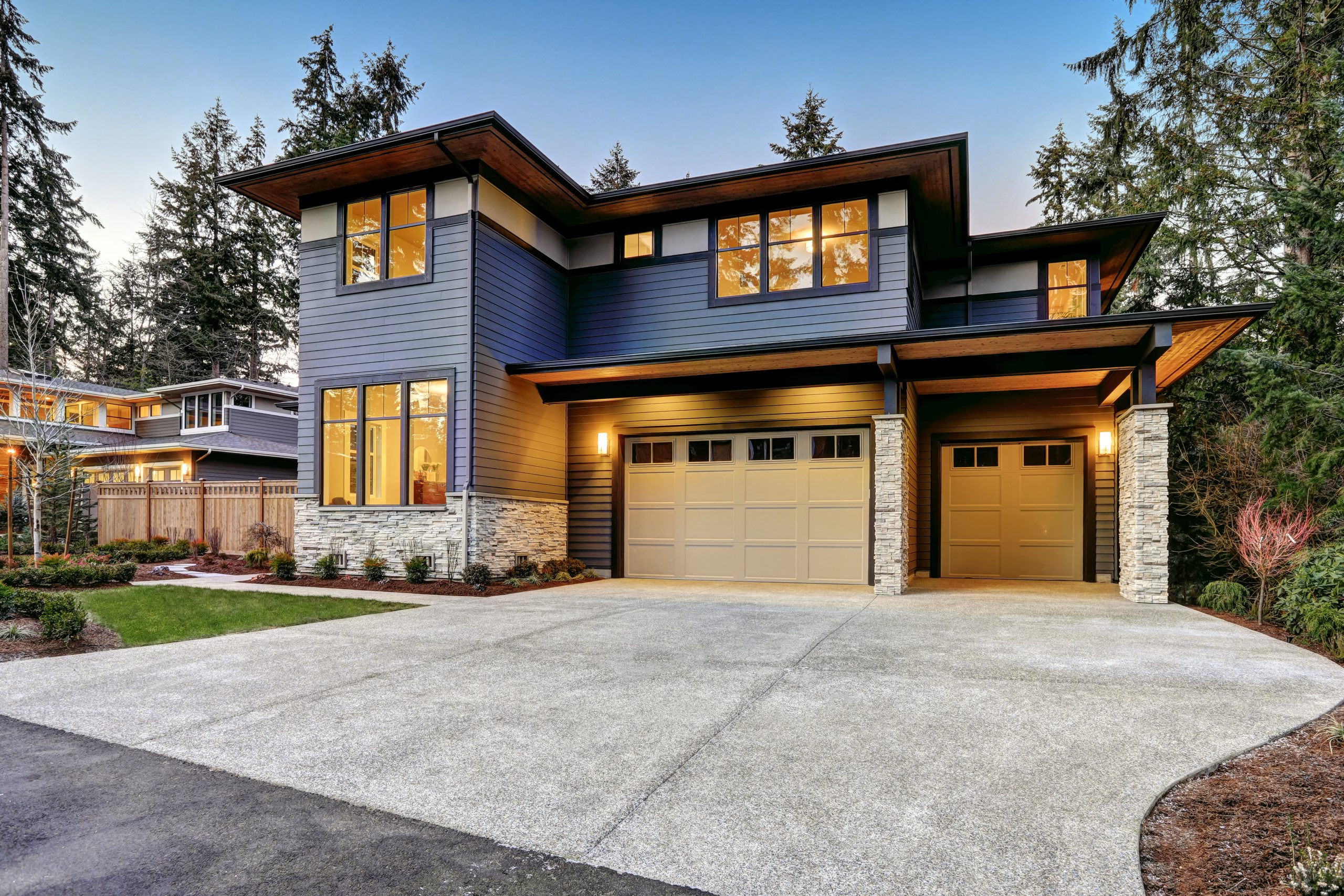
The magic here is in the high contrast. The light, almost white, aggregate concrete driveway acts like a bright welcome mat, drawing your eye toward the home. It pops against the house’s moody, dark blue-gray siding. This isn’t an accident; it’s a deliberate choice to create visual tension and highlight the architecture. The natural wood tones on the soffits and the warmth from the interior lights provide just enough softness to keep the whole look from feeling too cold or stark. It’s a masterclass in balancing bold modernism with natural warmth.
Maintenance Reality
A light-colored concrete driveway is stunning but requires commitment. It will show oil drips, tire marks, and rust stains much more than a darker surface. Plan on pressure washing it at least twice a year to keep it looking fresh. Sealing the concrete every 2-3 years (costing around $1-$2 per square foot) is non-negotiable; it’s your best defense against stains and cracking from freeze-thaw cycles. The subtle aggregate finish helps hide minor dirt, but there’s no escaping the fact that this is a high-visibility, high-maintenance choice.
2. Geometric Grey Pavers with Vibrant Grass Strips
Designer Tip
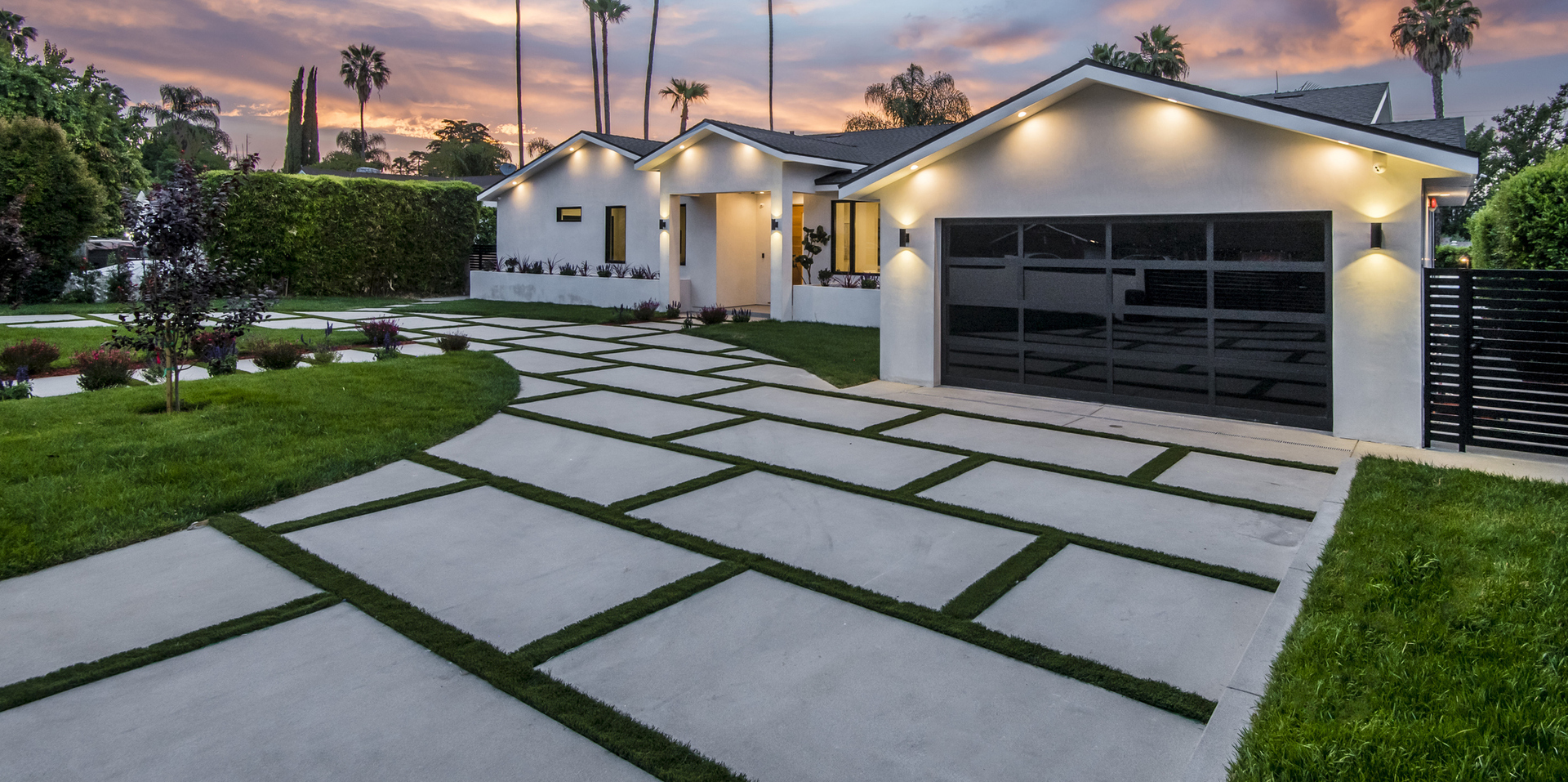
For a driveway like this to look truly sharp, the ratio of paver to grass is critical. Aim for a grass strip width that is no more than 20% of your paver’s width. For example, if you use 24-inch wide pavers, your grass strips should be around 4 to 5 inches wide. Any wider, and the grass can look unruly and start to feel more like a lawn with some concrete in it, rather than a structured, geometric driveway. This tight ratio keeps the design looking intentional and graphic, emphasizing the clean lines.
Real Talk
While this look is undeniably cool, be honest with yourself about the upkeep. Those perfect strips of green are often artificial turf for a reason. Real grass requires regular mowing, edging, and watering, which can be tedious to do in these narrow channels. Weeds will be a constant battle. If you choose artificial grass, invest in a high-quality product with good drainage. Cheap turf will fade, fray, and look plasticky within a few years, completely undermining the sleek, high-end aesthetic you were going for.
3. Pebble Mosaic Driveway with a Geometric Pattern
The One Thing
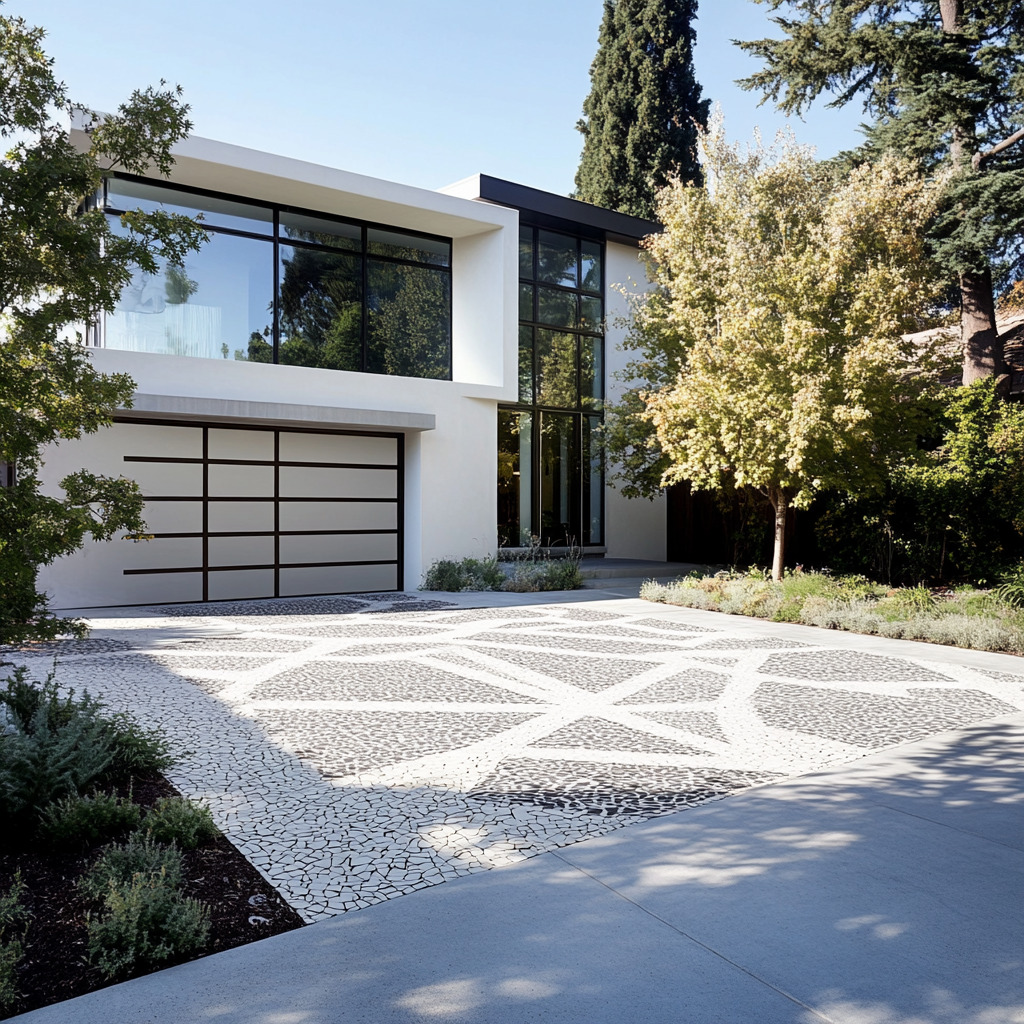
The pebble mosaic is, without a doubt, the star of this show. Remove it, and you have a nice, modern white house with a plain concrete driveway. It’s a functional but forgettable entrance. The intricate geometric pattern, created with contrasting light and dark pebbles, transforms the driveway from a mere utility space into a significant piece of the home’s design. It’s texture, art, and function all rolled into one, proving that the surface under your tires can be as thoughtfully designed as the house itself.
Budget Breakdown
- Pebble Mosaic Mats: $15 – $30 per sq. ft.
- Concrete Border & Foundation: $8 – $12 per sq. ft.
- Labor for Installation: $10 – $25 per sq. ft. (highly dependent on pattern complexity)
- Sealer & Adhesives: $1 – $2 per sq. ft.
- TOTAL: $34 – $69 per sq. ft.
- Budget alternative: For a similar but more affordable look, use stencils and concrete stain on a standard poured concrete driveway to create a faux mosaic pattern. This can cut costs by 60-70%.
4. Interlocking Pavers with Light Stone House Facade
Style Math
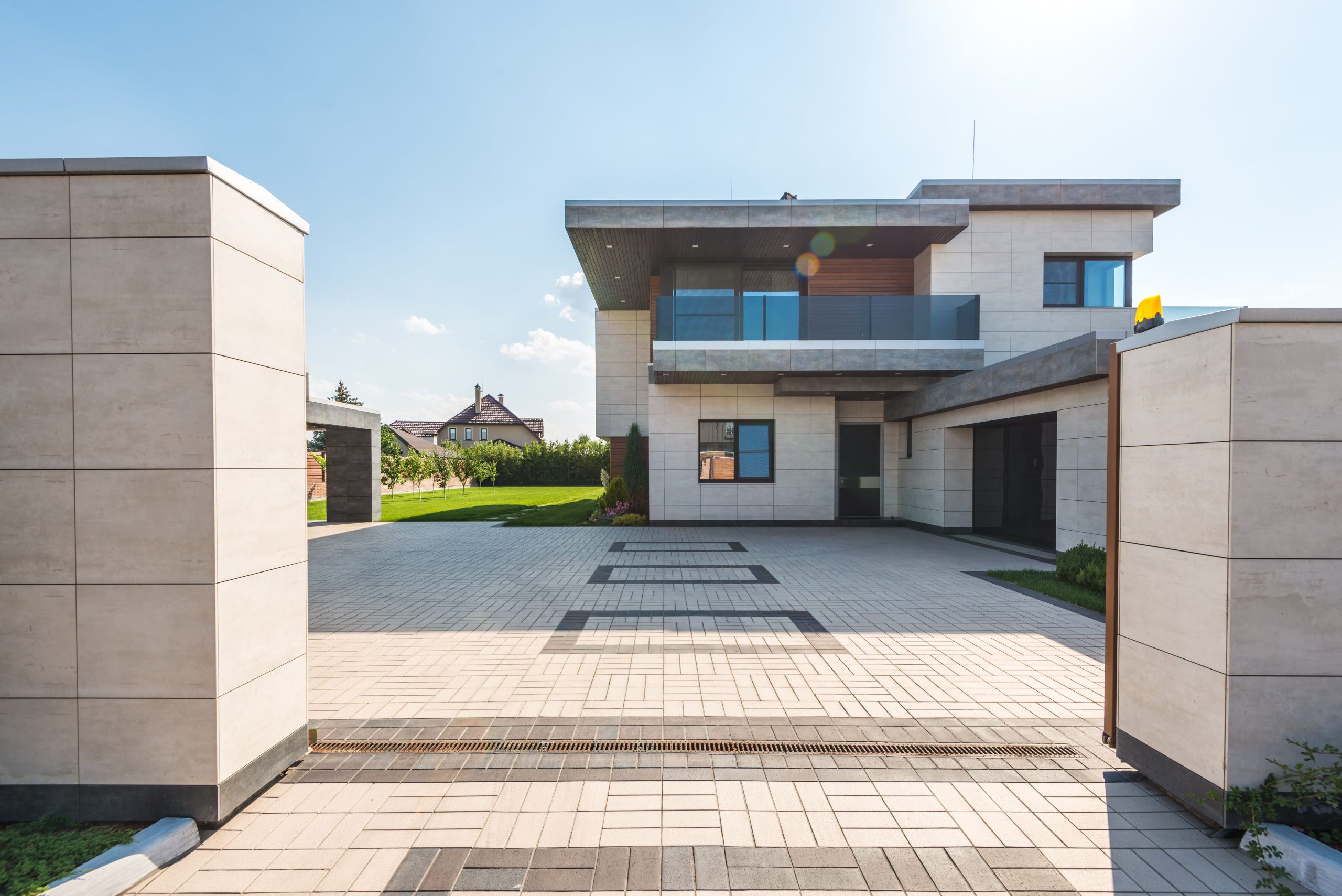
This composition is a beautiful exercise in quiet luxury. The formula is approximately: 60% light neutral + 30% dark neutral + 10% natural texture. The light beige tones of the stone paneling and the main pavers create a calm, expansive base. The dark grey pavers, window frames, and roofline provide the structure and graphic punch. Finally, the warm wood on the balcony and gate brings in a touch of organic texture, keeping the palette from feeling one-note. You could easily swap the wood for black metal for a more industrial feel, or change the dark pavers to a deep brown to lean more earthy.
Scale Guide
This look is best suited for large properties with a driveway of at least 800 square feet. The interlocking paver pattern and the home’s substantial stone paneling have a lot of visual weight. In a smaller space, these elements could feel overwhelming and busy. A minimum frontage of 50-60 feet is ideal to allow the design to breathe and the contrasting paver lines to have a real impact. For smaller driveways, consider a look like Idea #7, which uses a simpler pattern.
5. Sleek Dark Concrete Driveway with Illuminated Pillars
What Makes It Work
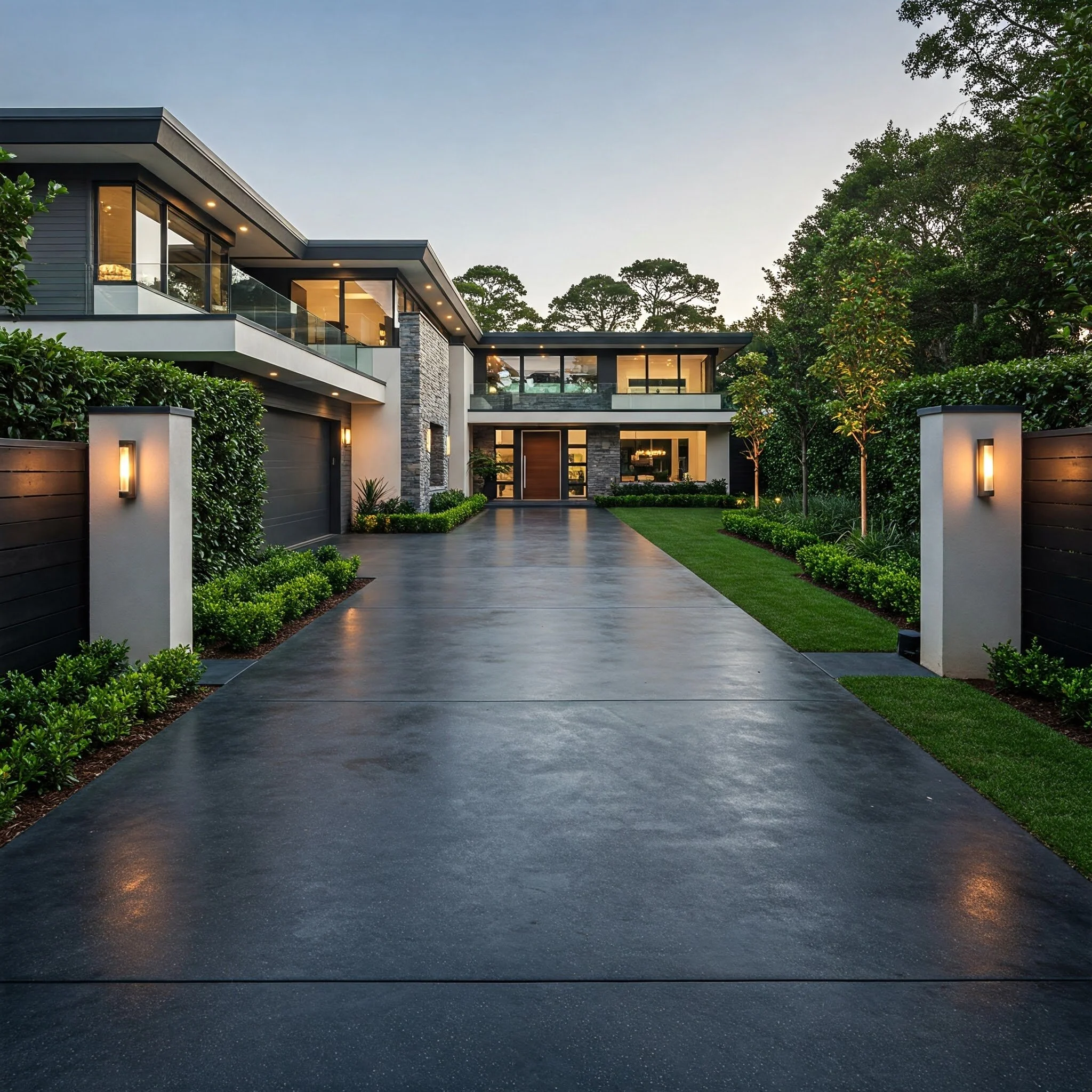
This driveway’s success lies in its bold simplicity and clean lines. The unbroken expanse of dark grey concrete creates a powerful, monolithic look that feels both modern and timeless. Instead of busy patterns, it relies on the subtle grid of expansion joints for visual interest. The framing is key: crisp, manicured green hedges on one side and modern concrete light pillars on the other create a formal, gallery-like entrance that funnels your view directly to the architectural home. Contrast this with the bright airiness of Idea #1.
Trending Context
This design taps directly into the ‘Dark Mode’ trend we’re seeing in both digital interfaces and real-world architecture. A dark, moody driveway feels sophisticated, confident, and a bit dramatic. As homeowners seek to create a cohesive, statement-making aesthetic from the curb to the back fence, the driveway is no longer an afterthought. It’s the opening scene, and this dark, cinematic approach is gaining major traction on Pinterest for its ability to make landscaping and architectural lighting pop.
6. Light Stone Tile Driveway With Contrasting Borders
Designer Tip
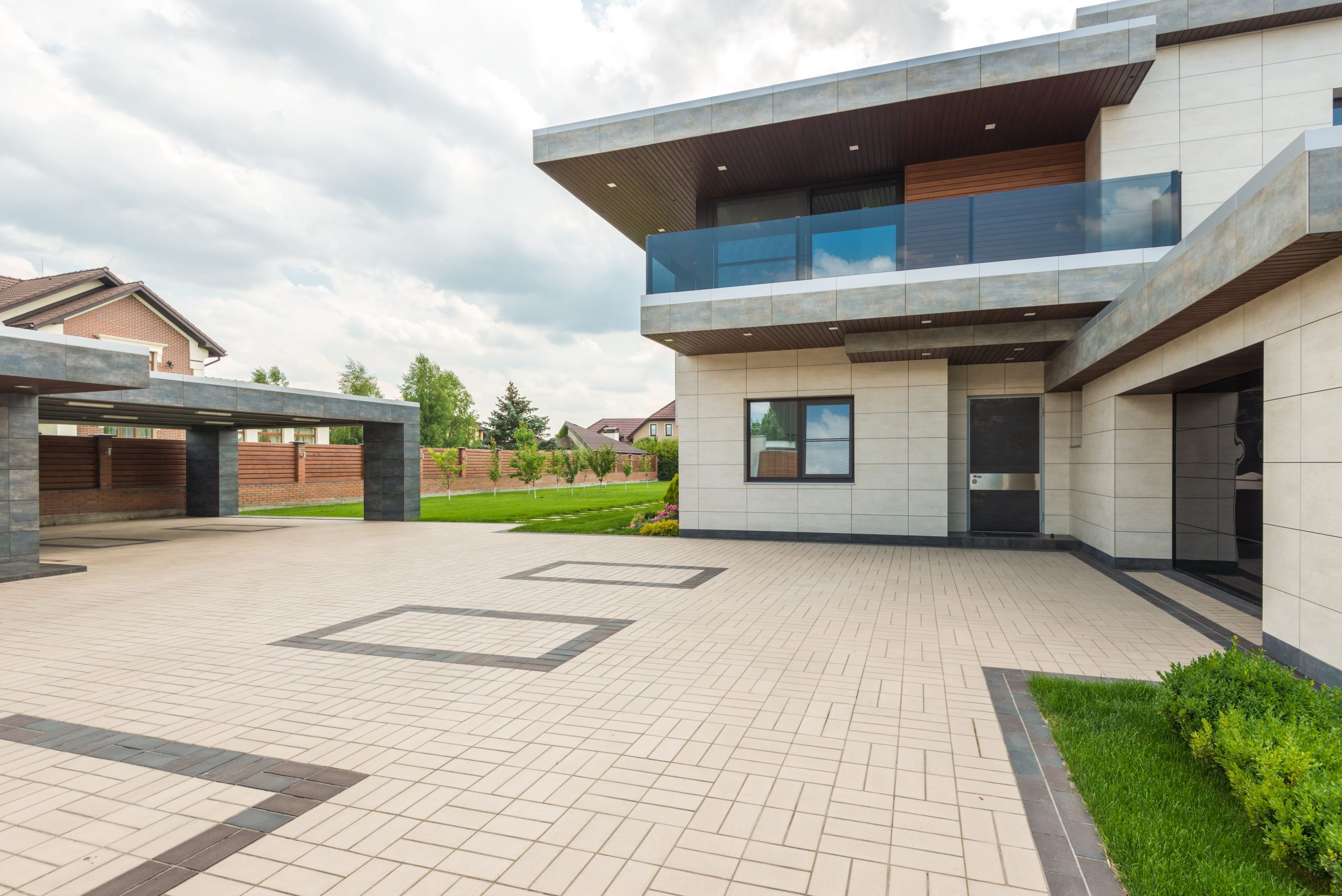
When using large-format tiles like these, the choice of grout and the size of the joint are as important as the tile itself. For a sleek, modern look, use a joint that’s as narrow as possible (typically 1/8 inch) and choose a grout color that closely matches the tile. This minimizes the grid effect and creates a more unified, seamless surface. For the contrasting border tiles, using a slightly darker grout can help to further define the geometric pattern and make those lines really crisp and intentional.
Before You Start Checklist
- Confirm your substrate: Porcelain or stone tiles requires a perfectly level and stable concrete base. You cannot lay them over asphalt or existing cracked concrete.
- Check load ratings: Ensure the tiles you select are rated for vehicular traffic. Patio tiles are not the same and will crack under the weight of a car.
- Plan for water runoff: A solid tile surface needs a carefully planned slope (at least a 1/4 inch per foot) and potentially a channel drain to prevent pooling.
- Order a surplus: Always order 10-15% more tile than you need to account for cuts, mistakes, and any future repairs.
7. Grey Concrete Slabs with White Pebble Dividers
How-To Brief
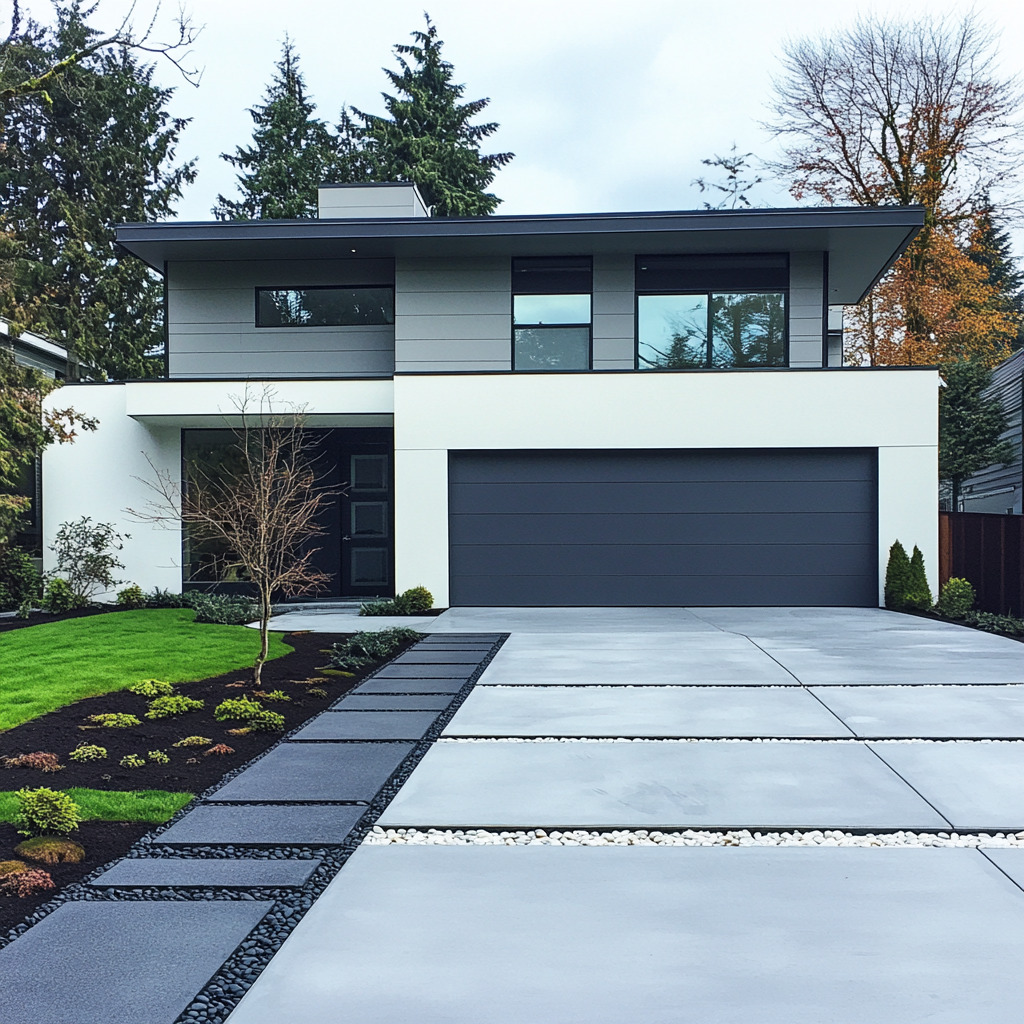
To create those crisp white pebble strips: This element is the key to the whole look. Time: 2-4 hours, Cost: $50-$150.
- After the concrete slabs are poured and cured, deeply clean the channels between them, removing all dirt and debris.
- Install a heavy-duty landscape fabric in the bottom of each channel to prevent weeds from growing through the pebbles.
- Place a rigid plastic or metal edging along the concrete slabs, about half an inch below the top surface. This will contain the pebbles.
- Fill the channels with the white pebbles, ensuring they are level with the edging but slightly below the concrete surface to prevent scattering.
- Gently tamp down the pebbles to create a firm, even surface.
Get This Look For Less
The core concept here—a graphic, multi-material driveway—can be achieved on a much smaller budget. Instead of pouring new oversized concrete slabs, you can work with an existing concrete driveway. Use a concrete saw to cut 4-inch wide channels in a simple grid pattern. Then, fill those channels with inexpensive white or black pebbles, which you can buy for about $5-$10 per bag at a home improvement store. You get the same striking geometric effect for the cost of a saw rental and some bags of stone—likely under $500 total.
8. Grey Driveway with Black Gravel Circular Inlays
The One Thing
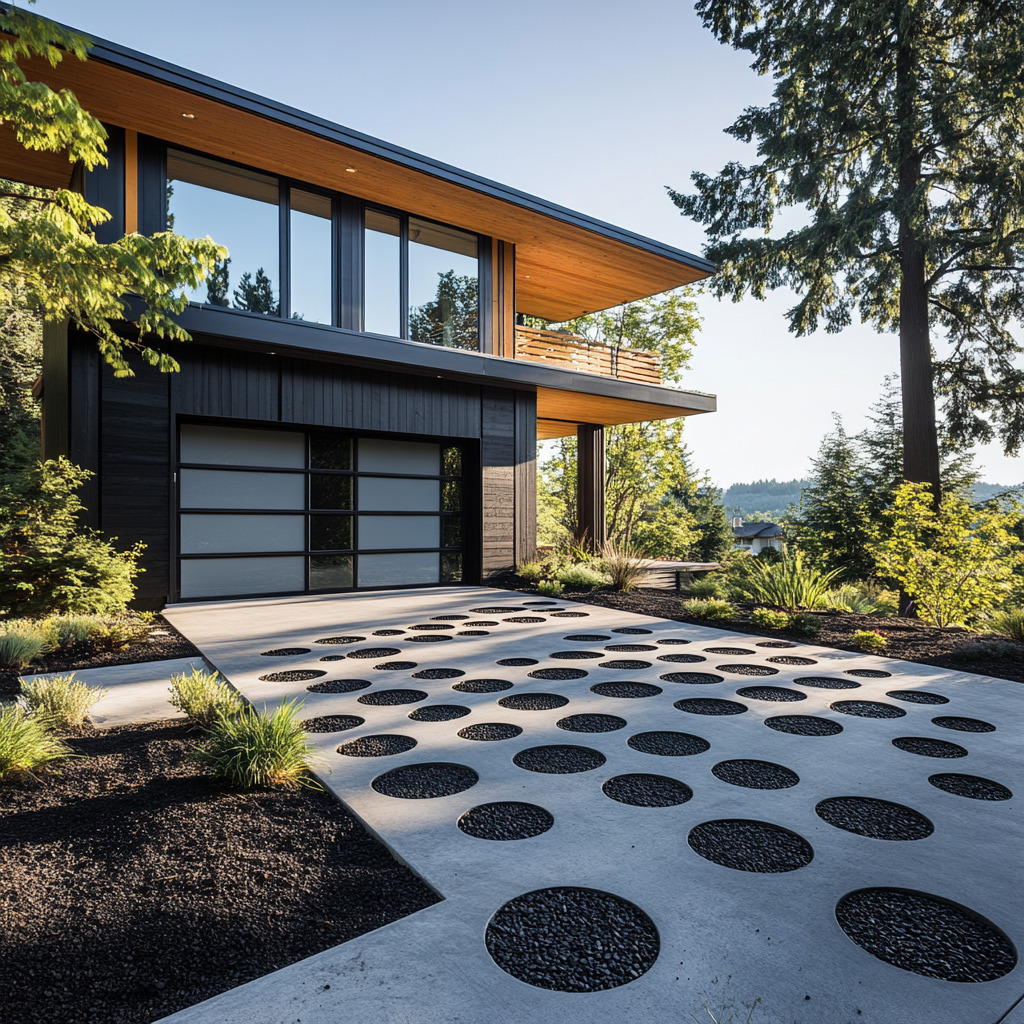
It’s all about the polka dots. The circular cutouts filled with black gravel are the single element that elevates this driveway from ordinary to extraordinary. They introduce a playful, unexpected geometry that contrasts beautifully with the strong, linear architecture of the house. It’s a touch of whimsy and artistry that shows a deep level of design consideration. The driveway isn’t just a path; it’s a patterned landscape element that bridges the gap between the modern house and the natural surroundings.
Real Talk
Those cool gravel circles can become a maintenance headache. Leaves, pine needles, and dirt will inevitably collect in them, and they aren’t easy to clean with a standard leaf blower, which will just scatter the gravel everywhere. You’ll likely need to use a shop vac or clean them by hand. Over time, the gravel will settle or get kicked out by tires, requiring you to top them off periodically to keep them looking full and crisp. It’s a high-style choice that demands a bit of detailed-oriented upkeep.
9. Dark Cobblestone Pavers on a Modern White House
Style Math
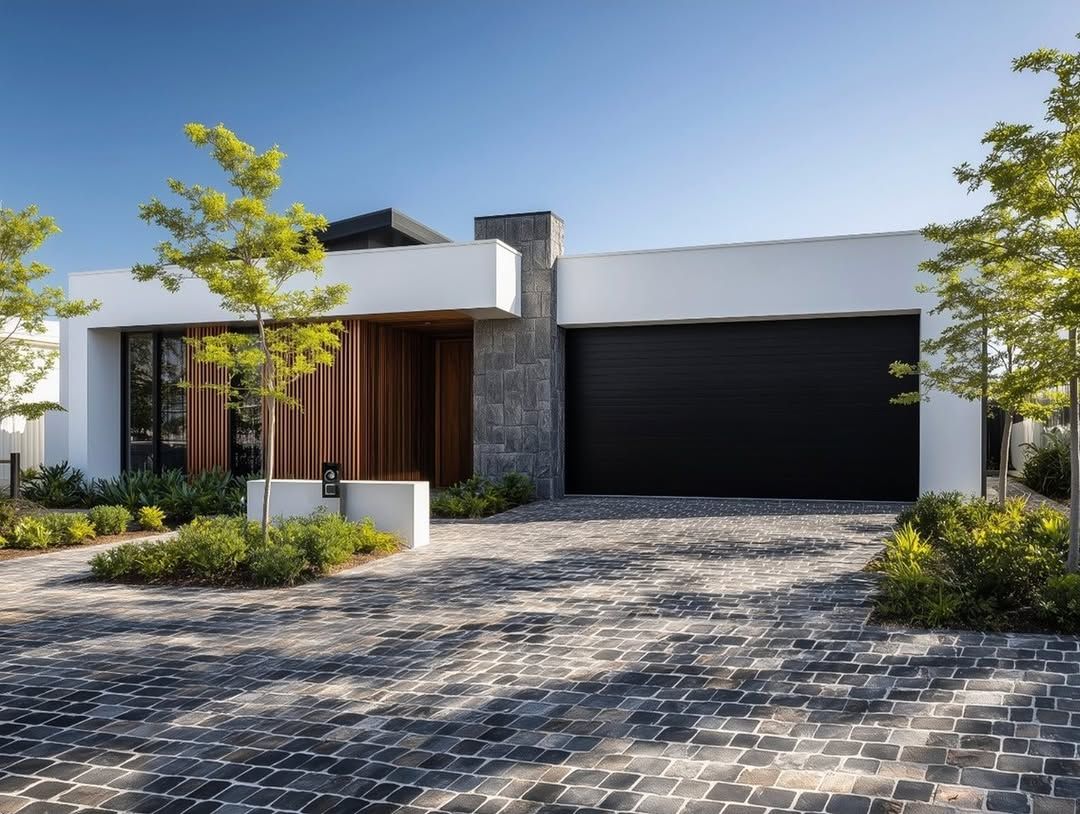
This entrance achieves its striking look with a formula of contrasts: 50% smooth/white + 40% textured/dark + 10% natural/warm. The clean, white facade of the house is the dominant feature. The dark, varied-tone cobblestone driveway provides a heavy, textured anchor that grounds the airy house. Finally, the wood slat detailing and green plantings inject warmth and organic softness. The balance is perfect; without the dark cobblestones, the house would feel less substantial, and without the wood, it might feel too sterile. See how texture changes the game compared to the smooth surface in Idea #5.
Maintenance Reality
Cobblestone driveways are incredibly durable, but the wide joints between the pavers are a magnet for weeds and moss. Using a high-quality polymeric sand in the joints is essential to lock the pavers in place and inhibit weed growth, but you should still expect to do some spot weeding or treatment a few times a year. The uneven surface can make snow removal a little tricky; a snowblower with the blade set high or a plow with a rubber edge is recommended to avoid catching and dislodging the stones.
10. Light Paver Driveway with Dark Wood Siding Accents
What Makes It Work
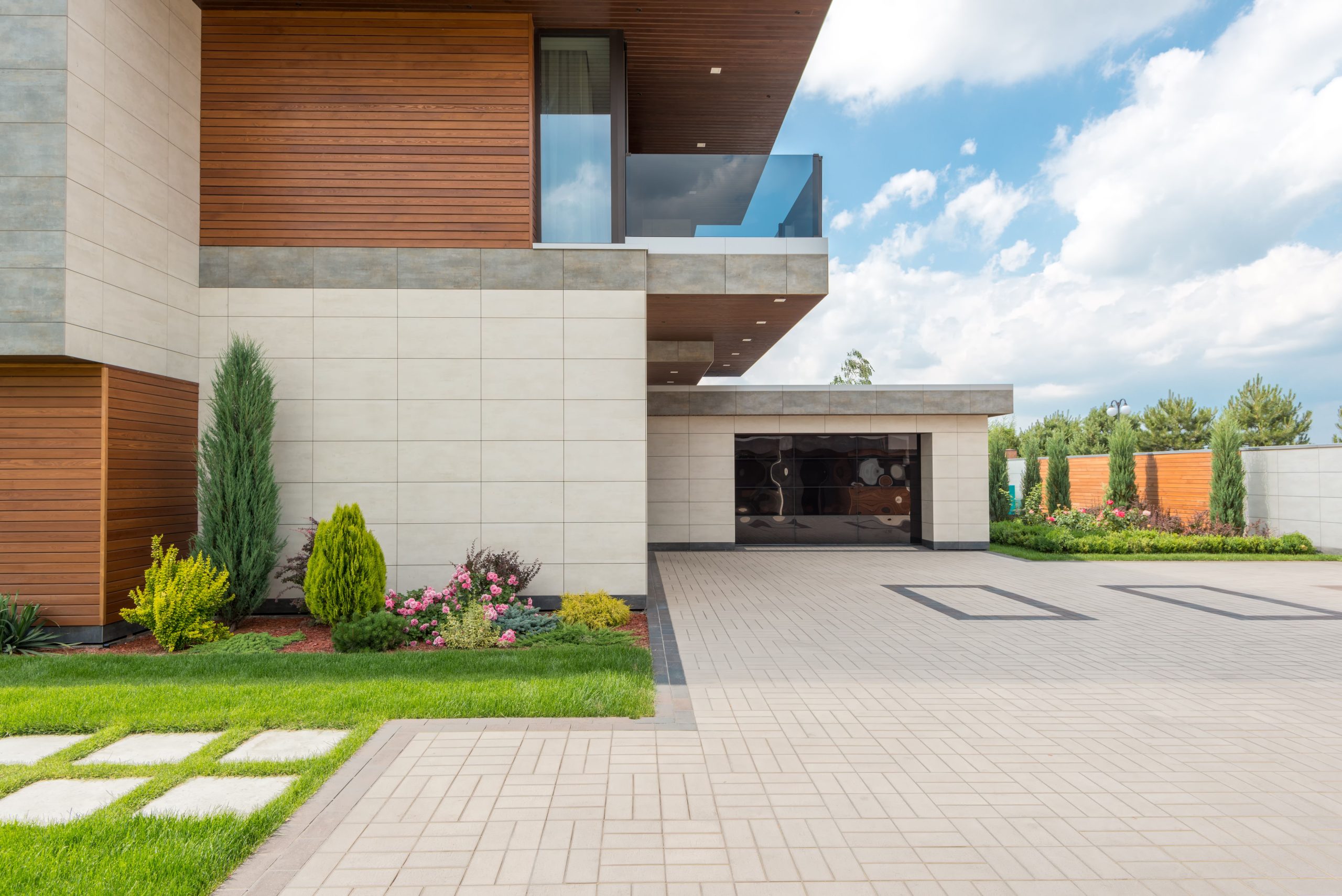
This design works because it repeats materials and lines across different surfaces to create a cohesive whole. The light tan of the driveway pavers is echoed in the cream-colored wall panels of the house, creating a visual link. The dark gray accent pavers in the driveway mirror the dark, vertically oriented wood siding and the black garage door. This repetition of color and form makes the entire front facade feel like a single, intentionally composed piece of architecture, rather than a house with a driveway tacked on.
Designer Tip
When creating geometric patterns with pavers, less is more. Notice how this design uses the dark gray accent pavers sparingly, just enough to create a distinct shape that leads the eye toward the entrance. A common mistake is to make the pattern too complex or to use too many colors, which can make a driveway look dated and busy. Stick to two, or at most three, complementary paver colors and use the accent color to create a simple, strong geometric statement that complements the lines of your home.
11. Curved Cobblestone Driveway with Natural Cut Stone Facade
Scale Guide
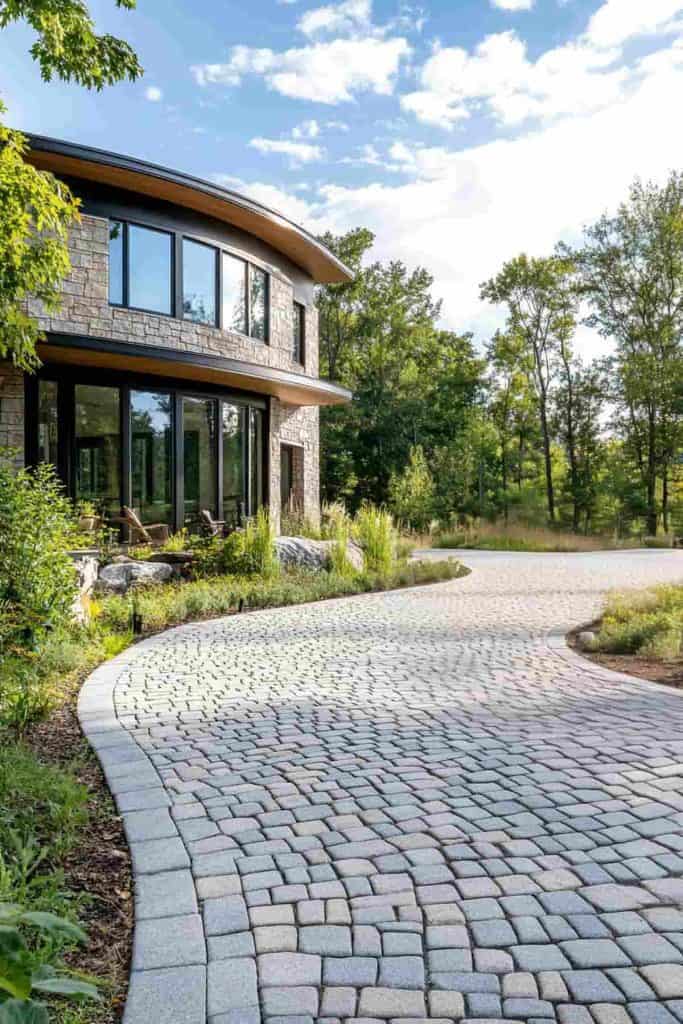
A design that heavily features natural materials like cobblestone and large cut stone needs space to feel authentic and not cramped. This look is ideal for properties with a deep setback from the road, allowing the gentle curve of the driveway to feel graceful and unforced. A minimum width of 12 feet for the driveway itself is recommended to accommodate the slight irregularities of cobblestone. The combination of a curved drive and a stone-clad building works best on lots that are at least a half-acre, where it can integrate with the surrounding landscape.
Trending Context
This embodies the concept of ‘biophilic design’—the practice of connecting architecture more closely to the natural world. The use of raw, textured materials like the cobblestones and the cut stone facade, paired with the prominent exposed wood and lush greenery, blurs the lines between the built environment and the landscape. In 2026, as homeowners crave a sense of calm and a retreat from the digital world, this kind of nature-integrated design feels more relevant and luxurious than ever.
12. Expansive Gravel Driveway with Rustic Stone House
Get This Look For Less
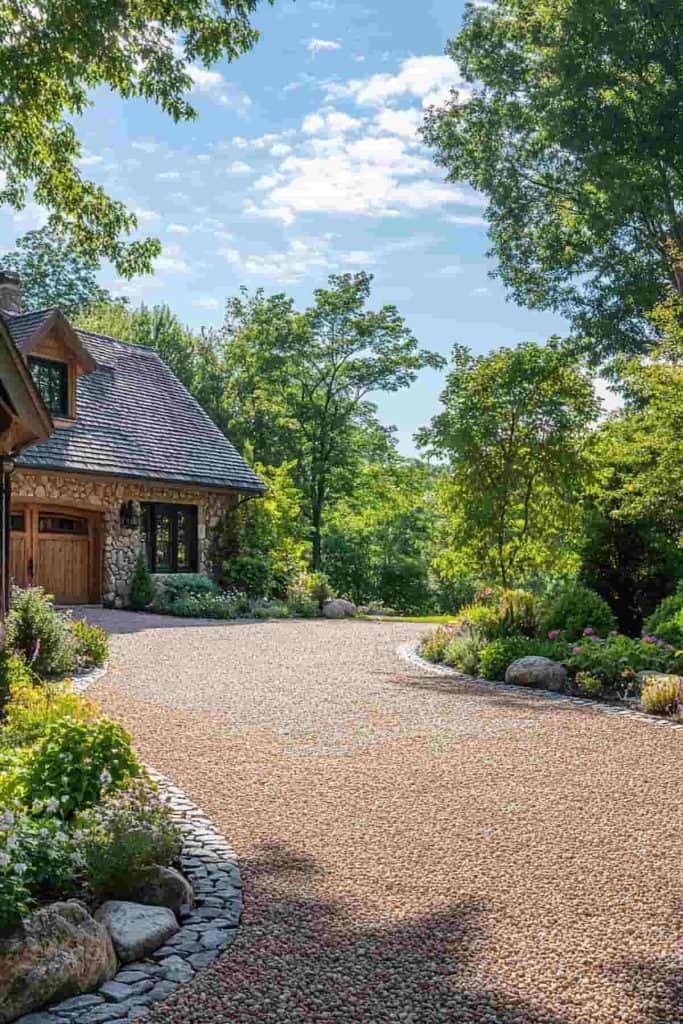
This sprawling, rustic look feels incredibly high-end, but a gravel driveway is one of the most cost-effective options available. Where pavers or concrete can cost $10-$30+ per square foot installed, a professionally installed gravel driveway typically runs between $2 and $5 per square foot. To get this specific look, choose a light brown or gray crushed stone (around 3/4 inch is a good size for driving on) and ensure it’s installed over a properly graded base with landscape fabric to prevent weeds. This is a beautiful, lower-cost alternative to the intricate stonework in Idea #11.
The One Thing
that makes this driveway feel so serene and established is its generous, sweeping curve. A straight driveway to the garage would have felt purely functional and abrupt. The curve forces a slower, more meandering approach to the house, allowing you to take in the stone facade, the landscaping, and the surrounding trees. It turns the act of arriving home into a moment of transition and decompression, which is a subtle but powerful piece of design.
13. Gray Gravel Drive with Colorful Perennial Borders
What Makes It Work
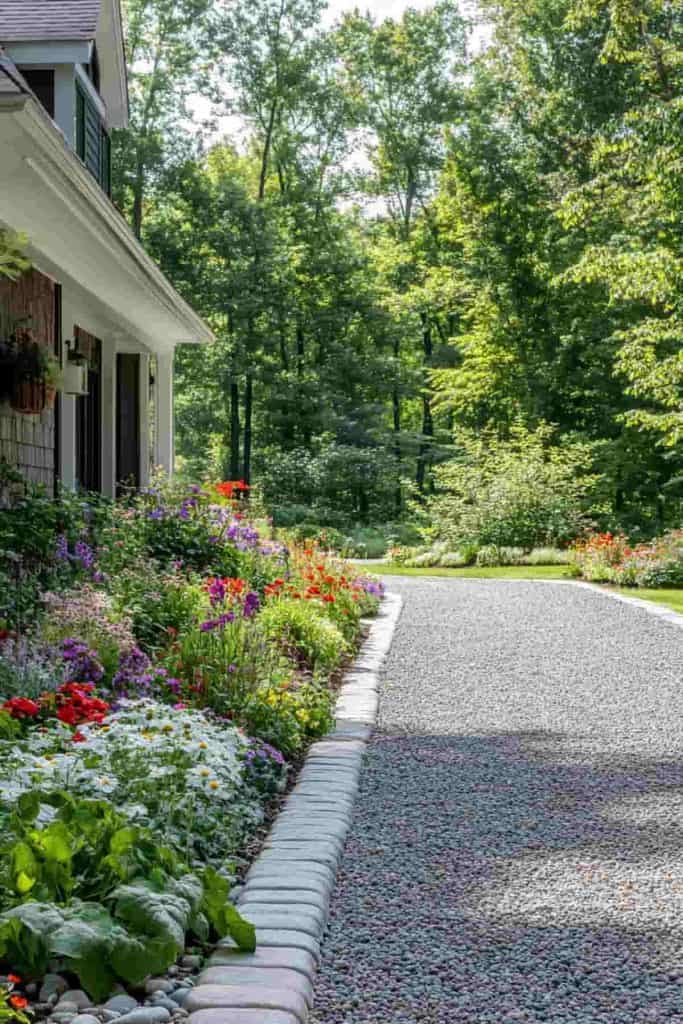
This design is a masterclass in using color and texture to create charm. The simple, light gray gravel driveway provides a neutral, textured canvas. This cool-toned base makes the vibrant colors of the perennial flower beds absolutely sing. Your eye is immediately drawn to the pops of red and purple. The neatly placed stone paver edging is the quiet hero, creating a crisp, clean line that separates the loose gravel from the soft plantings, making the whole composition feel tidy and intentional rather than wild and messy.
Designer Tip
To keep a gravel driveway from looking like a construction site, you must use edging. A border of stone or metal is non-negotiable. For a look like this, install the paver edging so its top surface is about half an inch above the gravel level. This creates a small lip that helps contain the loose stones, preventing them from spilling into your flower beds every time you drive or walk on the edge. It’s a small detail that makes a huge difference in long-term maintenance and visual appeal.
14. Interlocking Red and Gray Pavers with Tiered Landscaping
Style Math
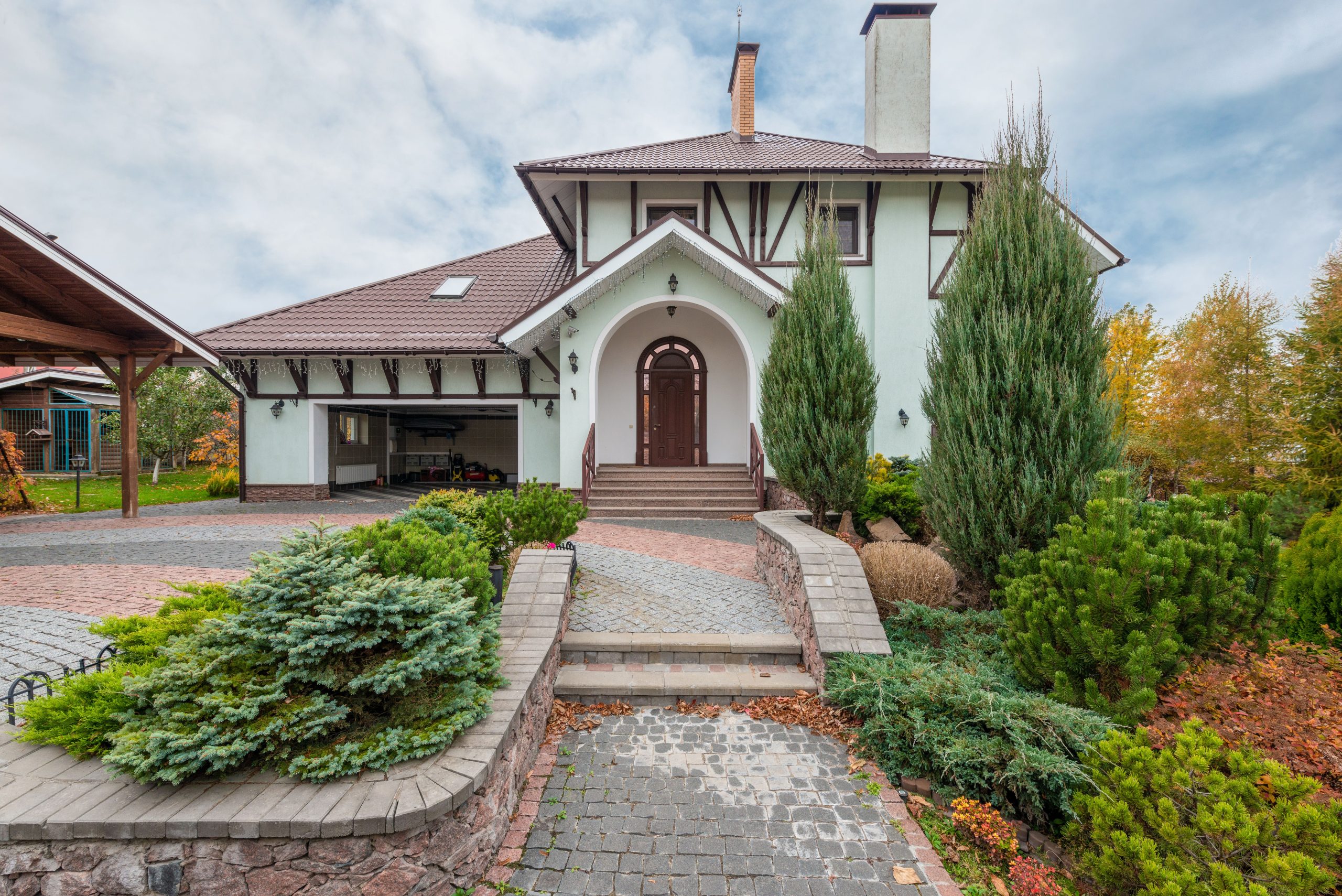
This look is a formula for classic, structured curb appeal: 40% warm-toned pavers + 30% cool-toned accents + 30% structured greenery. The reddish-brown pavers provide a warm, welcoming foundation. The gray pavers, concrete steps, and stone walls introduce a cool, stabilizing contrast. Finally, the tiered beds with a mix of evergreen shrubs and trees add life and vertical interest. The key is how the paver colors are picked up in other elements—the red pavers echo the roof, and the gray pavers match the stone walls, creating a unified palette.
Real Talk
An interlocking paver driveway with multiple levels and retaining walls is a significant structural project, not just a cosmetic one. Proper installation is critical to prevent shifting, sinking, and drainage nightmares. This isn’t a DIY weekend job. You need a professional installer who understands how to build a compacted base, handle water runoff on a slope, and properly construct retaining walls that can bear a load. Skimping on installation will lead to costly repairs down the line. Get multiple quotes from certified installers.
15. Curving Gravel Driveway Leading to a Cedar Shake Home
The One Thing
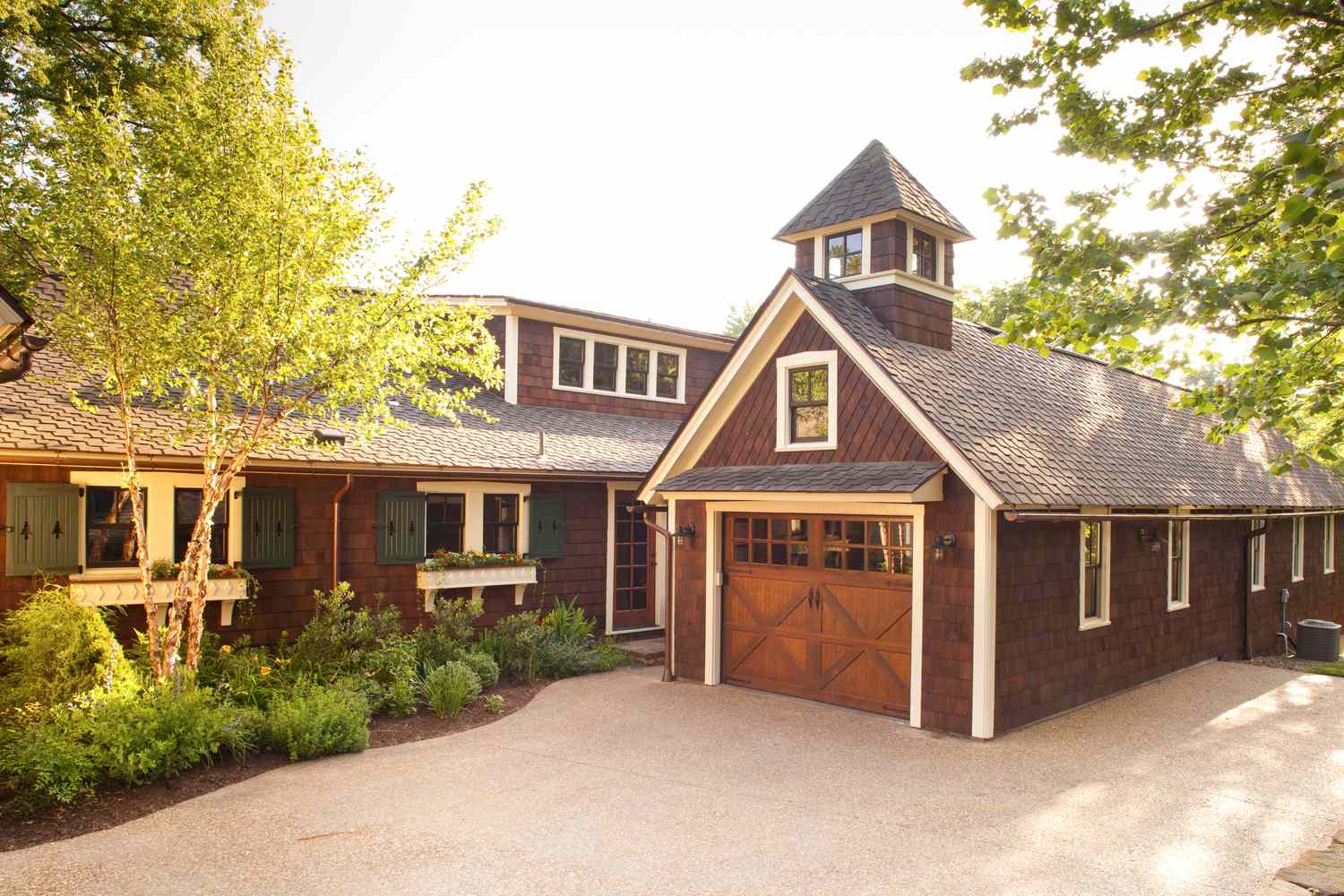
The defining element here is texture. Every key surface in this scene is deeply textured, creating a rich, rustic tapestry. You have the crunchy, irregular surface of the light gravel driveway, the layered, dimensional quality of the cedar shake siding, the paneled texture of the garage doors and shutters, and the soft, varied textures of the surrounding foliage. It’s this commitment to texture over smooth, flat surfaces that gives the home its immense character and cozy, established feeling.
Scale Guide
A long, winding gravel driveway and a large, multi-sectioned home like this demand a grand scale. This aesthetic is perfectly suited for rural or large suburban lots of one acre or more. The driveway itself, being a key landscape feature, should be at least 150-200 feet long to achieve that graceful, meandering feel. The width should be generous, at least 12 feet, to feel proportional to the large house and to allow for easy passing. On a smaller property, this much gravel and texture could feel busy and overwhelming.
16. Brick Paver Driveway with Grand Entrance Pillars
What Makes It Work
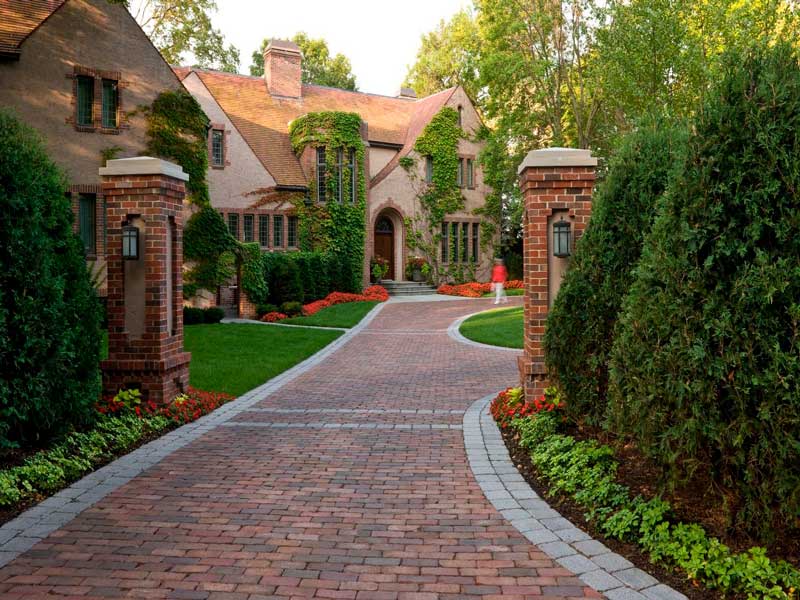
This design succeeds by leaning into traditional elements with confidence. The substantial brick pillars, topped with classic black lanterns, create an undeniable sense of arrival. They act as formal gateposts, even without a gate. The choice of reddish-brown interlocking pavers provides a warm, classic feel, while the light grey paver border adds a crisp, tailored finish that keeps the look from feeling dated. The lush, abundant greenery softens the hardscaping and makes the grand entrance feel inviting rather than imposing.
Budget Breakdown
- Interlocking Brick Pavers: $4 – $8 per sq. ft.
- Base/Installation Labor: $8 – $15 per sq. ft.
- Brick Pillars (2): $3,000 – $7,000 total (highly variable based on size/materials)
- Outdoor Lanterns (2): $300 – $1,200 total
- TOTAL (for a 600 sq.ft. driveway + pillars): $14,500 – $32,000
- Budget alternative: Get a similar feel by using affordable cast concrete pillars instead of custom brick, and install solar-powered lanterns to avoid electrical work.
17. Paved Driveway with Red Brick Borders and Wooden Gates
Designer Tip
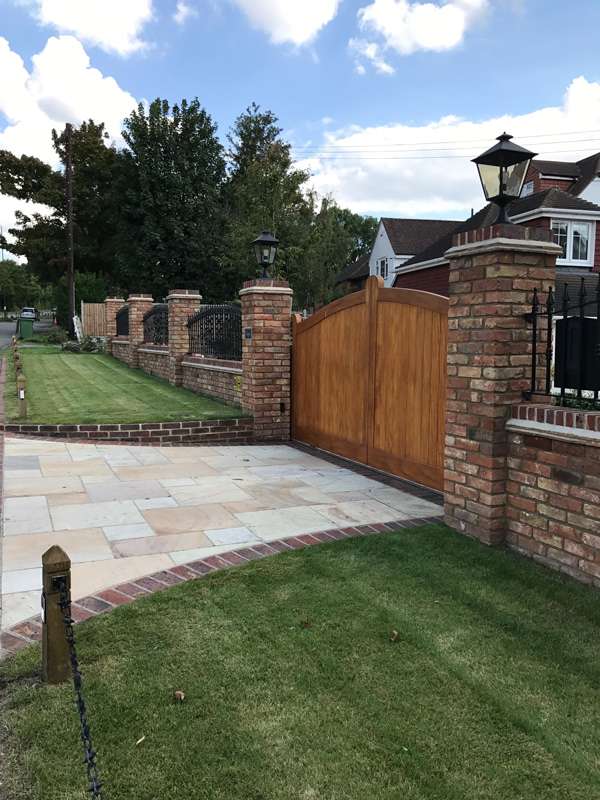
When combining pavers and bricks, the pattern of the brick border can make a big difference. Notice how this driveway uses a ‘soldier course’—a single line of bricks standing side-by-side. For the curved sections, the installer has expertly cut the bricks into slight wedges to maintain a tight, clean arc. For a more formal or historic look, you could use a ‘sailor course’ (bricks lying flat, end to end) or a double soldier course. The key is to use the border to accentuate the shape of the driveway.
Style Math
This entrance is a blend of traditional materials used in a clean, flowing way. The formula is: 50% Neutral Pavers + 25% Warm Brick + 25% Natural & Metal Accents. The light beige pavers create a bright, clean field. The dark red brick border introduces color, warmth, and a classic texture. The wooden gates bring in a natural, organic element, while the black wrought iron and lanterns provide a sharp, graphic counterpoint. This balance ensures the driveway feels established but not stuffy, and welcoming but also secure.
18. Herringbone Paver Driveway with Ornate Gray Gates
The One Thing
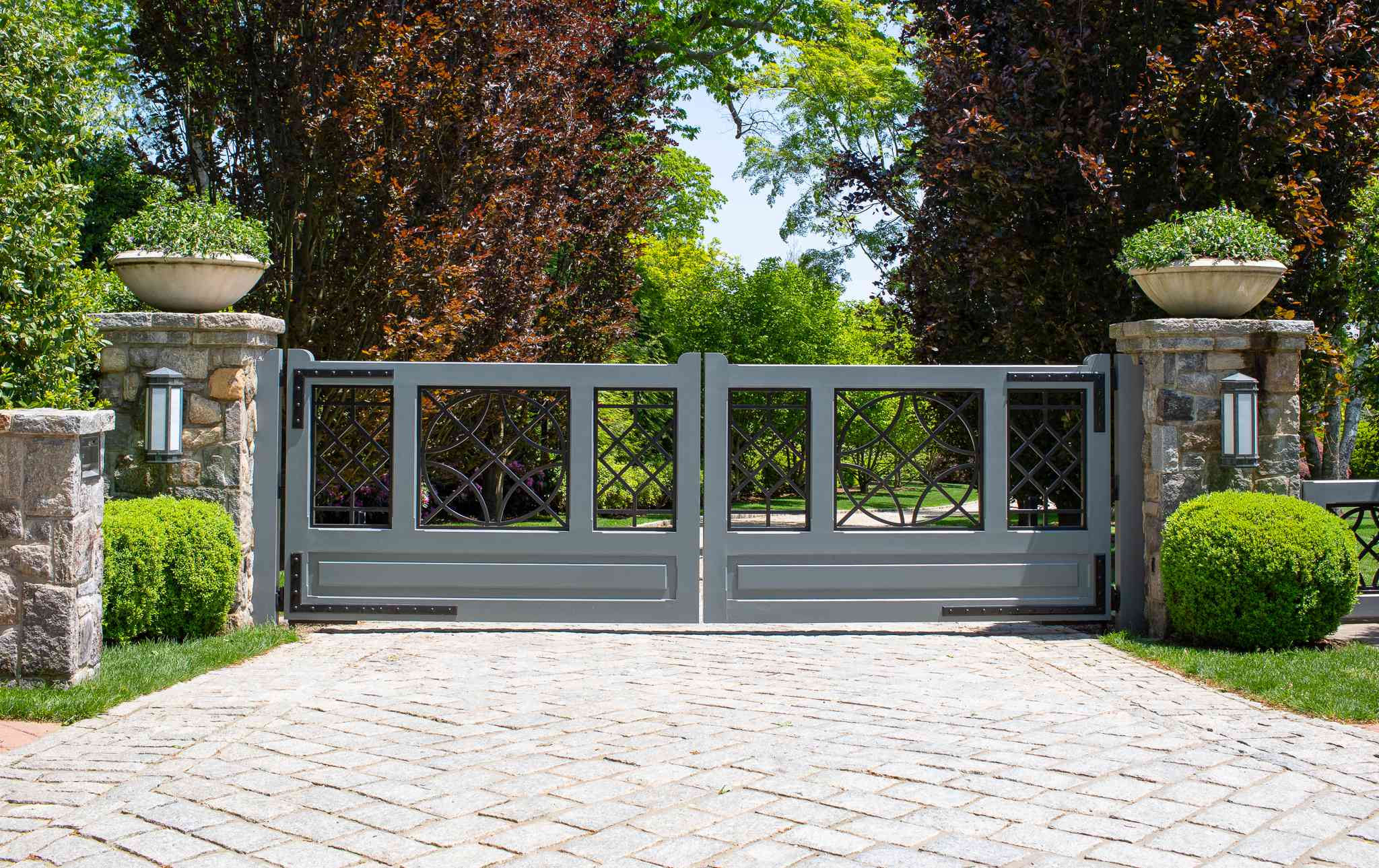
The gates are the undeniable focal point. While the herringbone pavers are lovely, the ornate, custom-designed gray double gates elevate the entire entrance from nice to truly memorable. Their solid construction provides security and privacy, but the delicate black ironwork inserts keep them from feeling like a fortress. The medium gray color is a sophisticated choice that’s softer than black but still provides elegant contrast against the stone pillars and surrounding greenery. They set a tone of bespoke elegance before you even step onto the property.
How-To Brief
To style the gate planters for year-round interest: This ensures your entrance always looks alive. Time: 1 hour per planter, twice a year. Cost: $100-$300 per planter.
- Start with the ‘thriller, filler, spiller’ method. Choose one tall, upright plant as the ‘thriller’ in the center (like a boxwood or dwarf ornamental tree).
- Add ‘filler’ plants around the thriller. These are mounding plants that fill the space, like heuchera, ferns, or seasonal flowers.
- Choose ‘spiller’ plants that will trail over the edges of the planter, such as ivy, vinca vine, or bacopa.
- In the fall, swap out summer annuals for cool-weather plants like pansies, ornamental kale, and small evergreen shrubs.
19. Light Gray Gravel Yard with Integrated Soil Beds
What Makes It Work
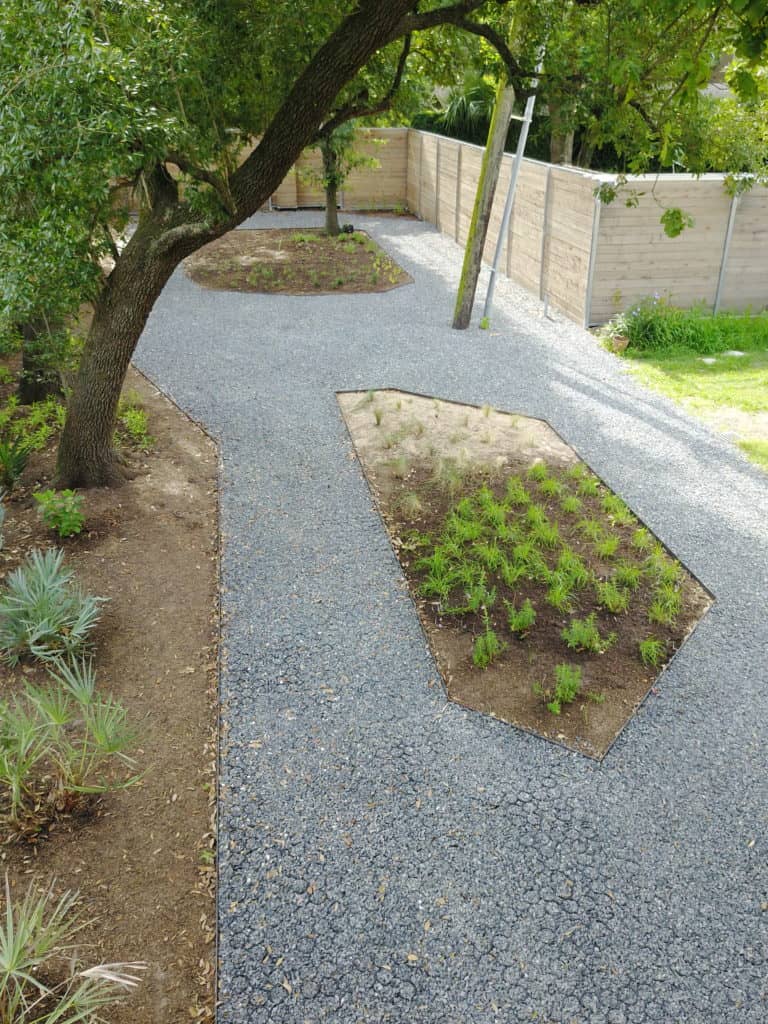
This design’s success lies in its minimalism and intentionality. Instead of fighting nature, it works with it. The light gray gravel provides a clean, permeable surface that feels softer and more natural than concrete. The genius is in the defined soil beds cut directly into the gravel. This allows for planting while maintaining a very clean, organized aesthetic. The thin metal edging is crucial; it creates a crisp separation between stone and soil, showing that every element is deliberate. The large tree provides a natural canopy, making the space feel like a secluded courtyard.
Get This Look For Less
A gravel yard is already a budget-friendly choice, but you can make it even more so. The key is in the edging. Instead of expensive custom-cut metal, you can find affordable plastic or recycled rubber landscape edging at any home improvement store for $1-$2 per linear foot. For the gravel itself, look for ‘crusher run’ or ‘pea gravel’ from a local landscape supplier, where buying in bulk is far cheaper than buying bags. The whole look—gravel, edging, and soil for beds—can be achieved for just a few dollars per square foot. Compare the simplicity here to the more complex pebble mosaic in Idea #3.
20. Modern Driveway with Integrated Wall and Entry Lighting
Designer Tip
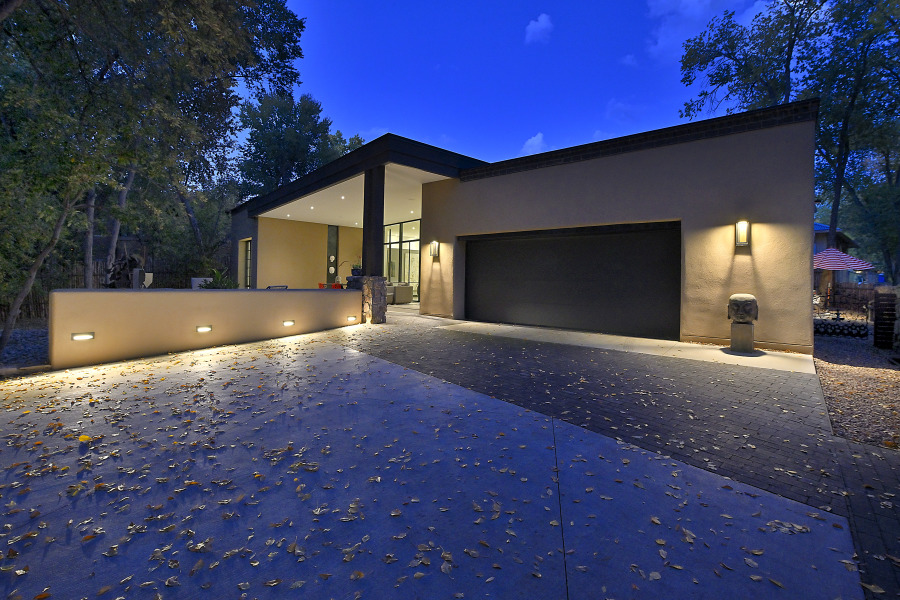
Layering your exterior lighting is key to a high-end look. This design does it perfectly. It doesn’t just rely on one type of light. There is recessed lighting in the covered entry for general ambiance, modern wall lanterns for a decorative touch, and—most importantly—the low-level lights integrated into the driveway wall. These ground-level lights are essential for safety, guiding the way along the path, and they also create a beautiful grazing effect on the wall texture. Always plan for at least two, preferably three, types of lighting at your entrance.
Real Talk
Integrated lighting looks incredibly sleek, but it requires planning from the very beginning of your project. You can’t just add these lights to an existing concrete wall or paver driveway easily. The electrical conduit needs to be run underground and stubbed out in precise locations *before* any concrete is poured or pavers are laid. This means coordinating with an electrician early in the design phase. It adds complexity and cost upfront, but the seamless, polished result is impossible to achieve as an afterthought.
21. Grey Paver Driveway with White River Rock Landscaping
What Makes It Work
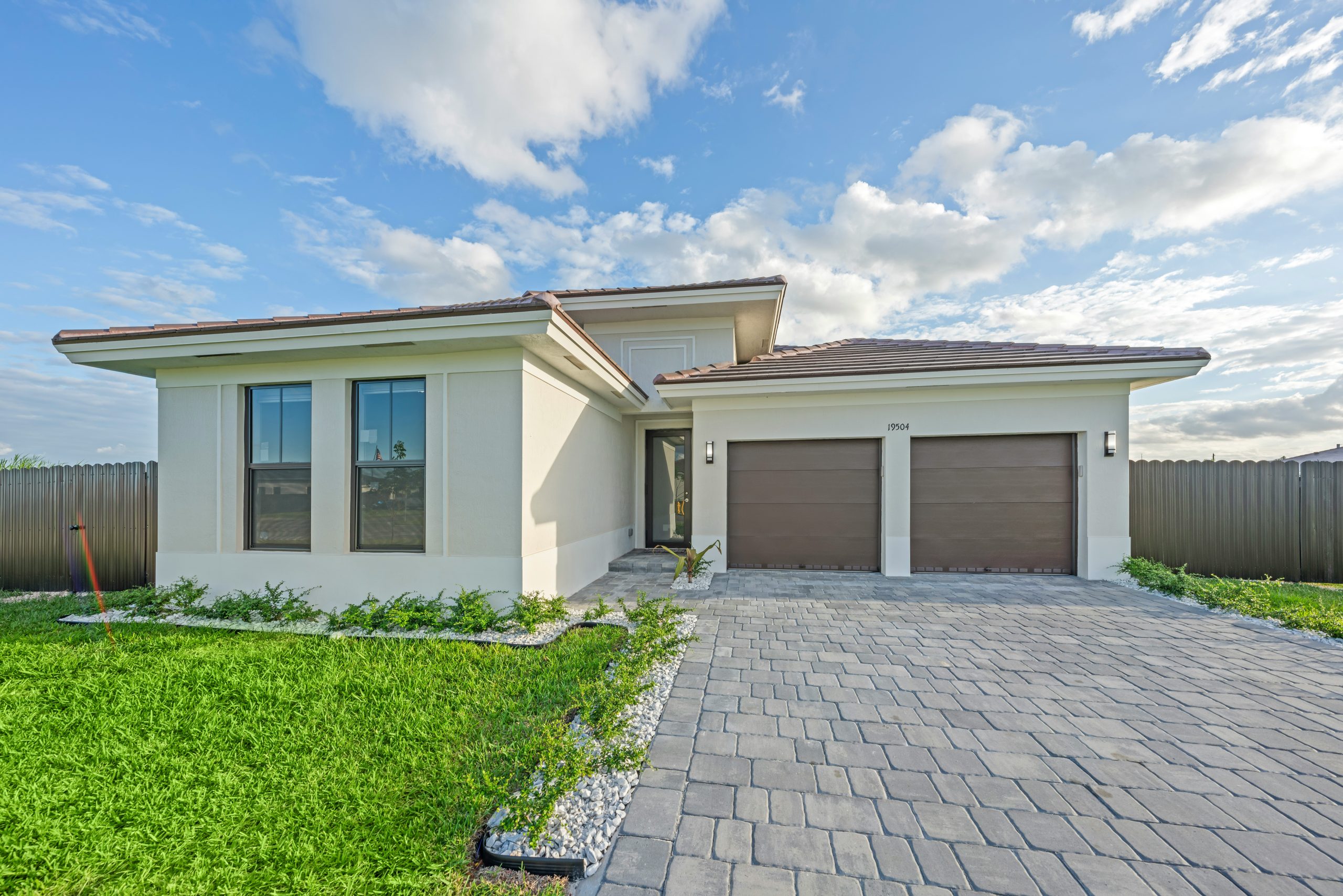
This is all about clean, crisp contrast in texture and color. The smooth, orderly grey pavers of the driveway create a neat, man-made surface. This is placed directly against the bright white of the decorative river rocks, which are organic and irregular in shape. The bright green of the manicured lawn and small bushes adds a third layer of color and living texture. The combination feels incredibly clean, modern, and low-maintenance because each zone is so clearly defined. The light stucco of the house acts as a neutral backdrop that ties it all together.
Maintenance Reality
White decorative rock looks amazing when it’s first installed, but it can be a real chore to keep it looking pristine. Over time, dirt will wash into it and leaves or grass clippings will get stuck in it, making it look dingy. You’ll need to use a leaf blower on a low setting regularly. The rocks may also need to be washed or even removed and cleaned every few years to maintain their bright white color. You absolutely must install a high-quality landscape fabric underneath to prevent weeds from taking over.
22. Curved Paver Driveway with Ornamental Grass Borders
The One Thing
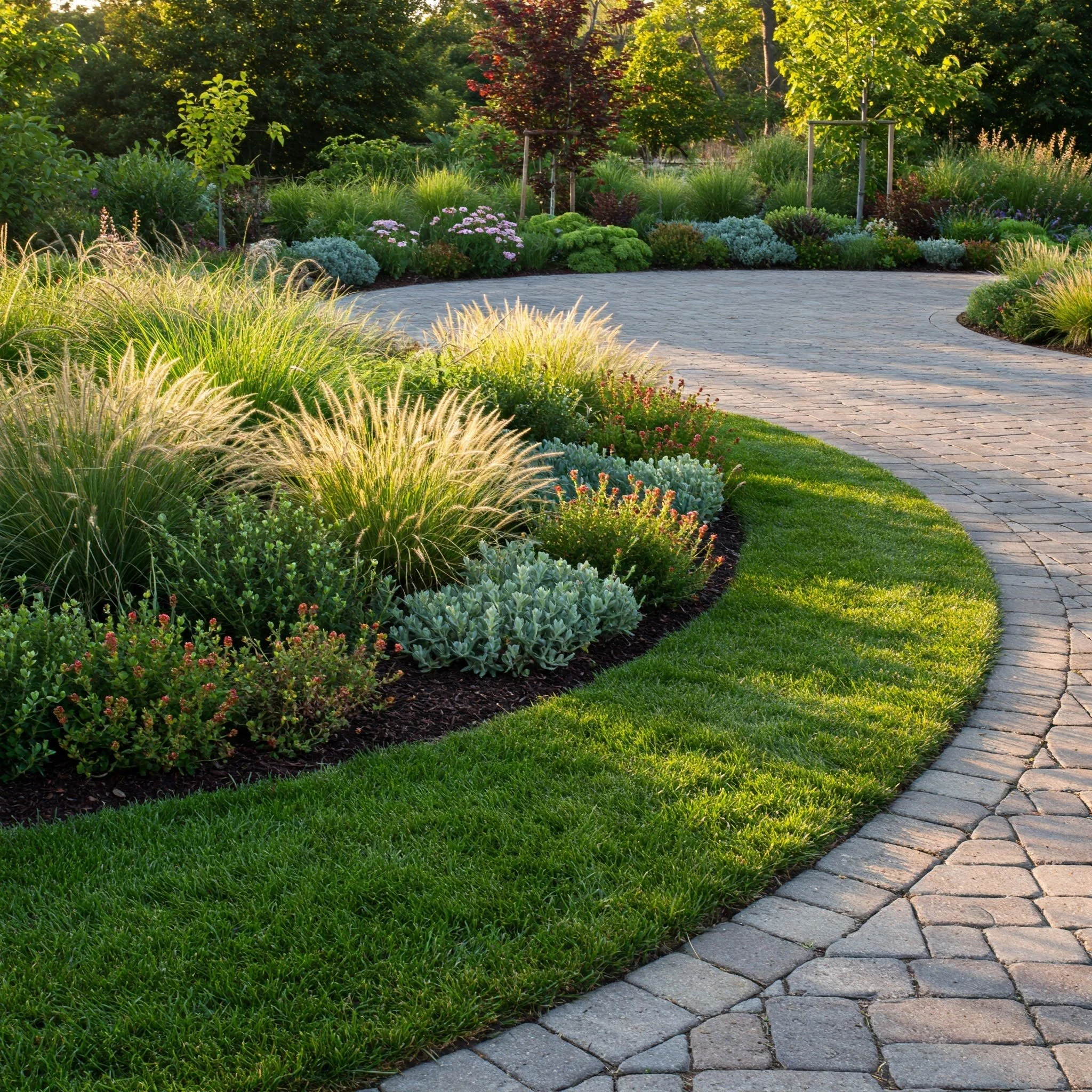
The ornamental grasses are the single element that gives this design its soft, lush, and modern feel. Without them, you would have a standard paver driveway with some low shrubs. The grasses, with their height, feathery plumes, and gentle movement in the wind, add a layer of dynamic texture and serenity. They bridge the gap between the hard, static driveway and the manicured lawn, creating a more natural, meadow-like transition that feels both deliberate and effortless.
Designer Tip
When landscaping with ornamental grasses, variety is your best friend. Notice how this design uses several different types. There are taller, upright grasses with airy plumes, and lower-growing, mounding grasses with a silvery-blue hue. This mix of heights, colors, and textures is what makes the planting bed so visually interesting. A common mistake is to plant a single row of just one type of grass, which can look rigid and monotonous. Combine at least three different varieties for a more natural, professionally designed look.
23. Winding Asphalt Driveway with Lush Flower Gardens
What Makes It Work
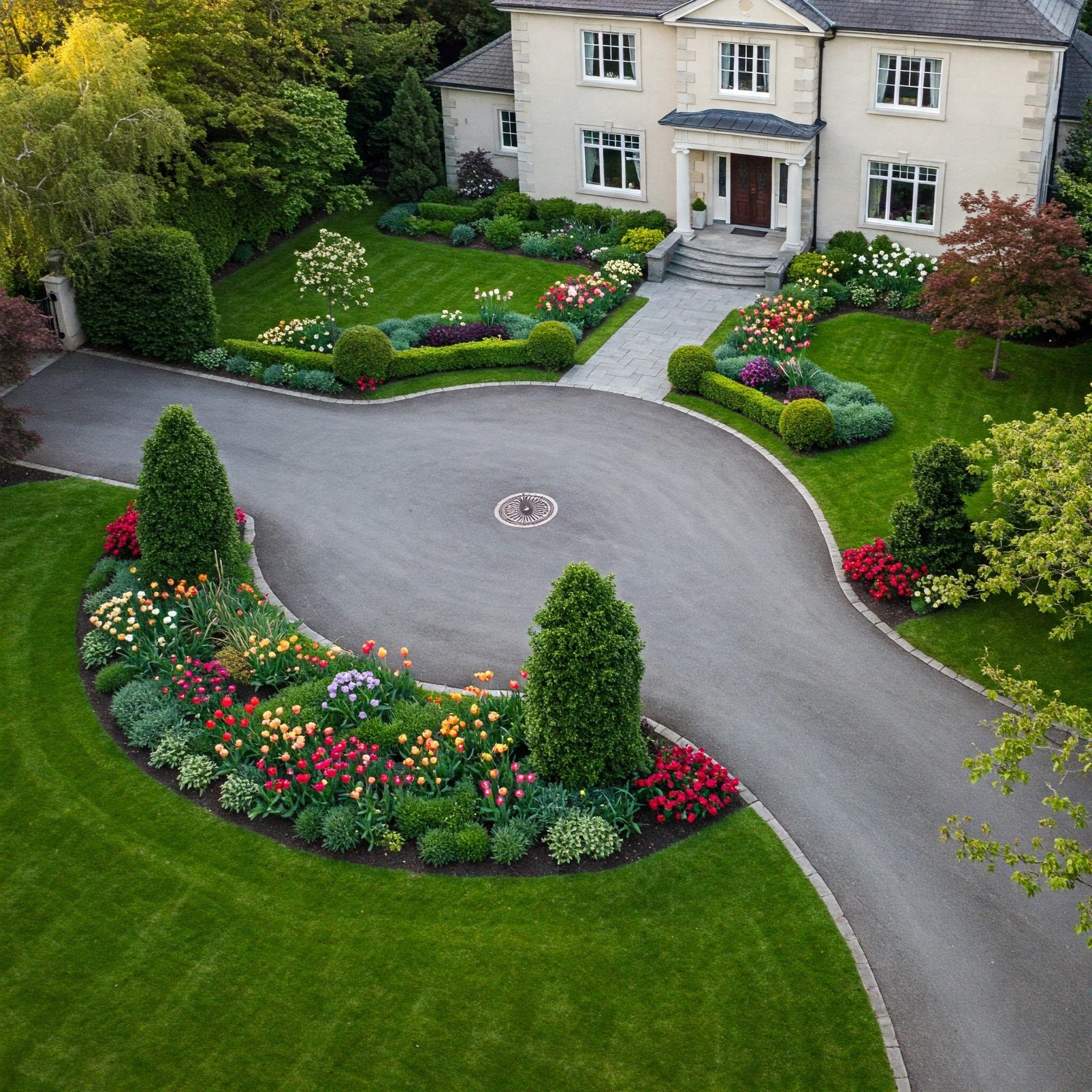
The power of this design comes from the dramatic contrast between the functional and the flamboyant. The asphalt driveway is purely utilitarian—a smooth, dark, unassuming ribbon. This simplicity and dark color creates the perfect neutral backdrop, allowing the magnificently colorful and meticulously maintained garden beds to be the undisputed star of the show. The garden’s curving, organic shapes also play beautifully against the clean, sweeping lines of the driveway, creating a dynamic visual dialogue between the man-made and the natural.
Get This Look For Less
24. Geometric White House with Slat Wood Accents and Paver Driveway
Style Math
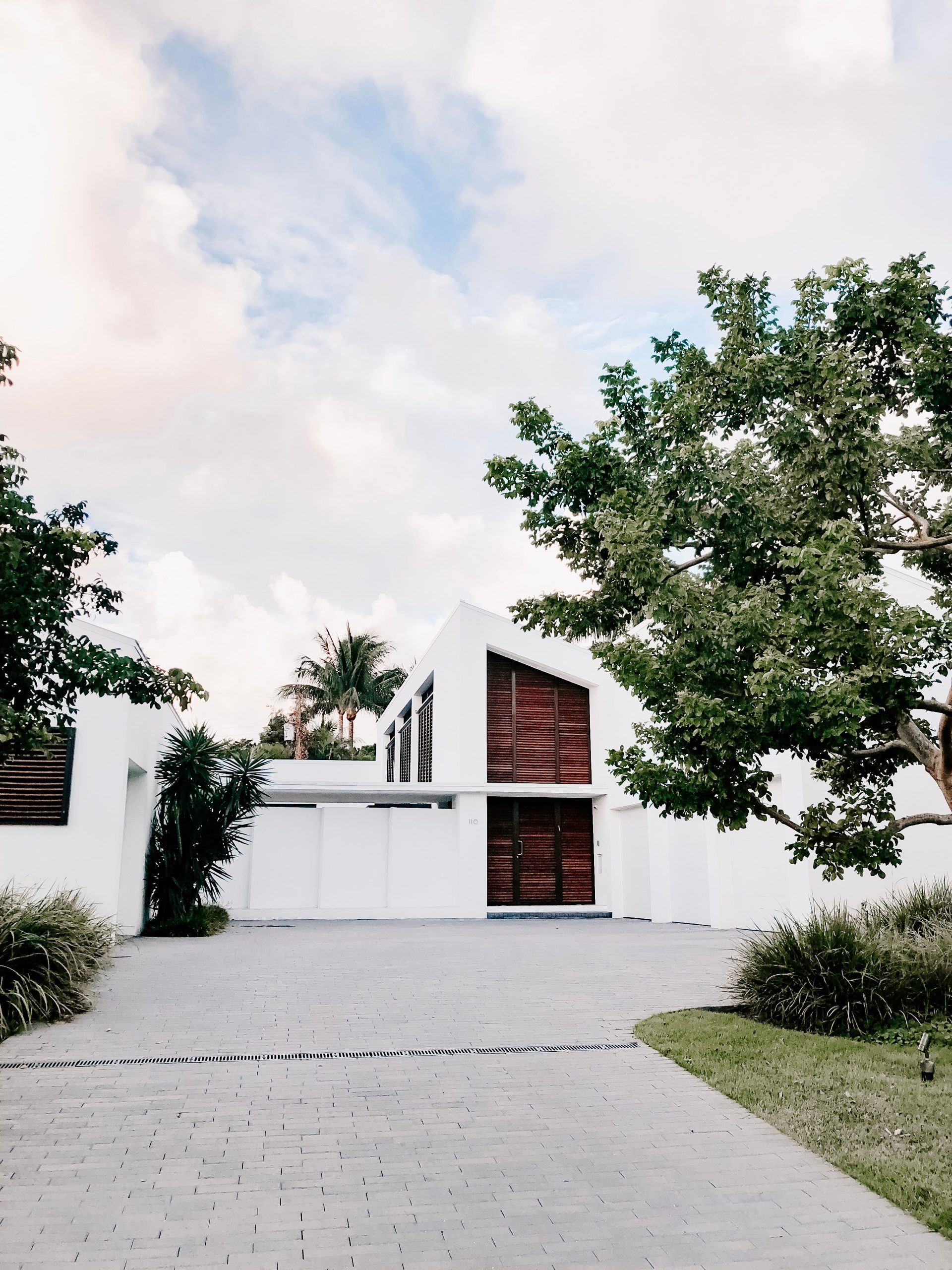
This home’s striking curb appeal follows a clean, modern formula: 50% crisp white geometry + 30% warm wood texture + 20% soft green landscaping. The sharp, angular lines of the white house provide a bold architectural statement. The dark, slat-style wood on the garage and accent panels introduces critical warmth and texture, preventing the design from feeling sterile. The lush, varied greenery, from the lawn to the palm trees, softens the hard lines and roots the modern structure in its environment. It’s a perfectly balanced trio of elements.
Scale Guide
A symmetrical design like this thrives on having enough space to be properly centered and framed. It works best on a lot with at least 60-75 feet of frontage, which allows the landscaping to flank the house evenly without feeling crowded. The driveway itself doesn’t need to be massive; a standard two-car width is sufficient because the focus is on the house’s architecture. This strong, symmetrical approach is less forgiving on narrow or irregularly shaped lots where the balance would be lost.
25. Winding Concrete Driveway on a Rural Estate with Stone Buildings
The One Thing
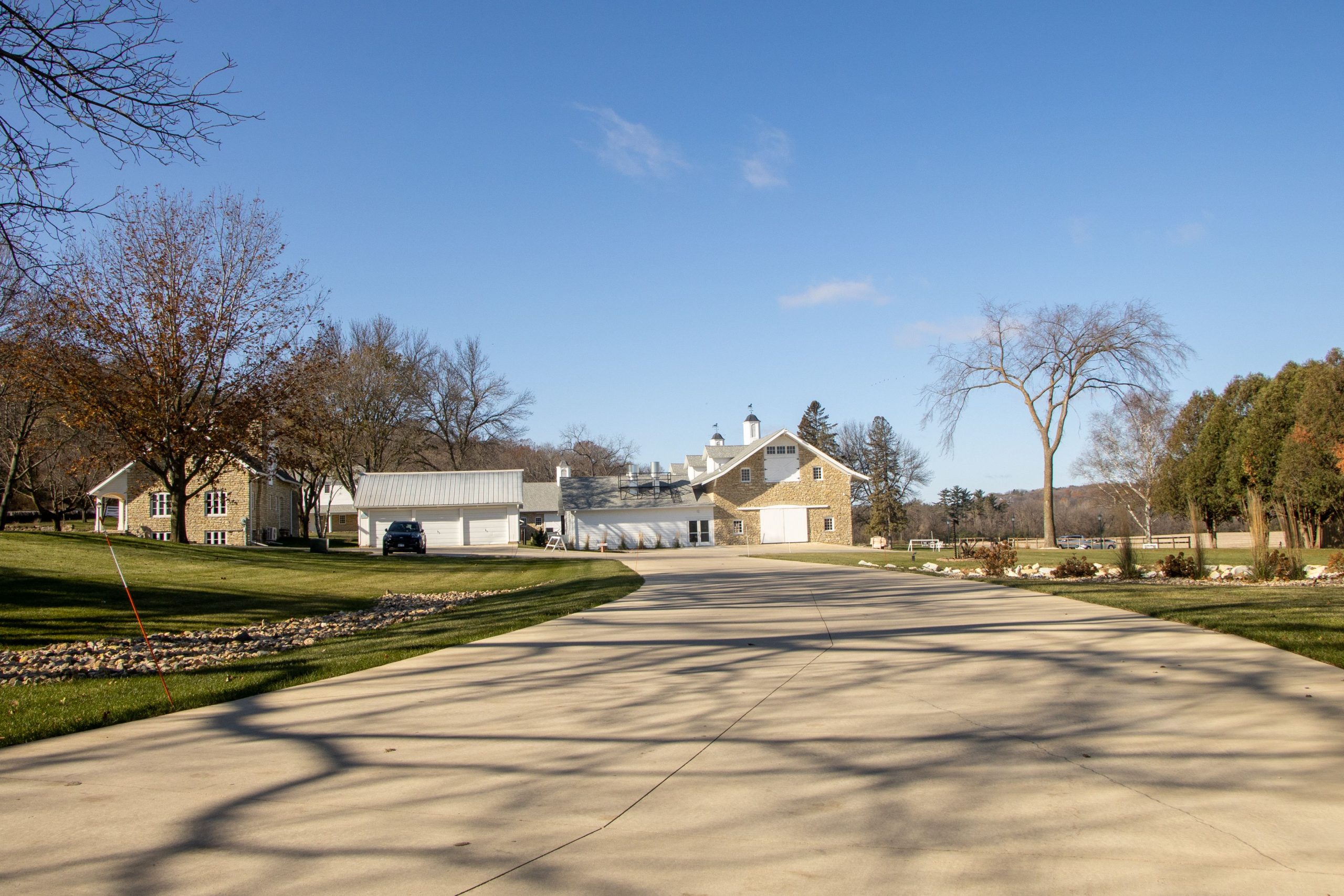
The most important element here is the sheer sense of space. The wide concrete driveway isn’t just a path; it’s a feature that carves a clean, modern line through an expansive, natural landscape. It’s the contrast between the smooth, man-made river of concrete and the vast, green lawns and rustic stone buildings that creates the feeling of serene, understated luxury. On a smaller, more cramped lot, this simple concrete drive wouldn’t have nearly the same impact.
What Makes It Work
This design works through the elegant use of repetition and graceful lines. The gentle, sweeping curves of the driveway guide the eye smoothly through the property, creating a sense of calm and flow. This curvature is subtly echoed in the manicured edges of the lawn and decorative rock beds. The color palette is also controlled and effective: the light gray of the concrete and stone, the clean white of the siding, and the vibrant green of the grass create a harmonious and peaceful scene that feels connected and whole.
26. Permeable Garden Path of Stone Pavers and Grass
Trending Context
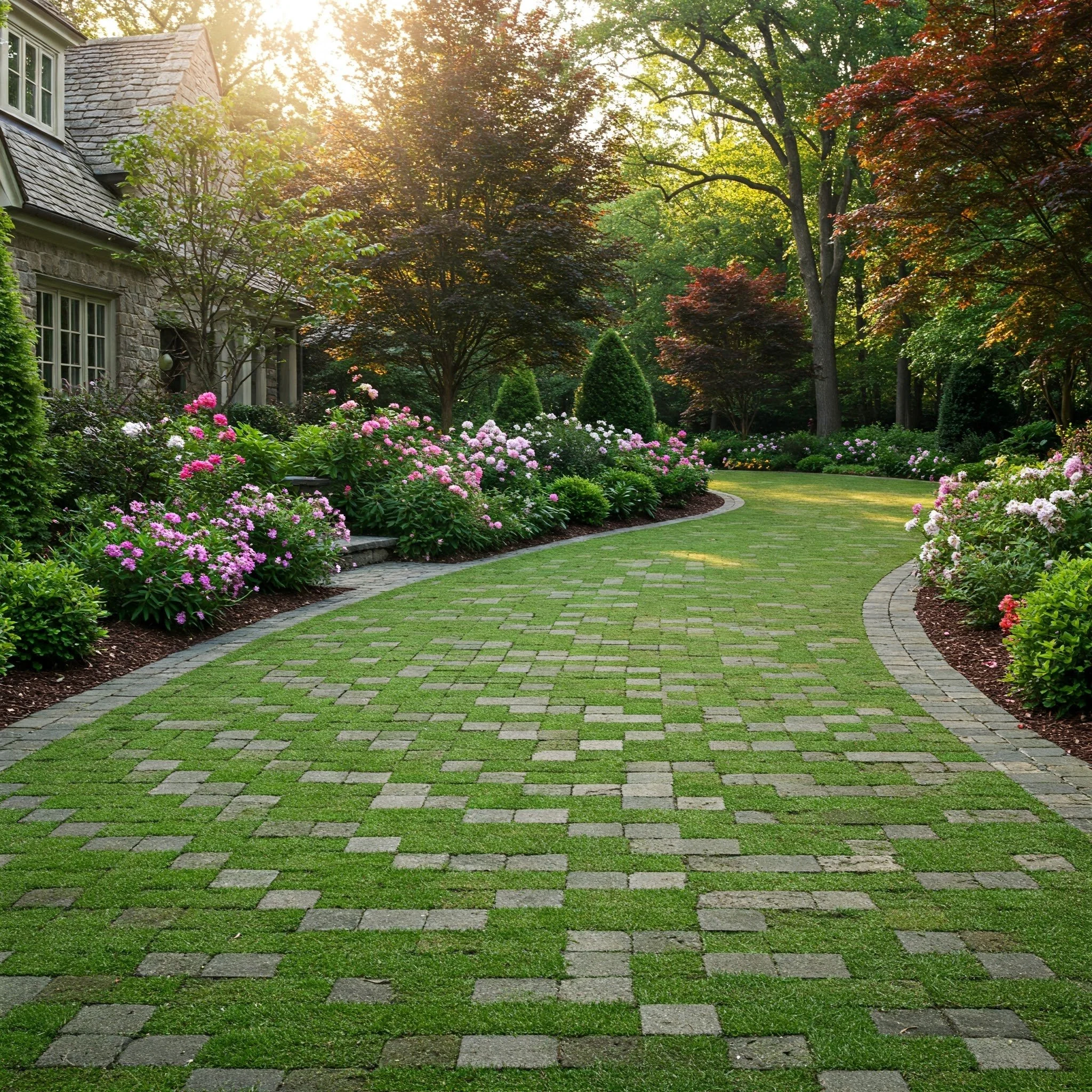
This isn’t just a driveway; it’s a prime example of a ‘permeable’ or ‘eco-friendly’ paving solution, a major trend for 2026. By leaving space for grass to grow between the stone pavers, the design allows rainwater to soak into the ground naturally rather than running off into storm drains. This helps to replenish groundwater, reduce flooding, and mitigate the ‘heat island’ effect common with large expanses of solid asphalt or concrete. It’s a beautiful way to blend high function with environmental responsibility.
Real Talk
A grass and paver driveway requires the right conditions to thrive. It needs plenty of sunlight and good soil drainage to keep the grass healthy. In a heavily shaded or constantly damp area, the grass will struggle, and you’ll end up with mud and moss instead. It’s also not ideal for high-traffic areas or for cars that tend to leak oil, as stains are difficult to remove from the stone and will kill the grass. This is best for a secondary driveway or a home where car use is less frequent.
27. Modern Grey Paver Driveway with Linear Edge Lighting
The One Thing
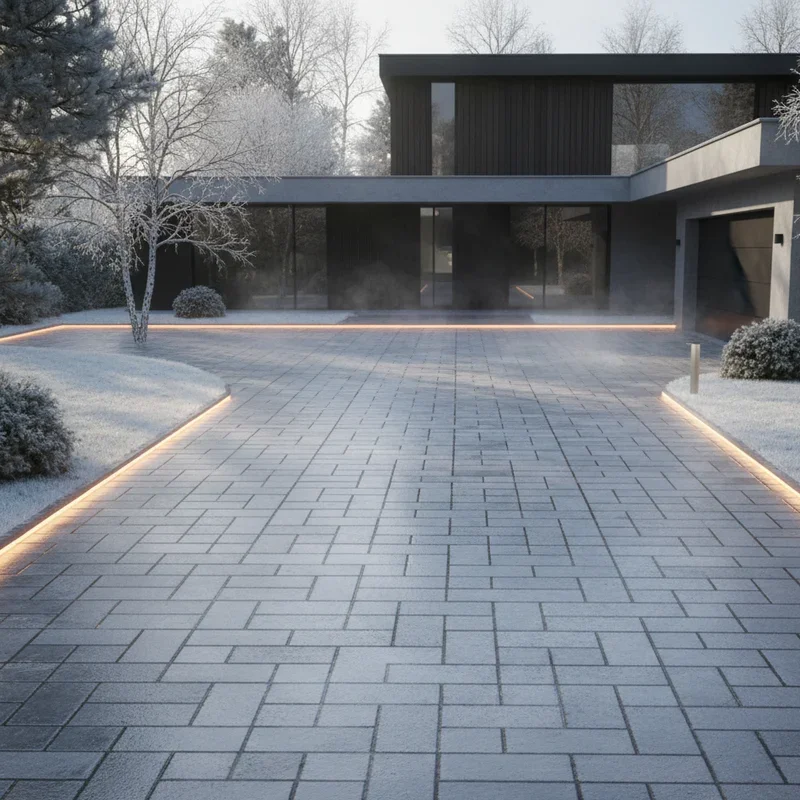
The single most defining feature of this design is the integrated linear lighting. It completely transforms the driveway at night from a simple surface into a sleek, guiding runway. It’s a detail that feels incredibly luxurious and architectural. The soft, continuous glow along the edges defines the driveway’s shape, enhances safety, and casts a beautiful light on the surrounding landscape, highlighting the texture of the snow and frosted trees. It’s a feature that works as both practical illumination and a powerful design statement.
Designer Tip
For a clean, high-end look with linear lighting, use a diffused or frosted lens. This prevents you from seeing individual ‘hot spots’ from the LED bulbs and instead creates a smooth, continuous line of light. Also, ensure the fixture is recessed perfectly flush with the surrounding pavers. Any part of the fixture sticking up can be a trip hazard and will look unfinished. Plan for this from the beginning, as it requires a specific channel to be created during the paver installation process. The basketweave pattern here is a great choice as it adds subtle texture without competing with the strong lines of the lights.
Your Home’s First Impression, Redefined
Your driveway is more than just a place to park; it’s the handshake that greets your guests and welcomes you home every day. Whether you’re drawn to sleek modern lines or lush, natural textures, the right design sets the stage for your entire home. We hope these ideas have inspired you to think beyond simple pavement and start planning an entrance that truly reflects your style. Now, head over to Pinterest and start creating that dream driveway board!